Project-1: Powertrain for aircraft in runways
Part A:
1)
How Much Do Airplanes Weigh?
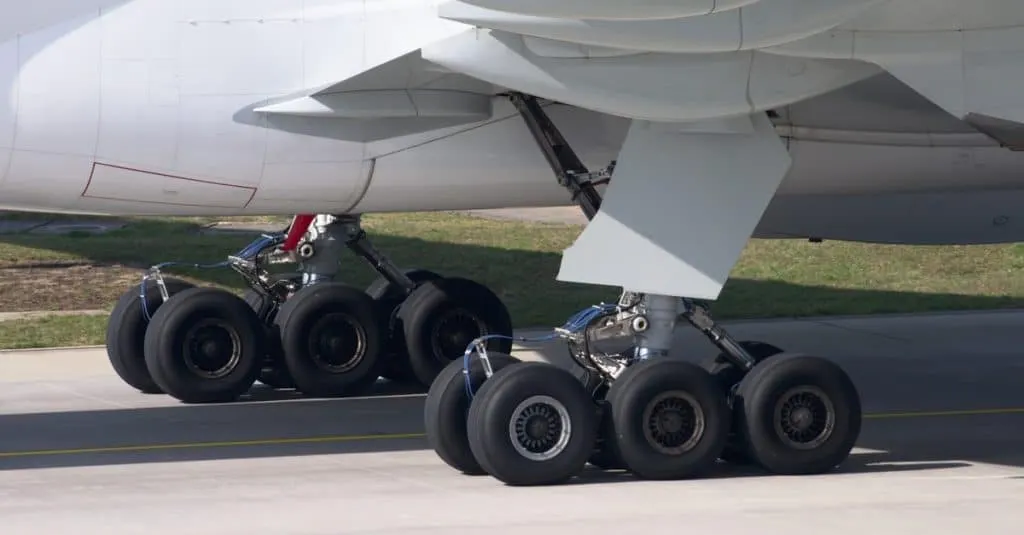
To this day it still amazes me how something that can weigh so much can even get airborne! Some of the weights that airplanes take off are staggering. In this article, I want to look at some of the most recognizable aircraft and break down what they weigh and what makes up the weight.
The Boeing 737 can weigh from 132,000lbs/60,000kg to 187,000lbs/85,000kg at takeoff depending on the model, compared to a small Cessna 172 weighing around 2,400lb/1,11kg. An aircraft’s empty weight, fuel, passengers & cargo must not weigh more than the aircraft’s Maximum Gross Takeoff Weight.
The weight of the aircraft is needed to be calculated by the pilot for every flight to ensure the aircraft remains within the weight limitations set by the manufacturer. These limitations are to ensure the aircraft can perform and recover from all flight maneuvers and withstand structural loading.
Typical Airplane Weights
Below is a table of some of the most common aircraft flying around our skies today:
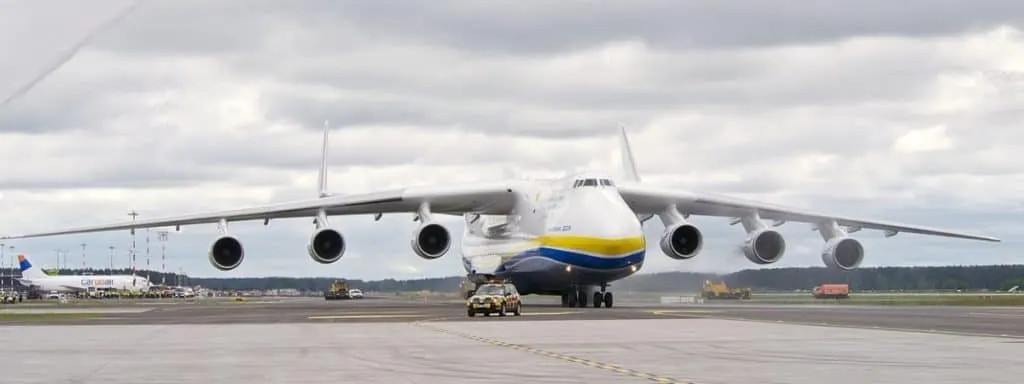
| Aircraft | Empty Weight | Max Fuel Weight | Max Cargo Weight | Max Gross Takeoff Weight |
|---|---|---|---|---|
| Antanov An-22 | 628,000 lbs 285,000 kg |
661,400 lbs 300,000 kg |
417,000 lbs 190,000 kg |
1,411,000 lbs 640,000 kg |
| Airbus A380-800 | 611,000 lbs 277,000 kg |
560,000 lbs 254,000 kg |
185,000 lbs 84,000 kg |
1,268,000 lbs 575,000 kg |
| Boeing 737-800 | 485,300 lbs 220,100 kg |
427,400 lbs 194,000 kg |
295,000 lbs 134,000 kg |
987,000 lbs 447,700 kg |
| Airbus A340-500 | 370,000 lbs 168,000 kg |
386,300 lbs 175,000 kg |
119,000 lbs 54,000 kg |
820,000 lbs 372,000 kg |
| Boeing 777 | 370,000 lbs 168,000 kg | 320,800 lbs 145,500 kg | 148,000 lbs 67,100 kg |
776,000 lbs 352,000 kg |
| Boeing 787 | 299,000 lbs 135,500 kg | 223,500 lbs 101,500 kg |
126,300 lbs 57,300 kg | 560,000 lbs 254,000 kg |
| Boeing 737 | 98,500 lbs 44,700 kg |
53,100 lbs 24,000 kg |
44,600 lbs 20,200 kg |
187,000 lbs 85,000 kg |
| Airbus A320 | 93,900 lbs 42,600 kg |
48,700 lbs 22,100 kg |
44,000 lbs 20,000 kg |
150,000 lbs 68,000 kg |
| Embraer 190 | 63,500 lbs 28,800 kg |
28,600 lbs 13,000 kg |
28,800 lbs 13,100 kg |
106,000 lbs 48,000 kg |
| Gulfstream G650 | 54,000 lbs 24,500 kg | 48,200 lbs 21,900 kg | 6,500 lbs 3,000 kg |
100,000 lbs 45,200 kg |
| Bombardier CRJ900 | 48,160 lbs 21,850 kg | 19,600 lbs 8,900 kg | 6,075 lbs 2,760 kg | 80,500 lbs 36,500 kg |
| Bombardier Q400 | 39,300 lbs 17,800 kg |
11,700 lbs 5,300 kg |
18,700 lbs 8,500 kg |
62,000 lbs 28,000 kg |
| Learjet 75 | 13,900 lbs 6,300 kg | 6,060 lbs 2,750 kg |
2,900 lbs 1,300 kg |
21,500 lbs 9,700 kg |
| Cessna Citation CJ4 | 10,300 lbs 4,700 kg | 5,800 lbs 2,650 kg |
2,200 lbs 1,000 kg | 17,200 lbs 7,800 kg |
| Becchcraft King Air 100 | 7,100 lbs 3,200 kg | 3,200 lbs 1,450 kg |
4,150 lbs 1,900 kg |
12,000 lbs 5,400 kg |
| Diamond DA50 | 3,200 lbs 1,450 kg |
340 lbs 155 lbs |
1,250 lbs 560 kg |
4,400 lbs 2,000 kg |
| Beechcraft Bonzana | 2,500 lbs 1,150 kg | 450 lbs 200 kg |
850 lbs 385 kg |
3,660 lbs 1,660 kg |
| Cessna 206H | 2,200 lbs 990 kg |
520 lbs 235 kg |
1,150 lbs 520 kg |
3,600 lbs 1,630 kg |
| Sirrus SR22 | 2,250 lbs 1,000 kg | 485 lbs 220 kg |
950 lbs 430 kg |
3,600 lbs 1,630 kg |
| Cessna 172R | 1,700 lbs 770 kg |
380 lbs 170 kg |
560 lbs 255 kg |
2,425 lbs 1,100 kg |
2)
Airspeed vs. Ground Speed
True airspeed is simply the speed at which an aircraft is moving relative to the air it is flying in. As such, it’s also the speed at which the air is flowing around the aircraft’s wings.
Ground speed, on the other hand, is the aircraft’s speed relative to the ground. One thing that should be noted here is that it’s horizontal rather than vertical speed – an aircraft climbing completely vertically would have a ground speed of zero.
In other words, while airspeed is what determines whether there is enough airflow around an aircraft to make it fly, ground speed is what determines how fast an aircraft will get to its destination.
3)
High engine thrust when moving on the ground can cause considerable damage to airplanes and other elements in the airport environment. An example of this problem occurred after an airplane arrived at its final destination with a log entry indicating the flight crew had experienced anomalous engine operation.
4)
Generally, small vehicles known as tugs push it away from the terminal building.
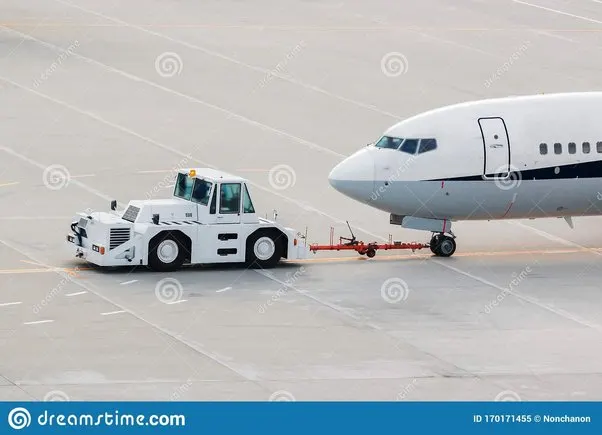
This is done for two reasons, not all planes can reverse their engines to back up and when close to the terminal reverse thrust jet blast or prop wash can throw loose objects at the terminal and passengers.
Once separated from the terminal enough to safely use its engines the plane can maneuver on the ground down the taxiway and to the runway holding area on the end.
5)
On a plane, there are 4 main forces acting on it at ALL times. These are lift, thrust, drag, and weight. These forces’ values change throughout the flight. Wind speed would put more or less drag, as fuel is used weight is reduced, you can increase and decrease engine thrust, and can change pitch. During takeoff, the forces with the highest values would be thrust and lift, as the plane speeds up and gets off the runway. During landing, the plane is lighter than takeoff and spoilers and airbreaks attempt to create drag and slow the plane.
Typical takeoff air speeds for jetliners are in the range of 240–285 km/h (130–154 kn; 149–177 mph). Light aircraft, such as a Cessna 150, take off at around 100 km/h (54 kn; 62 mph).
Braking Friction Coefficient
The braking friction coefficient μ is another important factor. It determines the course of the braking process and the landing distance of the aircraft. In the case of the tire–paved system (asphalt, concrete), the friction coefficient usually reaches values between 0.6–0.9. For unpaved surfaces such as grass turf, the friction coefficient is usually lower and may be 0.1–0.5. Factors affecting the μ value are grass length and humidity: The longer the grass and the more water it contains, the lower the friction coefficient. By definition, the friction coefficient is determined on the basis of the following relationship:
where rd is the dynamic radius of the tire.
shows an example of the braking moment, MY, course and the braking friction coefficient determined. As it can be seen, μ values oscillate around 0.22.
Rolling Resistance Coefficient
Rolling resistance is a property of the tire–surface system and depends on many factors. In automotive technology, rolling resistance is determined for a tire rolling on a drum test stand and its coefficient takes essentially constant values, on the order of 0.010–0.012. In the case of a tire interacting with a deformable surface, such as grassy surface, rolling resistance is difficult to determine, mainly due to the changing conditions of the surface, which was mentioned in the introduction. In addition, the values of the rolling resistance coefficient of the tire–grass surface system can vary by as much as an order of magnitude, taking into account, for example, changes in soil moisture. The presence of vegetation (grass, roots), as well as the size and mass of green parts of vegetation, are also significant.
The rolling resistance coefficient, kRR, is defined as the ratio of horizontal force during free turning to vertical force:
Aircraft Tyre | Design and Construction
Why are tyres important in Aircraft?
When it comes to safety, tyres are one of the most important components of aircraft. They help to absorb the shock of landing and provide cushioning. It also provides the necessary traction for braking and stopping of an aircraft.
An aircraft tyre is designed to withstand extremely heavy loads while landing, take off, taxing, and parking. The number of wheels required for aircraft increases with the weight of the aircraft, as the weight of the aeroplane needs to be distributed more evenly.
A Boeing 737NG & 737MAX uses 6 wheels, Boeing 787 uses 10 wheels, Boeing 777 uses 14 wheels and Airbus A380 uses 22 wheels. Aircraft tyres work under extreme conditions, carrying up to 340 tons and accelerating at over 250 km/hour at takeoff, in addition to enduring varied environmental stress when in flight and taxiing.
Design and Construction of Aircraft tyre
Carcass plies are used to form the tire. They are sometimes called casing plies. An aircraft tyre is constructed for the purpose it serves.
- They support the weight of an aircraft while it is on the ground.
- It also provides the necessary traction for braking and stopping of an aeroplane.
- Tyre also helps to absorb the shock of landing and provide cushioning the roughness of takeoff, roll-out, and taxi operations.
Unlike an automobile or truck tyre, it does not have to carry a load for a long period of continuous operation. However, an aircraft tyre absorbs the high impact loads of landing, and also it’s operating at high speeds for a short time when required.
Let’s go through some technical aspects of the tyre.
Retreading – Retreading is methods of restoring a worn tyre by renewing the tread area or by renewing the tread area plus one or both sidewalls. Repairs are included in the tyre retreading process.
Load Rating – Load rating is the maximum permissible load at a specified inflation pressure.
Ply Rating – Ply Rating is used to identify the maximum recommended load rating and inflation pressure for a specified tyre. It is an index of tyre strength.
Speed Rating – The speed rating is the maximum takeoff speed to which the tyre has been tested.
Skid Depth – Skid depth is the distance between the tread surface and the deepest groove as measured in the mould.
Aircraft tyres must have an approved speed and load rating and have sufficient clearance when retracted through landing gear to allow for tyre growth. Tyre growth is the increase in the size of the tyre due to centrifugal forces at high speed.
Aircraft tyres may be Tube-type or Tubeless
Tubeless tyres are more advantageous over tube-type. There is no longer the use of tube-type tyre in recent aviation. Nowadays all airliners are using tubeless tyres. Tubeless that are meant to be used without a tube has the word TUBELESS on the sidewall of the tyre.
Aircraft tyres may be Radial or Bias
Almost all airliners are using Radial tyre. Bias is an older design, and it’s mainly used for road vehicles. Radial tyres have the word RADIAL on the sidewall. Radial tires are more expensive than bias-ply tyres. Radial tires are in demand because of their lower life cycle cost and long term value.
Are aviation tyres are conductive?
Yes, Today’s tyres are conductive. Aircraft tyres are manufactured with tread rubber with conducting compounds to permit earthing of static charges.
In early days when tyres were not sufficiently conductive, aircraft used to have a conductive strip hanging down from the axle of the landing gear. Upon landing, this strip would be the first part of the aircraft to touch the earth. This discharges any static electricity accumulated on the outer surfaces of the aircraft. Now you don’t see them anymore.
What is the purpose of Chines in aviation tyre
Chines are also called deflectors. Chine tyre used on the nose wheel of aircraft, specially fuselage-mounted jet engines. It diverts runway water away from the engine inlets.
Chines are circumferential protrusions that are moulded into the sidewall of nose tyres that deflect water sideways to help reduce excess water ingestion into the engines. Tyres may have chines on one or both sides, depending on the number of nose tyres on the aircraft.
Aircraft Tyre Standards
Each tyre manufacturer produces their own designs of the tyre with different tread patterns, wear patterns, wear limits etc, and in some cases, different names for the same part of the tyre. But all tyres must meet the approved standards before being accepted by the FAA or CAA.
All commercial aircraft tyres approved under FAA Requirement Technical Standard Order (TSO) C62. A TSO is a minimum performance standard for specified materials, parts, and appliances used on civil aircraft.
Airplane Tires Don’t Explode on Landing Because They Are Pumped!

Tyre pressure:
ONE THING YOU almost never see when an airplane lands is a blowout. Think about that: Again and again, the tires hit tarmac at 170 miles per hour and bear the weight of a modest office building. And they nail it. Every time.
Aircraft tires are amazing when you think about it. The typical airliner tire can handle a 38-ton load. It can meet the ground 500 times before needing a re-tread, a refresh it can take on seven times in its life.
A Boeing 777 uses 14 tires, Airbus' A380 carries 22, and the enormous antonov demands 32. The key to their remarkable durability is maximizing the air pressure, says Lee Bartholomew, lead test engineer for Michelin Aircraft Tires. The high-flying rubber is typically inflated to 200 psi, roughly six times what you put in an automobile tire, and the tires on an F-16 fighter are pumped to 320 psi. “It's really pressurized air that's so strong,” he says.
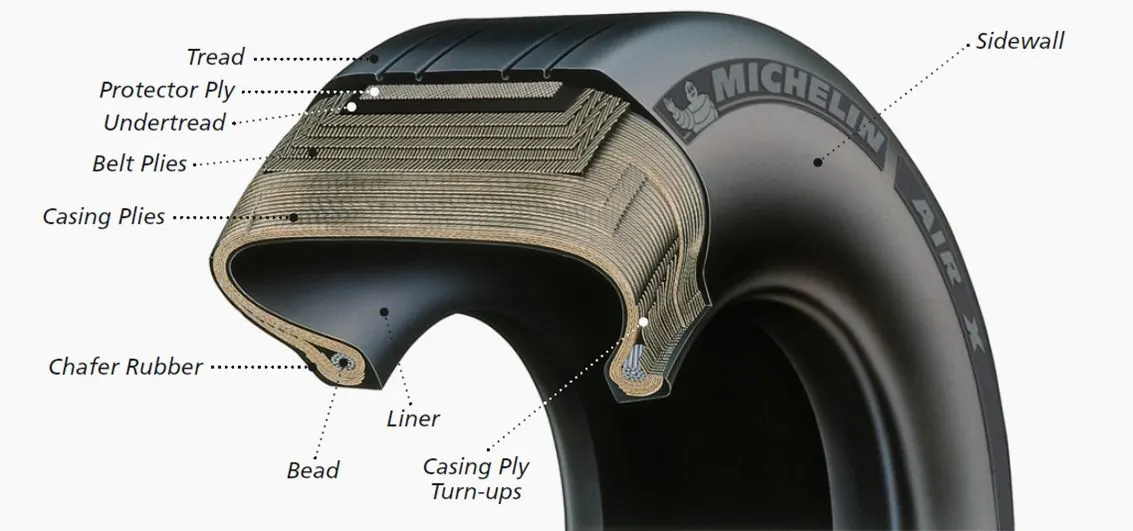
The tires themselves aren't terribly large--- a Boeing 737 rides on 27x7.75 R15 rubber. In English, that means it is 27 inches in diameter, 7.75 inches wide, and wrapped around a 15-inch wheel. The sidewalls aren't terribly thick, and the strength of the tire lies in the cords embedded below the tread, Bartholomew says. They're typically nylon, and more recently a variety known as aramid. Each layer of the casing contributes to its load bearing and air pressure resisting capabilities. Of course, tires can fail, especially when under-inflated or overloaded. Treads can come off and casings can blow out.
In the first moments after a plane touches down, the tires are skidding, not rolling. The airplane essentially drags them down the runway until their rotational velocity matches the velocity of the plane. That's why they smoke upon landing, and why Michelin uses grooves instead of the block patterns seen on your car's rubber---blocks would simply break off. (Most tire wear comes from this moment of contact---where the rubber meets the runway.) The stoutest tires are rated for speeds of up to 288 mph.
To develop a new sort of tire, or test a tweak, Michelin starts with computer simulation, followed by prototyping. Then it tests how the tires do when they're overloaded or pushed past their speed limit, on simulated takeoffs, landings, and taxiing. Like everything in aviation, tires must meet specific and demanding rules---for example, a tire must withstand four times its rated pressure for at least three seconds.
“It is almost impossible to blow out a tire by over inflating it,” Bartholomew says. “In fact, in cases where tires have been over-inflated, the wheel actually fails before the tire.”
Part B:
6)
Force required to pull an air plane.
The force to move an airplane on an absolute flat runway with no wind at constant low speed is equal to the rolling resistance between the plane and the tarmac.
The rolling resistance for the air plane can be calculated as
Fr = c mr ag (1)
where
Fr = rolling resistance (N, lbf)
c = rolling resistance coefficient
mr = rolling mass (kg, lbm)
ag = acceleration of gravity (9.81 m/s2)
Example - Force required to pull an airplane at constant low speed on tarmac
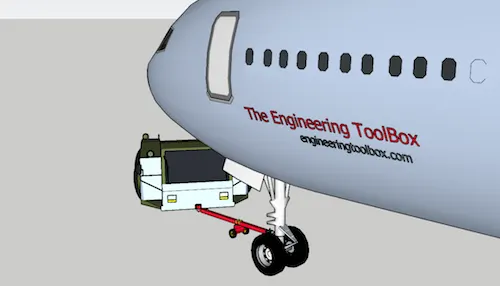
If the mass of a plane is 40000 kg and the rolling coefficient between the aircraft wheel and the tarmac is 0.02 - the force required to overcome the rolling resistance can be calculated as
Fr = 0.02 (40000 kg) (9.81 m/s2)
= 7848 N
This force can be delivered by a pulling truck or - as occasionally seen - by a number of pulling people. Enough weight for the pullers are required to create friction forces against the tarmac that equals the plane rolling resistance.
The friction force for the puller can be calculated to
Ff = μ W
= μ mf ag (2)
where
Ff = frictional force (N, lb)
μ = friction coefficient
W = weight (N, lbf)
mf = friction mass (kg)
Example - Required Mass for Pulling Truck
The friction coefficient between a pulling truck rubber wheels and dry tarmac is 0.9. Since pulling trucks are connected to air crafts nose wheels close to tarmac we simplify the calculation of required truck mass to
mf = (7848 N) / (0.9 (9.81 m/s2))
= 889 kg
B)Simulink Model:
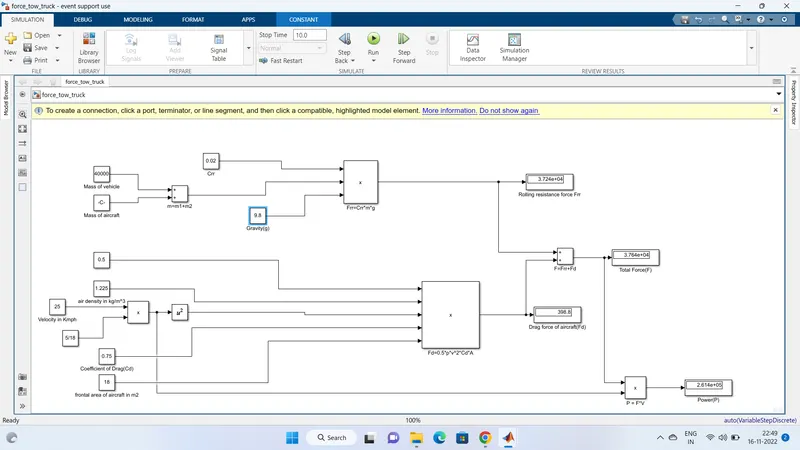
7)
A)
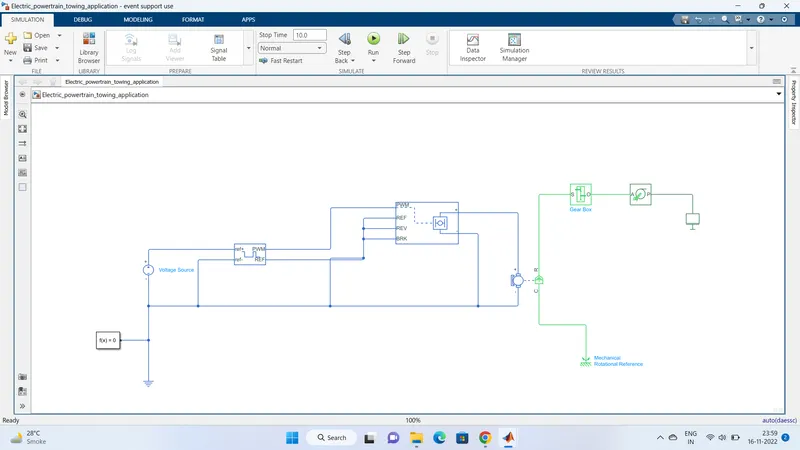
B)