Project-1: Powertrain for aircraft in runways
part A
1)
below screenshot indicates the weight of various aircrafts
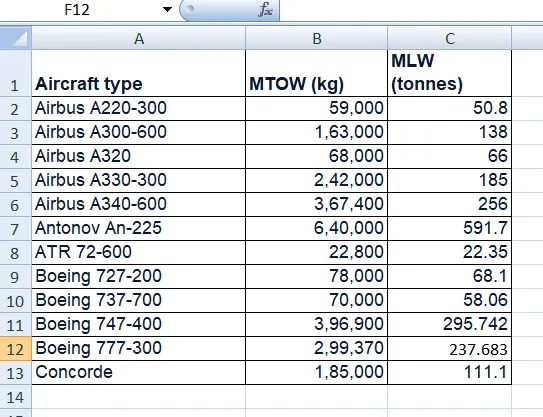
here the MTOW stands for maximum takeoff weight (this is the maximum weight at which the pilot of the aircraft is allowed to attempt to take off)
MLW stands for maximum landing weight which is the maximum weight at which the aircraft is permitted to land
The MLW must not exceed the MTOW.
2)
yes there is a difference between the ground speed and air speed
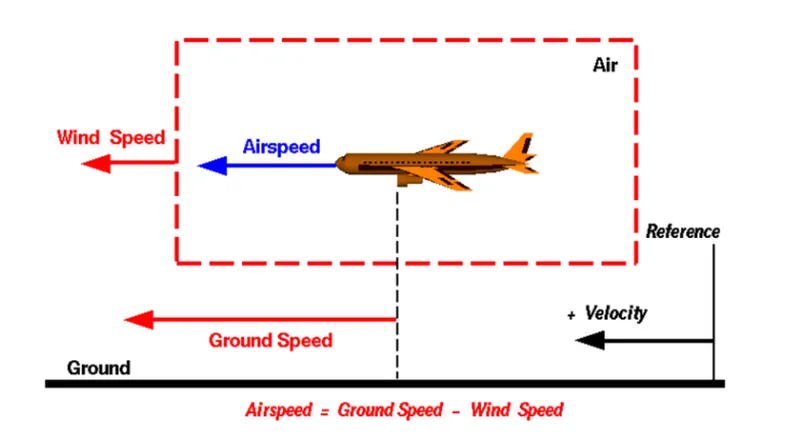
ground speed states that how fast an airplane's shadow would move across the land. If there's a strong wind pushing an aircraft, that's reflected in the ground speed
air speed means how fast an airplane is really flying strictly under its own power, which is calculated by subtracting the wind speed from the ground speed
3)
it is not recommended to use full engine power to move the aircraft in the airport because of safety reasons and to prevent hazards. Aircraft operated at full thrust could create high volumes of air spreading debris or damaging other aircraft or ground vehicles
disadvantages of using the engine power to move it on the ground at airport
*risk of injury to the ground staff personnel who may be in close proximity to the aircraft
*the pilot who is in the cockpit may not have the better view to taxi the aircraft when compared to the view of the pushback truck driver
*using aircraft engine power could also consume a considerable amount of the fuel
*aircrafts when using engine power are prone to much noise
4)
*due to the high thrust developed by jet engines it is not advisable to use the engine's power for propulsion on the ground except during taxiing but between the taxiway and the runway
*during departure or if an aricraft is parked in a hangar, aircraft engines be it jet or turboprop cannot reverse. In order to push or pull the aircraft to the taxiway, a towing tug or a tow tractor is used to move the aircraft around on the ground
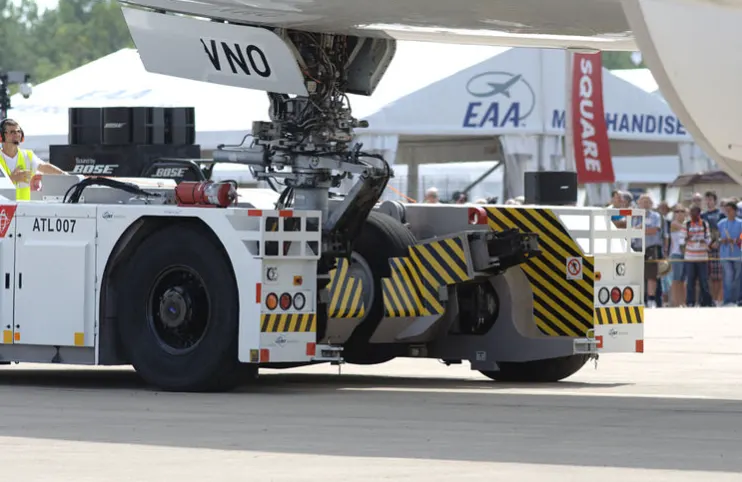
there are two types of pushback tractors
conventional tow tugs: use a tow bar to connect the tug to the nose landing gear of the aircraft
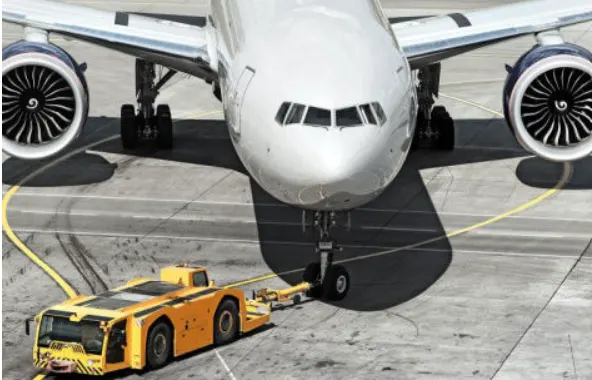
other one is towbar less tugs:this does not use a towbar, they scoop up the nose landing gear and lift it off the ground
5)
Take off power
*take off is the horizontal distance covered on the ground to get an aircraft airborne. This is done by having the aircraft travel a certain distance known as the ground run upon which the control stick is pulled to lift the aircraft's nose
*this creates an angle of attack to attain the lift co-efficient and the air acting on the wings generates lift and the aircraft then gets airborne
*in light aricrafts 100% of the power is used for take off where as for heavier aircrafts about 85% engine power is used for take off in order to prolong the engine life
formula to find the takeoff power

here the T =thrust
d= aerodynamic drag
F=rolling resistance
Tyre design
*aircraft tires may be tube-type or tubeless. they support the weight of the aircraft while it is on the ground and provide the necessary traction for braking and stopping
*the tires also help absorb the shock of landing and cushion the roughness of takeoff, rollout, and taxi operations. Aircraft tires must be carefully maintained to perform as required. They accept a variety of static and dynamic stresses and must do so dependably in a wide range of operating conditions
*aircraft tires are classified in various ways by type, ply rating, whether they are tube-type or tubeless, and whether they are bias ply tires or radials.
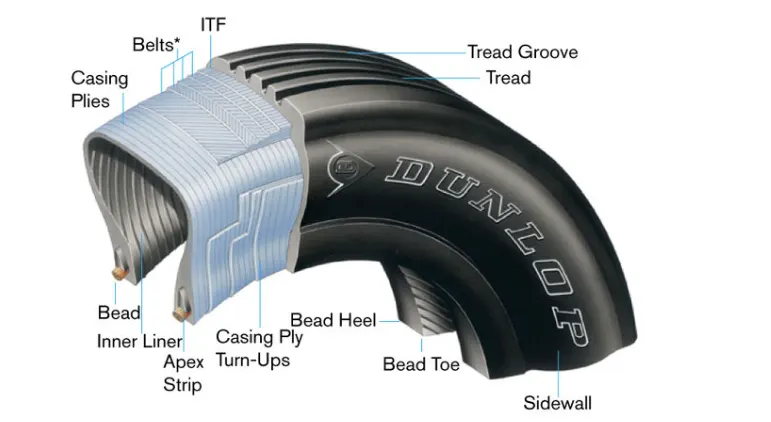
bias ply tyre:these tires are popular choices for aircraft tires because of their durability and retreadability
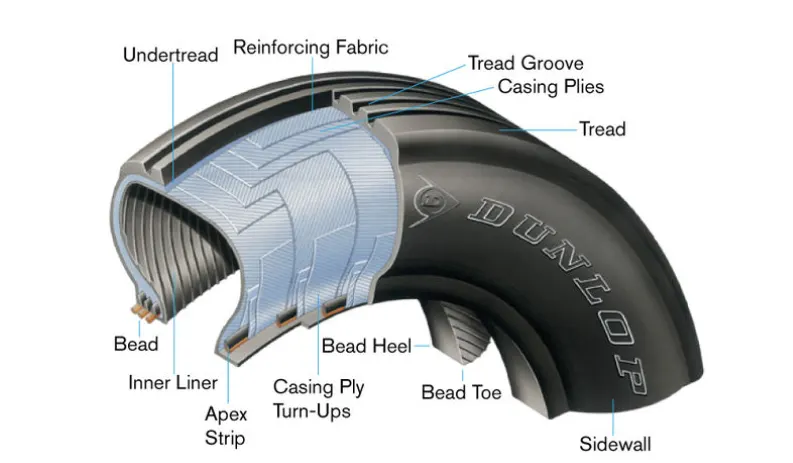
radial tyre: with their rigid belt, they provide increased landings and reduced rolling resistance. They have fewer components in their construction and are lighter than similarly sized bias ply tires
rolling resistance
*rolling resistance is the force resisting the motion when a body(wheels) rolls on a surface
*the physical effect of rolling resistance can be seen in the aircraft when aircraft takes off from the runway and while landing at the runway with the help of their wheels
it can be derived by below formula

urr = coefficient of rolling resitance
m=mass
g=acceleration due to gravity
tyre pressure
*aircraft tires are not the same as passenger car or truck tires. Unlike car tire, aircraft tires are not on the ground at all times and are only in contact with the ground during take off, landing and taxing
*during take off and landing, the tires must be able to withstand extremely heavy impact loads for short durations
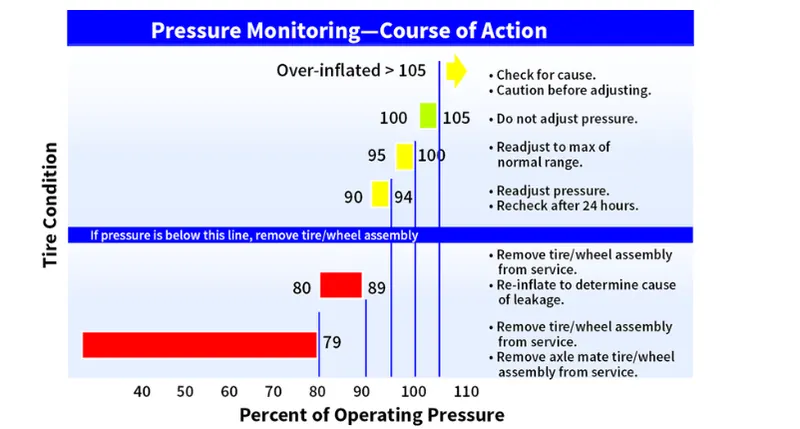
*because aircraft tires operate at such high extremes of pressure, load, and speed, their care and service is critically important. the most important action an operator can take to prevent tire-related events is to maintain proper tire inflation pressure. failure to keep aircraft tires properly inflated can lead to very serious consequences
*the most serious of these is the structural failure of the tire. If the tire operates underinflated or overdeflected/overloaded, the nylon cords which form the structure of the tire go in and out of compression as the tire rotates. This weakens the cords – much like a paperclip which is bent back and forth – until eventually the cords break. If enough cords break, the entire structure will eventually fail
brake forces
the braking devices which are used to deaccelerate the aircraft are
*wheel brakes
*spoilers
*reverse thrust
wheel brakes
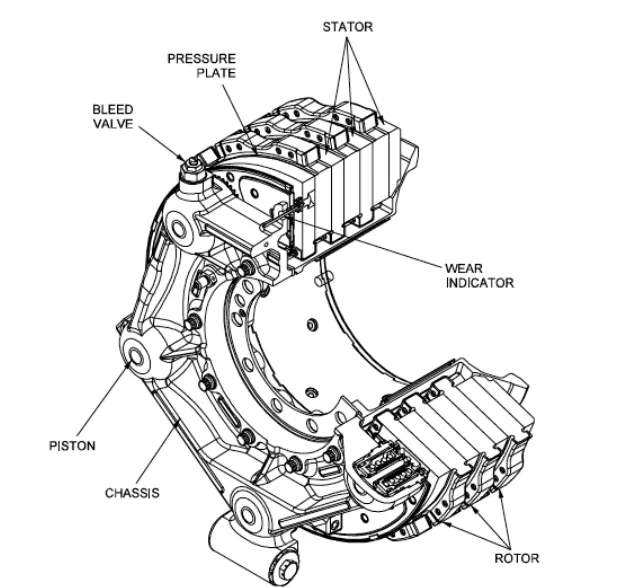
*aircraft brakes stop a moving aircraft by converting its kinetic energy to heat energy by means of friction between rotating and stationary discs located in brake assemblies in the wheels. brakes provide this critical stopping function during landings to enable airplanes to stop within the length of the runway
*the most common type of brake used on aircraft is the disc brake. Disc brakes function by exploiting friction between rotating and stationary discs inside the brake
assembly of disc brake
spoilers
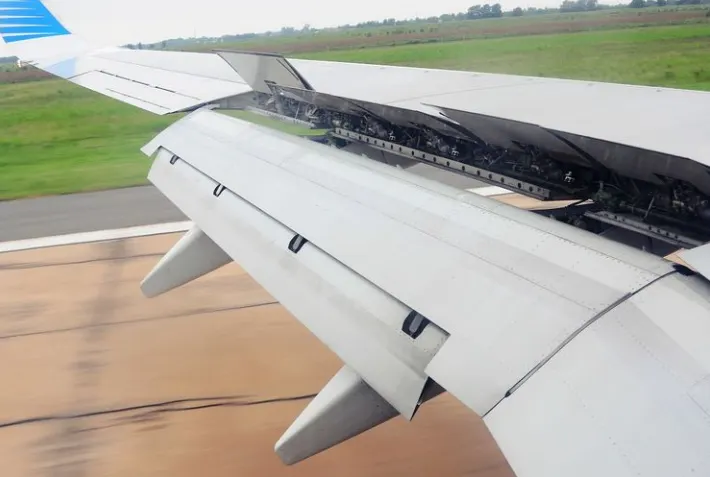
*spoilers serve several very important functions. they effectively increase the aircraft’s rate-of-descent without causing an accompanying increase in airspeed
*once the main landing gear is firmly on the runway, the pilot deploys the spoilers to their fully extended position, creating the maximum amount of drag to slow the aircraft from its touchdown speed of approximately 120-to-140 mph to a more proper braking speed of 60-80 mph. once the aircraft has decelerated to taxi speed, spoilers are stowed
reverse thrust
*reverse thrust is a control system found in many airplanes with jet engines that changes the direction in which air is exhausted from the engine
*airplanes can’t reverse direction in midair. Rather, reverse thrust is used primarily to assist pilots in decelerating their airplane prior to landing. when engaged, it changes the direction in which air comes out of the airplane’s engines, allowing the airplane to slow down in preparation of landing
Part B
6)A)
here the airbus A380 model aircraft is used for calculating the forces and the towing vehicle named mototok space 8600 is used
*rolling resistance force
F=u*M
here friction coefficeint u=0.002
weight of aircraft M=79000kgs
weight of towing vehicle M=5400kgs
rolling resistance force for aircraft is =0.002*79000=158N
rolling resistance force for towing vehicle is=0.002*5400=10.8N
*aerodynamic drag force
F=1/2*Cd*p*A*v^2
here
drag coefficient Cd=0.025
air density p=1.125
frontal area A=150 m^2
velocity V=1.5m/sec
(all these values are taken from the specs of towing vehicle)
by substituting the values in the equation we get
F=4.74N
*hill climbing force
this force can be neglected because the surface of airport runway is flat
*inertia force
F=m*(V/t)
here m=mass,v=velocity,t =towing time
towing time can be taken as 30secs
mass of aircraft is 79000/9.8=8061.22kgs
by substituting the values in the equation
we get
F=8061.22*(1.5/30)=403N
inertia force of the aircraft is 403N
now for the towing vehicle
m=5400/9.8=551kgs
inertia force=551*(1.5/30)=27.55
inertia force of the towing vehicle is 27.55N
by adding all these forces we get the total force
=158+10.8+4.74+403+27.55=604.09
total force=604.09N
to calculate the power
P=F*v
604.09*1.5=906.135W
P=906.135W
6)B)
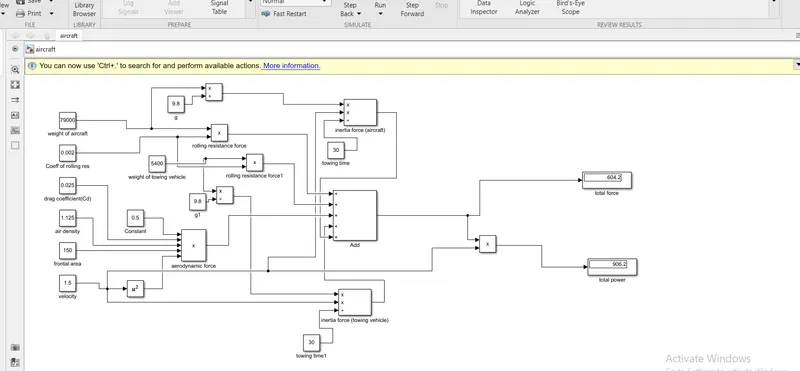
in the above screenshot basic blocks are used to implement the expressions of rolling resistance force , aerodynamic drag force and inertial forces. the forces are then added to find the net force required. the force is then multiplied with the velocity to obtain the total power required
7)A)
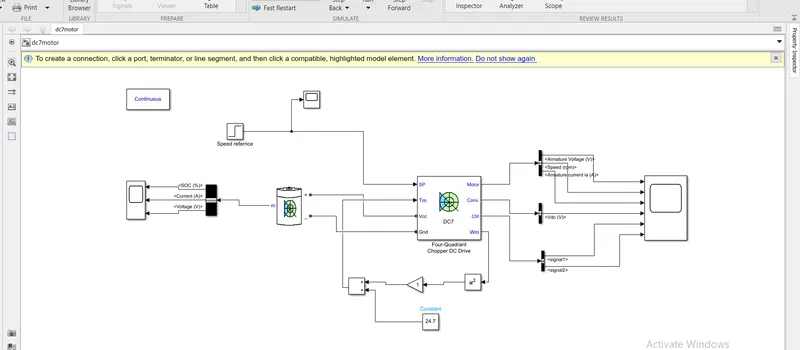
block diagram of powertrain
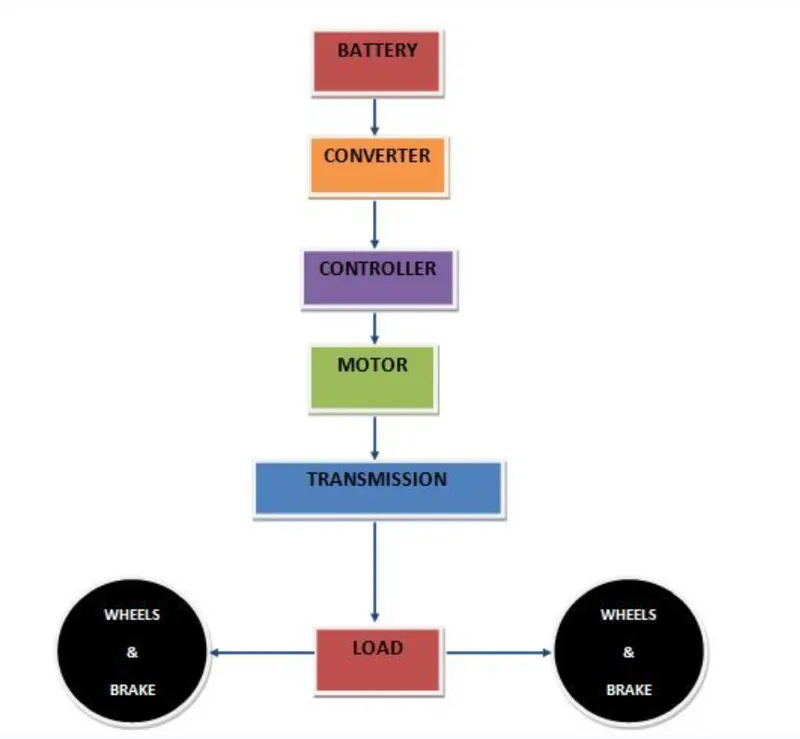
calculation of duty cycle
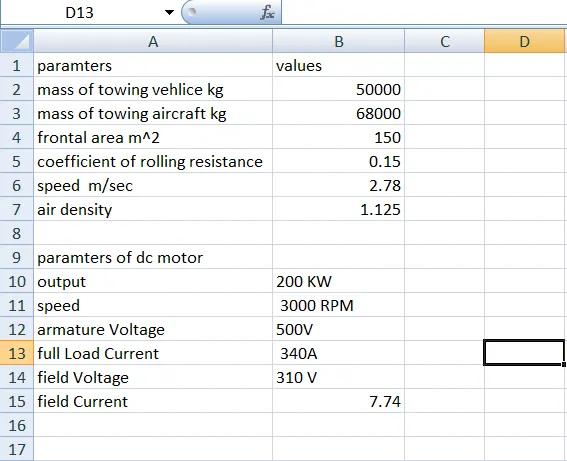
mass of the towing tug = 50,000 Kg.
mass of the aircraft = 68,000 Kg.
total mass = 118,000 Kg.
rolling resistance = 57879 N.
co-efficient of drag of the towing tug = 0.3.
co-efficient of drag of the aircraft = 0.15.
speed of the towing tug = 10 Km/hr = 2.78 m/s.
aerodynamic drag = 95.85 N.
power required to tow the aircraft = 161.17 KW
assuming the parameters of dc motor are
output = 200 KW
speed = 3000 RPM
armature Voltage = 500 V DC
full Load Current = 340A
field Voltage = 310 V DC
field Current = 7.74A
in order to calculate the duty cycle we must know the input and ouput power
output power Po=161.17Kw
input power Pi=200Kw
duty cycle d=Po/Pi
=161.17/200*100
80.58%
the duty cycle of the motor is 80.58%
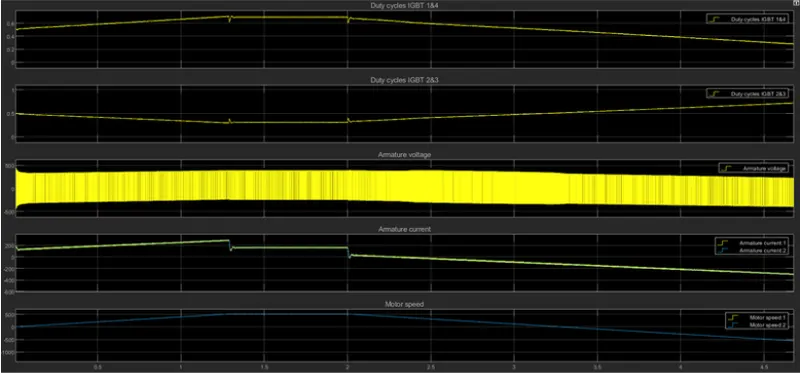
below graph is obtained from the output of the motor
7)B)