Project-1: Powertrain for aircraft in runways
EV BATCH - 16
Project-1: Powertrain for aircraft in runways
Part A
Task 1. Search and list out the total weight of various types of aircraft.
Aircraft weight is one of the many considerations in an efficient and safe operation of an aircraft. The maximum allowable weight of an aircraft is determined by the design considerations of the aircraft manufacturer. The maximum allowable aircraft weight is not constant and changes on the basis of flying altitude, air density, climate and weather conditions, type of runway, and runway length. However, the structural weight capability is determined during the aircraft design and certification.
- Manufacturer's Empty Weight (MEW): is the weight of the aircraft "as-built" and includes the weight of the structure, power plant, furnishings, installations, systems, and other equipment that are considered an integral part of an aircraft before additional operator items are added for operation.
- Zero fuel weight (ZFW): Zero fuel weight can be defined as the empty weight of the airplane, plus the weight of the unusable fuel, plus the maximum allowable payload (passengers, cargo, and crew). Expressed more clearly, any weight added to the airplane past the zero fuel weight must be in the form of fuel.
- Maximum Zero Fuel Weight (MZFW): Maximum Zero Fuel Weight is an operating limitation intended to protect the wing spar structure by limiting the concentration of load, relative to all-up weight, borne by the wings in the middle of the span.
- Operating empty weight (OEW): Empty weight (EW) is the sum of MEW, plus any standard items (SI) plus any operator items (OI), EW = MEW + SI + OI. The EW is calculated for each aircraft series and each unique configuration of an aircraft and is confirmed by periodically weighing it. The "Operating empty weight" (OEW) is the sum of the empty weight and the crew plus their baggage.
- Payload weight: Payload refers to the carrying capacity of an aircraft or launch vehicle, usually measured in terms of weight. Depending on the nature of the flight or mission, the payload of a vehicle may include cargo, passengers, flight crew, munitions, scientific instruments or experiments, or other equipment.
- Maximum Take-off Weight (MTOW): Maximum Take-off Weight of an aircraft is a value defined by the aircraft manufacturer. It is the maximum mass at which the aircraft is certified for take-off due to structural or other limits. MTOW is usually specified in units of kilograms or pounds.
- Regulated takeoff weight (RTOW): RTOW is the maximum weight in which an aircraft can take off from a particular runway under specific conditions (winds, weather, specific aircraft configuration, etc,).
- Aircraft Gross Weight: The aircraft gross weight is the total aircraft weight at any moment during the flight or ground operation
- Maximum landing weight (MLW): Maximum landing weight (MLW) is the maximum aircraft gross weight due to design or operational limitations at which an aircraft is permitted to land.
- Maximum Ramp Weight (MRW): The maximum ramp weight (also known as the maximum taxi weight (MTW)) is the maximum weight authorized for maneuvering (taxiing or towing) an aircraft on the ground as limited by aircraft strength and airworthiness requirements.
Total weight of various types of aircraft:
MTOW = Maximum take-off weight (kg), MLW = Maximum landing weight (tonnes), TOR = Take-off run (m) (SL, ISA+15°, MTOW), LR = Landing run (m) (SL, ISA+15°, MLW)
|
Aircraft name |
MTOW [kg] |
MLW [tonnes] |
TOR [m] |
LR [m] |
||
|
6,40,000 |
591.7 |
3500 |
Heavy |
Super |
||
|
5,89,670 |
3660 |
Heavy |
Super |
|||
|
Airbus A380-800 |
5,75,000 |
394 |
3100 |
1930 |
Heavy |
Super |
|
4,47,700 |
346.091 |
3100 |
1800 |
Heavy |
Heavy |
|
|
4,43,613 |
306.175 |
3100 |
Heavy |
Heavy |
||
|
4,12,770 |
295.742 |
3090 |
Heavy |
Heavy |
||
|
4,05,060 |
330 |
2520 |
900 |
Heavy |
Heavy |
|
|
3,96,900 |
295.742 |
3018 |
2179 |
Heavy |
Heavy |
|
|
Lockheed C-5 Galaxy |
3,81,000 |
288.417 |
2530 |
1494 |
Heavy |
Heavy |
|
Boeing 747-200 |
3,77,840 |
285.7 |
3338 |
2109 |
Heavy |
Heavy |
|
Boeing 747-300 |
3,77,840 |
260.32 |
3222 |
1905 |
Heavy |
Heavy |
|
Airbus A340-500 |
3,71,950 |
240 |
3050 |
2010 |
Heavy |
Heavy |
|
Airbus A340-600 |
3,67,400 |
256 |
3100 |
2100 |
Heavy |
Heavy |
|
3,47,800 |
260.816 |
2830 |
Heavy |
Heavy |
||
|
3,51,800 |
251.29 |
3100 |
Heavy |
Heavy |
||
|
3,47,450 |
223.168 |
3000 |
Heavy |
Heavy |
||
|
Boeing 747-100 |
3,40,200 |
265.3 |
Heavy |
Heavy |
||
|
3,08,000 |
233.5 |
Heavy |
Heavy |
|||
|
2,99,370 |
237.683 |
3380 |
Heavy |
Heavy |
||
|
2,97,550 |
213 |
3380 |
1550 |
Heavy |
Heavy |
|
|
Airbus A340-300 |
2,76,700 |
190 |
3000 |
1926 |
Heavy |
Heavy |
|
2,73,300 |
185 |
2990 |
1890 |
Heavy |
Heavy |
|
|
2,70,000 |
175 |
2670 |
1860 |
Heavy |
Heavy |
|
|
2,70,000 |
195.04 |
3115 |
2118 |
Heavy |
Heavy |
|
|
2,56,280 |
183 |
2990 |
1890 |
Heavy |
Heavy |
|
|
Boeing 787-9 |
2,54,000 |
192.777 |
2900 |
Heavy |
Heavy |
|
|
Boeing 787-10 |
2,54,000 |
201.849 |
Heavy |
Heavy |
||
|
Airbus A340-200 |
2,53,500 |
181 |
2990 |
Heavy |
Heavy |
|
|
2,51,000 |
191 |
3100 |
Heavy |
Heavy |
||
|
2,50,000 |
175 |
2600 |
1980 |
Heavy |
Heavy |
|
|
Airbus A330-300 |
2,42,000 |
185 |
2500 |
1750 |
Heavy |
Heavy |
|
Airbus A330-200 |
2,42,000 |
180 |
2220 |
1750 |
Heavy |
Heavy |
|
2,31,300 |
166.92 |
2636 |
Heavy |
Heavy |
||
|
Boeing 787-8 |
2,28,000 |
172.365 |
3300 |
1695 |
Heavy |
Heavy |
|
2,11,400 |
Heavy |
Heavy |
||||
|
2,08,000 |
175 |
Heavy |
Heavy |
|||
|
2,04,000 |
158.758 |
3414 |
Heavy |
Heavy |
||
|
Airbus A300-600R |
1,92,000 |
140 |
2385 |
1555 |
Heavy |
Heavy |
|
1,87,000 |
136.08 |
2713 |
1676 |
Heavy |
Heavy |
|
|
1,85,000 |
111.1 |
3440 |
2220 |
Heavy |
Heavy |
|
|
Airbus A300-600 |
1,63,000 |
138 |
2324 |
1536 |
Heavy |
Heavy |
|
1,59,000 |
136.078 |
2713 |
1676 |
Heavy |
Heavy |
|
|
Airbus A310-300 |
1,57,000 |
124 |
2290 |
1490 |
Heavy |
Heavy |
|
1,52,000 |
151.9 |
Heavy |
Heavy |
|||
|
Boeing 707-320B |
1,51,000 |
97.5 |
Heavy |
Heavy |
||
|
Boeing 707-320C |
1,51,000 |
112.1 |
Heavy |
Heavy |
||
|
1,47,000 |
Heavy |
Heavy |
||||
|
Airbus A310-200 |
1,42,000 |
123 |
1860 |
1480 |
Heavy |
Heavy |
|
1,41,000 |
122 |
980 |
770 |
Heavy |
Heavy |
|
|
1,40,000 |
Heavy |
Heavy |
||||
|
1,25,000 |
Medium |
Large |
||||
|
1,24,000 |
101.6 |
2550 |
1750 |
Medium |
Large |
|
|
Boeing 707-120B |
1,17,000 |
86.3 |
Medium |
Large |
||
|
1,16,000 |
89.9 |
2347 |
1555 |
Medium |
Large |
|
|
Boeing 720B |
1,06,000 |
79.5 |
Medium |
Large |
||
|
Boeing 720 |
1,04,000 |
79.5 |
Medium |
Large |
||
|
1,04,000 |
80 |
Medium |
Large |
|||
|
1,04,000 |
87.5 |
2250 |
Medium |
Large |
||
|
87,500 |
Medium |
Large |
||||
|
85,000 |
66.36 |
2500 |
1704 |
Medium |
Large |
|
|
85,000 |
71.35 |
2804 |
1829 |
Medium |
Large |
|
|
Boeing 727-200 Adv |
84,000 |
70.1 |
Medium |
Large |
||
|
Airbus A321-100 |
83,000 |
77.8 |
2200 |
1540 |
Medium |
Large |
|
79,000 |
65.32 |
2308 |
1634 |
Medium |
Large |
|
|
Boeing 727-200 |
78,000 |
68.1 |
Medium |
Large |
||
|
73,000 |
63.28 |
Medium |
Large |
|||
|
Boeing 727-100 |
72,500 |
62.4 |
Medium |
Large |
||
|
Boeing 727-100C |
72,500 |
62.4 |
Medium |
Large |
||
|
71,000 |
64.41 |
2165 |
1520 |
Medium |
Large |
|
|
70,700 |
Medium |
Large |
||||
|
70,000 |
58.06 |
1921 |
1415 |
Medium |
Large |
|
|
Airbus A320-100 |
68,000 |
66 |
1955 |
1490 |
Medium |
Large |
|
68,000 |
54.9 |
2540 |
1540 |
Medium |
Large |
|
|
68,000 |
Medium |
Large |
||||
|
67,000 |
Medium |
Large |
||||
|
66,000 |
54.66 |
1796 |
1340 |
Medium |
Large |
|
|
65,000 |
57.61 |
1890 |
1494 |
Medium |
Large |
|
|
65,000 |
Medium |
Large |
||||
|
Airbus A319 |
64,000 |
62.5 |
1850 |
1470 |
Medium |
Large |
|
63,000 |
51.7 |
1939 |
1396 |
Medium |
Large |
|
|
60,000 |
49.9 |
1832 |
1360 |
Medium |
Large |
|
|
59,000 |
50.8 |
1463 |
1356 |
Medium |
Large |
|
|
Airbus A318 |
59,000 |
57.5 |
1375 |
1340 |
Medium |
Large |
|
55,000 |
47.174 |
1950 |
Medium |
Large |
||
|
55,000 |
Medium |
Large |
||||
|
54,000 |
Medium |
Large |
||||
|
50,000 |
46.265 |
1950 |
Medium |
Large |
||
|
50,000 |
Medium |
Large |
||||
|
48,600 |
Medium |
Large |
||||
|
48,500 |
Medium |
Large |
||||
|
Embraer 190 |
48,000 |
43 |
2056 |
1323 |
Medium |
Large |
|
46,000 |
Medium |
Large |
||||
|
46,000 |
39.95 |
1621 |
1350 |
Medium |
Large |
|
|
44,000 |
Medium |
Large |
||||
|
42,000 |
36.74 |
Medium |
Large |
|||
|
39,000 |
Medium |
Large |
||||
|
Embraer 175 |
37,500 |
32.8 |
2244 |
1304 |
Medium |
Large |
|
Bombardier CRJ900 |
36,500 |
33.345 |
1778 |
1596 |
Medium |
Large |
|
Embraer 170 |
36,000 |
32.8 |
1644 |
1274 |
Medium |
Large |
|
33,000 |
30.39 |
1564 |
1478 |
Medium |
Large |
|
|
33,000 |
Medium |
Large |
||||
|
30,400 |
Medium |
Large |
||||
|
28,000 |
28.01 |
1219 |
1295 |
Medium |
Large |
|
|
23,000 |
21.319 |
1918 |
1479 |
Medium |
Large |
|
|
22,800 |
22.35 |
1333 |
914 |
Medium |
Large |
|
|
22,800 |
21.5 |
1300 |
Medium |
Large |
||
|
22,000 |
19.3 |
2270 |
1380 |
Medium |
Large |
|
|
18,600 |
18.3 |
1165 |
1126 |
Medium |
Small |
|
|
13,150 |
12.93 |
1300 |
1030 |
Medium |
Small |
|
|
11,500 |
11.25 |
1560 |
1380 |
Medium |
Small |
|
|
10,890 |
10.57 |
1493 |
826 |
Medium |
Small |
|
|
Learjet 75 |
9,752 |
8.709 |
1353 |
811 |
Medium |
Small |
|
Pilatus PC-24 |
8,300 |
7.665 |
893 |
724 |
Medium |
Small |
|
Embraer Phenom 300 |
8,150 |
7.65 |
956 |
677 |
Medium |
Small |
|
7,765 |
7.605 |
1036 |
853 |
Medium |
Small |
|
|
Cessna Citation CJ4 |
7,761 |
7.103 |
1039 |
896 |
Medium |
Small |
|
7,000 |
Medium |
Small |
||||
|
4,800 |
4.43 |
975 |
741 |
Light |
Small |
Task 2. Is there any difference between ground speed and airspeed?
Wind speed: Wind speed, or wind flow speed, is a fundamental atmospheric quantity caused by air moving from high to low pressure, usually due to changes in temperature. Wind speed is now commonly measured with an anemometer.
Ground speed: Ground speed is the aircraft’s speed relative to the ground. It is the horizontal speed of the aircraft rather than vertical speed i.e, an aircraft climbing completely vertically would have a ground speed of zero.
Airspeed: Airspeed is simply the speed at which an aircraft is moving relative to the air it is flying in or the speed at which the air is flowing around the aircraft’s wings.
Airspeed = Ground speed - Wind speed
Difference between ground speed and airspeed: Airspeed is what determines whether there is enough airflow around an aircraft to make it fly, and ground speed is what determines how fast an aircraft will get to its destination.
Task 4. How an aircraft is pushed to the runway when it's ready to take off?
Runway: A runway is a defined rectangular area on a land aerodrome prepared for the landing and takeoff of aircraft
Ramp or apron: A defined area on an airport intended to accommodate aircraft for purposes of loading or unloading passengers or cargo, refueling, parking, or maintenance.
Taxiway: A taxiway is a path for aircraft at an airport connecting runways with aprons, hangars, terminals, and other facilities.
Taxiing: Taxiing is the movement of an aircraft on the ground, under its own power, in contrast to towing or pushback where the aircraft is moved by a tug or a pushback truck.
Pushback tug/tractor: A pushback is an airport procedure during which an aircraft is pushed backward away from its parking position, usually at an airport gate by an external power. Pushbacks are carried out by special, low-profile vehicles called pushback tractors or tugs. An aircraft pushback tractor is a powerful vehicle used for towing an aircraft on the ground. It is easily identifiable due to its low-profile design and large wheel size.
- After all servicing activities are finished, the aircraft needs to get back on the runway to take off, however, it first needs to reverse itself from the aircraft stand.
- This is where the pushback tractor comes in. A towing hook/hydraulic lift at the front landing gear attaches to the aircraft and the other end to the pushback tractor.
- The driver receives a go-ahead signal from the Pilot and begins the pushback operation. It pushes the aircraft back and also steers it so that the aircraft ends up incorrect position on the taxiway
- There are 2 types of pushback tractors:
- Conventional/Tow bar tug: Conventional tugs use tow bars to connect to the nose wheel of the aircraft. The tow bar can be connected at the front or the rear of the tractor, depending on whether the aircraft will be pushed or pulled. The towbar has a shear pin. The shear pin prevents the aircraft from being mishandled by the tug—when overstressed the shear pin will snap, disconnecting the bar from the nose gear to prevent damage to the aircraft and tug.
- TBL or Towbarless tug: Towbarless tractors do not use a towbar. They scoop up the nose wheel and lift it off the ground, allowing the tug to maneuver the aircraft. This allows for better control of the aircraft, and higher speeds, without anyone in the cockpit
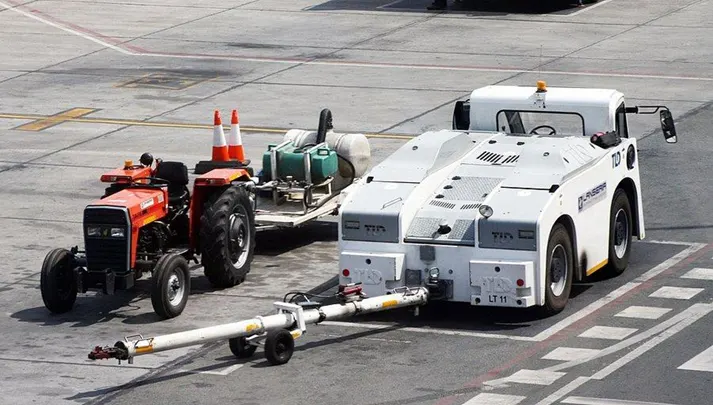
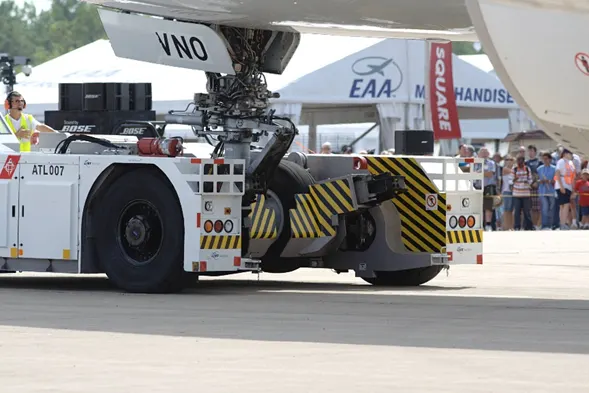
Conventional Tug Towbarless tug
A pushback tractor is used for:
- Maintenance hangar movement
- Aircraft movement between parking bays
- Repositioning of aircraft centerline
- Push the aircraft nosewheel back to its stop position during takeoff
Task 3. Why is it not recommended to use aircraft engine power to move it on the ground at the Airport?
Powerback: Powerback is used by aircraft to move backward on the ground using the power of their engines along with the aircraft's thrust reversal. It is done by a technique called Thrust reversal, a procedure by which the thrust generated by the engine is directed in the opposite direction.
Usually, Turboprop aircraft, Military aircraft, and seaplanes tend to use powerback as a means of reversing.
Powerback or thrust reversal is not recommended to use aircraft engine power to move it on the ground at the Airport because:
- High-mounted engines obstruct the backside visibility of the aircraft and have a risk of collision and jet blast.
- Low-mounted engines are very close to the ground and thrust reversal forms a vortex that sucks in debris like gravel or metallic objects which might damage the aircraft engine, surrounding buildings, or even the people and the crew.
- There is a risk of tail striping and structure damage while braking during a power back
- There is also a higher fuel consumption in powerback because the almost full thrust is used to generate enough power for reverse movement
Task 5. Learn about take-off power, tire design, rolling resistance, tire pressure, and brake forces when landing.
Take-off power:
- The takeoff in any aircraft occurs when the airplane leaves the ground and becomes airborne.
- The fundamental forces one needs to consider during the takeoff are: Thrust, drag, weight, and lift.
- The take-off and initial climb are two of the most critical safety phases of the aircraft flight. The combined analysis of both phases is referred to as the aircraft take-off performance.
- The takeoff performance can be given by
dV/dt = (T-D-F)/m
where, dV/dt = aircraft acceleration
T = Propulsive thrust
D = Aerodynamic drag
F = rolling resistance
m = mass of the aircraft
Tire design:
- An aircraft tire is designed to withstand extremely heavy loads while landing, and high temperatures due to dragging, take off, taxiing, and parking.
- Aircraft tires do not have to carry a load for a long period of continuous operation. However, an aircraft tire absorbs the high impact loads of landing, and also it’s operating at high speeds for a short time when required.
- Aircraft tires are conductive. Aircraft tires are manufactured with tread rubber with conducting compounds to permit earthing of static charges.
- Chines are also called deflectors. Chine tires are used on the nose wheel of aircraft, specially fuselage-mounted jet engines. It diverts runway water away from the engine inlets.
- An aircraft tire serves the following purposes:
- They support the weight of an aircraft while it is on the ground.
- It also provides the necessary traction for braking and stopping an airplane.
- Tyre also helps to absorb the shock of landing and provides cushioning for the roughness of takeoff, roll-out, and taxi operations.
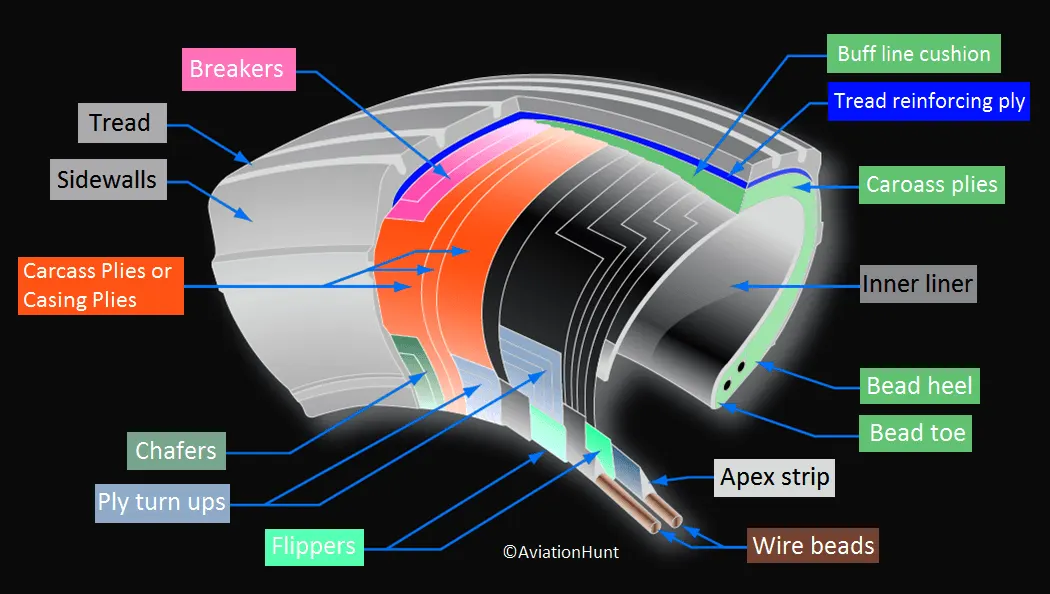
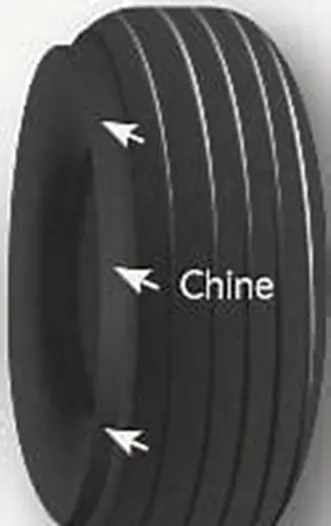
Technical aspects of the tire.
Retreading:– Retreading is a method of restoring a worn tire by renewing the tread area or by renewing the tread area plus one or both sidewalls. Repairs are included in the tire retreading process.
Load Rating:– Load rating is the maximum permissible load at a specified inflation pressure.
Ply Rating:– Ply Rating is used to identify the maximum recommended load rating and inflation pressure for a specified tire. It is an index of tire strength.
Speed Rating:– The speed rating is the maximum takeoff speed to which the tire has been tested.
Skid Depth:– Skid depth is the distance between the tread surface and the deepest groove as measured in the mould.
Aircraft tire pressure:
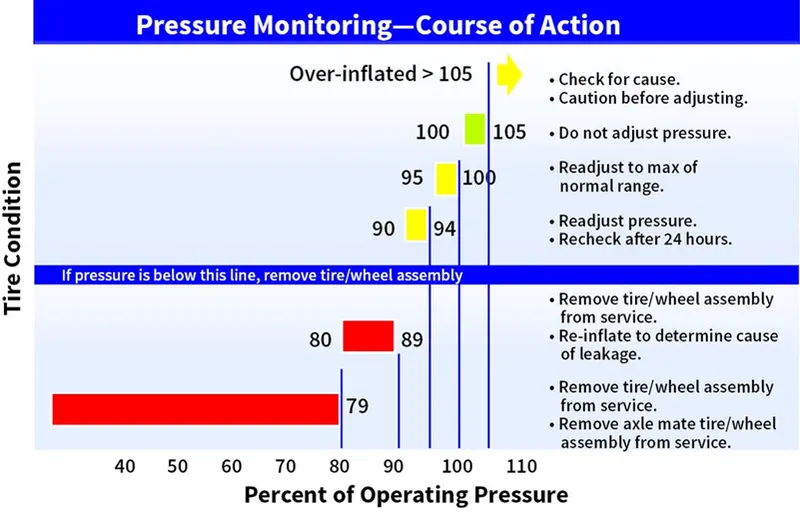
- Making sure that the aircraft tires are properly inflated is a crucial part of preflight and routine service checks which can go a long way to maximizing tire utilization and minimizing risks to safe operations.
- The target pressure range of aircraft tires is between 100 and 105 percent of the operating pressure.
- The passenger car and truck tires even though they are of the same size, are able to operate continuously because they reach thermal equilibrium while aircraft tires do not.
- An aircraft tire that taxis continuously at rated load and 40 mph will continue to heat up until the tire fails. The failure to reach thermal equilibrium is a consequence of the high deflections at which aircraft tires operate.
- High inflation pressure and high deflection rates – 2.5 times greater than a car tire – allow relatively small tires to support the high loads of an aircraft.
Rolling resistance:
- Rolling resistance is the force resisting the motion when a body such as a tire or wheel rolls on a surface. Considering an aircraft tire it is the effort to keep the tire rolling or maintain a constant speed over a surface.
- It is caused by the non-elastic effects that are Hysterisis loss and plastic deformation.
- Rolling resistance can be given by,Frr = Crr * N
or Frr = Crr * (mg)
where, Frr = Rolling resistance (N)
Crr = Coefficient of rolling resistance
m = mass of the aircarft (kg)
g = acceleration due to gravity (9.8m/s^2)
Brake forces when landing:
Braking in an aircraft: Bringing an aircraft to stop using braking requires an immense amount of brake force. The huge kinetic energy of the aircraft is converted into heat energy in the brake discs and tires. Aircraft equips ABS brakes and also supports automatic braking.
- Disc brakes in the landing gears are used as the primary braking equipment in airliners which might be pneumatically or hydraulic controlled.
- Huge aircraft or jumbo jets use thrust reversers for braking and reduce braking distance
- Flaps and rudders in the wings increase the air drag and help in efficient braking and reduce the drag of tires
- Military aircraft and several passenger aircraft may use a drogue parachute for quick braking.
- Fighter jets that don't equip board brakes use a tailhook while landing on the ground or even on an aircraft carrier which brings them to a sudden stop.
Part B:
Task 6.1:
With necessary assumptions, calculate the force and power required to push/pull an aircraft by a towing vehicle.
We consider the pushback tug TMX 150-9 and aircraft Airbus A-319
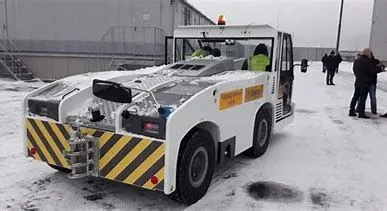
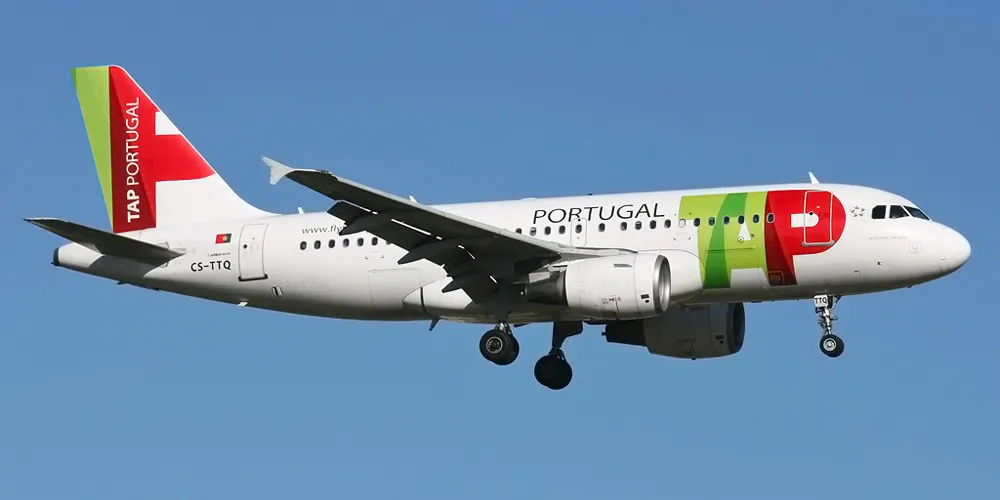
The TMX series aircraft tractors are designed to perform pushback and towing operations on narrow, medium, and widebody aircraft. TLD TMX tractors have the ability to move aircraft up to the Boeing 787 and Airbus A350.
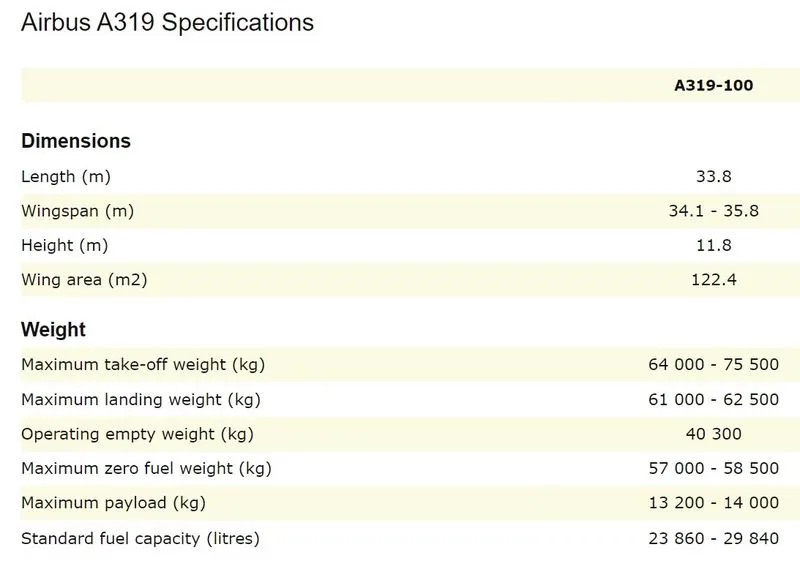
TMX-150-9 specifications:
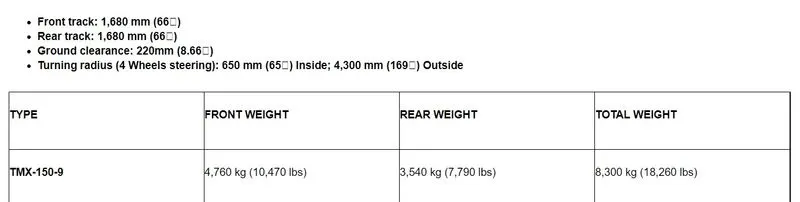
Given data:
Mass of the tug: 8300 kg
Mass of the aircraft : 75500 kg
Length of the aircraft: 33.84 m
Tug velocity (V) : 25 kmph = 6.95 m/s
Aircraft height : 11.76 m
Air density : 1.225 kg/m^3
Drag coefficient (Cd) = 0.75
Coefficient of rolling resistance: 0.013
Gravitational constant (g) = 9.8 m/s^2
Rolling resistance (Frr)
Frr = μrr * m*g
m (kg) = (mass of tug + aircraft mass) = (8300 + 75500) = 83800 kg
Frr = 0.013 * 83800 * 9.8
= 10676.12 N
Aerodynamic drag (Fad)
Fad = 0.5 * ρ * Cd * V^2
Frontal area, A = l * h = 33.84 * 11.76 = 392.544 m^2
Fad = 0.5 * 1.224 * 0.95 * 392.544 * 6.95 ^2
= 11032.84 N
Total force for push or pull of the aircraft (F)
F = Frr + Fad
= 10676.12 + 11032.84 = 21708.96 N
Power required = F * V = 21708.96 * 6.95
= 150877.27 W
= 150.87 kW.
Task 6.2:
Develop the model for the calculated force and power using Simulink.
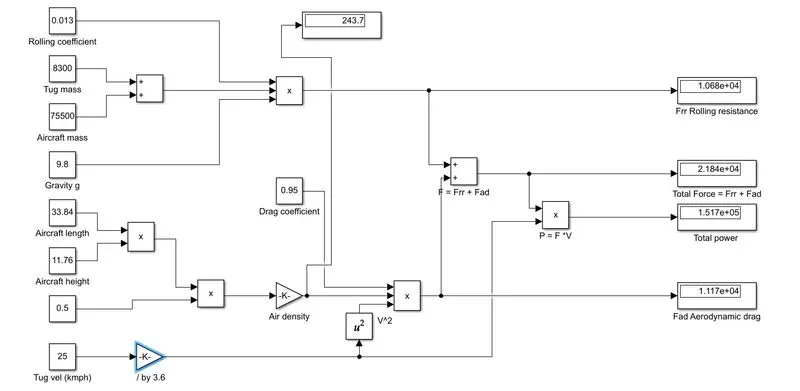
Simulink blocks used:
- Constant
- Add
- Product
- Math function
- Gain
- Display
- The constant blocks are used to input the values for Rolling coefficient, Tug mass, Aircraft mass, Gravity constant, Aircraft length and height, Tug velocity, and Drag coefficient.
- The add block is used to sum up the total mass, and total force
- Gain blocks are used for converting velocity to m/s and to input the air density
- The math function block is used to find the square of the velocity
- Product block is used for all the multiplication operations in the formulae
- Display blocks are used to read out, Rolling resistance, Total force, Total power, Aerodynamic drag
Task 7.1:
Design an electric powertrain with the type of motor, its power rating, and energy requirement to fulfill aircraft towing applications in Simulink. Estimate the duty cycle range to control the aircraft speed from zero to highest. Make all required assumptions. Prepare a table of assumed parameters. Draw a block diagram of the powertrain. (Hint: DC7 Block)
Powertrain:
- The powertrain is the mechanism that transmits the drive from the engine/motor of a vehicle to its axle.
- Power is generated by the engine/motor and transmitted to the driveshaft.
- Other internal parts and components of the engine, differentials, axles, emissions control, exhaust, engine cooling system, etc are also included in the powertrain. An EV powertrain has 60% fewer components than the powertrain of an ICE vehicle
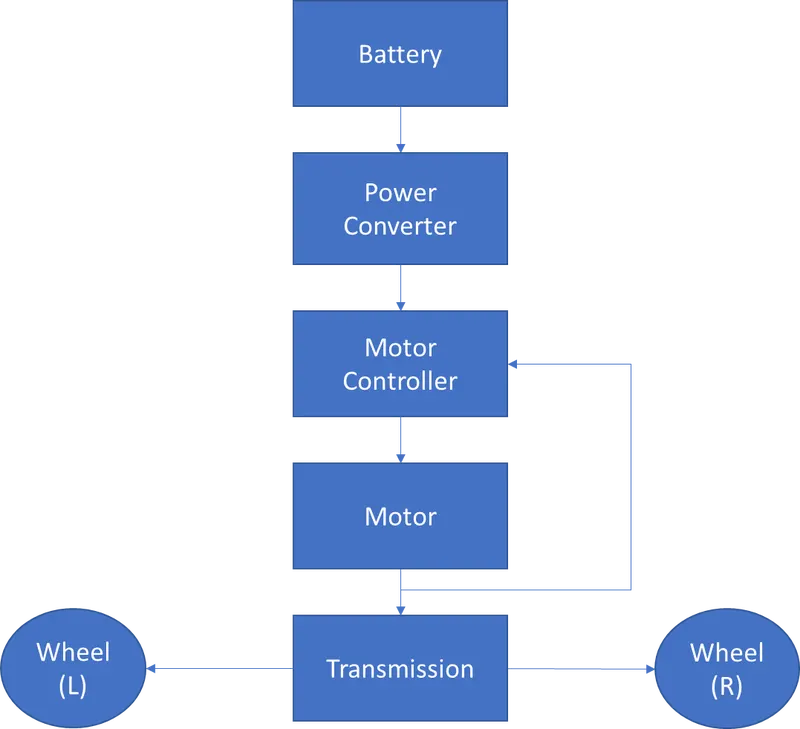
EV Powertrain block diagram
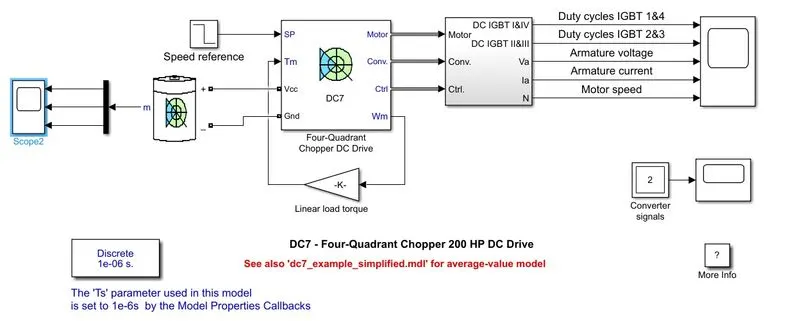
Simulink model:
- A battery is used as the power source and the 4 quadrant DC 7 chopper is used as the motor controller.
- The output plots for Duty cycles, SOC%, Voltage, and current are plotted.
- The simulation time is set as 20 seconds for plotting
Calculation:
Given data and assumptions
Model : TMX-150-9
Tyre specification: 315/70R15
Considered aircraft model : Airbus A-319
Force required to pull/push the aircraft: 21708.91 N
Power required: 150.87 kW
Tyre radius , R = 15 inches = 0.381 m
Gear ratio : 8
Transmission efficiency : μt = 80%
Motor efficiency: μm = 92%
Duration of operation: 15 mins = 0.25 hrs
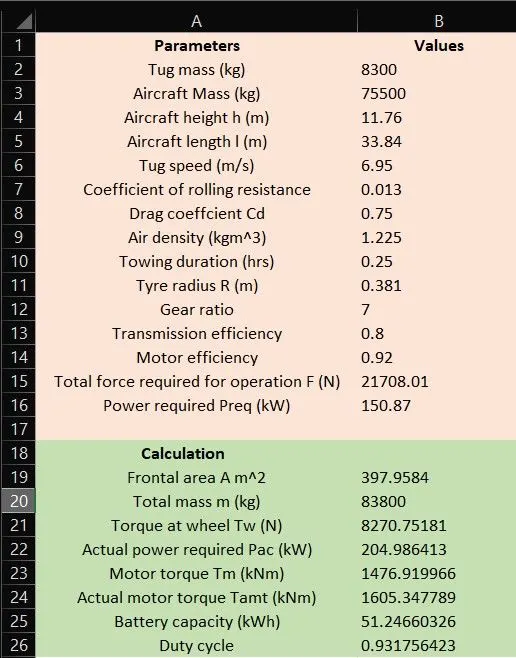
Torque available at wheel, Tw = F * R => 21708.91 * 0.381 = 8271.09 Nm
Actual power required, Pact = Preq/(μt*μm) = 150.87/0.736 = 204.98 kW
Motor torque required, Tm = Tw/(Gear ratio * μt) = 8271.09 /5.6 = 1.47 kNm
Actual motor torque, Tact = Tm/μm = 1.47/0.92 = 1.59kNm
Battery capacity required = Pact * Duration = 204.98 * 0.25 = 51.24 kWh
Duty cycle = Pact/Input power = 204.98/220 = 0.931
Output plots:
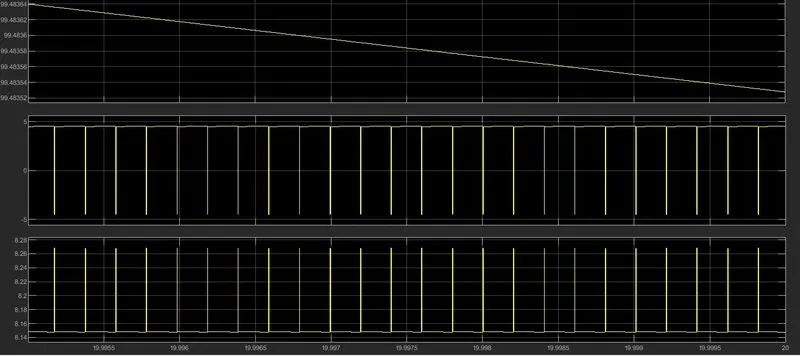
Plot for SOC %, Voltage and curent
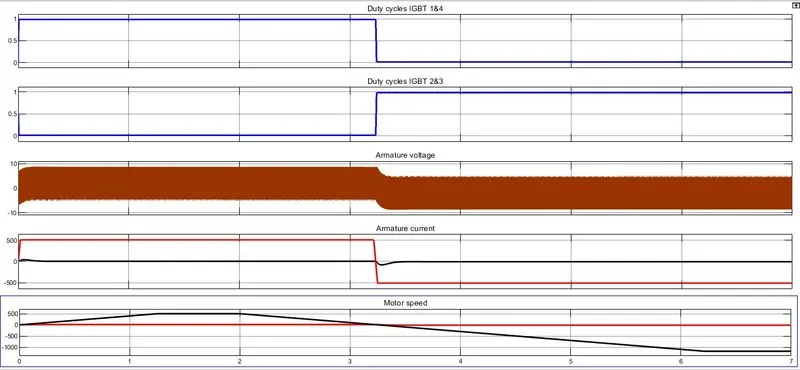
Plot for Duty cycles, armature current and voltage, and motor speed.
Task 7.2:
Design the parameters in an excel sheet.