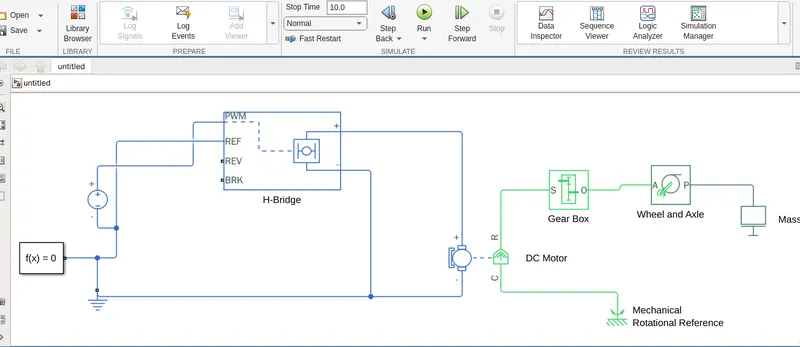
Project-1: Powertrain for aircraft in runways
PART-A
ANSWER-1: -Aircraft Gross Weight: -
As per federal aviation department, aircraft gross weight is defined as the total weight at any moment during flight or ground operation.
-The aircraft gross weight dicreases during flight due and oil consumption.ln some case gross weight (aircraft) may vary due to drop in payload or inflight ref ueling,where as on the other hand when the brakes are released the gross weight will be equal to take off weight.
-During flight an aircraft gross weight will be refered as inflight weight.
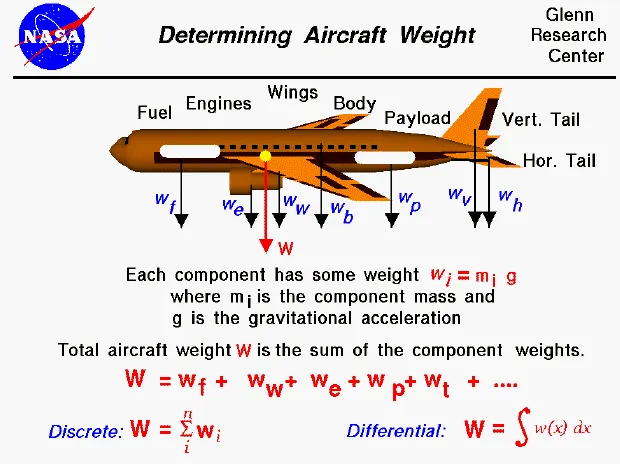
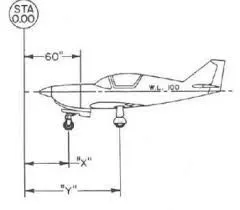
Types of aircraft weights are the following:
1)Manufatures empty weight: -It includes the weight of aircraft of the entire flight with its intergal working parts,but excludes baggage ,passenger and fuels.
2)zero fuel weight: -It includes total weight of aeroplanes including unuseable fuels but excludes total weight of useable fuel at board.
3)Payload: -It is load carrying capacity of an aircraft which includes passenger, ,cargo and fuels,But if it is in the case of cargo flight it determines the total load of logistics weight of the container which it needs to transport.
4)Maximum take off weight: -This is the maximum weight at which the aircraft would be made to takeoff .
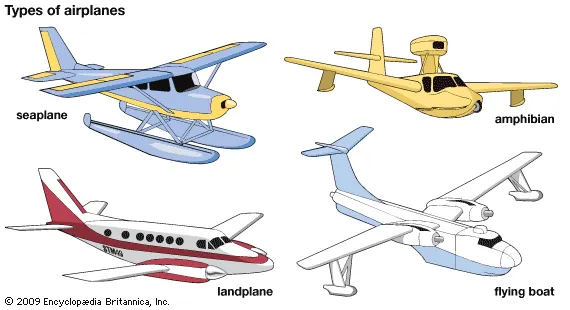
5)Regulated take off weight: -Depending on different factors (flap setting,altitude,lenght of runway),RTOW varies for each take off,but can never be high for MTOW. 6)Maximum landing weight: -It is maximum weight at which an aircraft is permitted to land. 7)Maximum Ramp weight: -It is the maximum weight used for manuevering (towing) aircraft on the ground. -Listed below are the types of aircraft with its weight:
Category MLW(tons) MTOW(kg)
______________________________________
Boeing 747-81 447,700 346.091
Airbus A380-800 575,000 394
Concorde 185,000 111.1
Antonov An225 640,000 91.7
Vickers VCIO 152,000 151.9
Fokker 100 46,000 39.95
Embraer 17509) 37,500 32.8
Avro RJ-85 42000 36.7
Tupolev Tu-154M 104,000 80
Boeing 777-300 299,370 237.683
________________________________________________________________________________________________________________________________________________________________________________________________________________________________
ANSWER-2
*Ground speed:
-They are the airplane speed which is related to the ground.
-They are the speed which determines how fast the airplane will reach the detination.
-They are the calculated by summing up the airspeed and windspeed.
*Air speed:
-It refers to the speed which is relative to air it is flying in.
-They determine whether there is enough airflow around an aircraft to make it lift.
-They are independent of ground speed.
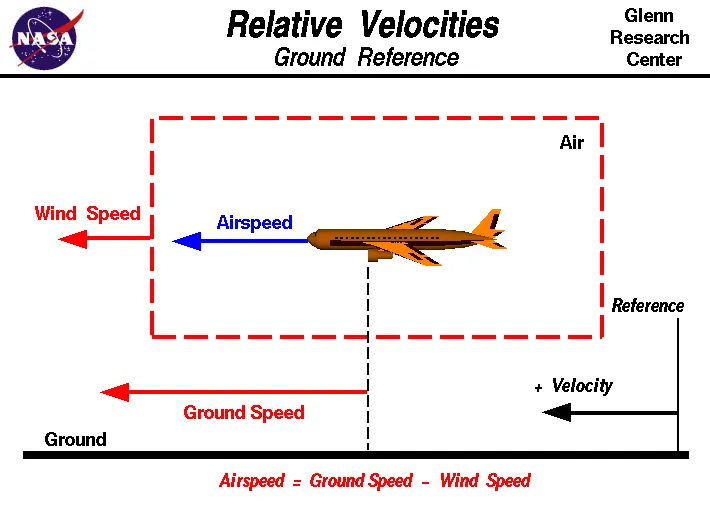
-The above two daigram relative velocity with respect to aircraft reference and ground reference.
-Here wind speed is the vector difference between ground and air speed.On a perfect still day the wind speed is zero and it is equal to the ground speed.
-If the measured air speed is greater than the observed ground speed the wind speed becomes positive.
__________________________________________________________________________________________________________________________________________________________________________________________________________________________________
ANSWER-3
Although many aircraft are capable of moving themselves backwards on the ground using reverse thrust (a procedure referred to as a powerback), the resulting jet prop might cause damage to the terminal building or equipment. Engines close to the ground may also blow sand and debris forward and then suck them into the engine, causing damage to the engine.
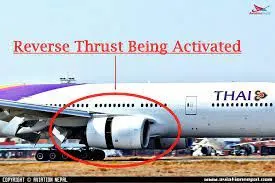
A pushback is therefore the preferred method to move the aircraft away from the gate.Although most aircraft are capable of moving themselves backwards on the ground using reverse thrust, a procedure called as a powerbacic, it is not typically done due to the following reasons:
• The jet blast from the engines can damage the terminal building and nearby equipment. It can even throw away people standing nearby. • Engines can blow sand and debris.
• Engines can suck in sand and debris which can cause serious damage to the engine.
• It is easier for the truck driver to see the surroundings better than the pilot sitting in the cockpit with limited windows.
• The pushback truck driver knows the airport better than the pilot.
• The plane engines are very loud. This noise can add up substantially when multiple planes are moving around the airport It won't be a pleasant experience for people sitting inside the terminal, as most people don't even like the sound of powerful motor-bikes.
• It saves fuel. Virgin Atlantic had proposed a new system in which the pushback trucks will push the plane all the way to the runway to save fuel and reduce impact on nearby environment
_________________________________________________________________________________________________________________________________________________________________________________________________________________________________
ANSWER-4
How Planes Work
Airplanes fly when the movement of air across their wings creates an upward force on the wings (and thus the rest of the plane) that is greater than the force of gravity pulling the plane toward the earth. The physics behind this phenomenon was first described by Daniel Bernoulli, an 18th century Swiss mathematician and scientist who studied the movement of fluids. Bernoulli discovered that the pressure exerted by a moving fluid is inversely proportional to the speed of the fluid. In other words, fluid pressure decreases as fluid speed increases and vice versa.
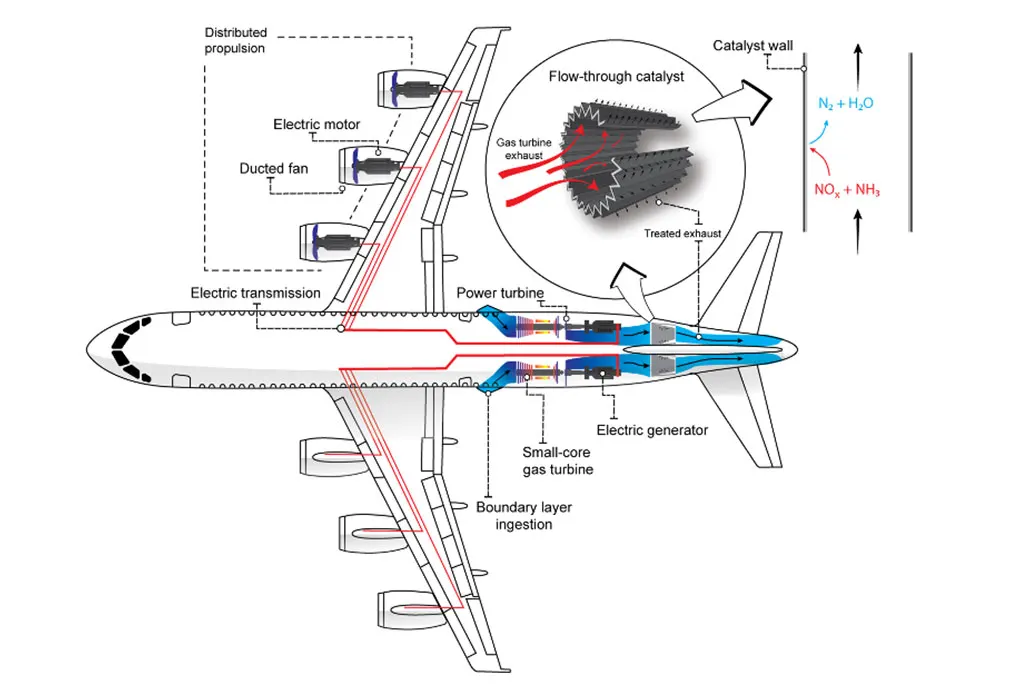
The Phases of Flight
Push-Back and Taxi-Out
Aircraft are not always moved with tugs (the small vehicle you refer to). Much of the time, they operate under their own power. Airliners are generally pushed back from the gate using a tug, as that's the simplest and most efficient method. They then taxi to the runway (and all the way up to the gate, after landing) using their own engines to provide thrust This is true of both jets and propeller aircraft
Some work is being done on self-contained electric-powered ground propulsion; one major player in this area is a company called WheelTug. They use high-torque motors and the aircraft APU to allow the aircraft to move itself without starting its engines or requiring a tug to be connected and disconnected. This first phase of flight, after all doors have been secured, involves the movement of the aircraft away from the terminal jetway and along taxiways to a runway. A motorized vehicle called a tug sometimes is used to push the aircraft back from its gate.
At some airports, certain aircraft are permitted to power bock. This means that following engine start at the gate, the thrust reversers are used to literally back the aircraft away from the gate.
The aircraft then moves under its own power along the taxiways. Since aircraft are designed primarily for flight, and are not ground vehicles, they are taxied at very low speeds. Push-back occurs only when the pilot has clearance to do so from Air Tragic Control, which monitors all aircraft movements during taxi.
_________________________________________________________________________________________________________________________________________________________________________________________________________________________________
ANSWER-5
Take off power=> Power Requirement to Keep a Jet Aircraft in the Air The total energy of an aircraft flying in the atmosphere can be calculated using equation,
E = 1/2 mv^2+ mgh
However, the engines mounted onto the wings of the plane are required to provide additional energy per time, power, in order to keep the aircraft flying at a constant altitude and speed. This extra power needed to overcome the drag acting on the airplane and is calculated using P = (dh/dt) mg
where (dh/dt) is the decent speed required to keep the planes speed constasnt if the engines fail.
Takeoff and Climb :When ready for takeoff, and cleared by Air Tragic Control to proceed, the pilot or first officer of an aircraft releases the brakes and advances the throttle to increase engine power to accelerate down the runway. Once aligned on the runway, steering the aircraft is normally accomplished by using foot pedals that manipulate the nose wheel until the speed is sufficient enough that wind rushing by the rudder on the aircraft tail makes nose wheel steering unnecessary. As the aircraft gains speed, air passes faster and faster over its wings and lift is created. Instruments onboard the aircraft display this airspeed, which equals not only the speed of the plane relative to the ground, but also the speed of any wind that may be blowing toward the aircraft (aircraft normally take off headed into the wind). When the airspeed reaches a certain predetermined point known as rotation speed, the pilot manipulates panels on the tail of the aircraft to rotate the nose of the plane upward. This creates even stronger lift and the plane leaves the ground. Rotation speed, abbreviated VR, is one of three important airspeed settings calculated before every flight.
TYRE DESIGN:
When it comes to safety tyres are one of the most important components of aircraft. They help to absorb the shock of landing and provide cushioning. It also provides the necessary traction for braking and stopping of an aircraft
An aircraft tyre is designed to withstand extremely heavy loads while landing, take off, taxing and parking. The number of wheels required for aircraft increases with the weight of the aircraft, as the weight of the aeroplane needs to be distributed more evenly.
A Boeing 737NG & 737MAX uses 6 wheels, Boeing 787 uses 10 wheels, Boeing 777 uses 14 wheels and Airbus A380 uses 22 wheels. Aircraft tyres work under extreme conditions, carrying up to 340 tons and accelerating at over 250 km/hour at takeoff, in addition to enduring varied environmental stress when in flight and taxiing.
Rolling resistance
Rolling resistance is one of the forces that act to oppose the motion of a cyclist. It is caused mainly because of deformation of the tyre and can be understood by thinking about: 1. energy losses due to heat (hysteresis) 2. the forces pushing on the tyre. Energy is lost as heat As the tyre conies into contact with the road, it changes shape as it is compressed (pushed in a bit). This compression causes parts of the rubber tube and the casing of the tyre to heat up. It also causes the tread on the outside of the tyre to heat up as it comes into contact with the road. A tyre with knobbly tread will have a lot more rolling resistance than a smooth tyre because there will be more rubber being compressed and so there will be more heat.
The tyre is a bit like a spring or a rubber band. Some of the energy is stored as the tyre becomes compressed (squeezed in). As the tyre comes back off the road, there is not as much of this stored energy returned because some of it has gone towards making the tyre heat up. This loss of available energy due to heating is called hysteresis. This means there will be less energy available to make the bike go faster.
If you feel the temperature of your tyres when you have been biking fast, you will notice this heat. If your tyres are not pumped up hard, there will be even more heat created.
The force of rolling resistance does not change at higher speeds. However, because there is a lot more heat being produced at higher speeds, the cyclist uses more power (energy per second) to work against rolling resistance.
Tyre pressure =>
An aircraft tire or tyre is designed to withstand extremely heavy loads for short durations.The number of tires required for aircraft increases with the weight of the aircraft as the weight of the airplane needs to be distributed more evenly. Aircraft tire tread patterns are designed to facilitate stability in high crosswind conditions, to channel water away to prevent hydroplaning, and for braking effect.
Aircraft tires also include fusible plugs (which are assembled on the inside of the wheels), designed to melt at a certain temperature. Tires often overheat if maximum braking is applied during an aborted takeoff or an emergency landing. The fuses provide a safer failure mode that prevents tire explosions by deflating in a controlled manner, thus minimizing damage to aircraft and objects in the surrounding environment.
Inflation : Each of the twelve Boeing 777-300ER main tires is inflated to 220 psi (15 bar; 1,500 kPa), weighs 120 kg (260 lb), has a diameter of 134 cm (53 in) and is changed every 300 cycles while the brakes are changed every 2000 cycles. Aircraft tires generally operate at high pressures, Inflation up to 200 psi (14 bar; 1,400 kPa) for airliners, and even higher for business jets. Tests of airliner aircraft tires have shown that they are able to sustain pressures of maximum 800 psi (55 bar; 5,500 kPa) before bursting. Aircraft tires are usually inflated with nitrogen to minimize expansion and contraction from extreme changes in ambient temperature and pressure experienced during flight.
Brake forces and landing=
Bringing at aircraft down to the runway from 37,000 feet is only part of the challenge. It's not over until the aircraft is safely parked at its gate. In order to do this, pilots have a number of systems available to slow the aircraft down, even in a blizzard on a snowcovered runway.
__________________________________________________________________________________________________________________________________________________________________________________________________________________________________
ANSWER-6
Let us Assume:
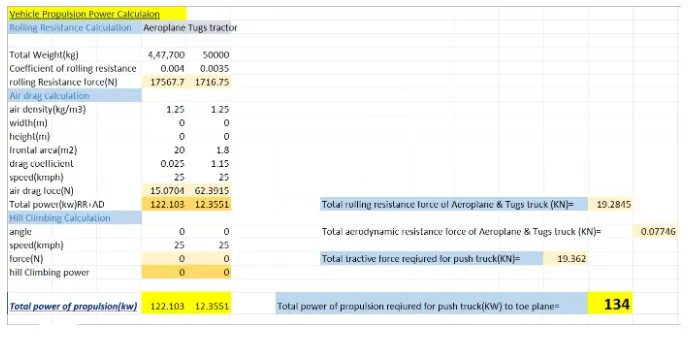
Weight of the Aircraft (Boeing 747-8)= 447,700kg
Rolling Resistance Coefficient of an aircraft tire= 0.004
Wight of the Tugs Tractor = 50000kg
Rolling Resistance Coefficient of Towing Vehicle = 0.0035
Then,
Rolling Resistance Force of Tugs Tractor -FRR = CRR x weight = .0035*50,000*9.81 =1,716.75 N
Rolling Resistance Force of aircraft =FRR = CRR x weight =.004.50,000.9.81 =17,567.748 N
Total Rolling Resistance force = Rolling Resistance Force of aircraft + Tugs Tractor = 17.567+ 1.71675
Total Rolling Resistance Force =19.28 KN
The Aerodynamic Drag is given by,
rho= Density of Air Medium
A = Frontal Area Of the Vehicle which strike the Air
V = Velocity with the vehicle moves
Cd= Coefficient of Dragwhich varies different shapes of the frontal area.
Calculation:
Let us assume
The Velocity of the Aircraft while Towing = 25 KMPH = 6.944 m/s
Density of Air medium = 1.25 kg/m3
The Frontal area of the Aircraft = 20 m2
The Frontal area of the Aircraft =1.8 m2
The Coefficient of Drag of the Aircraft = 0.025
The Coefficient of Drag of the Tugs tractor = 115
Air drag force = 0.5•rho•A•VA2•Cd
The Air Drag Force of the Aircraft = 5 * 1.25 * 20* (6.944^2) * .025 =15.07 N
The Air Drag Force of the Tugs Tractor = 5 * 1.25 * `1.8* (6.944^2) * 115 =62.38 N
Total Aerodynamic Drag Force = Air Drag Force of the Aircraft + Air Drag Force of the Tugs Tractor =15.07 N + 62.38 N
Total Aerodynamic Drag Force = 77.45 N
Therefore the total force that the motor needs to overcome = Total Rolling Resistance Force + Total Aerodynamic Drag Force =19.28 + .07745 (KN) =19.362 KN
Thus Total Force that the Motor needs to overcome in order to push/pull the Aircraft =19.362 KN
The Power Required-
The power required by the motor is given by the velocity with which the towing operation takes place.
The average speed of push/pull = 25 kmph = 6.9444 m/s
Power required by the motor = Total Force' Velocity =19.362'6.9444
Power Required by The Motor =134 KW
________________________________ ________________________________________________________________________________________________________________________________________________________________________________________________
ANSWER-7
The parameters assumed for designing this vehicle :
1. Weight of the Aircraft =447,700 kg
2. Weight of the Towing Tractor =50,000 kg
3. Rolling Resistance Coefficient of Aircraft = 0.004
4. Rolling Resistance Coefficient of Towing Tractor = 0.0035
5. The velocity of the Aircraft while Towing =6.944 m/s
6. Density of Air medium(rho) =1.25 kg/mA3
7. The Frontal area of the Aircraft =20 mA2
8. The Coefficient of Drag of the Aircraft =0.025
9. Towing Tractor Gear ratio(G- for high torque output) =11
10. Towing Tractor tyre radus(r) =0.5 m
11. Operational time of the Towing for one cycle =.25 Hour(15min)
12. Power converters used Bidirectional DC-DC Boost Converter
As we have The Total Force that the Motor needs to overcome in order to push/pull the Aircraft =19.362 KN
We have, F(Tractive)=•(G/r)
Thus T = F(Tractive)*(r/G) =19362 • (.5/11) = 880.090 Nm
So, Required power(P) = F * V =19.362* 6.944 =134 KW
Required Energy(E) for towing application based on the assumed time, that is E = P * t =134 (kw)• (.25hr) = 33.5 KWh
Therefore the battery must be able to store the energy 33.5 KWH and should deliver the energy throughout the run time in order for the motor to produce the 880.09 Nm of torque . Thus the storage of energy in batteries with high performance Ultracapacitors are selected to fulfill the required power deliver.
Motor Selection:
Here we have selected a Permanent-Magnet Synchronous Motor (PMSM) type that has a power rating of 134 kw and with the gear ratio and the transmission it should be able to deliver 880.09 Nm of torque instantaneously.
Motor Parameter:
Type = PMSM
Model No. = APEV80- 12(16)
Phase = 3
Application = Electric bus, Truck, passenger car
AC Voltage = 200-750 VDC
Pole =12
Direct Current Voltage (VDC) = 540
Rated current (A) = 255
Peak Current (A) = 650
Rated Power (kW) =150
Peak Power (kW) = 220
Rated Speed (RPM) =1,650
Peak Speed (RPM) = 3,300
Rated Torque (N.m) = 868
Peak Torque (N.m) = 3,000
BEMF (VAC)/rpm
rms = 660/2401
Insulation Grade =H
Cooling = water
weight= 260 kg
efficiency = 90%
Now Duty Cycle Calculation :
The motor output power is the input power of the tugs tractor so to obtain maximum speed, the duty cycle needed is calculated as,
Duty Cycle = Output Power/Input Power
= (134/166.666) here (Motor Input Power = Rated Motor Power/Motor Efficiency =150/.9 = 166.666 kw )
(Power required for aircraft towing =134 kw)
= 0.80399
=80.399 %
The duty cycle will be 80.399
The duty cycle range to control the aircraft speed from zero to highest is from 0 to 80.399 %.