Project-1: Powertrain for aircraft in runways
Search and list out the total weight of various types of aircrafts
- Cessna 172 – Used by many as initial training aircraft (27 feet long) – 1450lbs empty weight, 2450lbs max weight
- Citation Jet M2 – (42 feet long) – 6990lbs empty weight, 10,700lbs max weight
- Boeing 767-300 – (185 feet long) – 195,000lbs empty weight, 400,000 max weight
- Boeing 787-800 – (186 feet long) – 264,500lbs empty weight, 502,500lbs max weight
- Boeing 777-300 – (242 feet long) – 354,000lbs empty weight, 660,000lbs max weight
- Boeing 747-400 – (232 feet long) – 407,000lbs empty weight, 910,000lbs max weight
- Airbus A320 – (123 feet long) – 82,000lbs empty weight, 170,000lbs max weight
- Airbus A330 – (210 feet long) – 274,500lbs empty weight, 507,000lbs max weight
Is there any difference between ground speed and air speed?
While ground speed is the airplane’s speed relative to the surface of the Earth, airspeed – at least true airspeed – is its speed relative to the air it is flying in.
True airspeed is simply the speed at which an aircraft is moving relative to the air it is flying in. As such, it’s also the speed at which the air is flowing around the aircraft’s wings.
Ground speed, on the other hand, is the aircraft’s speed relative to the ground. One thing that should be noted here is that it’s its horizontal rather than vertical speed – an aircraft climbing completely vertically would have a ground speed of zero.
In other words, while airspeed is what determines whether there is enough airflow around an aircraft to make it fly, ground speed is what determines how fast an aircraft will get to its destination.
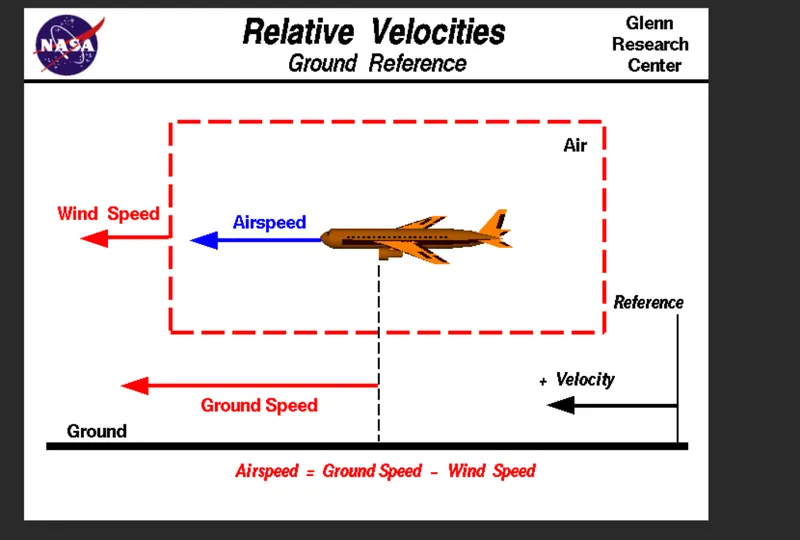
Ground speed is simply the sum of airspeed and wind speed.
If the aircraft is flying in the same direction as the wind is blowing, the aircraft experiences tailwind, and its ground speed is higher than its airspeed. On the other hand, if the wind is blowing against the direction the aircraft is traveling in, the aircraft experiences headwind, and its ground speed is lower than its airspeed.
Why is it not recommended to use aircraft engine power to move it on the ground at Airport?
There are basically 2 main reasons for an aircraft not using its engine power at ground on airport
1)Most important reason is due to safety
Many aircarfts can move in forward or backward direction ,but this might cause damage to the terminal building or equipment.
Engine also may blow sand and debris forward and then suck them into the engine causing damage and possibly a blast
THEREFORE movement on the ground aircraft uses its own engine power which is called taxing
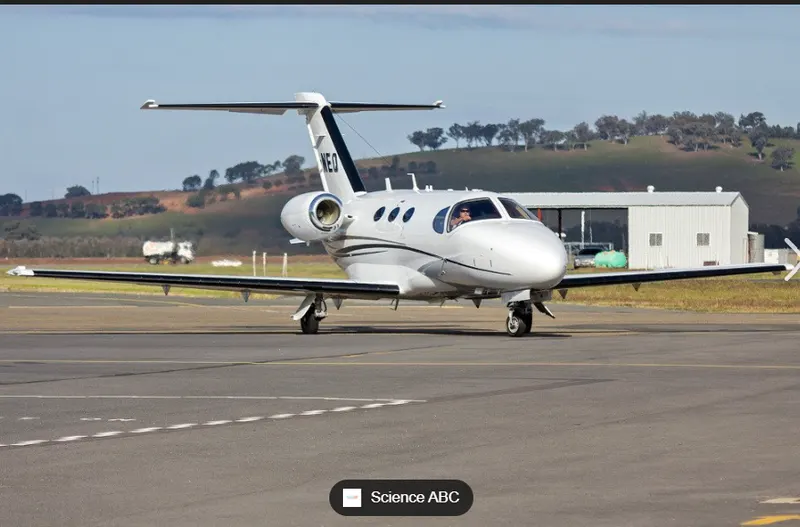
Engine power is used all the time to move aircraft on the ground. I think you mean in the ramp area. if, so, again, engine power is used all the time in the ramp. They do get pushed back because only aircraft with engines on the tail can power-back due to FOD. Sometimes, if it’s a tight area, a tug will be used.
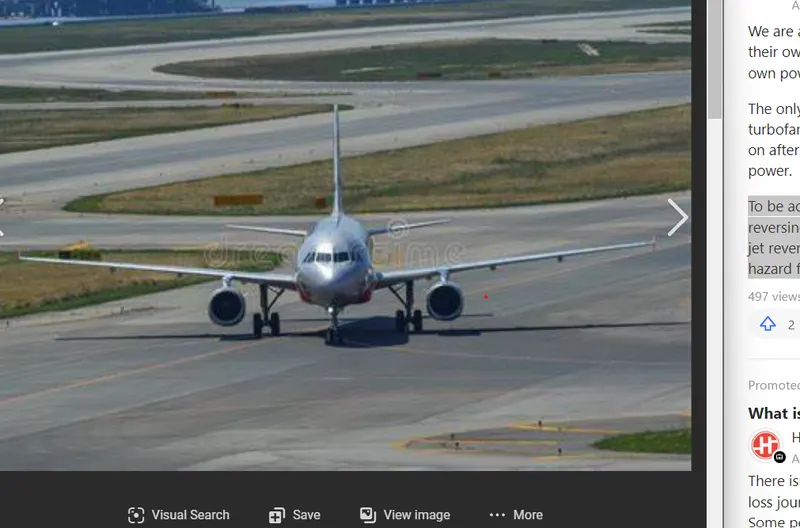
To be accurate, some aircraft can reverse using a variable pitch prop or thrust reversing on turbofans but generally reversing is done via pushback tractors. Blasting jet reversers blows debris In the crowded gate area creating foreign object damage hazard for adjacent aircraft, gate equipment or terminal waiting area glass windows.
How an aircraft is pushed to runway when its ready to take off?
IN GENERAL THERE ARE 2 METHODS TO PUSH THE AIRCRAFT TO TAKE OFF
1)TAXING
2)TOWING
Taxiing (rarely spelled taxying) is the movement of an aircraft on the ground, under its own power,
in contrast to towing or pushback where the aircraft is moved by a tug. The aircraft usually moves on wheels,
but the term also includes aircraft with skis or floats (for water-based travel).
An airplane uses taxiways to taxi from one place on an airport to another; for example,
when moving from a hangar to the runway. The term "taxiing" is not used for the accelerating
run along a runway prior to takeoff, or the decelerating run immediately after landing, which are called the takeoff roll and
landing rollout, respectively.
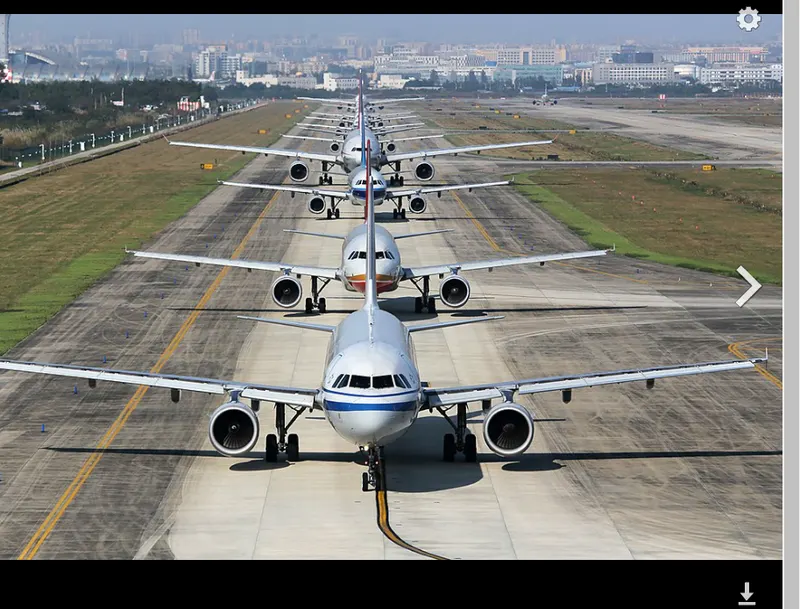
When taxiing, aircraft travel slowly. This ensures that they can be stopped quickly and do not risk wheel damage on larger aircraft if they accidentally turn off the paved surface. Taxi speeds are typically 16 to 19 kn (30 to 35 km/h; 18 to 22 mph).
Rotor downwash limits helicopter hover-taxiing near parked light aircraft. The use of engine thrust near terminals is restricted due to the possibility of structural damage or injury to personnel caused by jet blast.
TOWING
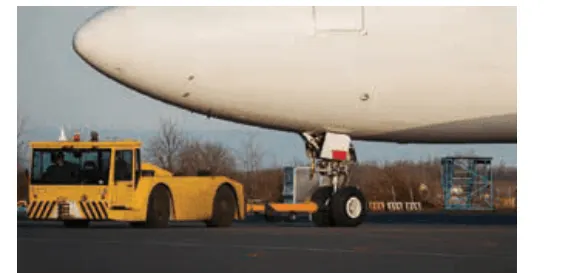
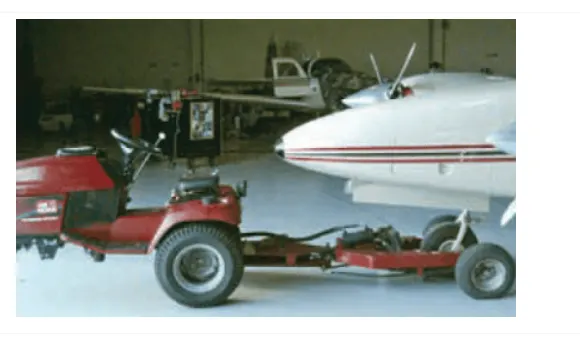
following figure is the example of tow tractor
Learn about take off power, tyre design, rolling resistance, tyre pressure, brake forces when landing.
Take off power:
take off power is nothing but power required by the airplane to be free from the ground and levitate in air
In the physics realm Power">PowerPower = Mass x Acceleration x distance/time
To many it means "how much throttle" , which is how much fuel/time.
"Throttle" x prop efficiency = Thrust">ThrustThrust
This gives you a unit of Force that can be directly compared to glide data as follows:
Potential energy Mass x Gravity x altitude loss = Thrust">ThrustThrust x horizontal distance flown
This rearranged to Thrust">ThrustThrust = Mass x Gravity x altitude loss/horizontal distance flown
Thrust">ThrustThrust = force required for straight and level flight, expressed in "pounds or Newtons"
One would at least double, or even triple this for "takeoff power", depending on your performance preferences.
tyre design:
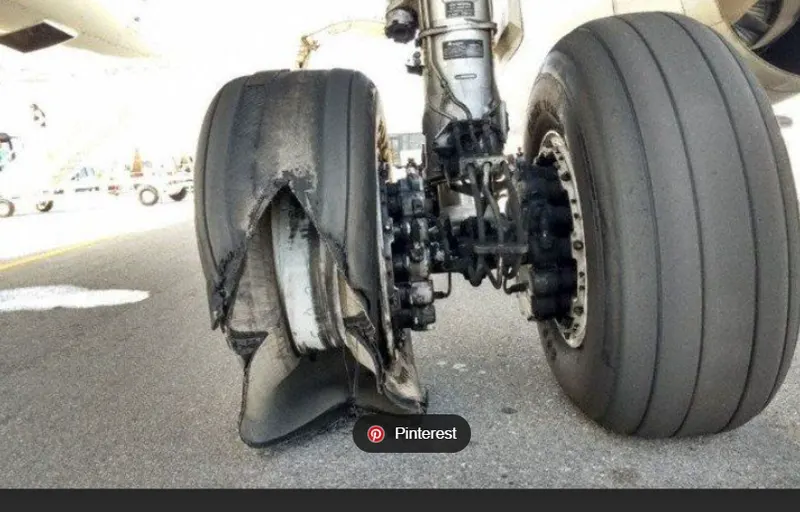
Aircraft tires are either designed to use an inflatable tube to provide the required pressure or seal directly onto the wheel without a tube. Tubeless tires are built with an inner lining to prevent air leaks and are stamped with the word “tubeless” on the tire sidewall
- They support the weight of an aircraft while it is on the ground.
- It also provides the necessary traction for braking and stopping of an aeroplane.
- Tyre also helps to absorb the shock of landing and provide cushioning the roughness of takeoff, roll-out, and taxi operations
When it comes to safety, tyres are one of the most important components of aircraft. They help to absorb the shock of landing and provide cushioning. It also provides the necessary traction for braking and stopping of an aircraft.
An aircraft tyre is designed to withstand extremely heavy loads while landing, take off, taxing, and parking. The number of wheels required for aircraft increases with the weight of the aircraft, as the weight of the aeroplane needs to be distributed more evenly.
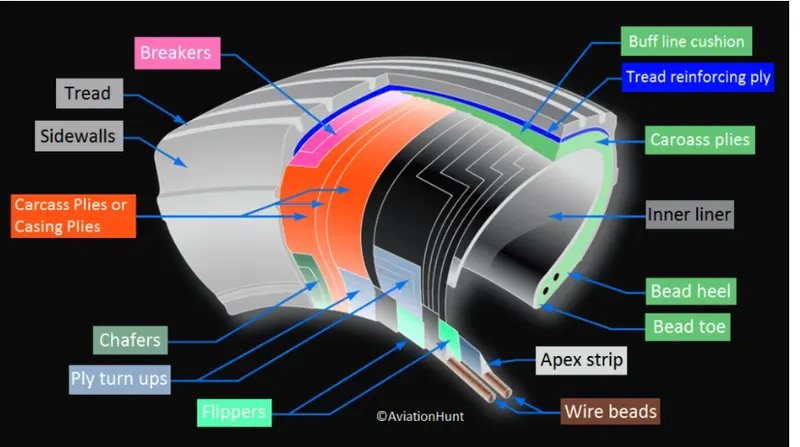
tyre pressure:
An aircraft tire or tyre is designed to withstand extremely heavy loads for short durations. The number of tires required for aircraft increases with the weight of the aircraft, as the weight of the airplane needs to be distributed more evenly. Aircraft tire tread patterns are designed to facilitate stability in high crosswind conditions, to channel water away to prevent , and for braking effect.
there should be enough pressure to to absorb all the load during takeoff and landing and keep enough friction beetween tyres and road.
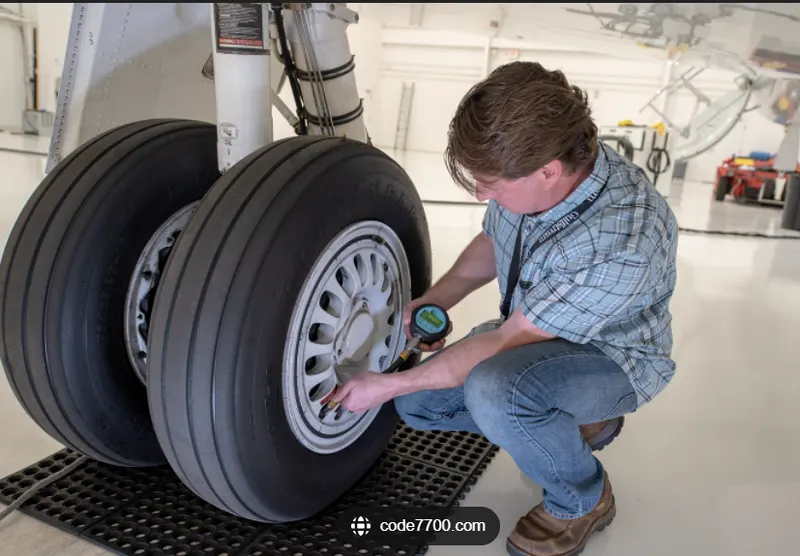
Aircraft tires generally operate at high pressures, up to 200 psi (14 bar; 1,400 kPa) for airliners, and even higher for business jets. The main landing gear on the Concorde was typically inflated to 232 psi (16.0 bar), whilst its tail bumper gear tires were as high as 294 psi (20.3 bar).
braking in aircraft :
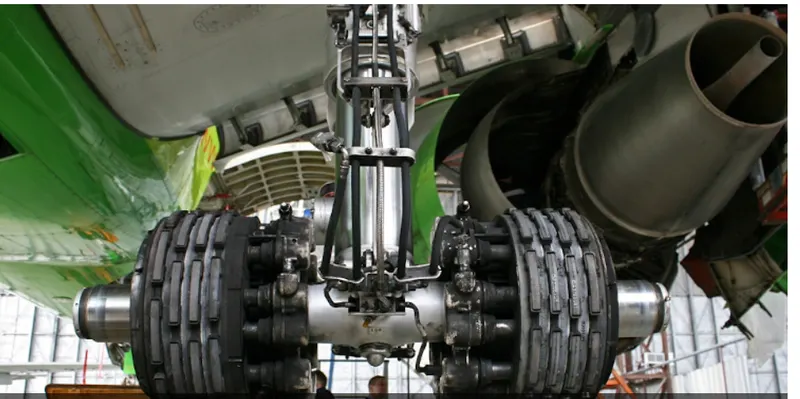
Aircraft brakes stop a moving aircraft by converting its kinetic energy to heat energy by means of friction between rotating and stationary discs located in brake assemblies in the wheels.
Brakes provide this critical stopping function during landings to enable airplanes to stop within the length of the runway. They also stop aircraft during rejected takeoff events, in which an attempted takeoff is canceled as the airplane is rolling down the runway before it lifts off from the ground due to engine failure, tire blowout, other system failure or direction from air traffic control.
follwoing is the brake assembly of boeing 737
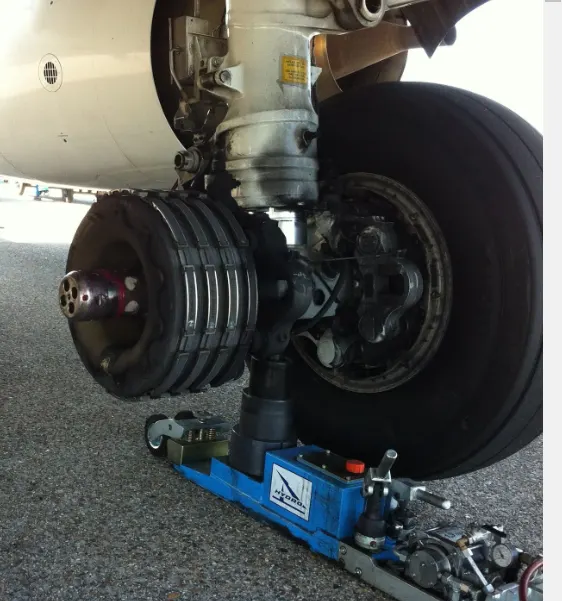
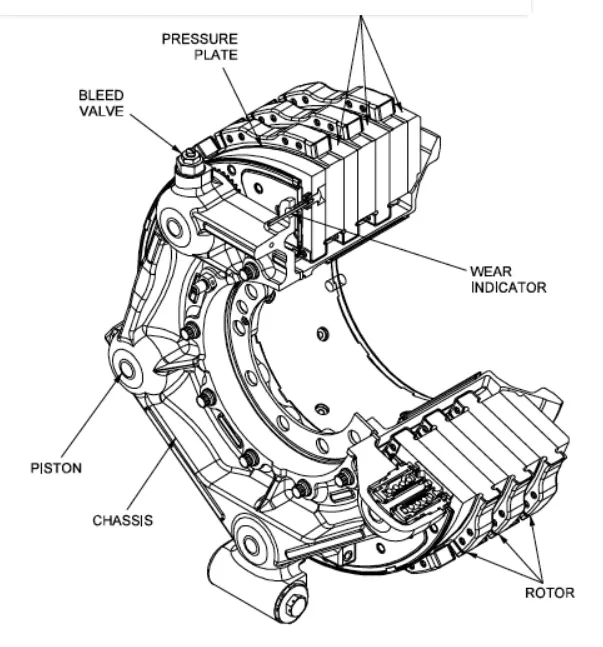
Aircraft brakes work in conjunction with other brake mechanisms such as thrust reversers, Air brakes and spoilers. Thrust reversers are surfaces that are deployed into the path of the jet blast from the engines to redirect propulsive thrust in a direction that opposes the motion of the aircraft. Air brakes and spoilers are flight control surfaces that create additional aerodynamic drag when deployed into the path of air flowing around the aircraft.
PART B:
A. With necessary assumptions, calculate the force and power required to push / pull an aircraft by a towing vehicle.
As we know forces acting on aircraft
1)rolling resitsance
2)air drag
3)hill climb force
following are the assumptions we took for our aircarft
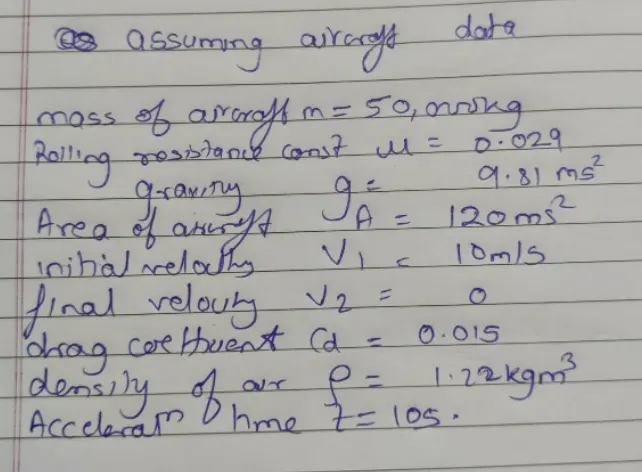
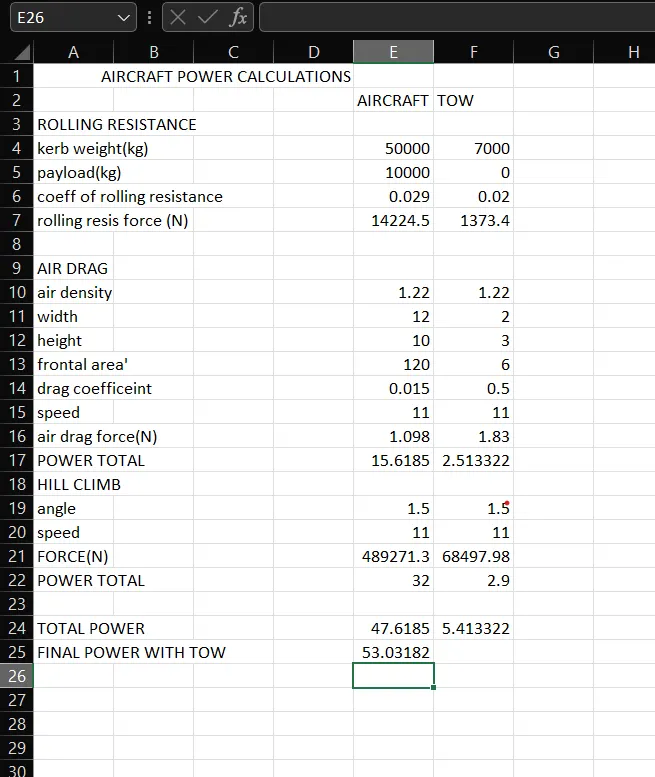
we can see that the power of towing required is 53.03KW
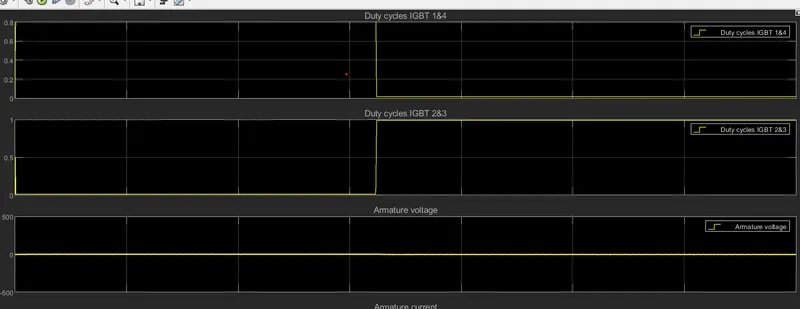
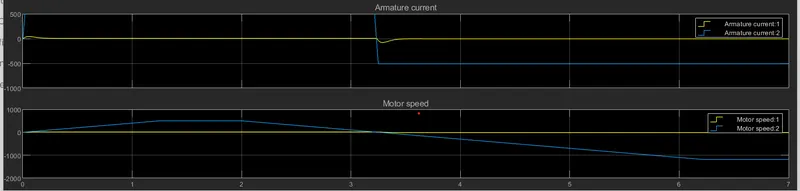
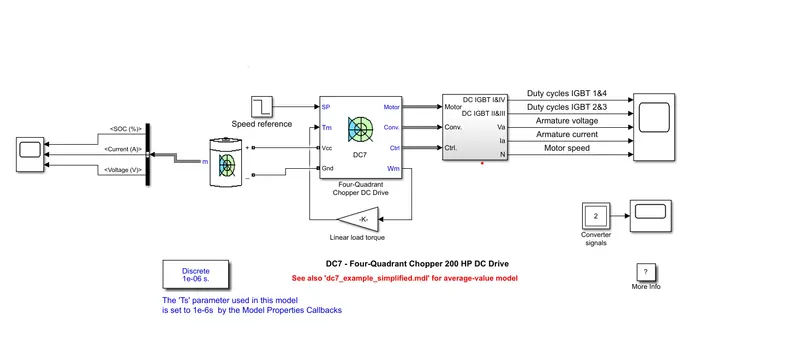
A. Design an electric powertrain with type of motor, it’s power rating, and energy requirement to fulfill aircraft towing application in Simulink. Estimate the duty cycle range to control the aircraft speed from zero to highest. Make all required assumptions. Prepare a table of assumed parameters. Draw a block diagram of powertrain.
SOC% SCOPE
CURRENT (SCOPE)
VOLTAGE (SCOPE)

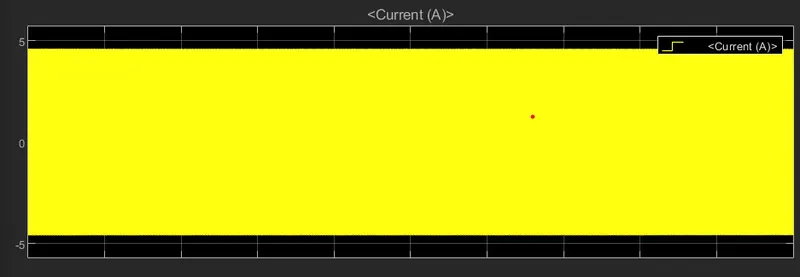
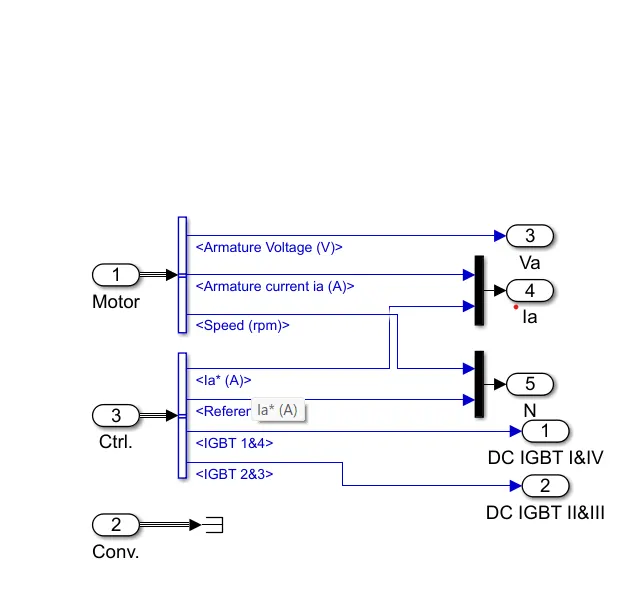
we first have a four quadrant chopper and then coonect it to a battery a speed reference and dutycycle
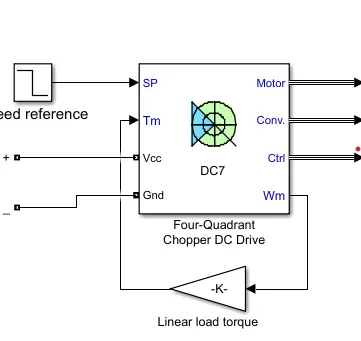
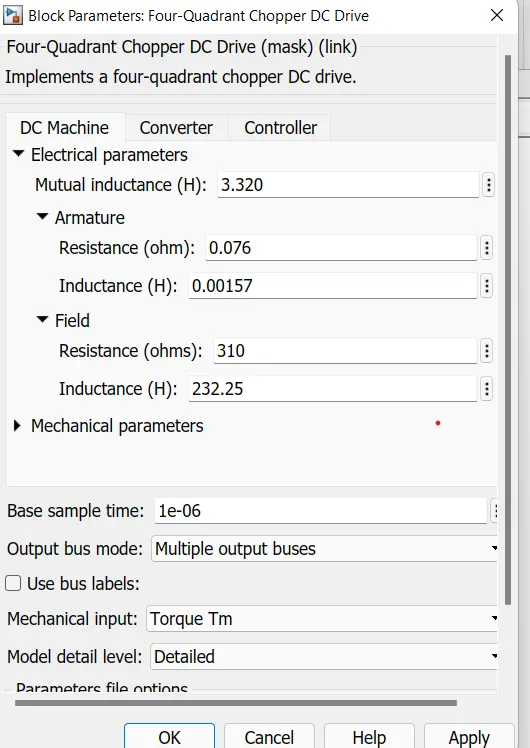
following are the parameters considered for our model