Project-1: Powertrain for aircraft in runways
Part A:
1. Search and list out the total weight of various types of aircrafts.
|
Aircraft |
Empty Weight |
Max Fuel Weight |
Max Cargo Weight |
Max Gross Takeoff Weight |
|
285,000 kg |
661,400 lbs |
417,000 lbs |
1,411,000 lbs |
|
|
300,000 kg |
190,000 kg |
640,000 kg |
||
|
277,000 kg |
560,000 lbs |
185,000 lbs |
1,268,000 lbs |
|
|
254,000 kg |
84,000 kg |
575,000 kg |
||
|
220,100 kg |
427,400 lbs |
295,000 lbs |
987,000 lbs |
|
|
194,000 kg |
134,000 kg |
447,700 kg |
||
|
168,000 kg |
386,300 lbs |
119,000 lbs |
820,000 lbs |
|
|
175,000 kg |
54,000 kg |
372,000 kg |
||
|
168,000 kg |
320,800 lbs 145,500 kg |
148,000 lbs |
776,000 lbs |
|
|
67,100 kg |
352,000 kg |
|||
|
135,500 kg |
223,500 lbs |
126,300 lbs |
560,000 lbs |
|
|
101,500 kg |
57,300 kg |
254,000 kg |
||
|
44,700 kg |
53,100 lbs |
44,600 lbs |
187,000 lbs |
|
|
24,000 kg |
20,200 kg |
85,000 kg |
||
|
42,600 kg |
48,700 lbs |
44,000 lbs |
150,000 lbs |
|
|
22,100 kg |
20,000 kg |
68,000 kg |
||
|
28,800 kg |
28,600 lbs |
28,800 lbs |
106,000 lbs |
|
|
13,000 kg |
13,100 kg |
48,000 kg |
||
|
24,500 kg |
48,200 lbs 21,900 kg |
6,500 lbs |
100,000 lbs |
|
|
3,000 kg |
45,200 kg |
|||
|
21,850 kg |
19,600 lbs 8,900 kg |
6,075 lbs 2,760 kg |
80,500 lbs |
|
|
36,500 kg |
||||
|
17,800 kg |
11,700 lbs |
18,700 lbs |
62,000 lbs |
|
|
5,300 kg |
8,500 kg |
28,000 kg |
||
|
6,300 kg |
6,060 lbs |
2,900 lbs |
21,500 lbs |
|
|
2,750 kg |
1,300 kg |
9,700 kg |
||
|
4,700 kg |
5,800 lbs |
2,200 lbs 1,000 kg |
17,200 lbs |
|
|
2,650 kg |
7,800 kg |
|||
|
3,200 kg |
3,200 lbs |
4,150 lbs |
12,000 lbs |
|
|
1,450 kg |
1,900 kg |
5,400 kg |
||
|
1,450 kg |
340 lbs |
1,250 lbs |
4,400 lbs |
|
|
155 lbs |
560 kg |
2,000 kg |
||
|
1,150 kg |
450 lbs |
850 lbs |
3,660 lbs |
|
|
200 kg |
385 kg |
1,660 kg |
||
|
990 kg |
520 lbs |
1,150 lbs |
3,600 lbs |
|
|
235 kg |
520 kg |
1,630 kg |
||
|
1,000 kg |
485 lbs |
950 lbs |
3,600 lbs |
|
|
220 kg |
430 kg |
1,630 kg |
||
|
770 kg |
380 lbs |
560 lbs |
2,425 lbs |
|
|
170 kg |
255 kg |
1,100 kg |
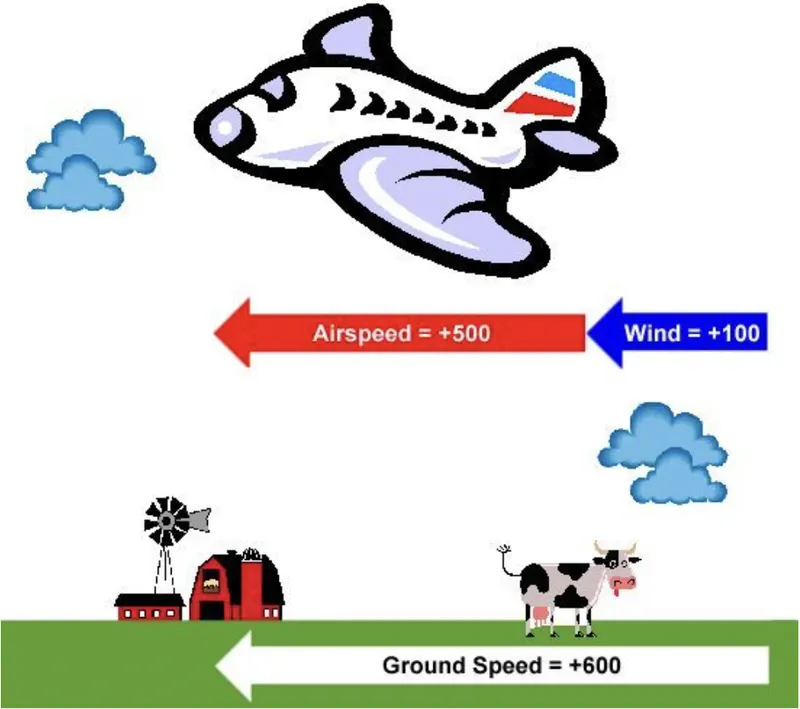
2. Is there any difference between ground speed and air speed?
Difference between airspeed and groundspeed may vary depending on:
Yes, because if there is wind blowing then groundspeed is the sum of airspeed and windspeed.
No, if there is no wind then groundspeed is equal to airspeed.
3. Why is it not recommended to use aircraft engine power to move it on the ground at Airport?
- Size of the aircraft, so there won't be any wear and tear because the pilot cannot see the entire surrounding
- Because of the thrust, it may damage the surrounding or intake of debris and cause in failure of engine or any other parts
- Loud noise because of the powerful engine
- Saving fuel
- They need lot of force to move from halt because of the weight
- They can halt the aircraft at precise location without any hassle.
4. How an aircraft is pushed to runway when its ready to take off?
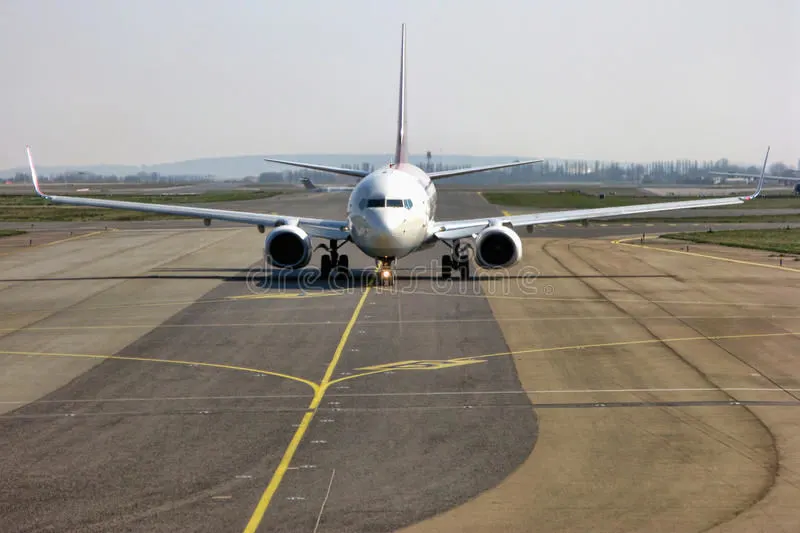
Taxiing: Taxiing is the movement of an aircraft on the ground on the yellow line, under its own power while on the
surface. The taxiing has speed limit for moving the aircraft.
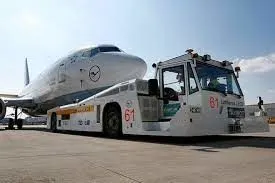
Towiing: Movement of most aircraft around the airport and hangars is usually accomplished by towing with a towing vehicle or 'tug'. The aircraft is attached it to the tow vehicle by the use of a towbar or other specialized methods that connect to or raise the nose or landing gear off the ground.
5. Learn about take off power, tyre design, rolling resistance, tyre pressure, brake forces when landing.
Take Off Power :
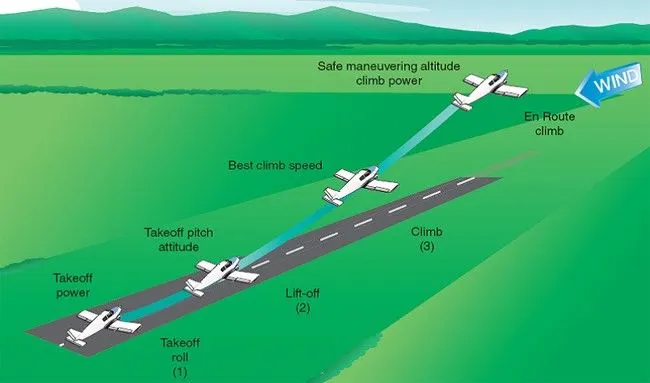
When it comes to safety, tyres are one of the most important components of aircraft. They help to absorb the shock of landing and provide cushioning. It also provides the necessary traction for braking and stopping of an aircraft.
An aircraft tyre is designed to withstand extremely heavy loads while landing, take off, taxing, and parking. The number of wheels required for aircraft increases with the weight of the aircraft, as the weight of the aeroplane needs to be distributed more evenly.
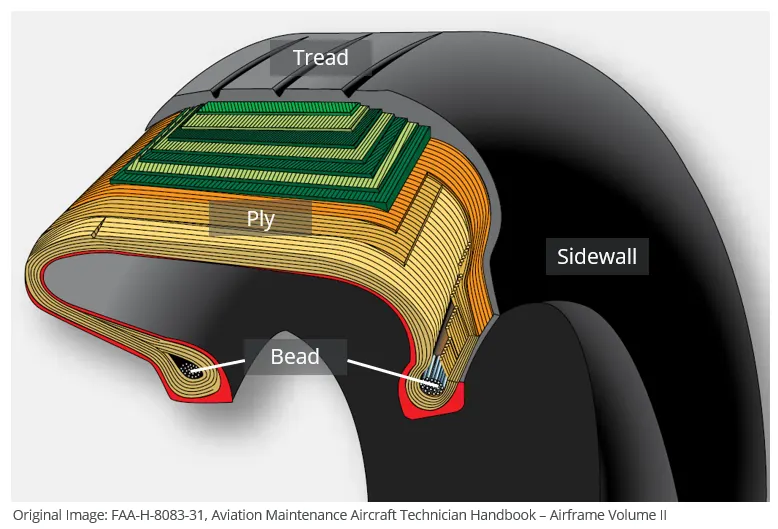
Rolling Resistance :
Rolling resistance is the energy that your vehicle needs to send to your tyres to maintain
movement at consistent speed over a surface. In other words, it's the effort required to keep a tyre rolling. The main
contributor to the rolling resistance is the process known as hysteresis. Hysteresis is essentially the energy loss that
occurs as tyre rolls through its footprint.
Frr = `mu`rr mg
Where, Fry = the rolling resistance force
`mu`r = rolling resistance coefficient
m = mass of the vehicle
g = acceleration due to gravity
Tyre Pressure :
The tyre pressure of an aircraft depends on number of tyres and weight of the aircraft under cold
pressure. It is important to maintain the desired inflation pressure of the tyre or else it may result in damage of tyre.
For aircrafts the pressure is 200-300 psi depends on the weight and number of tyres. Nitrogen is used for tyre
inflation.
Braking Force While Landing :
Following braking techniques are used to decelerate the aircraft i.e.,
- Aircraft disc brakes in the landing gear is used to brake the wheels while touching the ground. These brakes are operated hydraulically or pneumatically.
- Thrust reversers allows the thrust from the engines to be used to slow the aircraft.
- Air brakes dedicated flight control surfaces that work by increasing the drag.
- Large drogue parachutes are used by several former and current military and civilian aircraft.
Part B:
6. A. With necessary assumptions, calculate the force and power required to push / pull an aircraft by a towing vehicle.
Assuming,
Mass of the aircraft = `m_1`= 640000 kgs
Rolling resistance of aircraft = `rho_r` = 0.023
Acceleration due to gravity = g = 9.81 m/s2
Air density = `rho` = 1.25 kg/m3
Drag coefficient of the aircraft = `C_a` = 0.05
Frontal Area of aircraft = `A_1` = 250 m2
Mass of the tug = `m_2` = 2500 kgs
Rolling resistance of tug= `mu_(rt)` = 0.01
Drag coefficient of the tug = `C_t` = 0.02
Frontal area of the Tug = `A_2` = 20 m2
Speed of the tug vehicle = v = 15 kmph =15*5/18 =4.167 m/s
Where `mu_(rr) = mu_r+ mu_(rt)`
`M = m_1+ m_2`
`A = A_1+A_2`
`C_d= C_a + C_t`
Calculations:
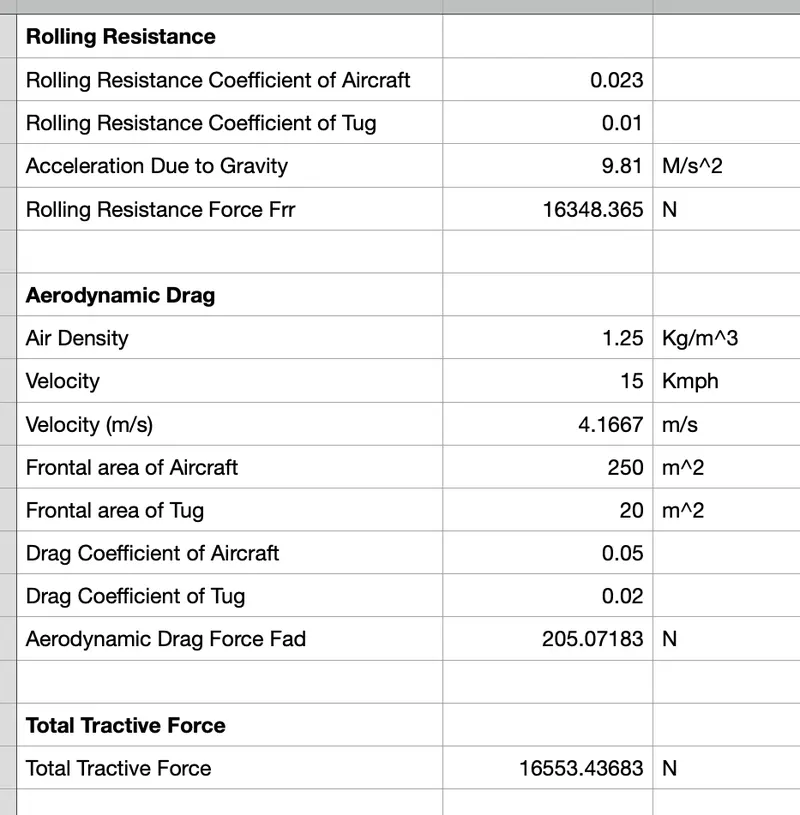
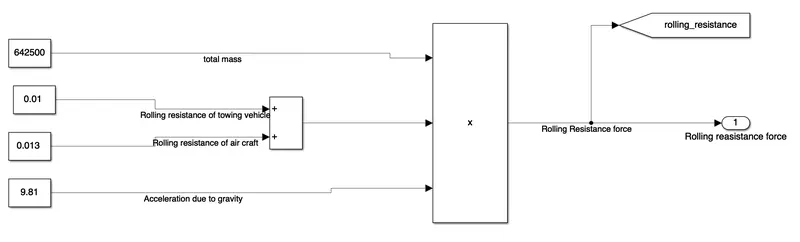
Rolling Resistance Force = `F_(rr)=mu_(rr) *M * g`
= (0.023+0.01) *(640000+2500)*9.81
=0.033 *642500*9.81
= 207.996 KN
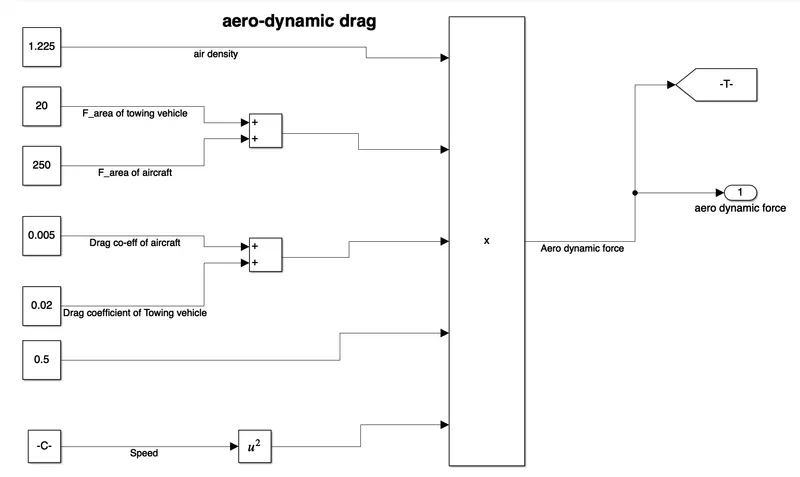
Aerodynamic Drag Force = `F_(ad) = 0.5*C_a*A*v^2*rho`
= `0.5* (0.05+0.02)* (250+20)* (4.167)^2 * 1.25`
= `0.5*0.07*270* (4.167)^2*1.25`
= 205.078 N
Total Tractive Force = `F_(te) = F_(rr) + F_(ad)`
= `207.996 + 0.205078`
= `208.195 KN`
`Total Power = P = F_(te)
=208.195K*4167
= 867.54 K`
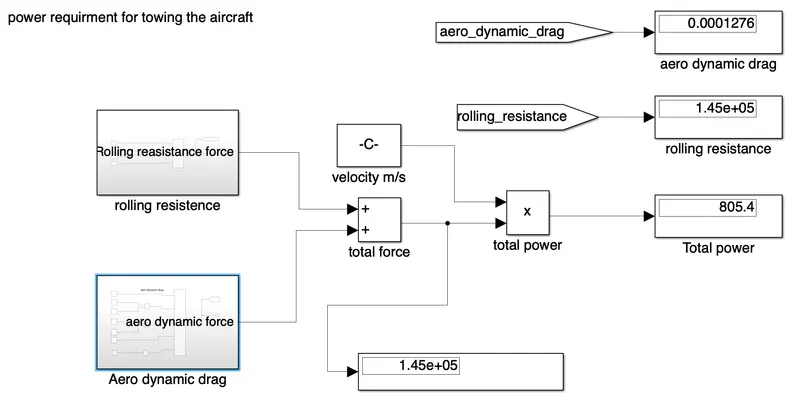
B. Develop the model for the calculated force and power using Simulink.
Rolling Resistance Force :
Aero Dynamical Drag Force :
Overall :
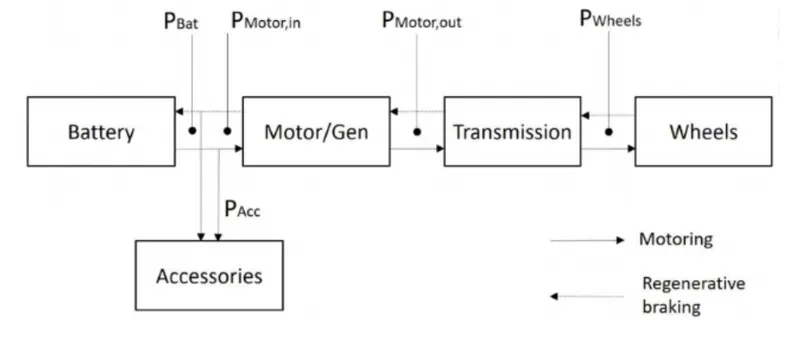
7. A. Design an electric powertrain with type of motor, it’s power rating, and energy requirement to fulfill aircraft towing application in Simulink. Estimate the duty cycle range to control the aircraft speed from zero to highest. Make all required assumptions. Prepare a table of assumed parameters. Draw a block diagram of powertrain.
(Hint :DC7 Block)
Process :
Assuming,
Mass of the aircraft = `m_1`= 48000 kgs
Rolling resistance of aircraft = `rho_r` = 0.023
Acceleration due to gravity = g = 9.81 m/s2
Air density = `rho` = 1.25 kg/m3
Drag coefficient of the aircraft = `C_a` = 0.05
Frontal Area of aircraft = `A_1` = 250 `m^2`
Mass of the tug = `m_2` = 2500 kgs
Rolling resistance of tug= `mu_(rt)` = 0.01
Drag coefficient of the tug = `C_t` = 0.02
Frontal area of the Tug = `A_2` = 20 m2
Speed of the tug vehicle = v = 15 kmph =15*5/18 =4.167 m/s
Where `mu_(rr) = mu_r+ mu_(rt)`
`M = m_1+ m_2`
`A = A_1+A_2`
`C_d= C_a + C_t`
Calculations:
Rolling Resistance Force = `F_(rr)=mu_(rr) *M * g`
= (0.023+0.01) *(48000+2500)*9.81
= 0.033 *50500*9.81
= 16.348 KN
Aerodynamic Drag Force = `F_(ad) = 0.5*C_a*A*v^2*rho`
= `0.5* (0.05+0.02)* (250+20)* (4.167)^2 * 1.25`
= `0.5*0.07*270* (4.167)^2*1.25`
= 205.078 N
Total Tractive Force = `F_(te) = F_(rr) + F_(ad)`
= `16.348 + 0.205078`
= `16.5534 KN`
`Total Power = P = F_(te)*v
= 16.5534K*4167
= `68.97 K`
The Torque-speed relation is T=24.7+0.005lw^2
Taking the Reb 90 electric motor with 80KW power,400-800VT=300Nm, 107 hp
Duty cycle = Output Power/Input Power
= 68.97/80 = 86.21%
|
Parameters |
SI unit |
|
Tractive Force |
16.55 KN |
|
Power Output |
6897 KW |
|
Power Input |
80 KW |
|
Duty Cycle |
0.86 |
|
Motor Voltage |
400 V |
|
Battery Pack |
550V |
|
Mass |
50500 kgs |
|
Rolling resistance coefficient |
0.033 |
|
Air density |
1.25 kg/m^3 |
|
Aero drag coefficient |
0.07 |
|
Frontal Area |
270 m^2 |
|
Velocity |
4.16 m/s |
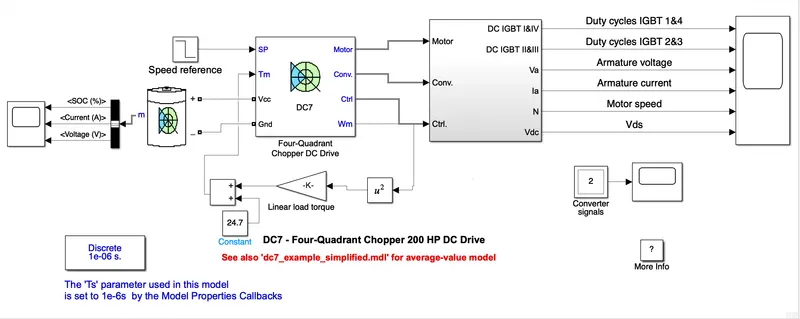
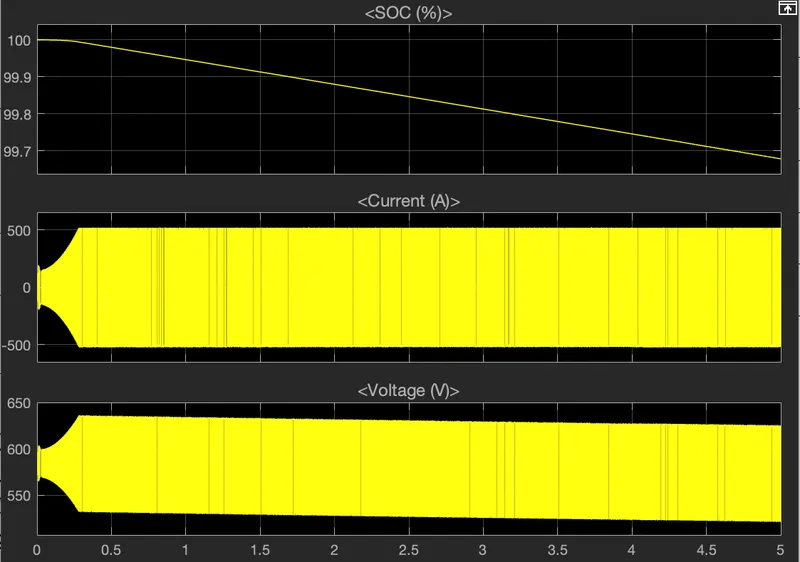
Result :
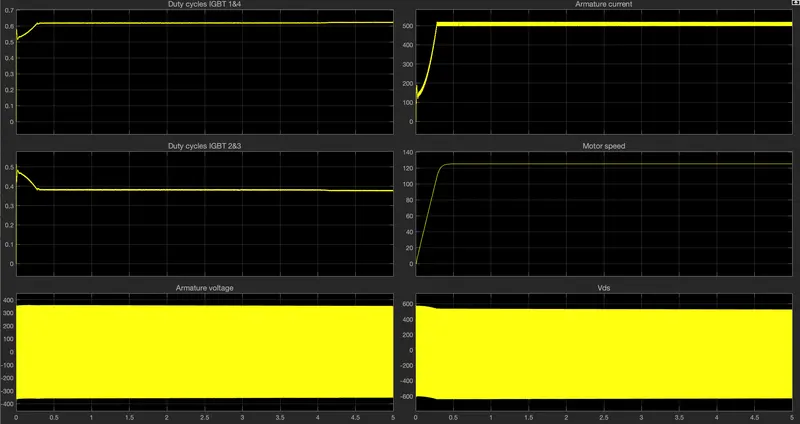
Block Diagram :
B. Also, Design the parameters in excel sheet.