Project-1: Powertrain for aircraft in runways
1) Search and list out the total weight of various types of aircrafts.
GROSS WEIGHT: It is the total weight of an aircraft at any moment during the flight or ground operation.
This gross weight can decrease during a flight due to fuel consumption.
TOTAL WEIGHT OF VARIOUS TYPES OF AIRCRAFTS:
MTOW=Maximum Take Off Weight.
MLW=Maximum Landing Weight.
2) Is there any difference between ground speed and air speed?
** Ground speed:
(1) Ground speed is the airplanes speed relative to the surface of the earth
(2) ground speed is what which determines how fast an aircraft will get to its destination
(3) Ground speed is simply the sum of airspeed and wind speed.
** Air speed:
(1) Air speed is the speed relative to the air it is flying in.
(2) Air speed is what which determines whether there is enough airflow around an aircraft to make it fly.
(3) Air speed is independent of ground speed.
3) Why is it not recommended to use aircraft engine power to move it on the ground at airport?
The risks which may arise from engine ground running would relate the loss of control of the aircraft by the one occupying the pilot seats in the flight.
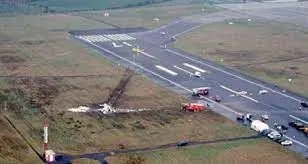
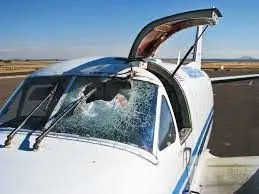
Damages can occur to the aircraft itself, other aircraft nearby.
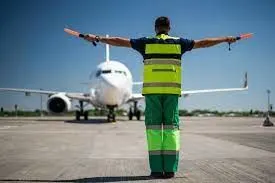
There is also an risk of injury to ground support personnel who may be standing very close to the aircraft.
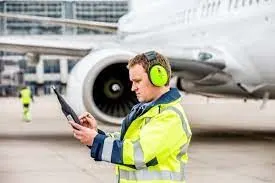
The extensive amount of noise arising from the engine power is also dangerous for the human and other living things around the aircraft.
Therefore, for the above given reasons it is not recommended to use engine power to move on the ground.
4) How an aircraft is pushed to runway when its ready to take off?
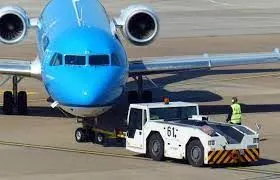
In the aircraft movement in the runway pushback is an airport procedure during which an aircraft is pushed backwards away from the airport gate by external power.
Pushbacks are carried out by special, low profile vehicles called pushback tractors.
The aircrafts are capable of moving themselves backwards on the ground using reverse thrust, but this might cause many damages.
During this the engines also blow and and then suck them into the engine, which may cause damage to the engine.
Therefore, pushback is used to move the aircraft away from the gate.
Since the pilots cannot see behind the aircraft, steering is done by the pushback tracktor driver and not by the pilots.
After the pushback is completed, the aircraft can move forward under its own power.
5) Learn about take off power,tyre design,rolling resistance,tyre pressure,brake forces when landing.
TAKE OFF POWER:
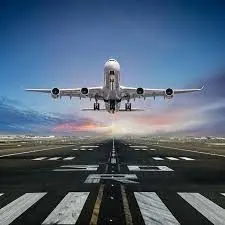
In lighter aircraft full power is used during takeoff, large transport category aircraft may use a reduced power for takeoff, where less than full power is applied in order to reduce maintanence cost and reduce noise emission.
During emergency the power used can be increased to increase the aircrafts performance.
Before take off the engines are used to run at full power to check for the engine related porblems if any present.
During this process the noise ia also raised to a nominal 5-a5 nose up pitch altitude to increase lift from the wings and effect liftoff.
ROLLING RESISTANCE:
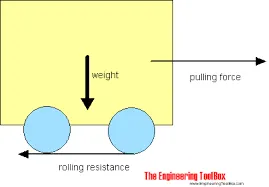
The resistance whic is obtained by the tyres against motion of the aircraft is caleed as rolling resistance, the rolling resistance is produced during take off and landing in the runway.
BRAKE FORCES: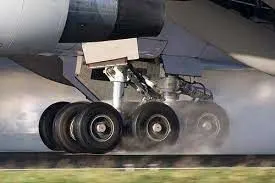
Wheel brakes are usually selected to engage automatically after landing, they are called autobrakes, all airliners have several levels of autobrake severity.
The crew will only decide the which is most suitable to use for every landing depending upon factors like the runway wetness, runway dryness, length of the runway, etc....