Power-train Analysis: Aircraft in runways
OBJECTIVE:
- Part A:
1. Search and list out the total weight of various types of aircrafts.
2. Is there any difference between ground speed and air speed?
3. Why is it not recommended to use aircraft engine power to move it on the ground at Airport?
4. How an aircraft is pushed to runway when its ready to take off?
5. Learn about take off power, tyre design, rolling resistance, tyre pressure, brake forces when landing.
- Part B:
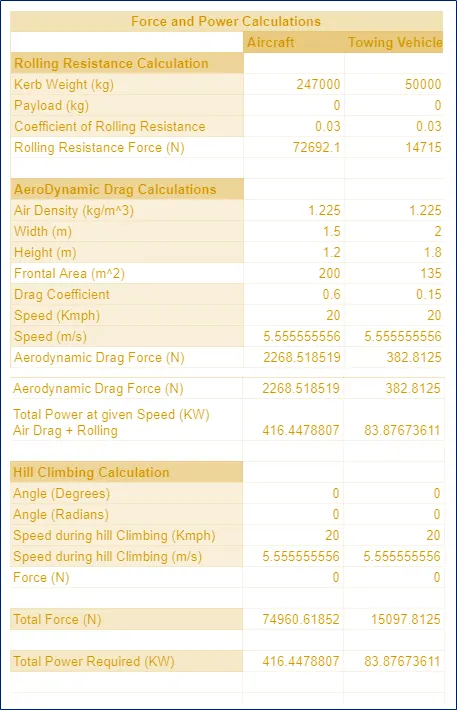
6. A. With necessary assumptions, calculate the force and power required to push / pull an aircraft by a towing vehicle.
B. Develop the model for the calculated force and power using Simulink.
7. A. Design an electric powertrain with type of motor, it’s power rating, and energy requirement to fulfill aircraft towing application in Simulink. Estimate the duty cycle range to control the aircraft speed from zero to highest.
Make all required assumptions. Prepare a table of assumed parameters. Draw a block diagram of powertrain.
(Hint :DC7 Block)
B. Also, Design the parameters in excel sheet.
SOLUTION:
Part A:
A. 1. Search and list out the total weight of various types of aircrafts.
For reference,
- MTOW = Maximum take-off weight
- MLW = Maximum landing weight
Source: Wikipedia
|
Type |
MTOW [kg] |
MLW [tonnes] |
|
640,000 |
591.7 |
|
|
589,670 |
NA | |
|
575,000 |
394 |
|
|
447,700 |
346.091 |
|
|
443,613 |
306.175 |
|
|
412,770 |
295.742 |
|
|
Antonov An-124-100M |
405,060 |
330 |
|
396,900 |
295.742 |
|
|
381,000 |
288.417 |
|
|
377,840 |
285.700 |
|
|
377,840 |
260.320 |
|
|
371,950 |
240 |
|
|
367,400 |
256 |
|
|
347,800 |
260.816 |
|
|
352,000 |
251.5 |
|
|
351,800 |
251.29 |
|
|
347,450 |
223.168 |
|
|
340,200 |
265.300 |
|
|
308,000 |
233.5 |
|
|
299,370 |
237.683 |
|
|
297,550 |
213.00 |
|
|
276,700 |
190 |
|
|
273,300 |
185 |
|
|
270,000 |
175 |
|
|
270,000 |
195.04 |
|
|
256,280 |
183 |
|
|
254,000 |
192.777 |
|
|
254,000 |
201.849 |
|
|
253,500 |
181 |
|
|
250,000 |
175 |
|
|
242,000 |
185 |
|
|
242,000 |
180 |
|
|
231,300 |
166.92 |
|
|
228,000 |
172.365 |
|
|
211,400 |
NA | |
|
208,000 |
175 |
|
|
204,000 |
158.758 |
|
|
192,000 |
140 |
|
|
187,000 |
136.08 |
|
|
185,000 |
111.1 |
|
|
163,000 |
138 |
|
|
159,000 |
136.078 |
|
|
157,000 |
124 |
|
|
152,000 |
151.9 |
|
|
151,000 |
97.5 |
|
|
151,000 |
112.1 |
|
|
147,000 |
NA | |
|
142,000 |
123 |
|
|
141,000 |
122 |
|
|
140,000 |
NA | |
|
125,000 |
NA | |
|
124,000 |
101.6 |
|
|
117,000 |
86.3 |
|
|
116,000 |
89.9 |
|
|
106,000 |
79.5 |
|
|
104,000 |
79.5 |
|
|
104,000 |
80 |
|
|
104,000 |
87.5 |
|
|
87,500 |
NA | |
|
85,000 |
66.36 |
|
|
85,000 |
71.35 |
|
|
84,000 |
70.1 |
|
|
Airbus A321-100 |
83,000 |
77.8 |
|
79,000 |
65.32 |
|
|
78,000 |
68.1 |
|
|
73,000 |
63.28 |
|
|
72,500 |
62.4 |
|
|
72,500 |
62.4 |
|
|
71,000 |
64.41 |
|
|
70,700 |
NA | |
|
70,000 |
58.06 |
|
|
Airbus A320-100 |
68,000 |
66 |
|
68,000 |
54.9 |
|
|
68,000 |
NA | |
|
67,000 |
NA | |
|
66,000 |
54.66 |
|
|
65,000 |
57.61 |
|
|
65,000 |
NA | |
|
64,000 |
62.5 |
|
|
63,000 |
51.7 |
|
|
60,000 |
49.9 |
|
|
59,000 |
50.80 |
|
|
59,000 |
57.5 |
|
|
55,000 |
47.174 |
|
|
55,000 |
NA | |
|
54,000 |
NA | |
|
50,000 |
46.265 |
|
|
50,000 |
NA | |
|
48,600 |
NA | |
|
48,500 |
NA | |
|
48,000 |
43 |
|
|
46,000 |
NA | |
|
46,000 |
39.95 |
|
|
44,000 |
NA | |
|
42,000 |
36.74 |
|
|
39,000 |
NA | |
|
37,500 |
32.8 |
|
|
36,500 |
33.345 |
|
|
36,000 |
32.8 |
|
|
33,000 |
30.39 |
|
|
33,000 |
NA | |
|
30,400 |
NA | |
|
28,000 |
28.01 |
|
|
23,000 |
21.319 |
|
|
22,800 |
22.35 |
|
|
22,800 |
21.5 |
|
|
22,000 |
19.3 |
|
|
18,600 |
18.3 |
|
|
13,150 |
12.930 |
|
|
11,500 |
11.25 |
|
|
10,890 |
10.570 |
|
|
9,752 |
8.709 |
|
|
8,300 |
7.665 |
|
|
8,150 |
7.65 |
|
|
7,765 |
7.605 |
|
|
7,761 |
7.103 |
|
|
7,000 |
NA | |
|
4,800 |
4.43 |
A. 2. Is there any difference between ground speed and air speed ?
Ans: REF. Picture:
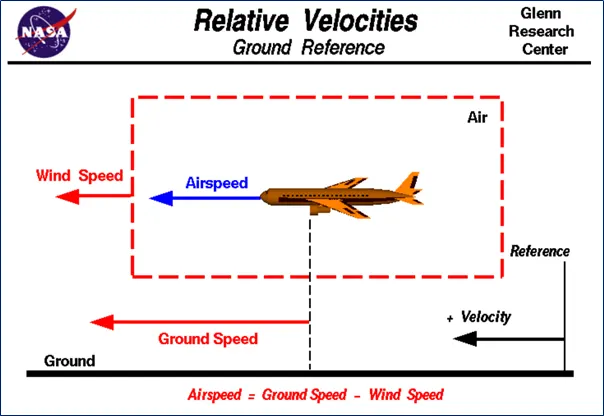
Yes, ground speed and air speed are different from each other. For that, we have to understand three different terms:
- Ground speed:
- For a reference point picked on the ground, the aircraft moves relative to the reference point at the ground speed.
- Ground speed is also a vector quantity. So a comparison of the ground speed to the wind speed must be done according to rules for vector comparisons.
- Wind speed :
- For a reference point picked on the ground, the air moves relative to the reference point at the wind speed.
- We get to notice that the wind speed is a vector quantity and has both a magnitude and a direction.
- The wind has components in all three primary directions (north-south, east-west, and up-down).
- With reference to the above figure, we are considering only velocities along the aircraft's flight path.
- A positive velocity is defined to be in the direction of the aircraft's motion.
- Cross winds are being neglected, which occur perpendicular to the flight path but parallel to the ground.
- Updrafts and downdrafts are also being neglected, which occur perpendicular to the ground.
- Air speed :
- The important quantity in the generation of lift is the relative velocity between the object and the air, which is called the airspeed.
- This cannot be directly measured from a ground position, but must be computed from the ground speed and the wind speed.
- Airspeed is the vector difference between the ground speed and the wind speed.
Airspeed = Ground Speed - Wind Speed
A. 3. Why is it not recommended to use aircraft engine power to move it on the ground at Airport?
Ans: Several factors accounting for not using the aircraft engine power, are as the following:
- Using engine at ground can burn a lot of fuel, causing unnecessary loss.
- This can cause a lot of noise, that can prove to be hazardous for ground-workers.
- A lot of braking force will be required if thrust is applied at ground. This in-turn can cause a lot of wear and tear of wheels and other components of the aircraft.
- The sand and debris present in the ground can enter into the turbine and may damage them.
A. 4. How an aircraft is pushed to runway when its ready to take off?
Ans: Following steps are followed:
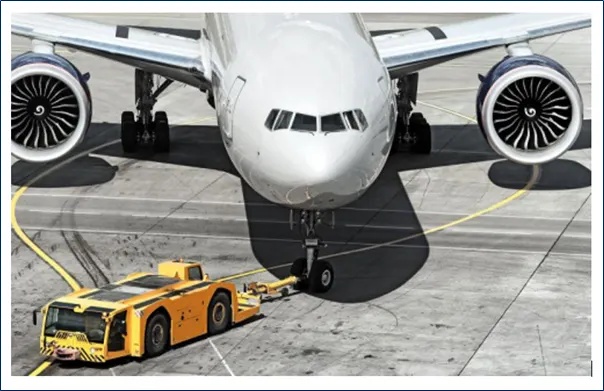
- A so-called pushback truck reverses the aircraft into taxiing position, pushing it with a towbar attached to the nose-wheel strut.
- The aircraft taxis to the runway to depart at the aforementioned time.
- The pilot waits for permission to take off from air-traffic control.
- As soon as the go-ahead is received, the plane takes to the air at full power.
A. 5. Learn about take off power, tyre design, rolling resistance, tyre pressure, brake forces when landing.
Ans. The followings are discussed, one-by-one below:
- Take-off power:
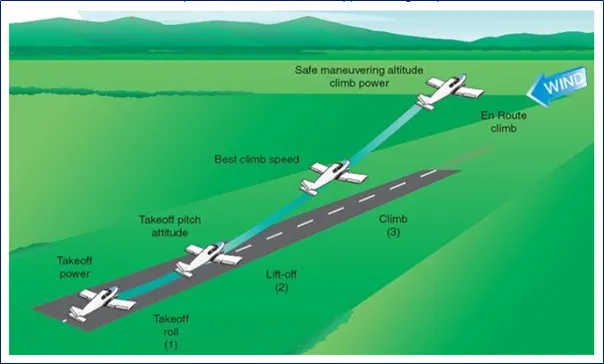
- The amount of power that an engine is allowed to produce for a limited period of time for takeoff.
- The use of takeoff power is usually limited to 5 min for reciprocating engines and up to 2½ min for gas turbine engines.
- Rolling resistance:
Rolling resistance for an aircraft depends upon a lot of factors such as:
- Aircraft weight
- Runway condition
- Tyre conditions
- Different environmental factors
- Tyre pressure:
- Aircraft tyres are designed to withstand extremely heavy loads for short durations.
- With the number of tyres required increasing with the weight of the plane in order to better distribute the weight.
- Tests of airliner aircraft tires have shown that they are able to sustain pressures of maximum 800 psi (55 bar; 5,500 kPa) before bursting.
- Brake forces:
- Bringing an aircraft to a safe stop is the most important part of a flight.
- In order to do this, pilots have a number of facilities available to them.
- The brakes bear the brunt of the hard work with the spoilers and reverse thrust lending a helping hand to ensure maximum efficiency.
- The autobrake system helps keep the deceleration nice and smooth.
- And the anti-skid system reduces the distances needed to stop by modulating the brakes on individual wheels and stopping them from skidding.
- Tyre design:
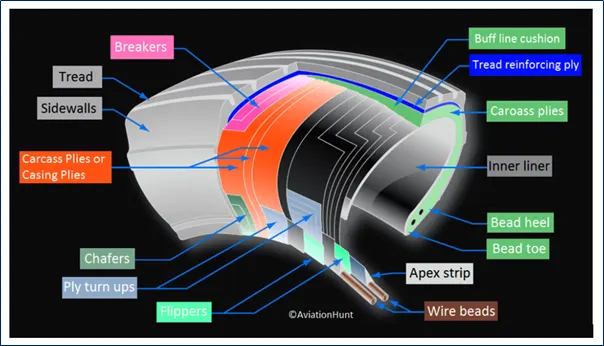
- They support the weight of an aircraft while it is on the ground.
- It also provides the necessary traction for braking and stopping of an aeroplane.
- Tyre also helps to absorb the shock of landing and provide cushioning the roughness of takeoff, roll-out, and taxi operations.
Terms assotiated with tyre designs:
1. Retreading – Retreading is methods of restoring a worn tyre by renewing the tread area or by renewing the tread area plus one or both sidewalls. Repairs are included in the tyre retreading process.
2. Load Rating – Load rating is the maximum permissible load at a specified inflation pressure.
3. Ply Rating – Ply Rating is used to identify the maximum recommended load rating and inflation pressure for a specified tyre. It is an index of tyre strength.
4. Speed Rating – The speed rating is the maximum takeoff speed to which the tyre has been tested.
5. Skid Depth – Skid depth is the distance between the tread surface and the deepest groove as measured in the mould.
Note:
1. All tires are radial.
2. Now a days, tires are conductive in nature
3. Most of the nose gear tires, comes with chines.
Part B:
B. 6. A. With necessary assumptions, calculate the force and power required to push / pull an aircraft by a towing vehicle.
Ans. The forces acting on an aircraft during the push and pull of the towing vehicle are
- Rolling Resistance
- Air drag force.
Assumptions: Let us assume an Aircraft with the following parameters,
- Mass = m_1 = 247000 kg
- Mass of the Towing Vehicle = m_2 = 50000kg
- Coefficient of Rolling ground friction for Dry concrete or asphalt road = μrr = 0.03
- Frontal Area of the Vehicle = VFA = 135m2
- Frontal Area of the Aircraft = AFA = 200m2
- Drag coefficient of an aircraft = ACd = 0.6
- Drag coefficient of a Towing Vehicle = VCd = 0.15
- Density of air = ρ = 1.225kgm3
- Gravity = g = 9.81ms2
- Speed of an aircraft = 20kmph = 20×518 = 5.556 m/sec
Now, Rolling Resistance Force :
For the Aircraft:
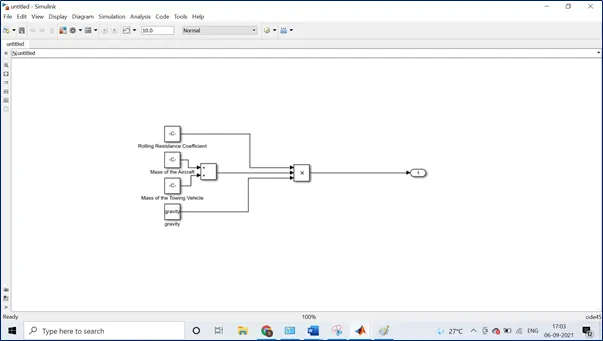
- Frr(aircraft) = μrr × m × gFrr(aircraft) = 0.03 × 247000 ×9.81Frr(aircraft) = 72692.1N
For the Towing Vehicle:
- Frr(vehicle) = μrr × m × gFrr(vehicle) = 0.03 × 50000 × 9.81Frr(vehicle) = 14715N
We need to add the mass of the Aircraft as the Towing Vehicle is pushing/ pulling the aircraft as well.
- Therefore, the total rolling resistance force will be:
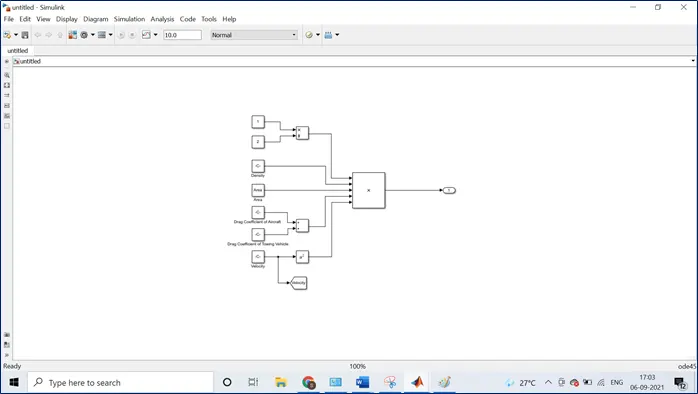
- Total Rolling Resistance force: Frr = Frr(aircraft) + Frr(vehicle)Frr = 72692.1 + 14715Frr = 87407.1N - Aerodynamic Drag force: Fad = 12 × ρ × A × v2 × (Cd(Aircraft)+Cd(Towing))Fad = 12 × 1.225 × 335 × (5.556) 2 × (0.6+0.15)Fad =4750.47N
- Total Force of the Towing Vehicle, F = Fad + Frr(vehicle)F = 4750.47 + 87407.1F = 92157.57N
- Power Required, P = F × v, P = 92157.57 × 5.556, P=512.027KW.
- Force required by the towing vehicle for carrying the Aircraft is 92.157KN.
- Power required by the towing vehicle to carry the Aircraft is 512.027 KW.
B. 6. B. Develop the model for the calculated force and power using Simulink.
The above formulas are used to calculate the values, and following the same, the blocks are designed:
- Subsystem-I
- Subsystem-II
- Using 2 subsystems, modelling all the necessary parameters for calculating the results:
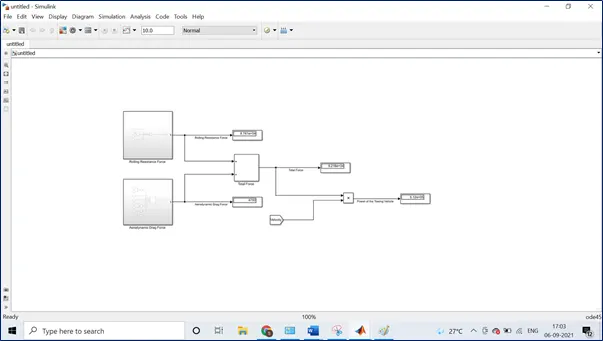
- Results are as the following:
- Rolling Resistance force = 87.41KN
- Aerodynamic Drag Force = 4750N
- The total force = 92.16KN
- Net Power = 512KW.
B. 7. A. Design an electric powertrain with a type of motor, its power rating, and energy requirement to fulfill aircraft towing application in Simulink. Estimate the duty cycle range to control the aircraft speed from zero to highest. Make all required assumptions. Prepare a table of assumed parameters. Draw a block diagram of the powertrain.
Powertrain design: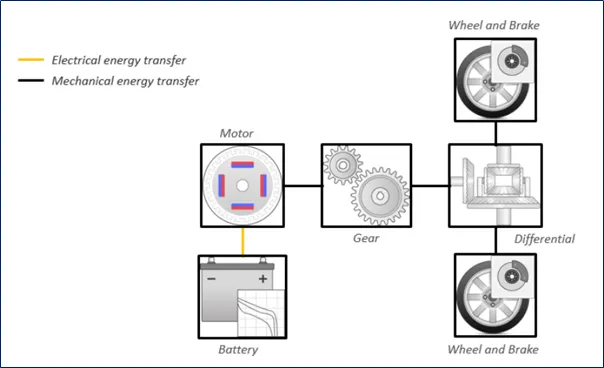
- Airplane towing vehicle is required to move airplanes between the runway and terminals and for routine maintenance.
- Towing vehicle should be able to generate a large force along with high speed for quick operations.
- Calculations and assumptions:
Let the Wheel Radius be 0.5m
Let the transmission efficiency be 85%
Let the gear ratio be 8
Maximum torque on wheels
T = Wheel Radius × Force
T = 0.5 × 92157.57
T = 46078.785 N−m ( torque at wheel)
- Motor torque : 46078.785/8 x 0.85 = 6776.29 N-m
- Power rating : 512 KW
- Assuming an induction motor with the following characterisrics: Input power in term of Mechanical power be 600 KW.
Duty Cycle = Output Power/ InputPower = (512/550) x 100 = 0.8533 ≅ 85.33% - The duty cycle is assumed to range between 0 to 85% to control the aircaft seed from zero to the maximum.
B. 7. B. Also, Design the parameters in excel sheet.