Project 1 Mechanical design of battery pack
CONTENTS:
- Project goal.
- Introduction to Lithium iron phosfet battery.
- Battery data sheet explanation.
- Electrical design of the battery pack. (includes calculation of cell voltage, current, amphour, etc).
- Mechanical design of the battery pack. (includes calculation of cell mass, weight, area, etc)
- General steps to design a complete battery pack.
- Materials required for assembly of a battery pack.
- A practical example of battery sorting and welding.
A.
AIM: Prepare a battery pack configured from below mentioned details with its enclosure.
- Battery pack capacity: 18 kWh
- Cell: ANR26650M1-B
B.
Introduction to Lithium iron phosfet battery(LFP): The lithium iron phosphate battery (lithium ferro-phosphate) is a type of lithium-ion battery using lithium iron phosphate (LiFePO4) as the cathode material and graphite carbon with a metallic backing as the anode. The advantages of the use of this type of battery are low cost, long cycle life, high safety, low toxicity, etc. It's a viable alternative to lead acid batteries.
C.
Battery data sheet explanation: Each part of the datasheet will be explained for better understanding.
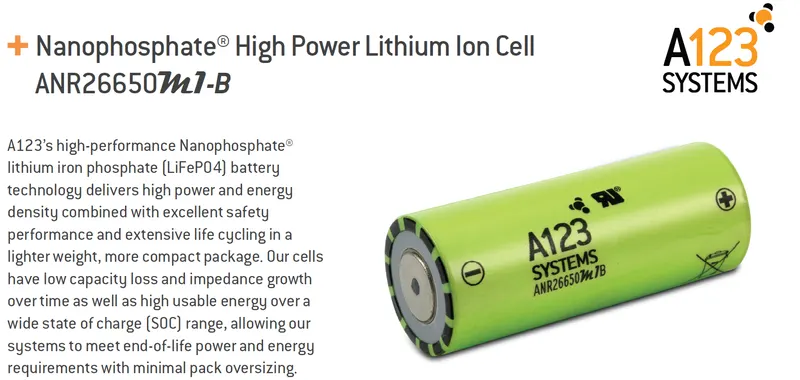
C1.
ANR26650m1-B: The above-mentioned battery model is manufactured by an organization(American /german) named A123 SYSTEMS. Some important terms used in the datasheet are,
- Nanophosphate: The technology was originally developed at the Massachusetts Institute of Technology by professor Yet-Ming Chiang. The Nanophosphate is a nanotechnology and is engineered to replace the conventional phosphates found in the electrodes of batteries. The new phosphate offers the gain of better conductivity and a more uniform discharge rate than conventional electrodes. All the magic occurs on the batteries within the cathode and electrode coated in nanoparticles.
- High power: Here power refers to electrical energy which may be calculated by AH(amp-hour) or WH(watt-hour)
- Energy density: The energy density is the amount of energy that can be stored in a given system or substance. The higher the energy density of a system or material, the greater the amount of energy it has stored. Energy density can be measured in energy per volume or per mass. (joule/m^3 or in this case Watt-hour/kg)
- Capacity loss: Capacity loss or capacity fading is a phenomenon observed in rechargeable battery usage where the amount of charge a battery can deliver at the rated voltage decreases with use. Also known as ideal discharge or self-discharge.
C2.
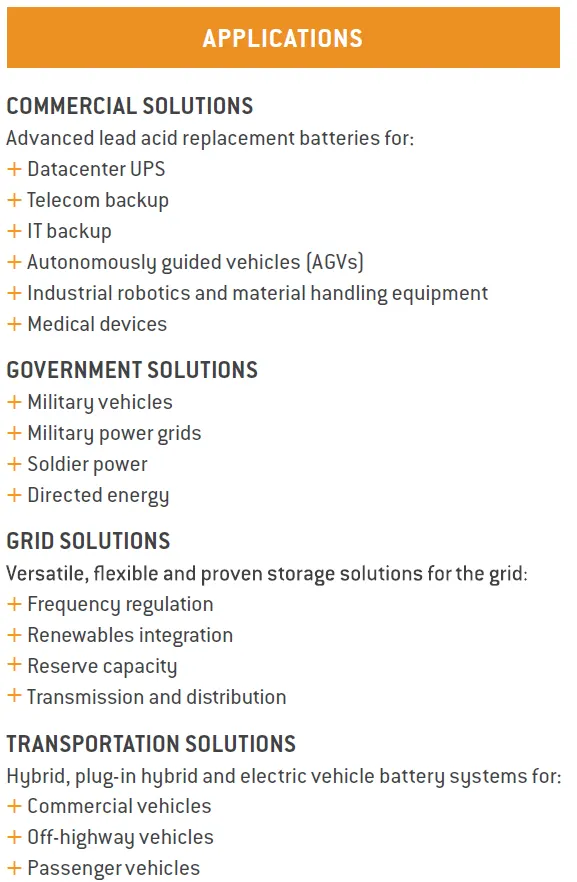
ANR26650m1-B Applications: From the below-attached part of the datasheet it is observed that this battery has a very wide range of use commercial to military, home appliances to evs.
C3. ANR26650m1-B Technical Overview:
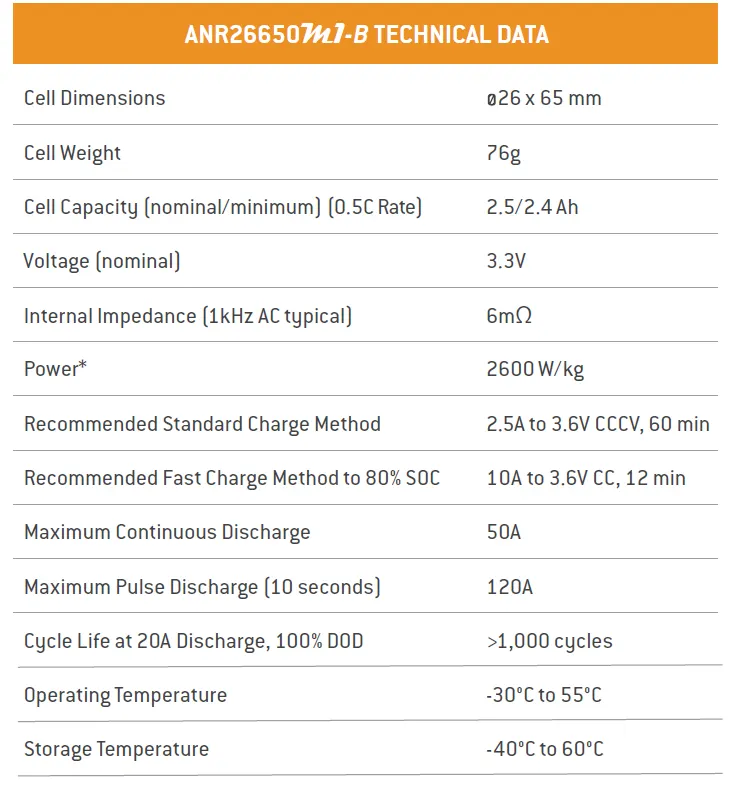
- cell dimensions: 26mm diameter and 65mm height.
- cell weight: 76 grams is the weight of a cell.
- cell capacity: capacity of a cell represents the charge or the energy of the cell. Nominal capacity means normally how much charge a cell can hold. Minimum capacity means the minimum requirement of charge for a healthy cell. Here nominal capacity is 2.5Ah and the minimum capacity is 2.4Ah. Now the complete term is 2.5Ah with a 0.5C rate. 2.5Ah/0.5C battery can provide 2.5/2=1.25Amp for 1*2=2hour to reach nominal capacity to minimum capacity during discharge or it can be charged for 2 hours @ 1.25Amp to reach nominal capacity from min capacity.[here, minimum capacity doesn't mean 0% SOC]
- Voltage(nominal): Nominal voltage is the standard voltage by which a cell is referred to or in technical terms after charging a battery to max capacity the voltage we get is the max voltage of that battery and after equalization in no load condition for some time we get the standard voltage of that cell also known as the nominal voltage. This cell has 3.3DC Voltage as nominal voltage.
- Internal impedance: Battery impedance is a combination of internal resistance and reactance. Here the value is 6mΩ or 0.006Ω.
- Power: Watts per kilogram, or w/kg, is a basic power-to-weight ratio measurement. This data point reflects how many watts can you hold for a certain period of time, divided by your weight in kilograms. Here the amount is 2300W/kg
- Recommended Standard Charge Method: 1C rate is the standard method in cc which means the cell should be charged with 2.5A for an hour to reach peak voltage which is 3.6VDC in cv charging 3.6VDC should be provided which also takes an hour to reach max capacity.
- Recommended fast Charge Method: Fast charging method has two steps, for 0-80% SOC 10A cc charging which will take 12 min, and 81-100% cv charging with 3.6v
- Maximum continuous Discharge: This battery can be discharged @ 20C rate which means this cell can provide 2.5*20=50Amp load for 60/20=3min.
- Maximum Pulse Discharge(10sec): Pulse charge/ discharge is a kind of periodic current square wave.
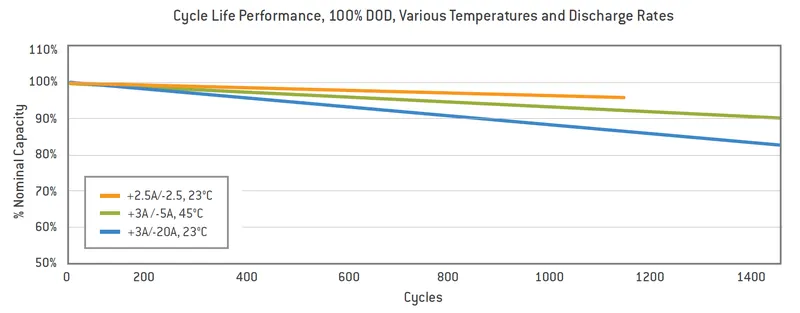
- Cycle life at 20A Discharge,100%DOD: At 20A as load current the cell will have more than 1000 cycles, with 100%DOD.
- Operating Temperature: This type of battery can operate perfectly between -30 to 55 degC.
- Storage temperature: This type of battery should be stored at -40 to 60 degC.
C4.
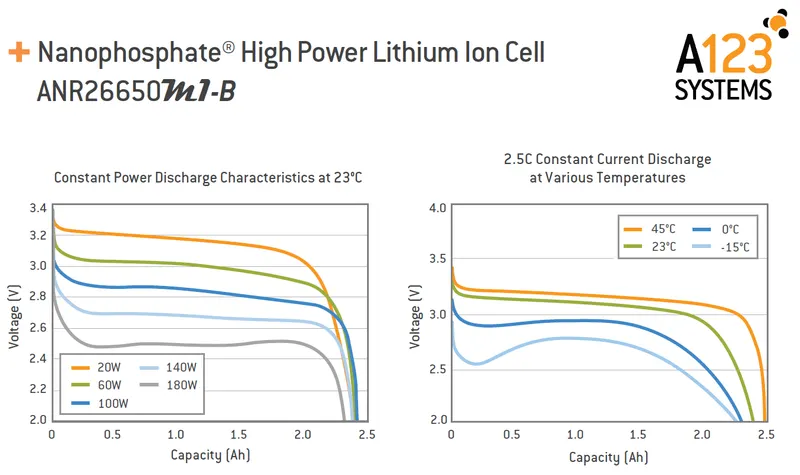
Power and Temperature characteristics w.r.t Voltage and Ah:
The below screenshot 2 graphs can be observed.
- Constant power discharge characteristics at 23 degC
- 2.5C constant current discharge at Various temperature
* I am unable to derive the below graph due to incomplete/incorrect data.
C5.
Cycle life Performance, 100%DOD, various Tempratre Discharge Rates: In the below fig it can be observed cycles varies upon temperature and discharge rates.
D.
Electrical design of the battery pack:
From the question and datasheet, we found some crucial technical data which we require to configure the battery pack, such as,
- Battery pack total capacity 18kWh (includes in question)
- Cell nominal voltage is 3.3VDC (Battery datasheet)
- Cell nominal capacity 2.5Ah (Battery datasheet)
- Without any voltage rating I won't be able to configure a proper battery pack so I assumed this whole course is about EVs and generally in EVs the average battery pack voltage is 400VDC(depending on motor power) so I am assuming the required voltage for the battery pack is 400V.(Assumed)
Please follow the steps on how to configure a complete battery pack from the above data only,
Step1: Minimum Total Voltage Required=400VDC ,
3.3V*122=402.6V, which means I need 122 no of cells connected in series. (Pack max voltage will be 3.6 *122=439.2 VDC)
Step2: Energy=Total voltage*total amp-hour
or, 18kwh=402.6 * (no of parallel connection * 2.5)
or, 18000wh=1006.5 * no of parallel connection
or, no of parallel connection = 17.8
which means 18 no of parallel connection is required thus,
(3.3 *122)*(2.5*18)=18117wh
so, the battery configuration will be 122S18P (2196 no of cells) whose capacity is 18.12kwh and battery pack capacity 18*2.5= 45Ah
Step3:
Battery Pack final configuration:
- Battery Pack total capacity in terms of energy = 18.12kwh
- Battery Pack voltage = 402.6VDC (Nominal)
- Battery Pack capacity = 45Ah
- Battery Pack contains a total of 2196 no cells with 122S18P config.
- Battery Pack Standard CC Charging rate @ 45Amp
- Battery Pack Standard CV Charging rate @ 439.2VDC(Max)
- Battery Pack Max Load Current = 18*50 = 900ADC
E. Mechanical design of the battery pack:
E1. Cell dimension and Battery Dimension:
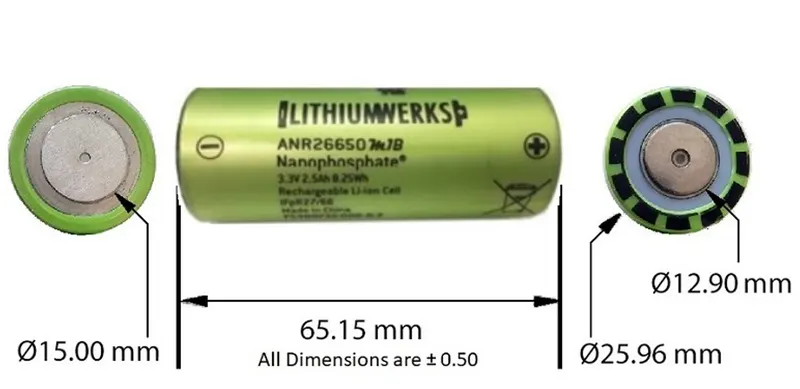
ANR26650 cell has a 25.96mm diameter and 65.15mm height. Based on that, we need to decide the battery size of the battery casing.
- Length pf casing (L) = number of cells at series * (cell diameter (25.96) + margin at both side of cell (4) + clearance at side (diameter of edged cell + margin)
L =122*29.96 + 60
L = 3715.12mm
- Breadth of casing (B) = number of cells at parallel * (cell diameter (26) + margin at both side of cell (4) + clearance at side (diameter of edged cell) + margin)
B = 18*29.96 +60
B = 599.28mm
- Height of casing (H) = 65.15 +35 (height of cell + margin for the wing, cell holder, and metal strips)
H = 100mm
E2. Weight of Battery Pack:
Cell weight = 76 g
Number of cells = 2196
Battery Pack weight (W) = cell weight * number of cells + weight of accessories
W = 76 * 2196 + 165.8 + 4.5
W = 166.9kg + weight of accessories
F.
General steps to design a battery pack: The steps are as follows,
- step1: Cell configuration (figure of no of cells, series /parallel config)
- step2: Structure (design a mechanical structure around the cells to support and protect them)
- step3: Protection (includes protection circuits like surge suppressor ckt to protect from surges, thermostat for high temperature, etc)
- step4: control (design a control system that monitors and manages the cells which are normally known as BMS)
- step5: Use (understanding the best usage for charging /discharging methods, appropriate temperature, etc)
G.
Materials required for assembly of the battery pack:
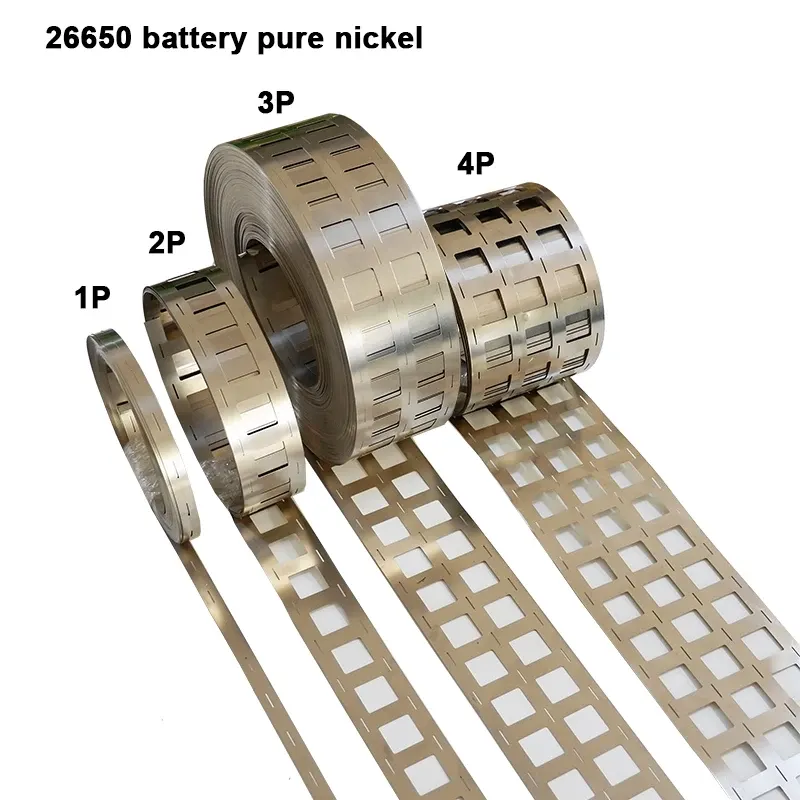
- Nickel strip
- PVC heat sink film
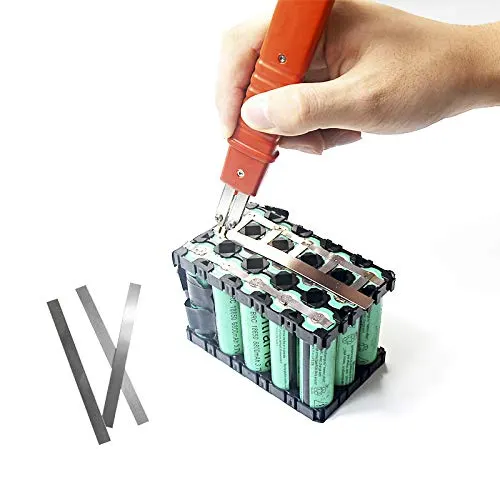
- spot welder
- Cell holder
- BMS(depends on the application)
- cooling system (depends on the application)
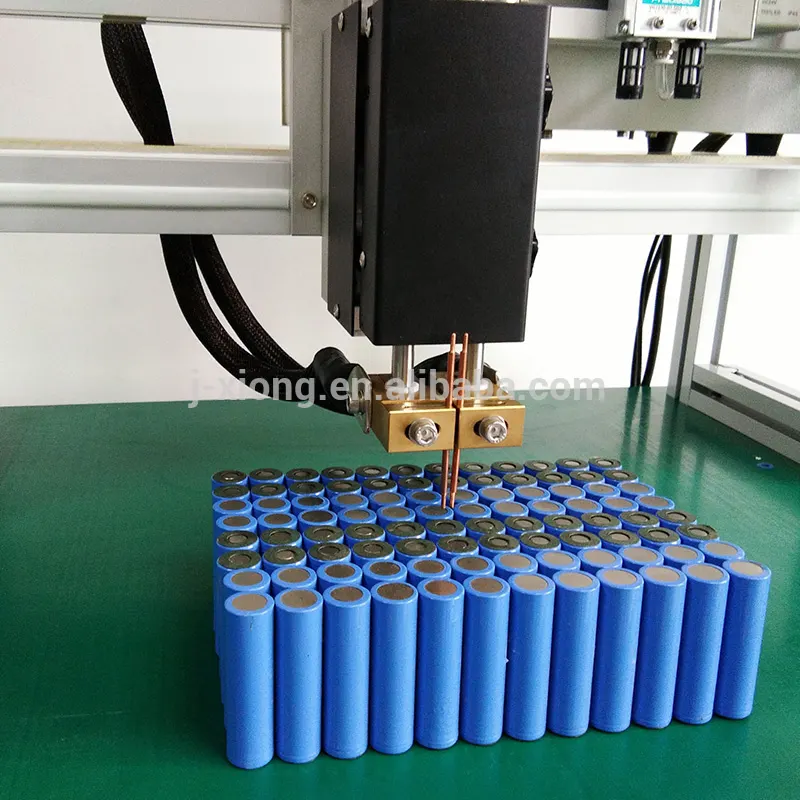
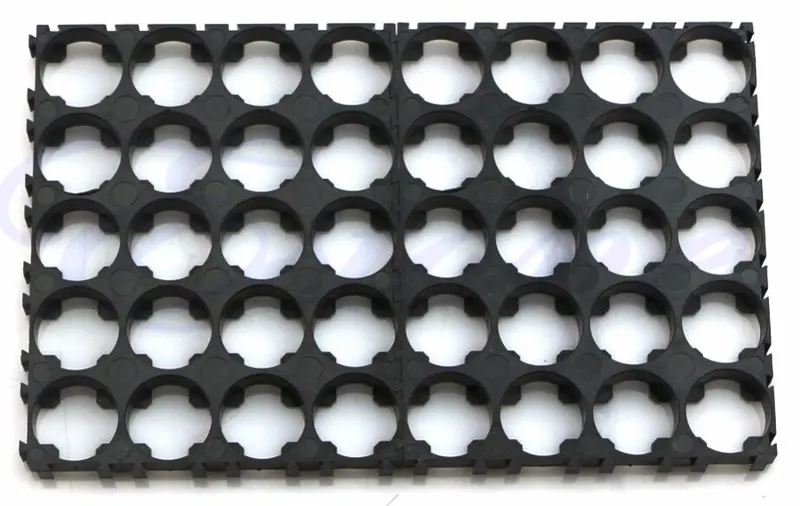
Some image of the above mentioned objects has been attached below accordingly. The last picture is the final product of a module with BMS installed.
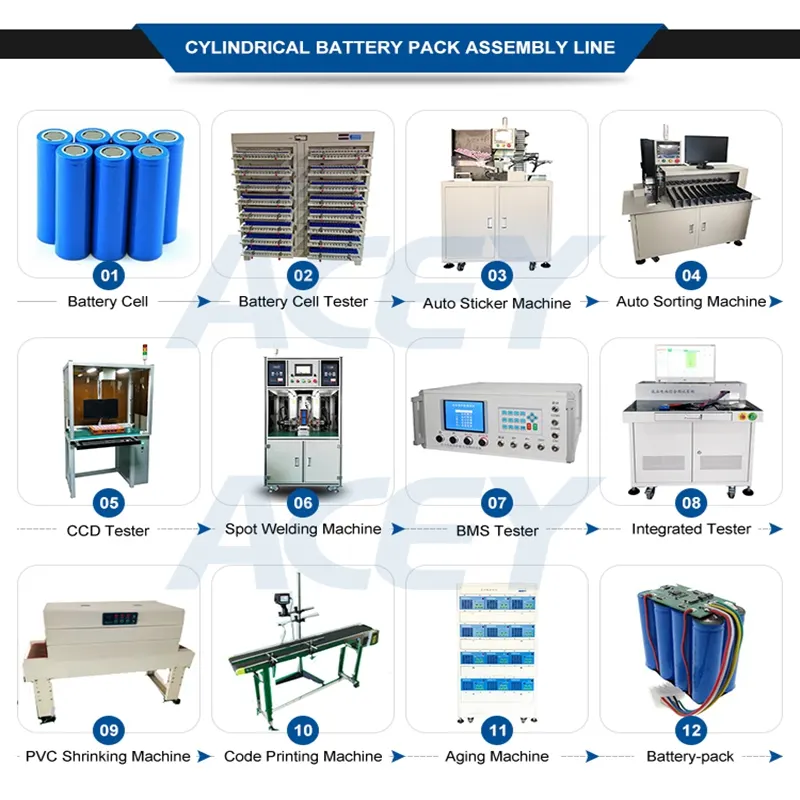
Cylindrical Battery assembly Line of 26650:
from the below figure, it can be observed how the cell gets shorted, tested, printed, etc, and all these works are done before installing cell holders, connectors, PCB for BMS, etc.
H.
A practical example of battery sorting and welding:
Mondragon Assembly is an International Organization (Spain, US, Germany, South Africa, India) well known for the automation of battery pack assembly line. Below are some pictures of their Battery sorting and spot welding operation.
Below is an example of a battery pack where the battery pack consists of 15 modules. Each module consists of 392 cells.