Project 1 Mechanical design of battery pack
EV BATCH - 16
Project 1: Mechanical design of battery pack
Task: Prepare a detailed battery pack drawing along with its enclosure. State your assumptions.
Given data:
Battery pack capacity: 18 kWh
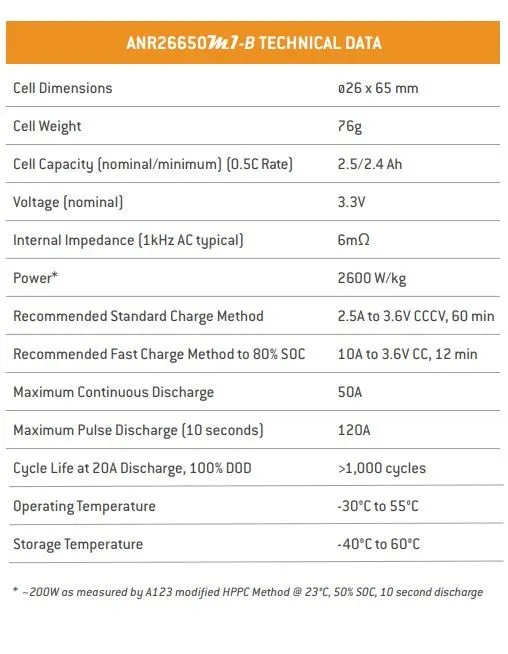
Cell: ANR26650M1-B
Battery pack: Overview A battery pack is a set of any number of (preferably) identical batteries or individual battery cells. They may be configured in a series, parallel, or a mixture of both to deliver the desired voltage, capacity, or power density. Components of battery packs include the individual batteries or cells, and the interconnects which provide electrical conductivity between them. Rechargeable battery packs often contain a temperature sensor, which the battery charger uses to detect the end of charging.
Battery regulators are sometimes used to keep the voltage of each individual cell below its maximum value during charging so as to allow the weaker batteries to become fully charged, bringing the whole pack back into balance. Active balancing can also be performed by battery balancer devices which can shuttle energy from strong cells to weaker ones in real-time for better balance. A well-balanced pack lasts longer and delivers better performance. Many times, the physical configuration makes it more attractive to use many small cells rather than a few large cells, since a large block is harder to fit than several small subunits
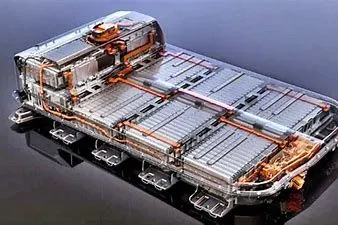
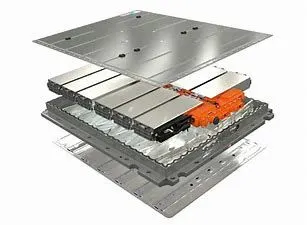
Advantages:
An advantage of a battery pack is the ease with which it can be swapped into or out of a device. This allows multiple packs to deliver extended runtimes, freeing up the device for continued use while charging the removed pack separately. An advantage of a battery pack is the ease with which it can be swapped into or out of a device. This allows multiple packs to deliver extended runtimes, freeing up the device for continued use while charging the removed pack separately.
Disadvantages:
Packs are often simpler for end-users to repair or tamper with than a sealed non-serviceable battery or cell. Though some might consider this an advantage it is important to take safety precautions when servicing a battery pack as they pose a danger as potential chemical, electrical, and fire risks.
Battery pack designing:
Desired characteristics of a battery pack:
- Light Weight
- Long-Lasting
- Optimum Cost
- Waterproof
Steps involved in battery pack design:
- Understand requirements
- Select cell chemistry, type, capacity etc.
- Select other components to meet requirements.
- Select wire AWG ratings as per the current.
- Assemble in CAD to see fitment possibility.
- Run structural, thermal, and CFD analysis.
- Decide heat management requirements.
- Change design if needed to accommodate the Heat Management System.
- Make CAD and run CAE Analysis.
- Get prototype manufactured.
- Connections
- Connector Selection
- Harness Design
- Wire Gauge Selection
- EMI/MC
- Variation in characteristics due to temperature
Thermal consideration:
- Safety
Mechanical consideration:
- Integrity of Components
- Vibration
- Sealing
- Ingress Protection
Battery specifications:
Ref: https://www.batteryspace.com/prod-specs/6610.pdf
Calculations:
Given: Battery pack capacity = 18kW
Assume Battery pack voltage = 240 V
Cell Volume, Vc = Pi * r^2 * h
= pi * 0.013^2 * 0.065
= 3.45x10^-5 m3
Cell energy, Ec = Nominal voltage * Nominal capacity
= 3.3 * 2.5
= 8.25 Wh
Cell energy density = cell energy / Cell volume
= 8.25/3.45x10^-5
= 24.3 kWh/m3
Total number of cells = No of cells in series * No. of cells in parallel
No of cells in series = Sc = Vb/Vc
= 240 / 3.3
=72.2 => 73 cells
No. of cells in parallel = Pc = Cb/Cc
Cb = (18x10^3) / 240 = 75Ah
Pc = 75 /2.5 = 30 cells
Total number of cells = 73 * 30 = 2190 cells
Weight of battery pack = Total number of cells *Cell weight
= 2190 * 65 = 166440 grams
166 kg