Project 1 Mechanical design of battery pack
Battery pack capacity: 18 kWh
Cell: ANR26650M1-B
Prepare a detailed battery pack drawing along with its enclosure. State your assumptions.
Battery-
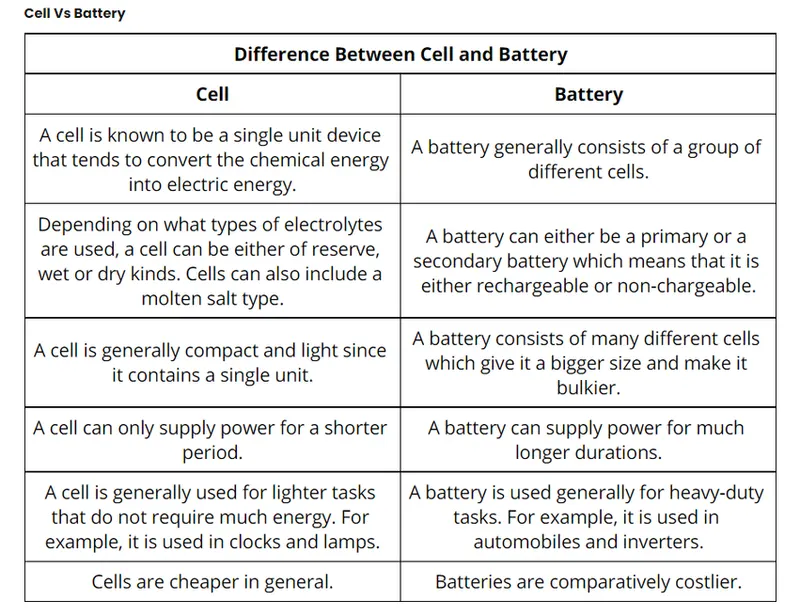
An electric battery is defined as a device that makes use of either one or an assembly of electrochemical cells that convert the stored chemical energy within them into electrical energy.
Cell-
An electric cell is a device, which converts chemical energy into electrical energy. It has two terminals, which are made up of metal: one terminal is positive, while the other one is negative. When the two terminals are connected to an electrical device, electric current flows through it.
- An electrochemical cell consists of electrodes namely cathode and anode.
- The non-spontaneous reaction is controlled by an external source of current.
- The decomposition of an electrolytic solution by passing current, which results in the liberation of corresponding gases or metals is known as electrolysis.
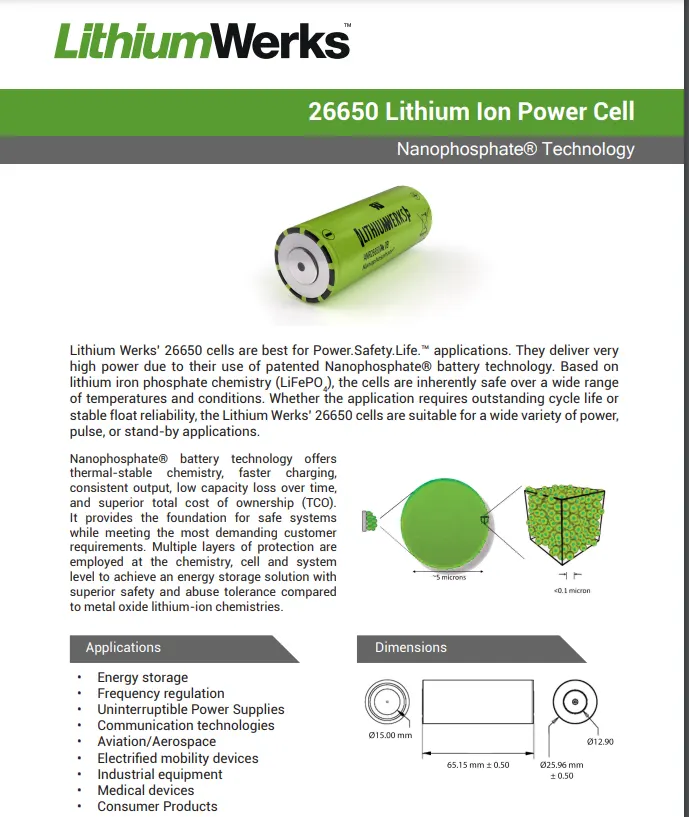
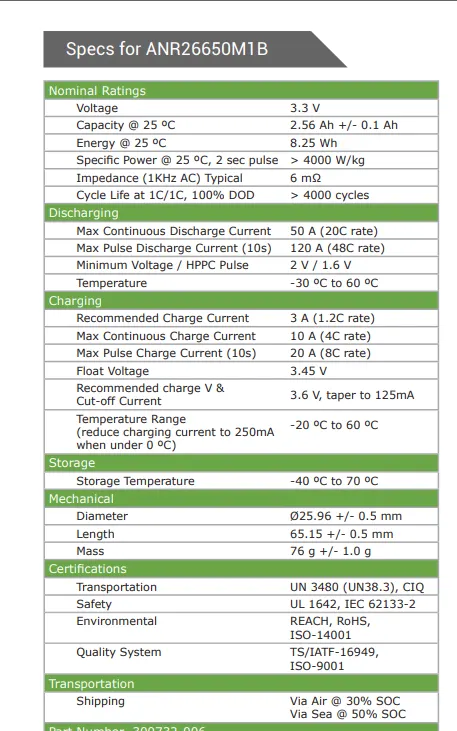
Cell: ANR26650M1-B
LithiumWerks ANR26650M1-B, 3.3 Volt, 2.5Ah, Lithium Iron Phosphate (LiFePO4) Battery
Features
The ANR26650M1-B is the next generation of A123 Systems’ pioneering 26650 cylindrical cell, now with greater power and energy density and lower impedance. This versatile lithium ion cell is suitable for a wide variety of applications and system designs. Proven performance in the toughest conditions, combining durability, reliability, and safety, the ANR26650 cell offers an excellent combination of price-performance.
Cylindrical Cell Primary Applications
- Portable high power devices
- Stationary battery backup systems
- Grid stabilization energy storage systems
- Commercial truck and bus hybrid electric vehicles (HEVs)
Nanophosphate® LiFePO4 Benefits
- Cycle Life at 1C/1C, 100% DOD, > 4000 cycles
- Safety: Excellent abuse tolerance and environmentally friendly
- Life: Excellent calendar life, 10X cycle life vs. conventional lithium ion
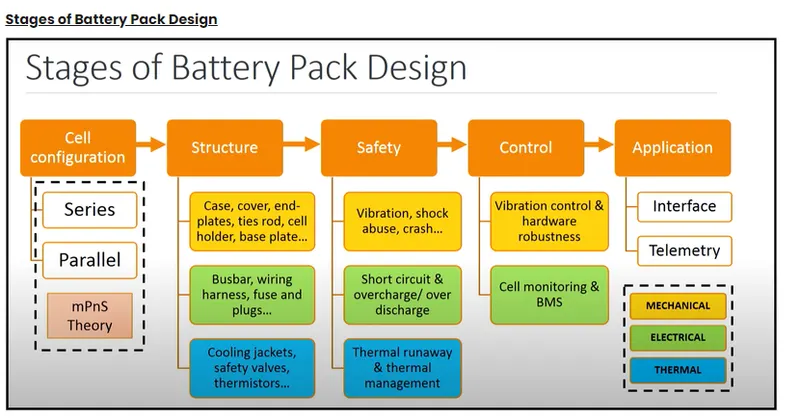
Battery design processs-
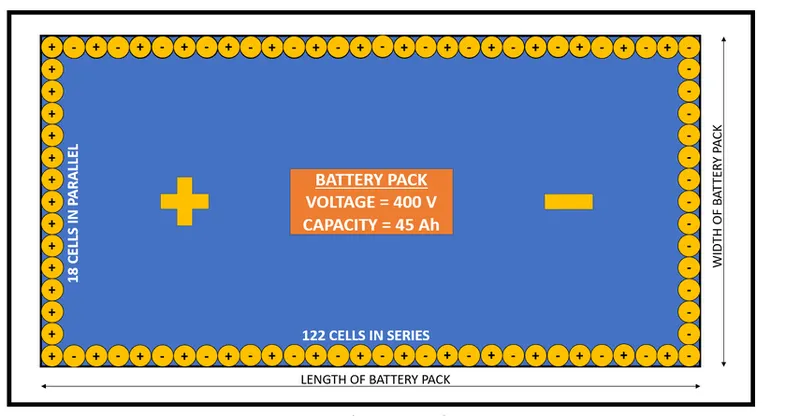
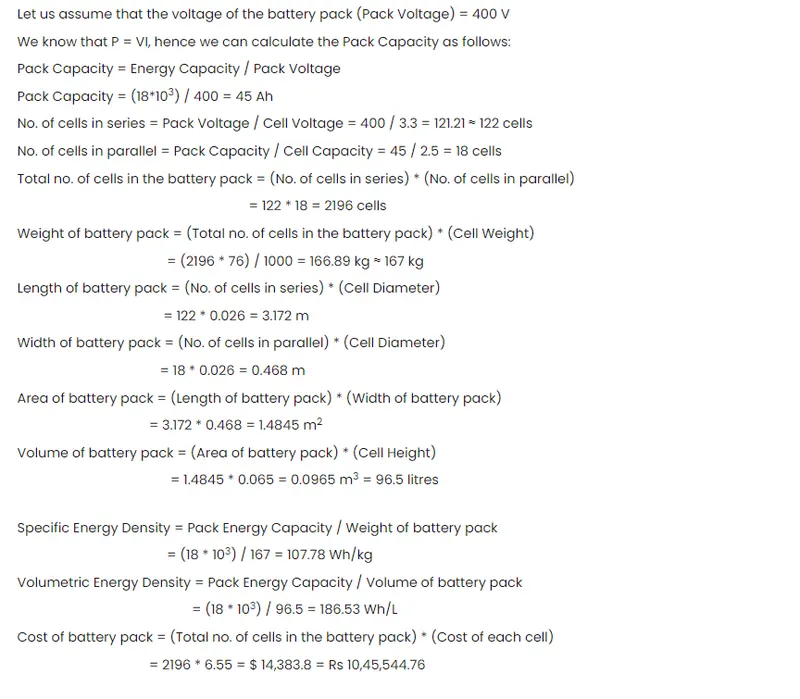
Required Energy Capacity for the pack= 18kWh
Refrences-