Project 1 Mechanical design of battery pack
Battery pack capacity: 18 kWh
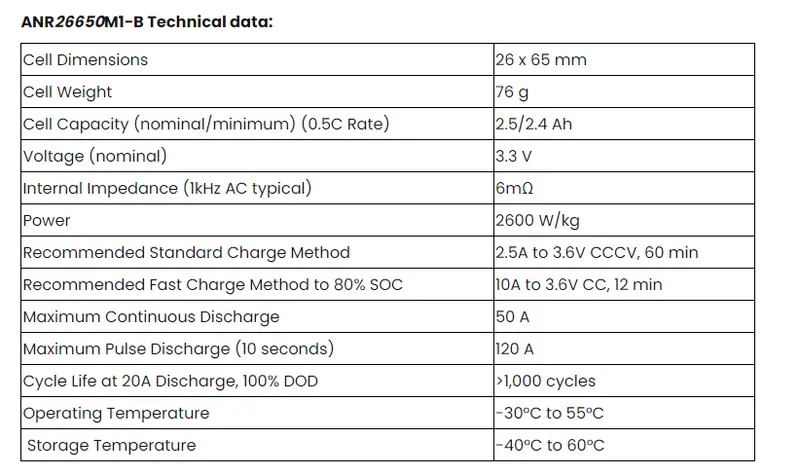
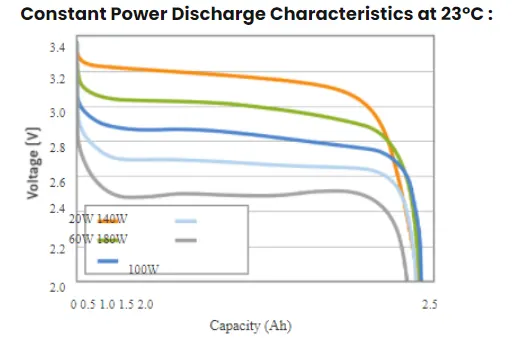
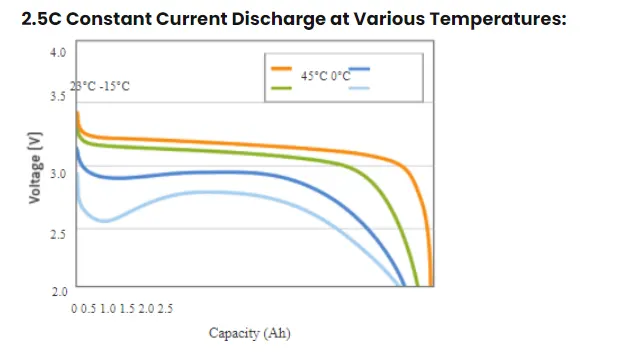
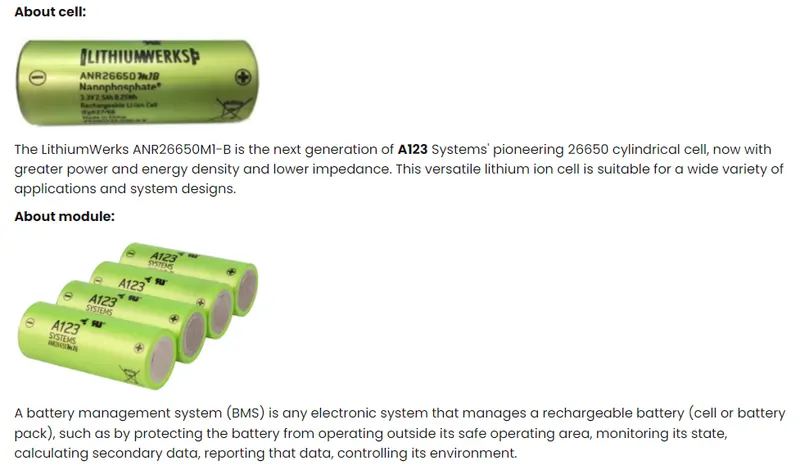
Cell:ANR26650M1-B
Prepare a detailed battery pack drawingalong withits enclosure. State your assumptions.
Ans:
Aim:To develop a mechanical design of battery pack based on the required energy capacity
Nanophosphate High Power Lithium Ion Cell ANR26650M1-B:
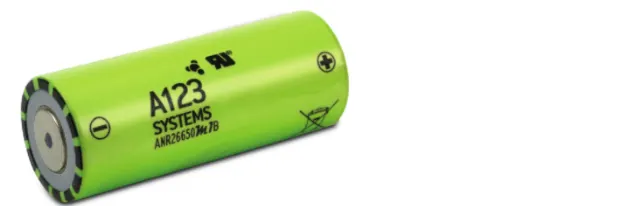
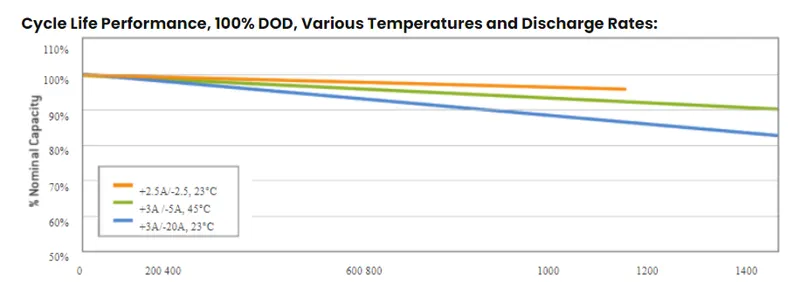
Al23's high-performance Nanophosphate lithium iron phosphate (LiFeP04) battery technology delivers high power and energy density combined with excellent safety performance and extensive life cycling in a lighter weight,more compact package. Our cells have low capacity Joss and impedance growth over time as well as high usable energy over a wide state of charge (soc) range,allowing our systems to meet end-of-life power and energy requirements witlh minimal pack oversizing.
Applications:
Commercial Solutions:
Advanced lead acid replacement batteries for:
- Datacenter UPS
- Telecom backup
- IT backup
- Autonomously guided vehicle (AGV's)
- Industrial robotics and material handling equipment
- Medical devices
Government Solutions:
- Military vehicles
- Military power grids
- Soldier power
- Directed energy
Grid Solutions:
- Frequency regulation
- Renewables integration
- Reserve capacity
- Transmission and Distribution
Transportaion Solutions:
- commercialvehicles
- Off-highway vehicles
- Passenger vehicles
Mechanical Design of battery pack:
The high voltage battery it is one of the most important component of a battery electric vehicle {BEV). The battery parameters have a significant influence on other components and attributes of the vehicle,like:
- maximum traction motor torque
- maximum regeneration brake torque
- vehicle range
- vehicle total weight
- vehicle price
Pretty much all major aspects of a pure electric vehicle {EV) depend on the parameters of the highvoltage battery. For our electric vehicle battery design we are going to start from 4 core input parameters:
- chemistry
- voltage
- average energy consumption of the vehic le on a driving cycle
- vehicle range
A battery consists of one or more electrochemical cells {battery cells) which are converting chemical energy into electrical energy {during discharging) and electrical energy into chemical energy {during charging). The type of elements contained within a battery and the chemical reactions during discharging-charging events define the chemistry of a battery.
A battery cell consists of five major components: electrodes - anode and cathode,separators,terminals,electrolyte and a case or enclosure. For automotive applications there are different types of cells used:
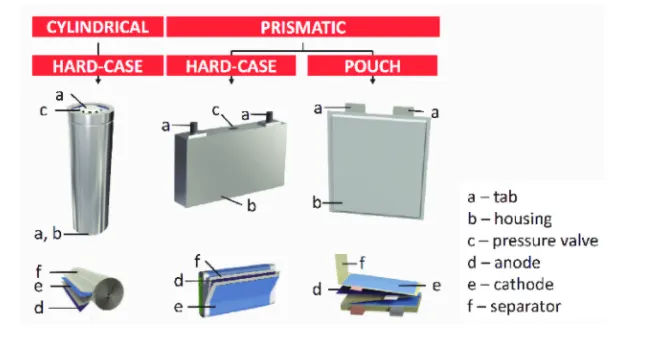
Individual battery cells are grouped together into a single mechanicaland electrical unit called a battery module. The modules are electrically connected to form a battery pack.
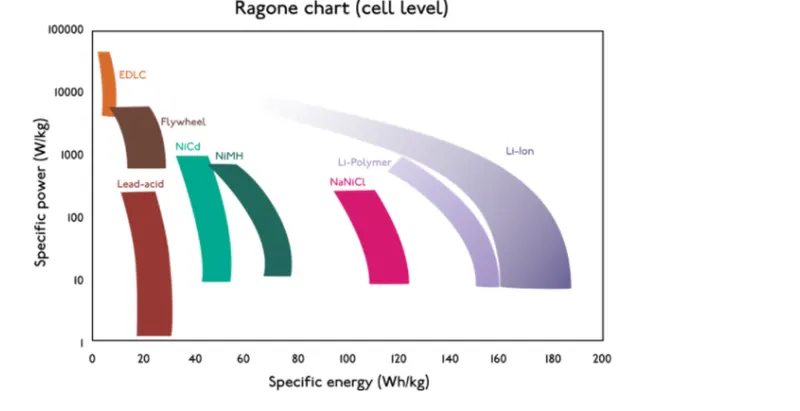
There are several types of batteries (chemistry) used in hybrid and electric vehicle propulsion systems but we are going to consider only Lithium-ion cells. The main reason is that Li-ion batteries have higher specific energy [Wh/kg] and specific power [W/kg] compared with other types.
EV design - Batterycalculation: Assumptions:
Battery energy = 18 kwh
Voltage (to run the vehicle} = 400V
(i) Energy = 18 kWh
- Number of cells (N) = energy / (nominalvoltoge * capocity)
N = 18000 I (3.3*2.5)
N = 2182
We need a minimum of 2182 cells to get 18 kWh energy,now based on that,we need to decide configuration - series and parallel.
In series configuration capacity remains the some and voltage will be the sum of individualcell voltage. In a parallel conf iguration,the voltage remains the some and capacity accumulates.
And we assumed 400 Volts ore need to run the vehicle. The nominalvoltage of one cell is 3.3 V
Number of series cells required to produce 400 V (Ns} = voltage required / nominalvoltage of one cell NS = 400 I 3.3
NS = 121.21= 122
122 cells ore connected in series will generate 400 voltage and the capacity of the whole module will be 2.5 Ah Now we need to f ind the number of cells which will be connected in a parallel configuration
Np (cell in parallel) = totalcell/ Ns
Np = 2182 I 122
Np = 17.8 = 18
Hence we toke 18 cells for each parallelrow,although it is exceeding the required capacity,that is negligible.
Cellarchitecture = 122 Series and 18 Parallel = 122S18P
(iii) Battery capacity:
We know parallel configured cell multiplies individualcell capacity so,
Capacity = parallelcell row*individuol cell capacity
Capacity = 18 * 2.5
Capacity = 45 Ah
(iv) current supplied by the battery
We have already calculated battery capacity which is 45 Ah means it is going to supply 45 A current per hour. which con be considered as C-rate.
(v) Range:
Let's powertrain energy consumption = 100 Wh/ km at 70% powertroin efficiency Range = Capacity / energy consumed per kilometre
Range = 18000 / 100
Range = 180 km
So,our vehicle will be able to cover around 180 km with current parameters.
(vi)Internal Resistance of Battery:
The entire resistance encountered by a current as if it f lows through a battery from the negative terminalto the positive terminal is known as internal resistance of battery.
(vii)Battery Dimensions:
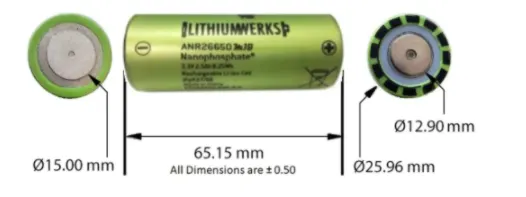
ANR26650 cell has 26mm diameter and 65mm height. On the basis of that we need to decide battery size of battery casing.
Length of casing (L) = number of cells at series•(cell diameter (26) + margin at both side of cell (4)) + clearance at side (diameter of edged cell + margin)
L = 122*30 + 60
L = 3720 mm
Breadth of casing (B) = number of cells at parallel*(cell diameter (26) + margin at both side of cell (4) + clearance at side (diameter of edged cell + margin)
B = 18*30 + 60
B = 600 mm
Height of casing (H) = 65+35 (Height of cell + margin for wiring ,Cell holders and metal strips)
H = 100 mm
(viii) Weight of battery pack
Cell weight = 76g
Number of the cells = 2182
Battery pack weight (w) = cell weight*number of cells + weight of accessories
w = 76*2182 + 4.5 = 165.8 + 4.5 = 170.3 kg
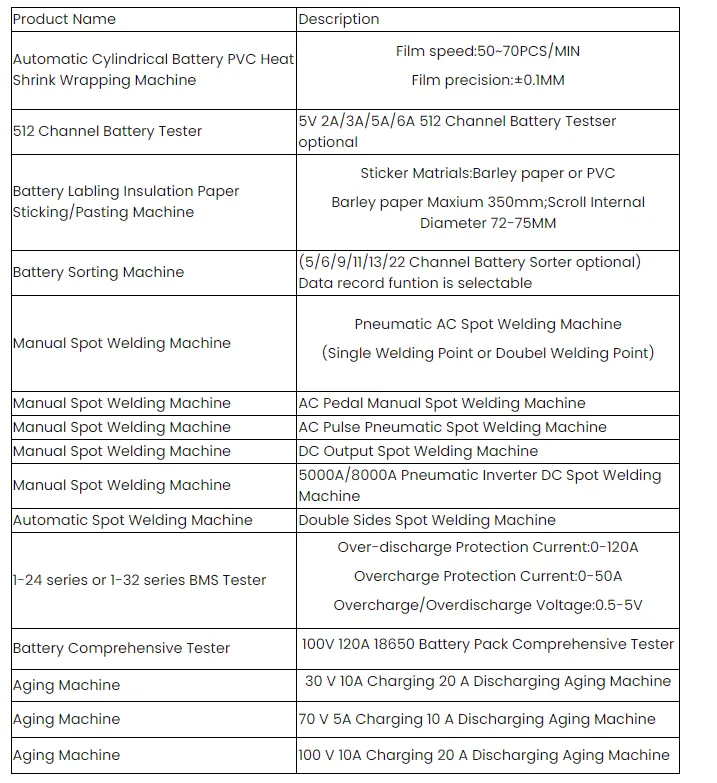
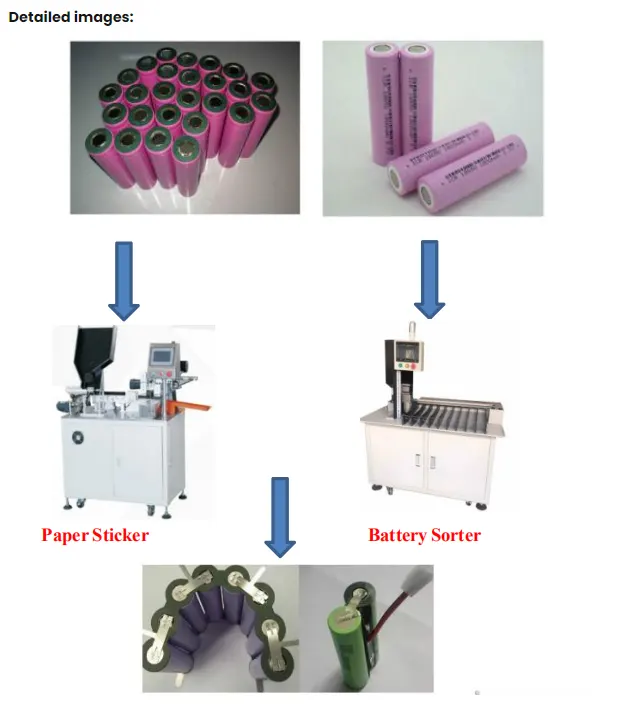
Cylindrical battery pack assembly equipment:
Conclusion:
Lithium Ion and Lithium Ion Polymer batteries are a great power source for some applications but they require preventive protection during discharging and charging.