Project 1 Mechanical design of battery pack
The Lithium Werks ANR26650M1-B is the next generation of A123 Systems’ pioneering 26650 cylindrical cell, now with greater power and energy density and lower impedance. This versatile lithium ion cell is suitable for a wide variety of applications and system designs. Proven performance in the toughest conditions, combining durability, reliability, and safety, the ANR26650 cell offers an excellent combination of price-performance. A123’s high-performance Nanophosphate® lithium iron phosphate (LiFePO4) battery technology delivers high power and energy density combined with excellent safety performance and extensive life cycling in a lighter weight, more compact package. Our cells have low capacity loss and impedance growth over time as well as high usable energy over a wide state of charge (SOC) range, allowing our systems to meet end-of-life power and energy requirements with minimal pack oversizing.
Nanophosphate because Nanophosphate® is a registered trademark for a Lithium Iron Phosphate battery technology that maximises the performance of the standard technology

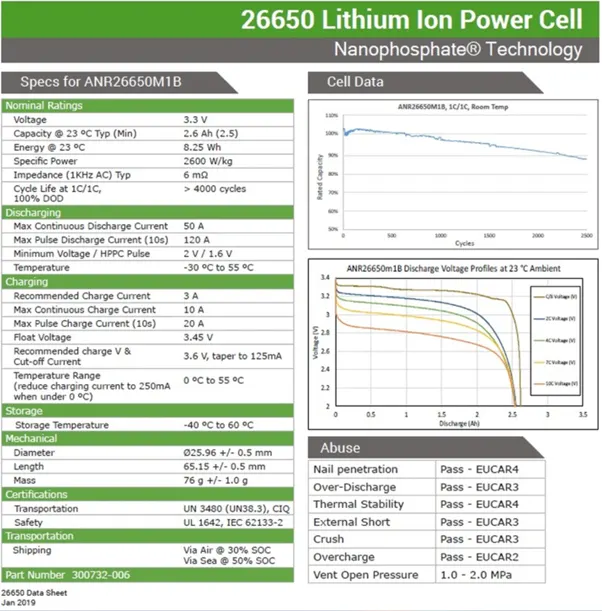
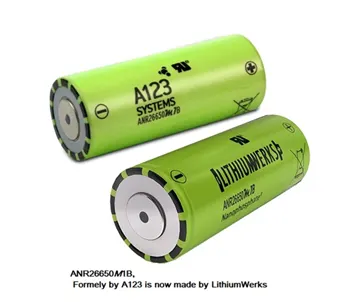
ANR26650M1-B Specifications
Nominal Ratings
Voltage: 3.3 Volts
Capacity: 2.5 Ah
Energy: 8.25 Wh
Specific Power: 2600 W/kg
Impedance (1KHz AC Typical) 6 mΩ
Cycle Life at 1C/1C, 100% DOD: > 4000 cycles
Cell Type: 26650 Lithium Ion Power Cylindrical Cell
Discharging
Max Continuous Discharage: 50 A
Max Pulse Discharge Current >50% SOC (10s): 120 A
Minimum Voltage: 2 Volts
Temperature: -30ºC to 55ºC
Charging
Recommended Standard Charge: 2.5 Amps
Max Charge Rate: 10 Amps
Max Pulse Charge Current <50% SOC (10s): 25 A
Float Voltage: 3.45 Volts
Recommended charge V & Cut-off Current: 3.6 Volts, taper to 125mA
Temperature
(reduce charging current to 250mA when under 0ºC): 0ºC to 55ºC
Mechanical
Diameter: Ø25.96 +/- 0.5 mm (1.0")
Length: 65.15 +/- 0.5 mm (2.6")
Mass: 76 g
Nanophosphate® LiFePO4 Benefits
- Cycle Life at 1C/1C, 100% DOD, > 4000 cycles
- Safety: Excellent abuse tolerance and environmentally friendly
- Life: Excellent calendar life, 10X cycle life vs. conventional lithium ion
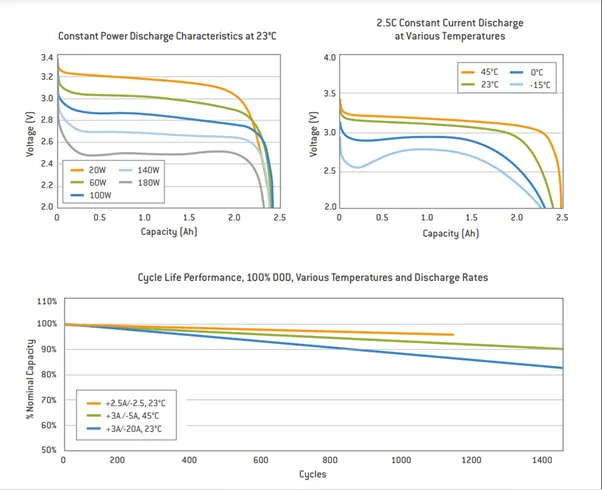
Google Link: https://www.tme.com/in/en/details/accu-anr26650m1b/rechargeable-batteries/lithium-werks/anr26650m1b/
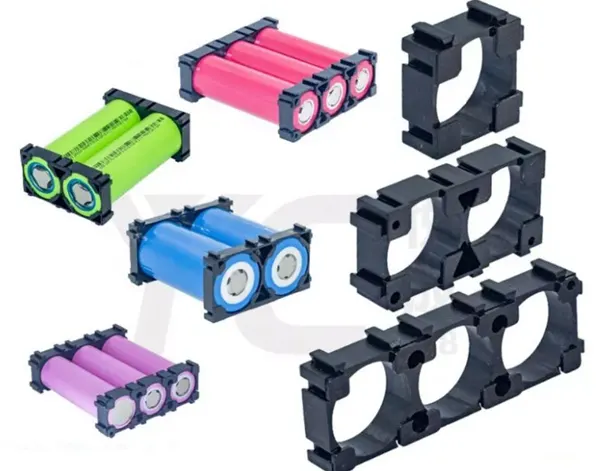
Cell Holder:
 Nick
Nick
Nickel strips are used
It is generally used in the welding of battery points together to connect the batteries in combinations. These Nickel strips are popular because of their good performance while soldering as it gets soldered very quickly and easily with normal soldering metal with High tensile tension and Low resistivity.
They are mainly used in the manufacture of nickel-hydrogen batteries, lithium batteries, high magnification power tools batteries
- High Tensile Tension.
- Low Resistivity.
- Useful for battery points welding.
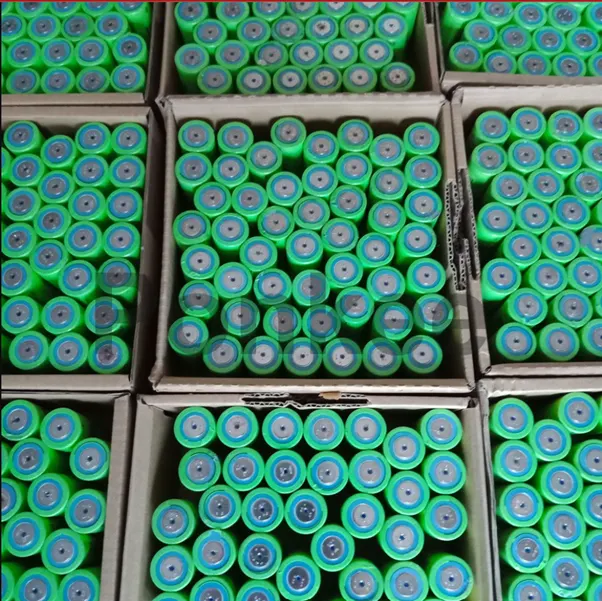
Assumption:
Cylindrical Cell Primary Applications:
Portable high power devices
Stationary battery backup systems
Grid stabilisation energy storage systems
Commercial truck and bus hybrid electric vehicles (HEVs)
ANR 26650:
Calculation for 18kWh Battery Pack depending upon (V)
Parameter and ampere hour or capacity (Ah).
Designing a high voltage battery pack for an electric vehicle to achieve its range upto 200km.
I assumed 150V is a nominal voltage for series connection.
Total Volume of the battery Pack
Cell Capacity (Ah) X Cell Voltage (V)
= 2.6 X 3.3
= 8.58Wh
The value of a single cell is used to calculate the total energy of the battery pack.
- Volumetric Energy (Wh/m3) = Single Cell Energy/ Volume of each cell
= 8.58/0.0346= 247.9Wh/m3
Volume = πr2h
= πx(12.98)2x65.16
= 34466.2
= 0.0346m3
- Gravimetric Energy (Wh/kg) = Single cell energy / Single cell mass
= 8.58/0.076
= 112.89 Wh/kg
For design and calculation of battery pack I assumed a vehicle to achieve 300km in 18kwh battery pack. Also I assume 150V nominal voltage for series connection.
If the vehicle range = 300km
Battery Pack capacity = 18.120kwh
= 18120wh
We will calculate/km average capacity = 18120/300 = 60wh/km
Therefore
The Total Energy of a Battery Pack = Avg. energy X km
= 60 x 300
= 18000wh
= 18kwh
Let Assume,
Nominal Voltage for series connection = 150V
Then number of cells connected in series,
Nominal Voltage of series connection/ Nominal Voltage of a Single Cell
= 150V/3.3 V = 45.45 = 46 Nos
46 Cells will be connected in a series connection to provide a proper voltage.
Energy for battery Pack (46 X 8.58 Wh)
= 394.68 Wh
Number of cells connected in parallel
Battery pack total Energy (Wh)/ Energy for battery pack (Wh) = 18000/394.68 = 46 Nos
46 no of cells are connected parallel and provide a required power.
The Total energy of Battery Pack (Wh)
= No of cells connected in parallel x Energy for battery pack(Wh)
= 46 X 394.68
= 18155.28 Wh
=18.155 kWh
Battery pack capacity
No of cells connected in parallel X Single Cell Capacity (Ah)
= 46X2.6Ah
=119.6 Ah
The value of the battery pack capacity is used for total power required by the vehicle
Total no of cells for the battery pack
=No of cells connected in series X No of cells connected in Parallel
= 46 X46
= 2116 cells
2116 no of cells will be used to make a complete battery pack
Mass of Total Battery Pack
=(2116x0.076)kg
= 160.816kg
Total volume of the battery pack
2116 X volume of single cell
= (2116 X 0.0346)m3
= 73.21 m3
Peak Current of the Cell Pack (A)
Max Pulse Charge Current (C-rate) X single cell Capacity
= 20 X 2.6A
= 52A
Peak current of the Battery Pack (A)
Cell Peak current X No of Cells connected in parallel
= 52 X 46
= 2392A
If the vehicle is decide to move the required power should be,
Battery Pack peak Current X Voltage in Series Connection
= 2392 X 150
= 358800
= 358.80W
Continuous cell current (A)
= Create Maximum Continuous charge current X Single cell capacity
= 10 X 2.6
= 26A
The battery Pack continuous current (A)
= Cell Continuous current X no of cell connected in parallel
= 26 X 46
= 1196A
That is the power supply continue to the whole battery pack system.
Battery pack continuous power (W)
= Battery pack continuous Current X Voltage in series connection
= 1196 X 150
= 171900
= 17.190kWh
We know that
Power = Voltage X Current
= 3.3 X 2.6
= 8.28kW
To get the 18kWh power we can assuming 48S48P battery Pack
Therefore , 48 X48
= 2304 nos of cell
For series connection (48X3.3) = 158.3 V = 160V
For Parallel connection (48 X 2.6) = 120A
From this we can get (160 X120) = 19200Wh = 19.200kWh
We design battery pack for 48S and 48P cell along with battery space to hold the cell and for their connection nickel trips are used.
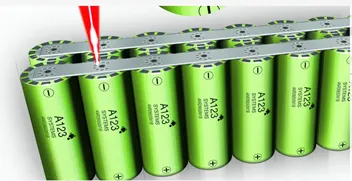
When the cells are connected by nickel strips by spot welding , that cell not get damaged. excellent cycle life and superior cost performance. It provides the foundation for safe systems while meeting the most demanding customer requirements. Multiple layers of protection are employed at the chemistry, cell and system level to achieve an energy storage solution with superior safety
Application :
- Energy storage • Frequency regulation • Uninterruptible Power Supplies • Communication technologies • Aviation/Aerospace • Electrified mobility devices • Industrial equipment • Medical devices • Consumer Products
Battery Construction
This is how we need to set our battery pack
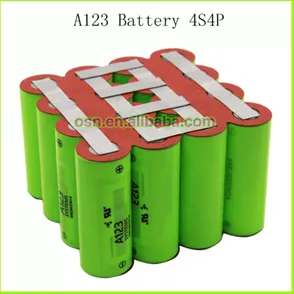
Selecting the Right Cells:
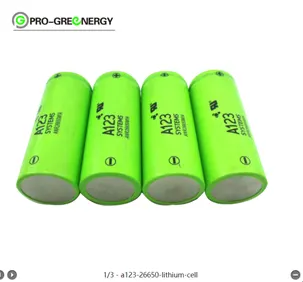
Choosing the Right Strips:
Cut the nickel strips and Pure Nickel Strips are mainly used in the battery welding and soldering field due to the fact that they can easily be soldered and welded; Pure nickel is widely used in our daily life due to its outstanding oxidation resistance, corrosion resistance, low resistance and high conductivity.

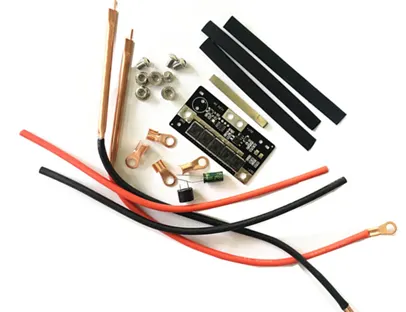
Soldering or Spot Welding: To start a tin solder, you need a soldering iron, tin wire, sponge and a clear workspace.
Welding is done by the two pieces of metal to be welded and by applying wire solder that melts in the heat and combines with the pieces to be welded. This allows obtaining a metallic bond between the two sides, which ensures electrical continuity and mechanical strength
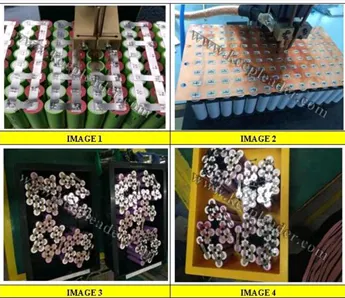
Check the Pack voltage & Current:
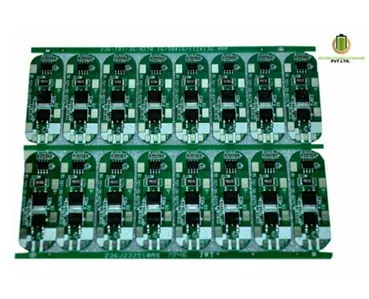
Assemble the Pack 26650 cells

Add to BMS:
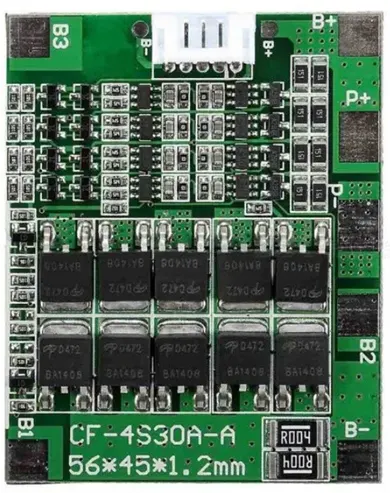
a BMS board is installed at each cell, with just a single communication cable between the battery and a controller. A battery management system (BMS) is any electronic system that manages a rechargeable battery (cell or battery pack), such as by monitoring its state, calculating secondary data, reporting that data, protecting the battery, controlling its environment, and balancing it.
- Continue checking the series and parallel group of connection from the power source to full charged .
- Cell balancing is very important.
- Over charging should be noticed.