Project 1 Mechanical design of battery pack
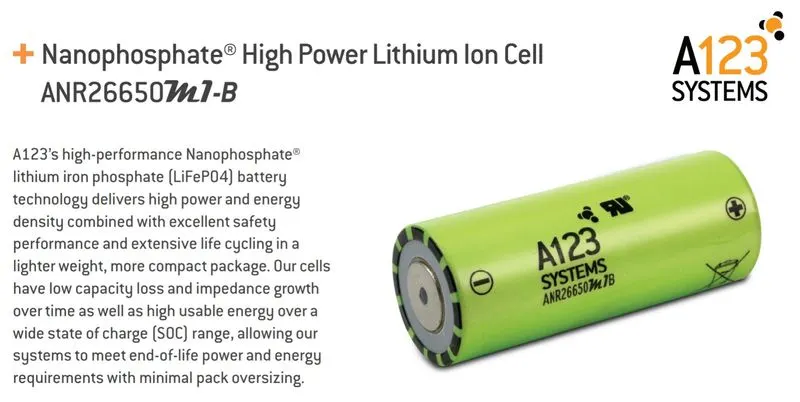
- ANR26650M1-B manufactured by Lithumweks.
https://datasheetspdf.com/pdf/1424845/A123Systems/ANR26650M1-B/1
- Nano phosphate Battery technology
This is based on the Lithium iron phosphate - LiFePO4 and nanophosphate tech. They hyave the abality to delliver very high power and can operate over a very huge range of temperature without encountering excessive losses .
This makes them safer for operation when compared with some other options .
They also have a very long life cycle and are more reliable
The nano tech is responsible for the fast charging and is thermally stable
The battery design itself is layered with multicell level embeded protection from any surges.
It has a very high energy storage capacity .
Cell Applications :
- datacenter UPS
- telecom backup
- IT backup
- Autonomosly guided vehicles
- Industrial robotics and materials
- medical devices
- military vehicles
- military power grids
- soldier power
- direct energy
- frequency regulation
-renewable integration
- reverse capacaty
- transmission and distribution
- commercial vehicles
- off highway vehicles
- passenger vehicles
Battery terminology :-
Battery: A battery is a unit that creates electrical energy from stored chemical energy. Strictly it consists of two or more cells connected in an appropriate series / parallel arrangement to provide the required operating voltage and capacity to meet its operating requirements.
Anode: It is the electrode at which an oxidation reaction occurs. This means that the electrode is a supplier of electrons. However the electron flow reverses between charge and discharge activities. As a result, the positive electrode is the anode during charging and the negative electrode is the anode during discharging.
Cathode: It is the electrode in a battery or other system at which a reduction reaction occurs. In this, electrode takes up electrons from an external circuit.
Electrode: The electrodes are the basic elements within an electrochemical cell. There are two in each cell: one positive and one negative electrode. The cell voltage is determined by the voltage difference between the positive and the negative electrode.
Electrolyte: The definition of the electrolyte within a battery is that it is the medium that provides the conduction of ions between the positive and negative electrodes of a cell.
Capacity: In a battery or cell It is defined as the amount of energy that can be deliver in a single discharge. Battery capacity is normally specified in amp-hours for larger batteries and mill-amp-hours for smaller batteries. i.e
Cell: The definition of the cell is the basic electrochemical unit that is used to create electrical energy from stored chemical energy or to store electrical energy in the form of chemical energy. A basic cell consists of two electrodes with an electrolyte between them.
Charge capacity: The capacity of a battery is often referred to as the charge capacity as this is the amount of charge the battery can hold.
Charge rate or C-rate : Charge rate or C-rate of a battery or cell is the charge or discharge current in Amperes(A) as a proportion of the rated capacity in Ah. For example, in the case of a 500 mAh battery, a C/2 rate is 250 mA and a 2C rate would be 1 A.
Constant-Current Charge: This refers to a charging process where the level of current is maintained at a constant level regardless of the voltage of the battery or cell.
Constant-Voltage Charge: - This definition refers to a charging process in which the voltage applied to a battery is held at a constant value over the charge cycle regardless of the current drawn.
Cycle Life: The capacity of a rechargeable cell or battery changes over its life. The definition of the battery life or cycle life of a battery is number of cycles that a cell or battery can be charged and discharged under specific conditions, before the available capacity falls to a specific performance criteria.
Cut-off voltage: As a battery or cell is discharged it has a voltage curve that it follows - the voltage generally falling over the discharge cycle. The point at which the charging or discharging is cut off may also be referred to as the End-of-Discharge voltage.
Deep Cycle: A charge discharge cycle in which the discharge is continued until the battery is fully discharged. This is normally take to be the point at which it reaches its cut-off voltage, typically 80% of discharge.
Energy Density: The volumetric energy storage density of a battery, expressed in Watt-hours per litre (Wh/l).
Power Density: The volumetric power density of a battery, expressed in Watts per litre (W/l).
Primary Rated Capacity: The capacity of a battery is expressed in Ampere-hours, Ah and it is the total charge that can be obtained from a fully charged battery under specified discharge conditions. This is effectively a more exact term for the capacity of the cell or battery.
Self-Discharge: Batteries and cells will lose their charge over a period of time, and need re-charging. This self-discharge is normal, but various according to a number of variables including the technology used and the conditions. Self-discharge is defined as the recoverable loss of capacity of a cell or battery. The figure is normally expressed in a percentage of the rated capacity lost per month and at a given temperature. The self-discharge rate of a battery or cell is very dependent upon the temperature.
Secondary cell: A secondary cell is one that can be recharged.
Separator: This battery terminology is used to define the membrane that is required within a cell to prevent the anode and cathode shorting together. It basically seperates the two
Specific Energy: The gravimetric energy storage density of a battery, expressed in Watt-hours per kilogram (Wh/kg).
Specific Power: The specific power for a battery is the gravimetric power density expressed in Watts per kilogram (W/kg).
Trickle charge: This terms refers to a form of low level charging where a cell is either continuously or intermittently connected to a constant-current supply that maintains the cell in fully charged condition. Current levels may be around 0.1C or less dependent upon the cell technology.
Battery Dimentions and Charastricts :-
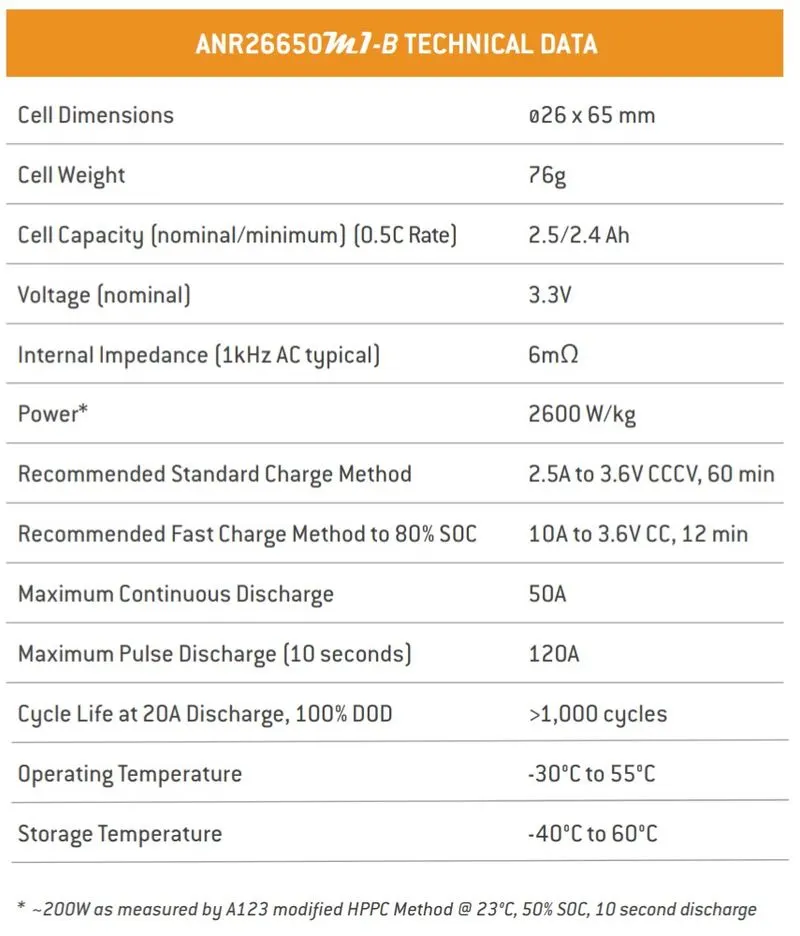
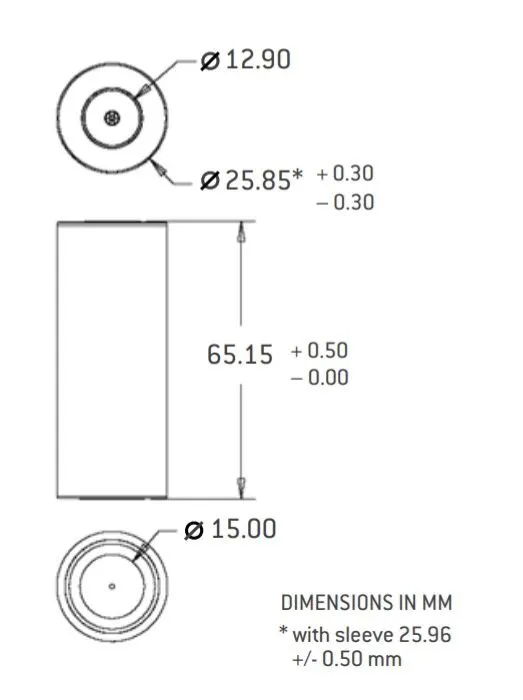
The above table gives all the required specifications and dimensions of the battery which can be used in building the housings and design the battery pack connections etc .
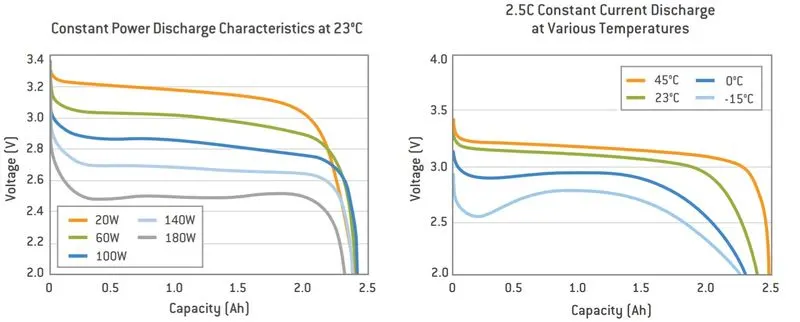
The above two graphs give us an idea of how the battery performs under varying loads and temperature conditions . With this the operational ranges of the battery can be set .
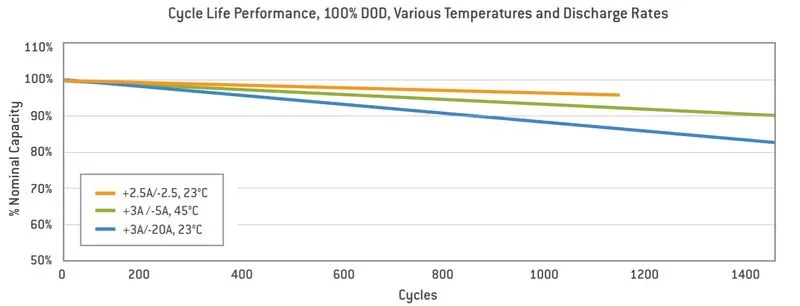
This gives us an idea on how the charging cycles can be desgned and how long the battery lasts , its service life will be determined using this .
Construction of the Battery pack:
Assumptions :
Cell Used - ANR26650M1-B
Pack capacity - 18kWh
Power draw - 800V
Used for a hybrid vehicle (As new trends suggest for 800V systems )
Construction :
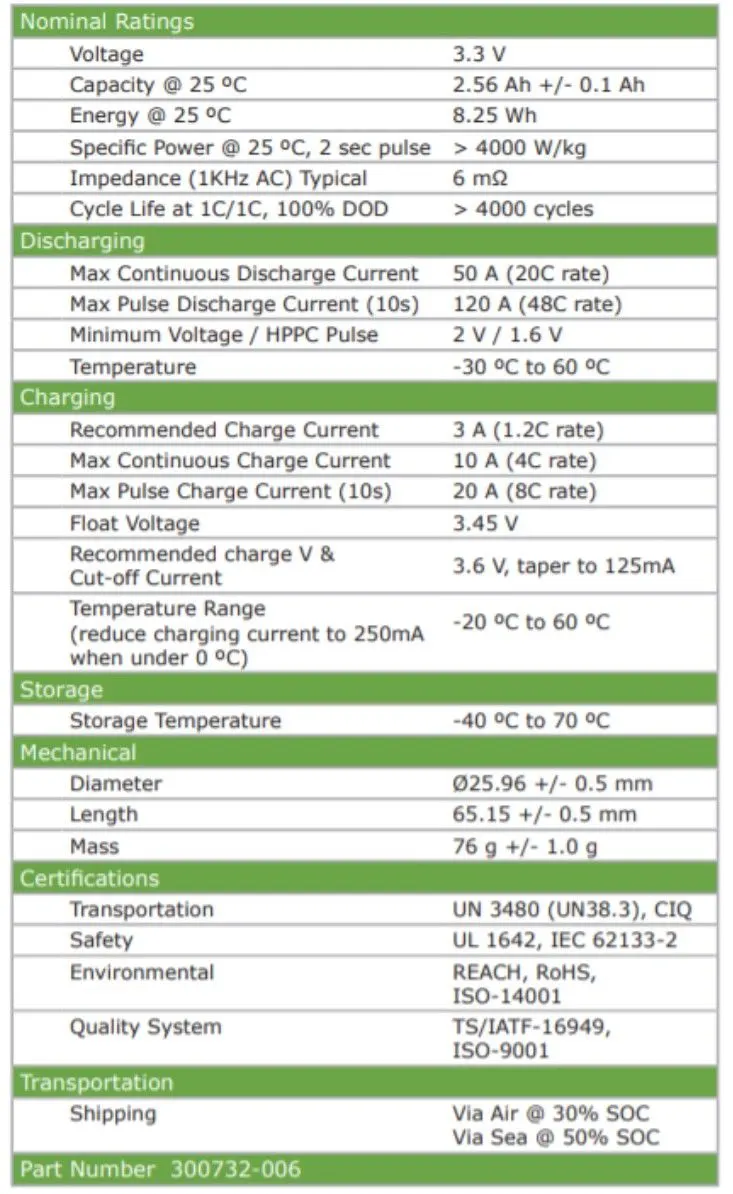
For this case, as each cell is a 3.3V and a capacity of 2.56Ah thus energy provided 8.25 Wh per cell, we know that the design must be suitable for 18 kWh of output . thus 18000/ 8.25 = 2182 cells (approx). Thus if we design each model or stack to account for 400V as thats the needed output .
Thus we can determine based on the current and voltage flow parameters of series , we make the stack in series for voltage addation thus 800/3.3 V = 244 cells (approx)
Then the total no of stacks required 2182/ 122 = 9 (approx)
thus the connection of battery must be 9P244S (9 stacks connected in paralled and each stack having 244 cells in series )
This will give us
9 * 2.56 = 23 Ah capacity
244 * 3.3 = 805 V
Thus the battery pushes 23A of current at 800V for 1 Hr . which will be 1 C discharge
Enclosure Design :
Now that we know the requirements and the dimensions of each cell we can stack it up and design the enclosures
The enclosure must be
- Robust
- lined with insulations
- should allow for cooling
- Vibrations must be damped
- In case of any leaks must be protected for passengers
- vents must be provided for any gases to escape
Hear as 244 cell are present for space constraints, we divide them into sets of 4 61+61+61+61
each module will take approximately
Length = no cells*(dia+clearence)+extra clearence for walls
61*(26+4)+60 = 1890 mm
breadth = cell dia + error gaps+ clearence
26+4+60 = 90 mm
hight = hight cell+connecting strip gaps + clearence
65+25+10 = 100mm
volume for each series module is
1890*90*100 = 0.01701 m3
no of modules 9 * 4 = 36 modules
volume required = 0.01701*36 = 0.61236 m3
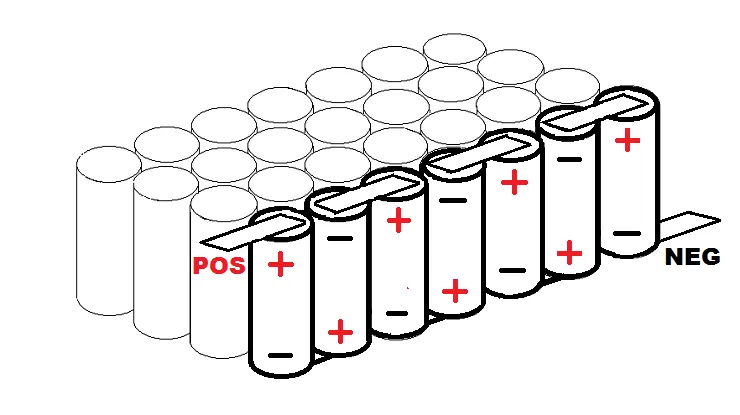
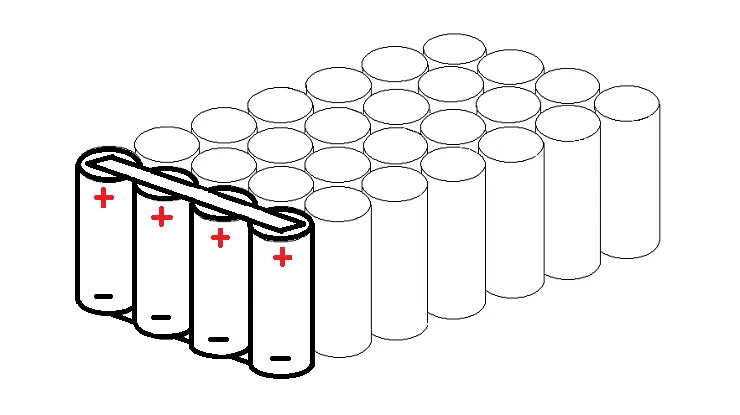
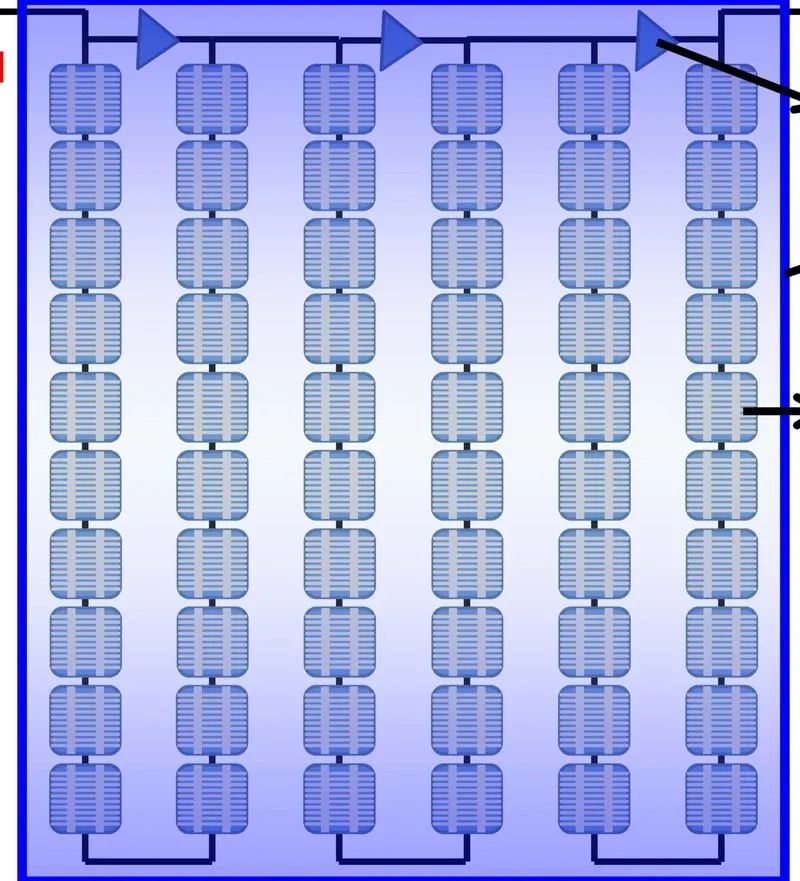
Cell connection in series
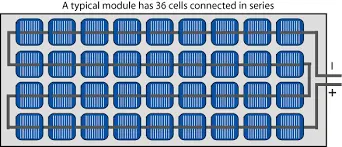
Cell connection in parallel
Joining of cells :
- ultrasonic metal weld
- resistance welding
- laser welding
- wire bonding
- machanical joining
As this is a design for EV battery pack having a very high voltage, In a industrial and quality level we will prefer to use laser weld as this is the most precise and can be done robotically wlemanating any gaps or imperfections . (reference given for benifits [4][5])
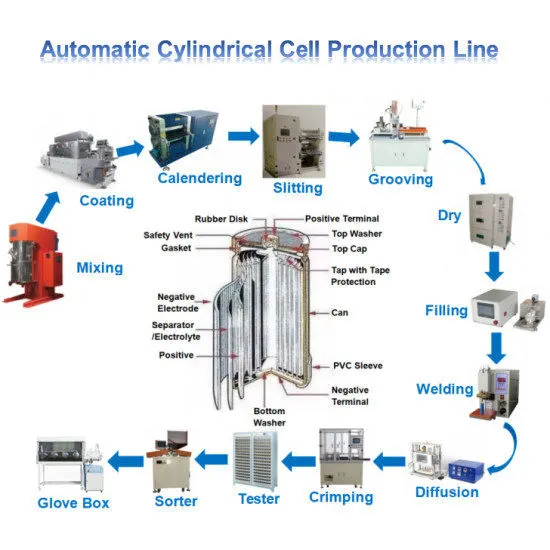
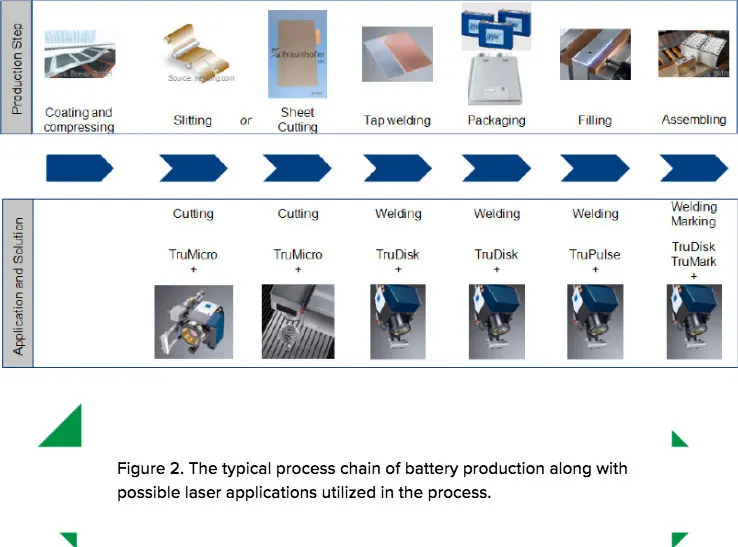
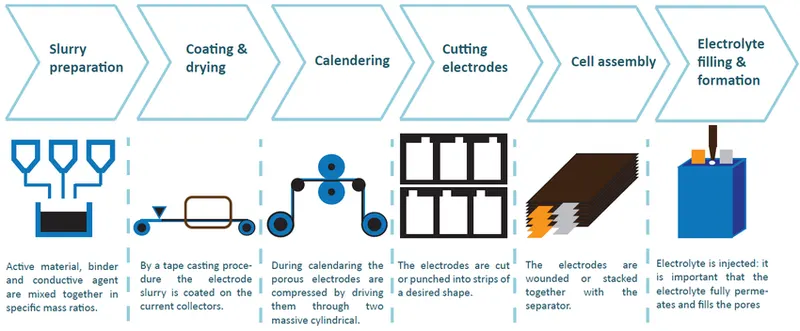
The generic manufacturing flow is given in the below chart
Reference :
2 https://datasheetspdf.com/pdf/1424845/A123Systems/ANR26650M1-B/1