Project 1 Mechanical design of battery pack
Here as per the given question we have to design a battery pack of capacity 18 kilowatt hours. Since only KWh capacity is mentioned we have to assume either voltage or current capacity of the battery pack. I am assuming the voltage capacity of the battery pack and let's suppose it would be 110 volts.
Now the given cell model number we have downloaded the Datasheet in the Datasheet parameters we can observe that barriers parameters of the battery like nominal capacity cell weight cell dimensions power capacity etc.
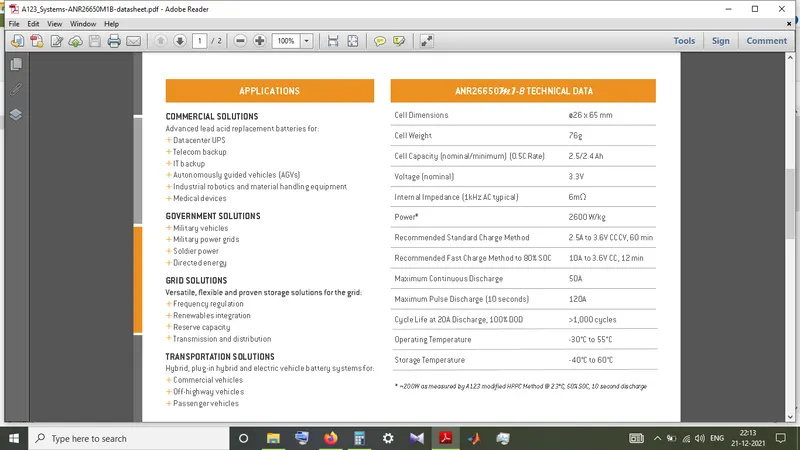
Here the battery nominal voltage mentioned in the Datasheet is 3.3 volts. In order to make a battery Of 110 volts output nominal output voltage we need to connect 110/3.3= 33.33(approx 34) Cells in series. So by connecting 34 cells in series we get an output voltage of 112.2 volts which is almost nearer to our required value. We can also mitigate this excess 2.2 volts by using zeiner diode or normal diode and creating some voltage drop in order to match our 110 volts requirement.
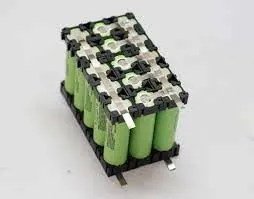
Here in the question the battery pack capacity is mentioned as 18 kWh. As we have considered voltage of our battery pack as 112.2 V the required AH capacity of the battery is calculated as 18000WH/112.2= 160.42AH.
In the first case we have connected 34 cells in series which will have Implication on the overall voltage of the series connected cells but empire hover capacity remains same that is the capacity of the individual cell which is 2.5 AH nominal.
In order to make a battery pack of capacity 160.42 AH, of 112.2V I.e., Equivalent to our desired 18 KWh battery pack we have to connect. 160.42AH/2.5= 64.16( appxox 65) set-in parallel.
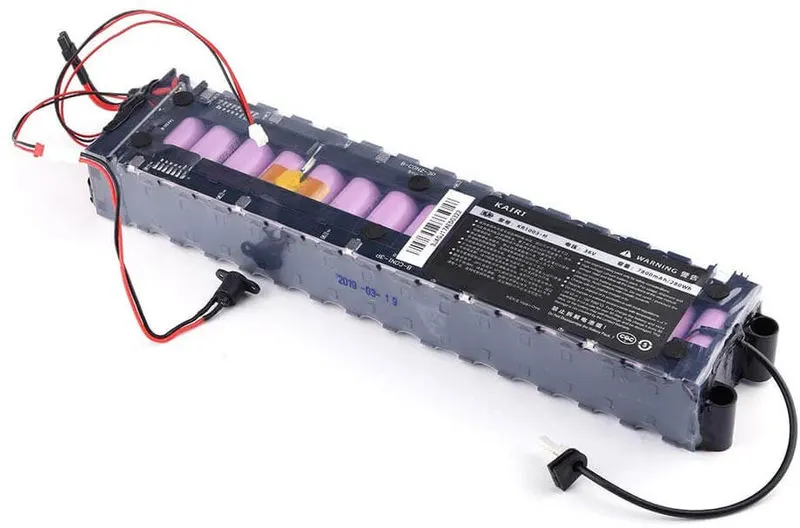
So what can we understand from this is in order to obtain the desired capacity we need to make an arrangement of 34 cells in series and we need same such arrangement in 65 sets. The total quantity of cells required would be 34 * 65 = 2210.
From the above we have obtained the quantity of the required cells no we have to work on the space requirements of the battery back.
From the Datasheet we can see that battery he’s off 26 mm Diameter and 65 millimeter length. Since we need to leave some gap between the cells because of their conical shape And in order to regulate the temperature of the battery pack we have to use some medium in between the battery packs for insulation and for cooling like veins in which coolant can travel like a Tesla battery pack. So I’m rinding of this 26 millimeter conical structure into a 30 by 30 square shape with 65 +5 millimeter for each cell. The 5MM added vertically in order to compensate the connections on both positive and negative ends.
So the entire volume of each cell considering all the assumptions would be 30*30*70 = 63000 cubic milliliters = 0.63 liters. Since we are connecting 34 cells in series as a set the total volume required buy single set would be 0.63*34=21.42 liters. Since we need 65 numbers of those sets the total volume for the entire battery pack would be 21.42 * 65= 1328.04 liters.
In terms of lengths and breath dimension Can be given as, since all the cells in a set are connected in series we are going to fix them in two rows off 17 each. This would be easy for connections also. So the dimension of a single set would be 510(L)×60(W)×70(H). all the dimensions are in MM.
Since we need 65 sets in the same fashion to be connected in parallel we are going to consider a block with 13 rows(length wise) and five columns(height wise) which will accommodate this 65 number of sets.
Now the overall dimension of the battery pack would be 510(L)×780(W)x350(H). all the dimensions are in MM.