Project 1 Mechanical design of battery pack
Project 1: Mechanical design of battery pack.
Project 1: Mechanical design of battery pack.
Battery pack capacity: 18 kWh
Cell: ANR26650M1-B
Prepare a detailed battery pack drawing along with its enclosure. State your assumptions.
Objective:
To create a battery pack drawing of 18KWh, cell ANR26650M1-B
To discuss about the enclosure used for battery pack.
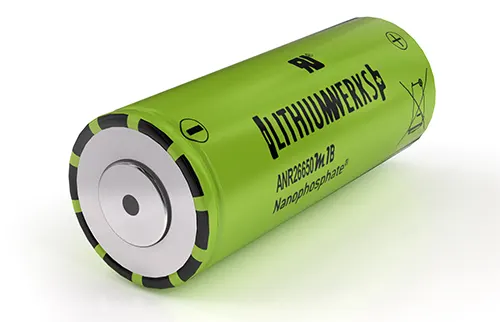
Li-ion cell(ANR26650M1-B):
Lithiumwerks is a leading producer of high performance Li-ion batteries. They deliver power with a high voltage and are easily adaptable to stand by applications. The cells are safe and can maintain their stability over a wide range of conditions.
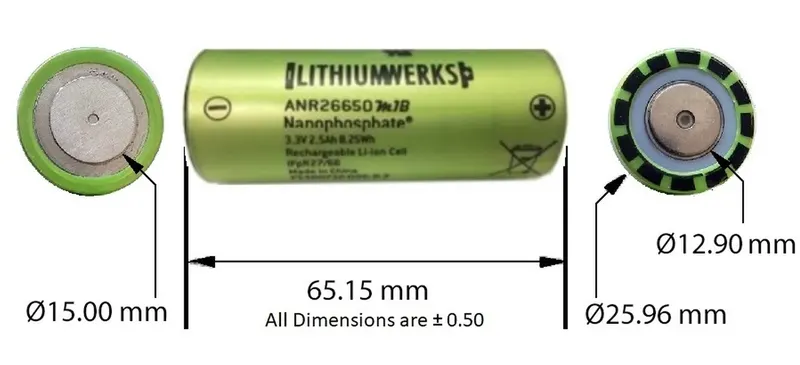
Dimensions:
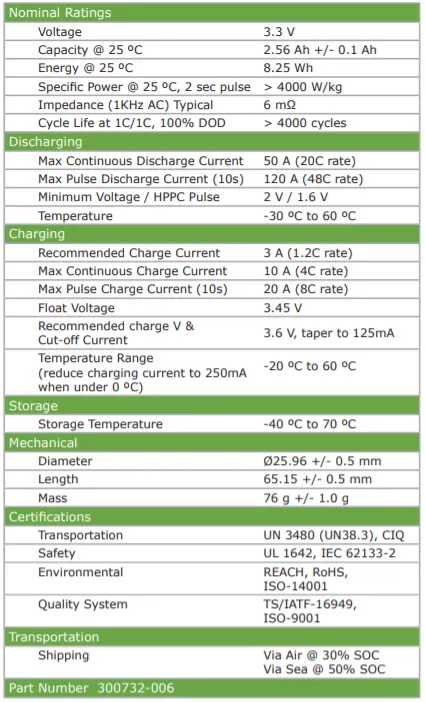
Cell specifications:
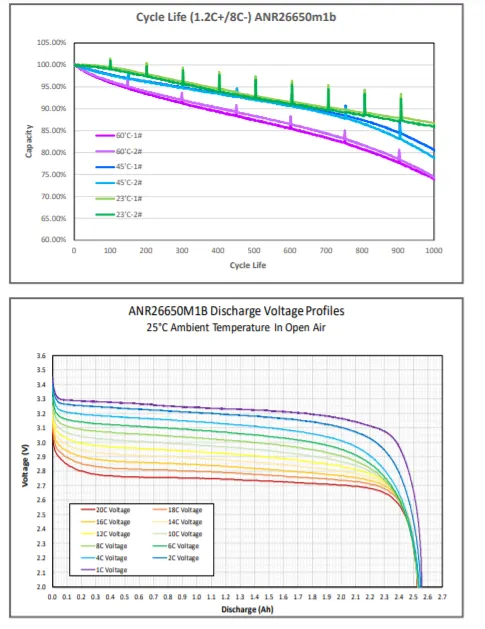
Discharge voltage profile and cycle life with respect to different operating temperature from data sheet:
Assumptions:
We are assuming the overall voltage required to operate the motor and other acessories of electric vehicle as 400V.
So we have construct the battery pack of 18KWh for a 400 V input voltage motor.
Construction of battery pack:
Before designing a battery pack, it is important to know the overall load requirement of the vehicle. You can easily accomplish this by estimating the voltage requirement of the load in series or parallel connections. The voltage requirement should be matched with the load.
For 18KWh battery pack,we need approximately 18000/ 22182 cells. To obtain 400V,we have to create a single module which will give 400V. This module will be connected in series where voltage and current are same.
The energy generated from one module is equivalent to 118*8.25Wh.To construct a battery pack that has 18KWh and doesn't exceed 400V,the modules should be connected parallel.This method will allow you to achieve 18KWh battery pack with no voltage increase.
To obtain 400V, no of cells required is approximately(400/3.3=122 cells).
Thus single module gives as 400V from 122 cells but energy of one module is not enough to run the vehicle as motor power rating is higher.The energy generated from
single module is (122*8.25Wh=1006.5Wh).
So to construct a battery pack with 18KWh with not exceeding 400V the modules are connected in parallel.In this parallel connections the currents are getting added and
voltage remains same as 400V.As current increases the power of battery pack increase to run the motor load of high power rating.
Now we have to find how many similar modules should be connected in parallel to acheive 18KWh battery pack.
This can be calculated as (18KWh/1006.5Wh =17.88),which gives as nearly 18 similar modules should be connected in pararallel to acheive 18KWh battery pack.
Thus the battery model is said to be 122S18P configuration(122 series and 18 parallel connections),which gives us (122*18 =2196 cells).
From this we have created overall capacity of battery pack as (2196*8.25Wh=18117Wh) which is slightly higher than 18KWh.
The overall Capacity(Ah) of battery pack is given as (2.5Ah * 18 = 45Ah).
Which means it provided 45 A of current continuously for one hour to full discharge.
Thus 18 modules should be arranged in a way as battery pack to fit in an EV chasis.
Enclosure construction:
To find overall enclosure volume we have to find the volume of single module volume consist of 122 cells in series connection and multiplied with 18 parallel connected module volume.
Single module,
Let as assume 122 cells(single module) are divided into 2 modules of 61+61 cells.
The length of the module=No.of cell in row*(Cell dia + Margin at both side of cells) + clearance at side(2(cell dia + margin)).
=61*(26+4) +60 =1890mm.
The bredth of the module=(cell dia +Margin of both side of cells + clearance)
=26+4+60 =90mm.
Height of the module=Height of cell + connectiing strip thickness,wires say 35mm
=65+35 =100 mm.
Thus the volume required for single module is 1.8*0.09*0.1 = 0.0162 m3.
The total volume of battery pack required to be constructed with two modules is 0.80 m3. In other words, the total volume of battery pack should be about 1m3 of volume.
Assume that two modules are combained into one cabinet. So 18 cabinets should be connected to form final battery pack.
Materials and process in battery pack construction:
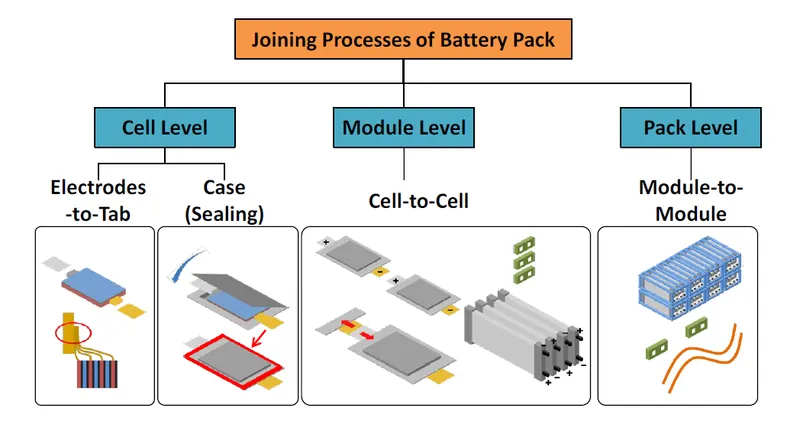
Battery pack constructions are made up of three levels of processings, namely, cell level, module level, and pack level. Electrolyte is used to combine the various cell models.
Joining technologies of cells:
The interconnections between cells/modules are practised by various welding techniques.Some of them are,
- Ultrasonic metal welding.
- Resistance welding.
- Laser beam welding.
- Wire bonding.
- Mechanical Jooining.
Ultrasonic metal welding:
Solid-state welding is a process that uses an ultrasonic oscillation to form a bond between two parts of metal. It does so by removing plastic and oxide layers.
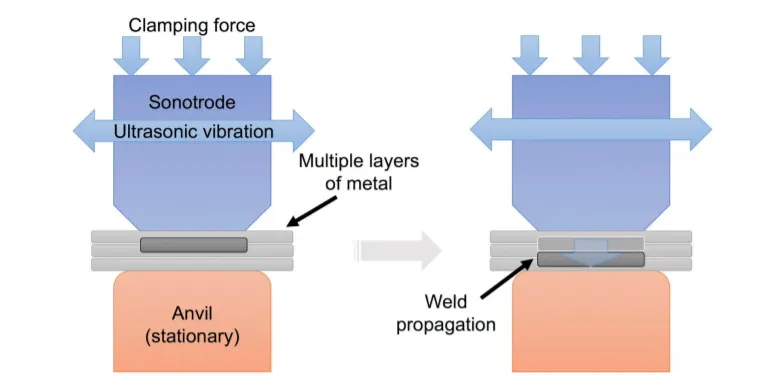
The four types of materials welded in this process can be seen as,
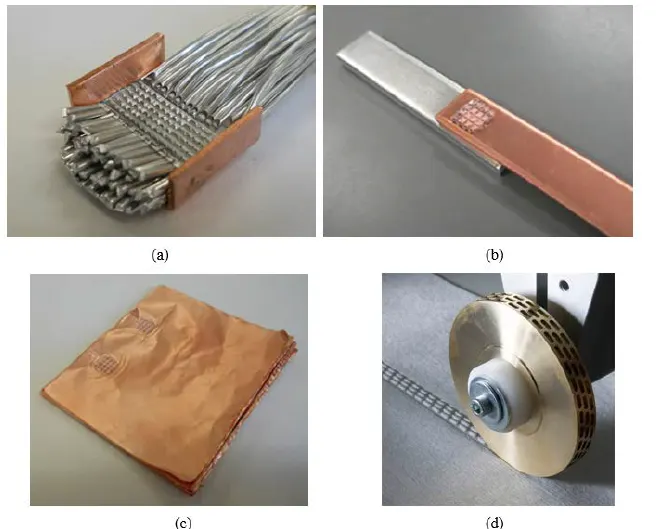
a)Aluminium wire welding on copper.
b)Copper and aluminium welding.
c)Multilayered copper foil welding.
d)Ultrasonic seam welding.
Resistance spot welding:
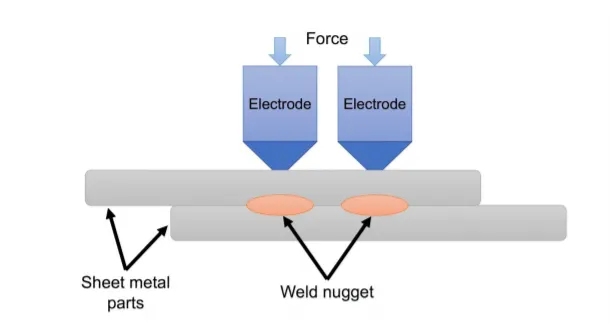
Resistance spot welding or RSW is a technique that involves the simultaneous welding of two or more metal sheets using a pressure-and-voltage interface. The process generates heated and melting parts of the materials without the use of additives or chemicals.
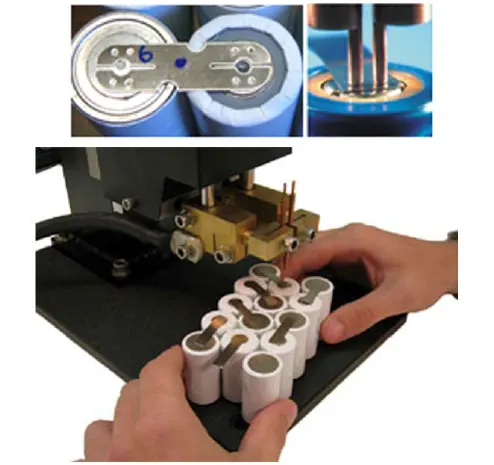
Laser beam welding: Laser beam welding is a technique that uses a laser beam to create a concentrated heat source that draws materials together. In this method, the high power density of the beam causes the metal to evaporate.
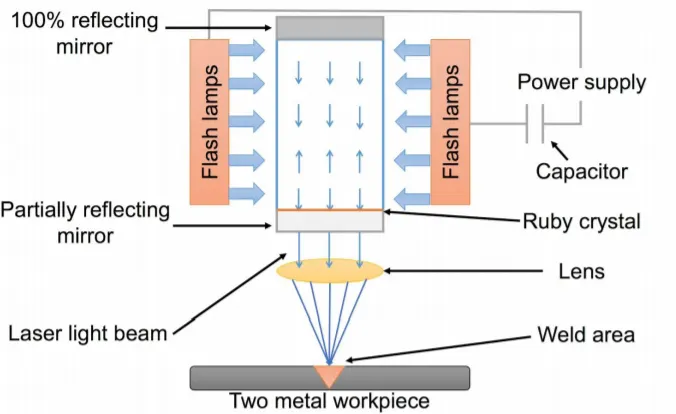
Here below shown the welding of busbars to cylindrical battry cans.

Enclosures:
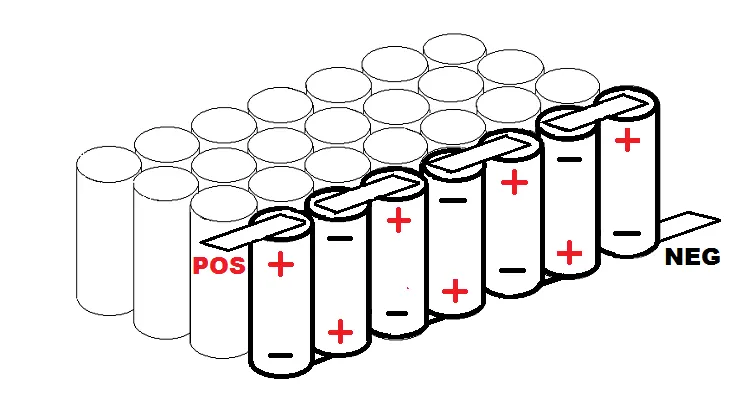
Cells in series connection-
When you connect cells together in series, it doesn’t change the amps or the capacity, it only raises the voltage of the pack. Hooking them up in series means that you connect the positive end of one cell (or P-group) to the negative end of the other as shown below.
Cells in Parallel connections-
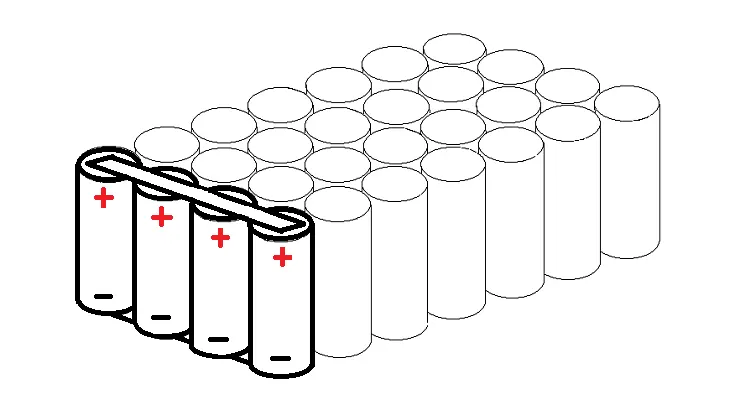
If you take several cells and connect their same-type electrodes in parallel, they all will act as though they are one large cell. Also, when you first connect them to each other, they must be at the same level of charge.
Cell houlders-
These houlders are used for houlding the individual cells in a better posture without mis-assemble.The connections can be made accordingly to make series connections and parallel connections to form the required module dimensions.

After installind the cells in a individual module the entire maximum positive terminal and maximum negative terninal are made under single pair of terminals as shown below.
Here shown the cells are arranged and welded without using cell houlders as,
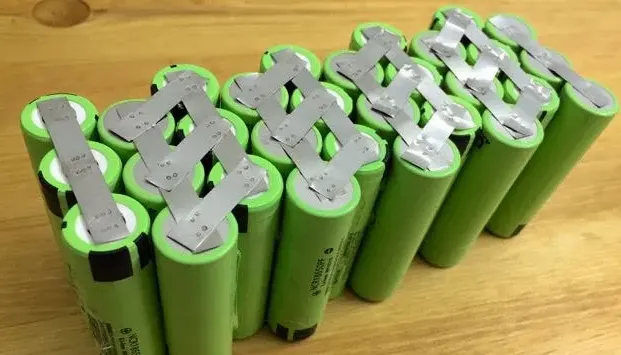
They are just covered by polimer sheet after the interconnections are made. Mostly connections with cell holders should be recommanded for better safety concerns.
Battery Cabinet arrangements-
In this all modules are interconnected in series or parllel as per the requirement, and packed as a single large cabinet pack as shown below.
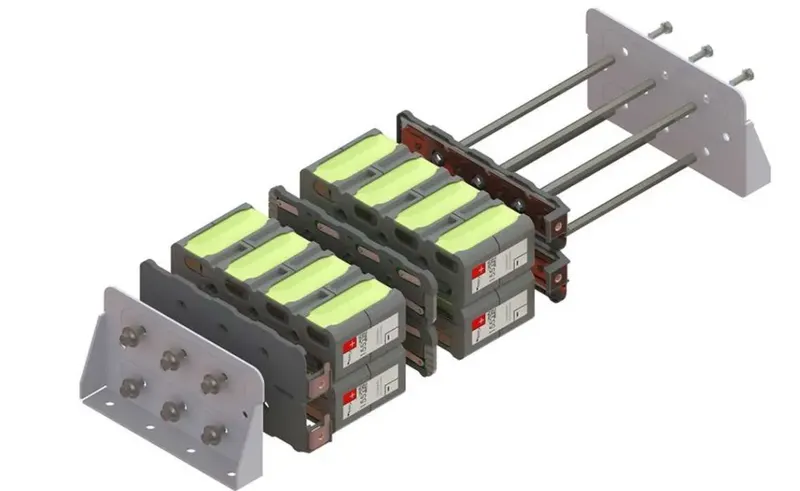
Battery pack arrangement:
Finally the arrangement of all cabinet connections with enclosure looks like below picture overall battery pack after the arrangement of all cabinet connections.
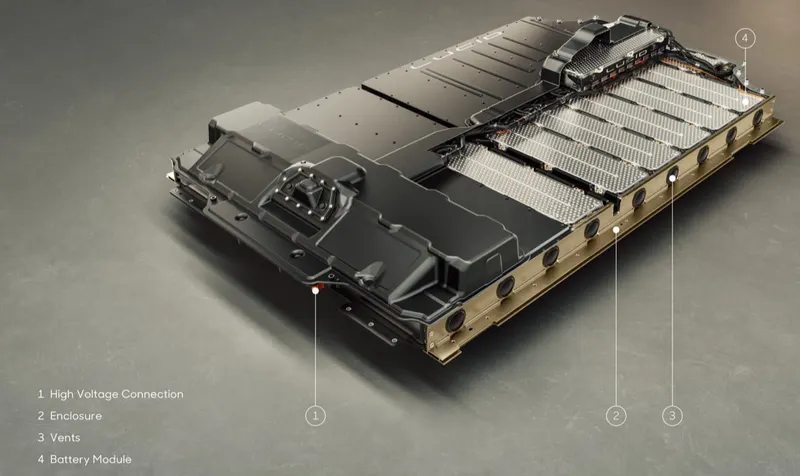
Vents holes are present with enclosure for cooling/heating the battery pack temperature according to its environment conditions.
The Different cell types are used by different manufacturers of EV:
Cylindrical,
Prismatic,
Pouch types.
The pack constructions are different for every manufacturers.
In the Below we can seen that, the battery pack constructios process of Tesla,BMW and Nissan Leaf.
Future scope: The eletric vehicle battery spends only 30 to 40% battery so, the batteries can be Reused Recycled, this batteries are used iin the power plant.