Project 1 Mechanical design of battery pack
Mechanical design of battery pack
To make the battery pack, we have to first finalize the nominal voltage and capacity of the pack. Either it will be in term of Volt, mAh/ Ah or Wh.
Total required Battery pack capacity is 18000 Wh.
The individual Cell: ANR26650M1-B has
Nominal voltage = 3.3 V
Current Capacity = 2.5 Ah
So, let us assume that for 18 kwh battery pack we need supply voltage of 200 V and 90 Ah
200 V = 3.3 * Cell in series
Cell in series = 200/3.3 = 60.60 = 60
Now, as we know that battery pack capacity (Wh) = Total current * Total voltage = (2.5* cell in parallel) * 200
18000 = (2.5* cell in parallel) * 200
Cell in Parallel = 18000/ (2.5*200) = 36
Module capacity
The required battery pack combination is 60S36P
For this we decided to choose 5 series and 3 parallel module connection.
Each 5S3P configuration Module Voltage capacity = 5*3.3 = 16.5 V
Each 5S3P configuration Current Module capacity = 3*2.5 = 7.5 Ah
So, total capacity of 1 module is = 16.5 * 7.5 = 123.75 Wh
Total Cells
Total number of cells = cell in 1 module * 144
Total number of cells = (5*3) *144
Total number of cells = 2160
1 cell capacity = 3.3* 2.5 = 8.25 Wh
So, total cell capacity = 2160*8.25
Total cells capacity = 17820 Wh = 17.82 KWh (almost 18 KWh)
Note: We should always target more KWH then required considering the losses and connection limitations.
Weight of one cell = 76 g = 0.076kg
So, Battery pack cell weight = 0.076*2160 = 164.16 kg
Module Connection
For 18 KWh of total 200 V and 90 Ah battery pack capacity we need 18000/123.75 = 145.45 modules.
For Simplicity of configuration we took 12*12= 144 modules of 5S3P.
We have to connect the cells in parallel to reach the desired capacity (mAh) and connect such parallel group in series to achieve the nominal voltage (Volt).
In this way, to achieve 200 V battery voltage, number of 5S3P configuration in series connected modules are = 200/16.5 = 12.12 = 12.
For 90 Ah battery current, now we connected 12(90/7.5 = 12) times such (series of 12 module of 200 V) in parallel to get 90 A current from this battery pack.
The 5S3P connection of ANR26650M1-B cell is shown below.
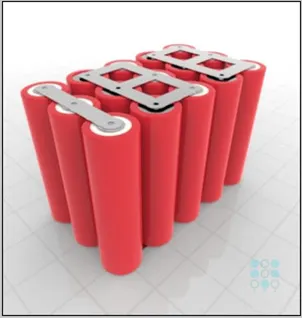
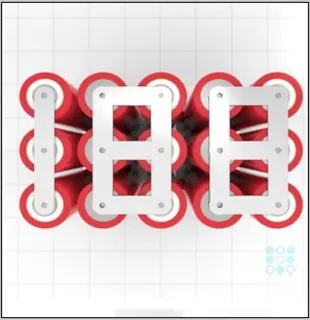
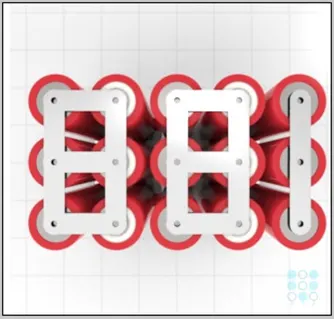
- This 16.5 V lithium ion battery pack has a 5S3P configuration with 7.5Ah (amp-hours) capacity.
A typical bill of materials (BOM) includes the following:
- Battery cell
- Nickel or other tabbing
- PCB/PCM/BMS
- PVC shrink wrap
- Insulating paper (barley paper)
- Insulating foam
- Connectors and wires
Step 1: Select the ANR26650M1-B Cells for the Battery Pack
Step 2: Check the Cell Voltage
- Before connecting the cells in parallel, first check the individual cell voltages.
- For paralleling the cells, the voltage of each cells should be near to each other, otherwise a high amount of current will flow from the cell with higher voltage to the cell with lower voltage.
- This can damage the cells and even result in fire on rare occasions.
Step 3: Assemble the ANR26650M1-B Cells
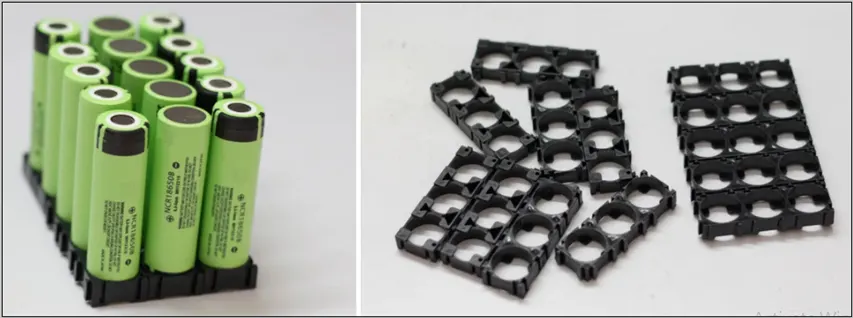
- From the previous step, it is clear that our battery pack is made up of 3 parallel groups connected in series and each parallel group have 5 cells.
- Now we have to arrange the 15 cells properly for making the electrical connection among them and with the BMS board.
- Place the first parallel group of cells (5 nos) positive side up, then place the second parallel group negative side up and then finally the last parallel group positive side up.
- We can assemble the cells to make the pack by using hot glue or by using plastic 18650 battery holder. I used plastic the ANR26650M1-B cell holders/spacers to assemble the 15 cells.
- It provides space between the cells, which allow fresh air to pass and the battery get cooled easily.
- It also makes our battery pack solid and reliable and provide safety anti vibration to our battery pack.
Step 4: Choosing the Right Battery Strips and Spot Weld the Nickel Strips
We have two options two connect the ANR26650M1-B cells together:
- Soldering
- Spot Welding
The best choice is always Spot welding, but Spot Welder is much costlier than a good quality Soldering Iron.
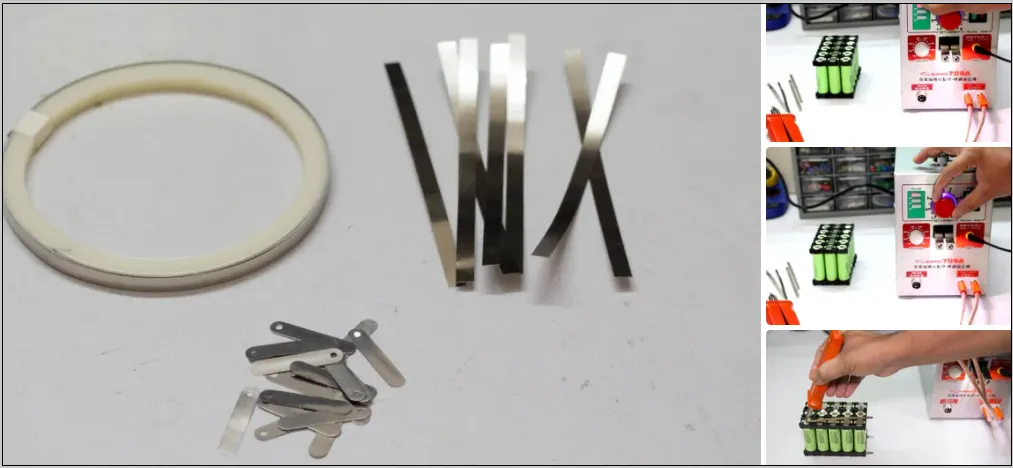
- To make the battery pack, we have to connect the ANR26650M1-B cells together by means of Nickel strips or thick wire.
- Generally, Nickel strips are widely used for this.
- In general, two types of nickel strips are available in the market: nickel-plated steel strips and pure nickel strips.
- The pure nickel is little bit costlier than the nickel-plated steel, but it has much lower resistance. Low resistance means, less heat generation during the charging and discharging, which leads to longer useful battery life.
Step 5: Adding the BMS
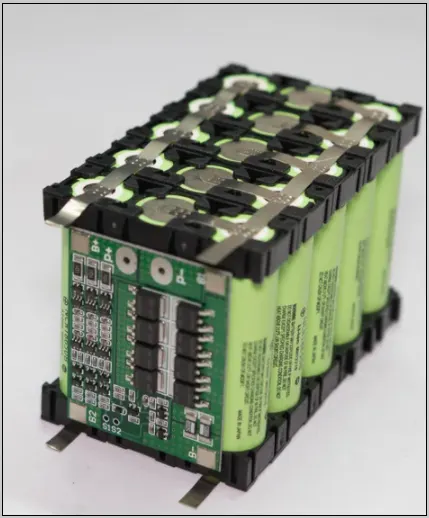
A battery management system (BMS) is any electronic system that manages a lithium battery pack and the main functionalities are
- Monitors all of the parallel groups in the battery pack and disconnect it from the input power source when fully charged.
- Balance all the cells voltage equally
- Doesn't allow the pack from over-discharged.
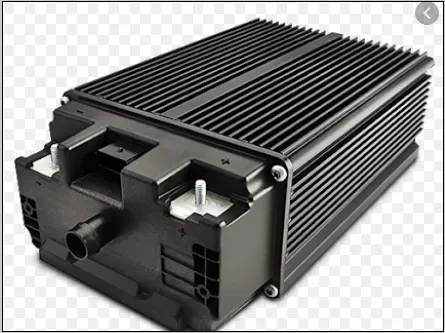
The battery pack have all around exposed nickel strips, to avoid any accidental shorting an Enclosure used.
Reference:-
https://datasheetspdf.com/pdf/1424845/A123Systems/ANR26650M1-B/1
https://www.instructables.com/DIY-Professional-18650-Battery-Pack/