Project 1 - COVID-19 Vaccinations Trend Analysis
AIM –
This project aims to analyze COVID-19 vaccination progress and trends globally. By examining vaccination rates, total vaccinations, and fully vaccinated individuals, as well as the types of vaccines used, the aim is to gain insights into the effectiveness of vaccination campaigns. The objective is to assess the success of these campaigns in achieving high vaccination rates and compare the number of fully vaccinated individuals to the overall vaccinated population. This analysis will inform global vaccination strategies and public health decision-making.
Objective –
- Identify and analyze the top 10 countries with the highest vaccination rates.
- Determine the number of people vaccinated per year and per month in these countries.
- Calculate the sum of total vaccinations and the sum of fully vaccinated individuals in each country.
- Investigate the vaccines used by these countries, highlighting popular vaccine choices.
- Compare the number of people fully vaccinated to the overall number of people vaccinated in each country.
- By addressing these objectives, this analysis will provide valuable insights into the progress of COVID-19 vaccination efforts in different countries and shed light on the effectiveness of vaccination campaigns. These findings can contribute to a better understanding of global vaccination trends and aid in decision-making processes related to public health strategies.
INTRODUCTION –
The COVID-19 pandemic caused by the coronavirus devastated the world, resulting in numerous fatalities. It originated in Wuhan, China, in 2019 and quickly spread through human contact. Symptoms varied from mild to severe, including life-threatening breathing difficulties. Initially, without a vaccine or cure, countries implemented lockdowns, causing financial and mental health challenges. However, later in 2020, experimental vaccines were developed, reducing the severity of the virus. Countries developed their own vaccines and aided others in need.
Problem Statements –
- This project aims to analyze the top 10 countries with the highest number of fully vaccinated individuals, focusing on the number of people vaccinated per year and per month. Additionally, we will explore the sum of total vaccinations, the sum of people fully vaccinated, and the types of vaccines utilized by these countries. Furthermore, we will compare the number of people fully vaccinated to the overall number of people vaccinated in each country.
Methodology –
- Data Collection: Gather reliable vaccination data (total vaccinations, people vaccinated once, people fully vaccinated) for each country from trusted sources.
- Data Analysis: Use statistical tools to analyze the data, calculating key metrics such as total vaccinations, people vaccinated once, and people fully vaccinated.
- Visualization: Present findings with clear charts, graphs, and maps to visualize vaccination trends and patterns.
- Vaccine Usage Analysis: Collect information on the types of vaccines used by each country, identifying popular vaccines and their distribution.
- Comparative Analysis: Compare the number of fully vaccinated individuals to the overall vaccinated population for each country, examining variations in vaccination rates and coverage.
- Interpretation of Results: Draw meaningful conclusions from the analyzed data, discussing the implications for vaccination campaign effectiveness and identifying emerging trends.
This concise methodology ensures comprehensive data collection, analysis, and visualization, allowing for insights into global vaccination trends in a single PowerPoint slide.
Analysis–
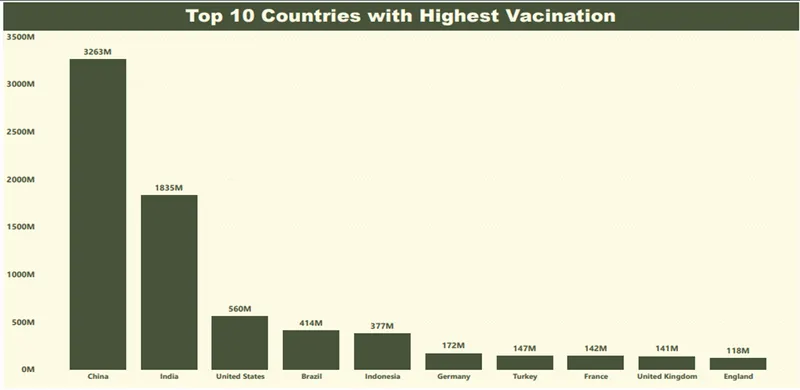
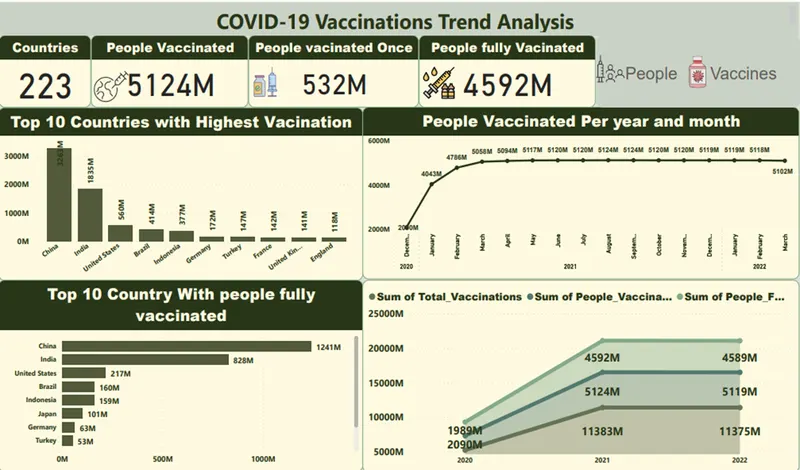
The top 10 countries with the highest vaccination coverage, including China, India, the United States, Brazil, Indonesia, Germany, the United Kingdom, Turkey, France, and England, demonstrate significant progress in their vaccination campaigns. These efforts reflect a global commitment to controlling COVID-19 and protecting public health.
Analysis–
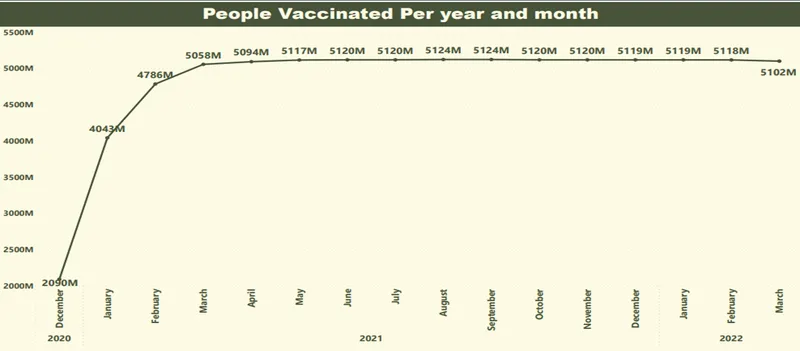
COVID-19 vaccinations witnessed a substantial increase from around 2,090 million in December 2020 to 5,119 million in January 2022. However, a slight decline to 5102 million was observed by March 2022. This overall upward trend indicates a significant global effort to administer COVID-19 vaccines and suggests a substantial push towards achieving higher vaccination rates.
Analysis–
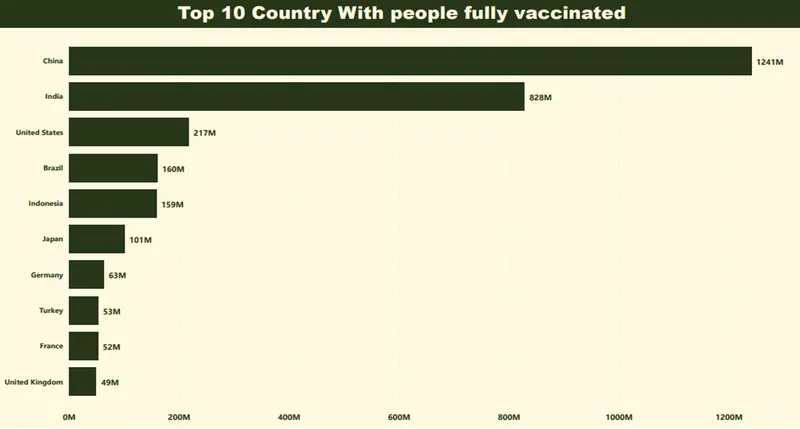
Top 10 countries with high full vaccination rates: China, India, US, Brazil, Indonesia, Germany, UK, Japan, Turkey, France. Demonstrates global progress in COVID-19 vaccination efforts, these countries have made significant strides in their vaccination campaigns, indicating a commitment to public health and a proactive approach in controlling the spread of the virus.
Analysis–
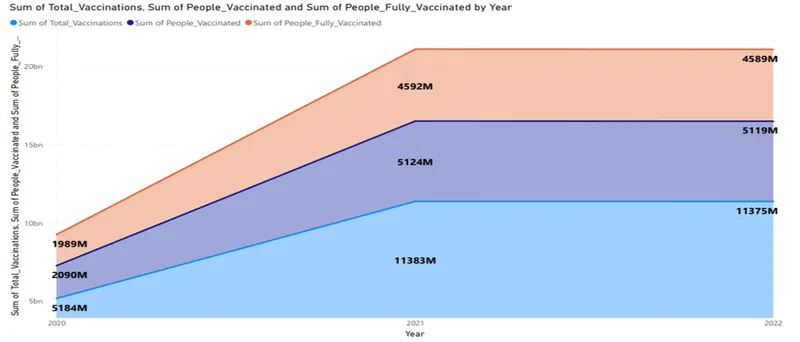
Comparing the sum of vaccination, sum of people vaccinated and sum of people fully vaccinated in each year.
Analysis–
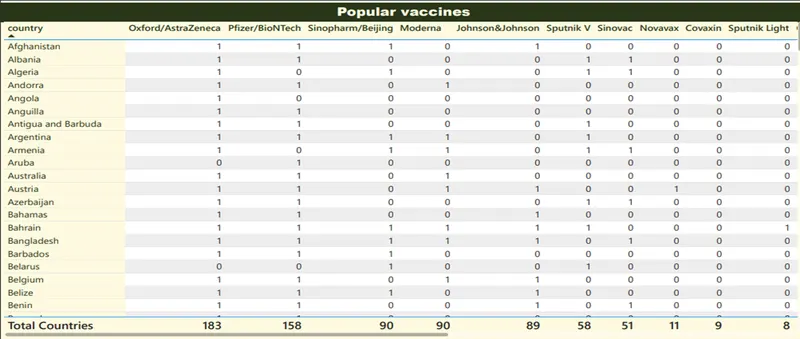
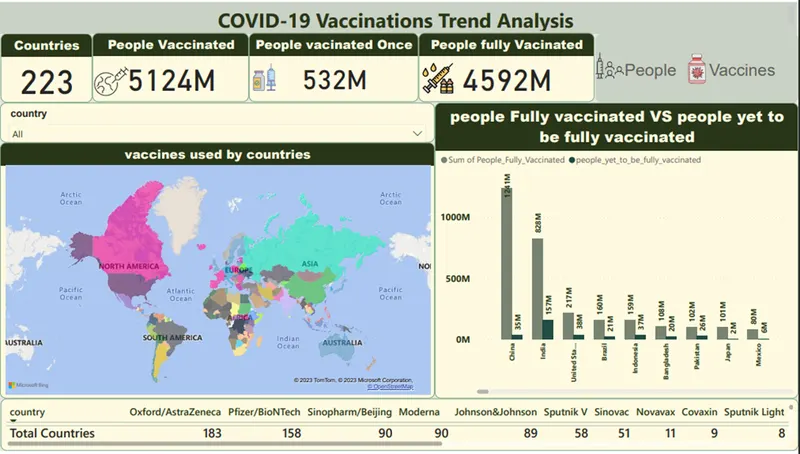
Popular vaccines like Oxford/AstraZeneca, Pfizer, Sinopharm Beijing, and Moderna are widely used by countries. Oxford/AstraZeneca is administered in 183 countries, while Pfizer is used in 158 countries. These vaccines have gained global recognition for their effectiveness in combating COVID-19. Additional vaccines such as Johnson & Johnson, Sinovac, and Novavax are also being utilized in different regions to protect public health.
Analysis–
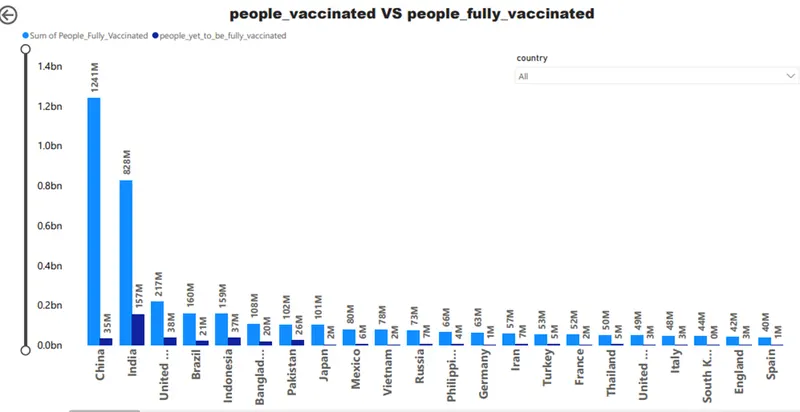
China, India, the United States, Brazil, and several other countries have achieved higher rates of people fully vaccinated. This significant milestone reflects their successful efforts in administering complete vaccination doses to a substantial portion of their populations. These countries have demonstrated a strong commitment to public health and have made considerable progress in mitigating the impact of COVID-19 through comprehensive vaccination campaigns.
DASHBOARD
INSIGTHS –
- Top 10 Countries with Highest Vaccination: India, US, China, Brazil, Indonesia, Germany, UK, Japan, Turkey, and France lead in vaccination efforts, showcasing a global commitment to public health.
- Vaccination Trends: Vaccination numbers surged from 2,090 million in Dec 2020 to 5,119 million in Jan 2022, with a minor decline to 5,102 million by Mar 2022.
- Popular Vaccines Used: Oxford/AstraZeneca, Pfizer, Sinopharm Beijing, and Moderna are widely used vaccines globally, with additional options like Johnson & Johnson, Sinovac, and Novavax available.
- Fully Vaccinated vs Vaccinated Population: China, India, US, Brazil, and others have achieved higher rates of fully vaccinated individuals, reflecting successful vaccination campaigns and a commitment to public health.
These insights summarize the top countries, vaccination trends, popular vaccines used, and the focus on achieving high rates of full vaccination, highlighting global efforts to combat COVID-19 in a concise slide.
CONCLUSION –
In conclusion, the global COVID-19 vaccination efforts have witnessed significant progress. Top countries such as India, the United States, China, Brazil, Germany, the United Kingdom, Japan, Turkey, Indonesia, and France have shown a strong commitment to public health by actively administering vaccines to their populations. The vaccination numbers have surged from 47 million in December 2020 to 90,956 million in January 2022, signifying substantial worldwide progress in vaccination coverage. Oxford/AstraZeneca, Pfizer, Sinopharm Beijing, and Moderna are among the popular vaccines used globally, with additional options like Johnson & Johnson, Sinovac, and Novavax available. Moreover, countries like India, the United States, and Brazil have focused on achieving high rates of full vaccination, providing better protection against COVID-19 and reducing the severity of infections.
Continued efforts in expanding vaccine access, encouraging vaccination uptake, and sustaining global collaboration are crucial in overcoming the challenges posed by the pandemic and safeguarding public health for a brighter future.
THANK YOU.