Project 1_Comparative study of different storey buildings for Seismic forces
A)
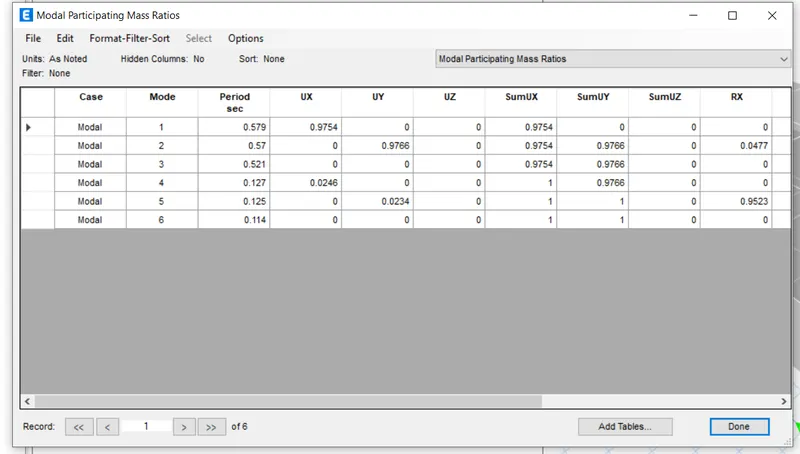
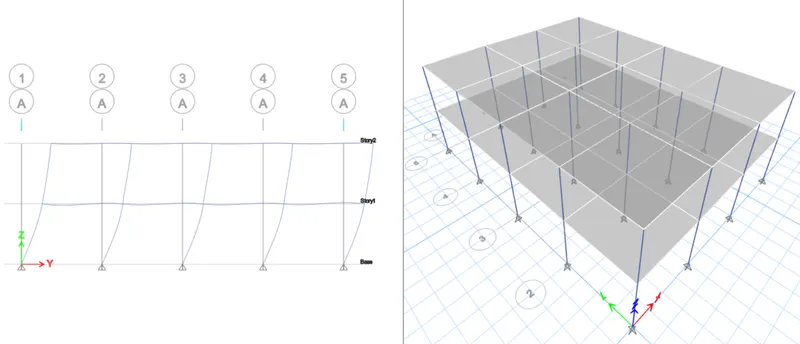
B)
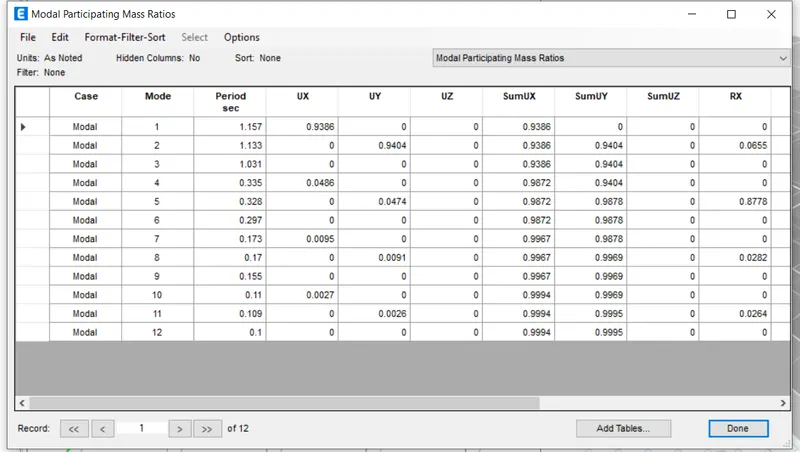
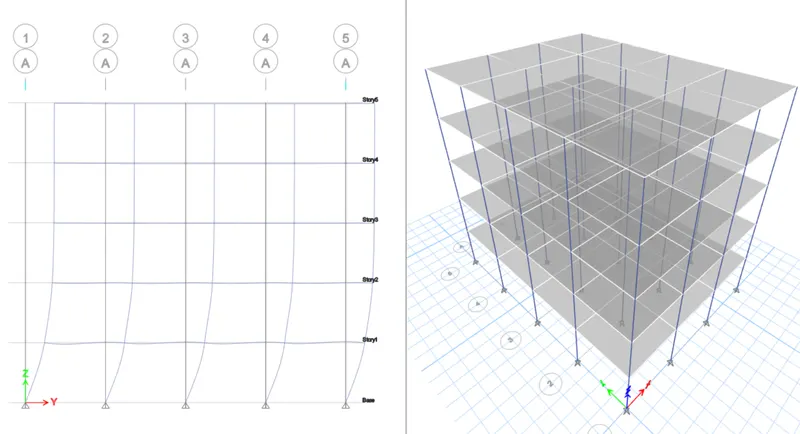
C)
D)
E)
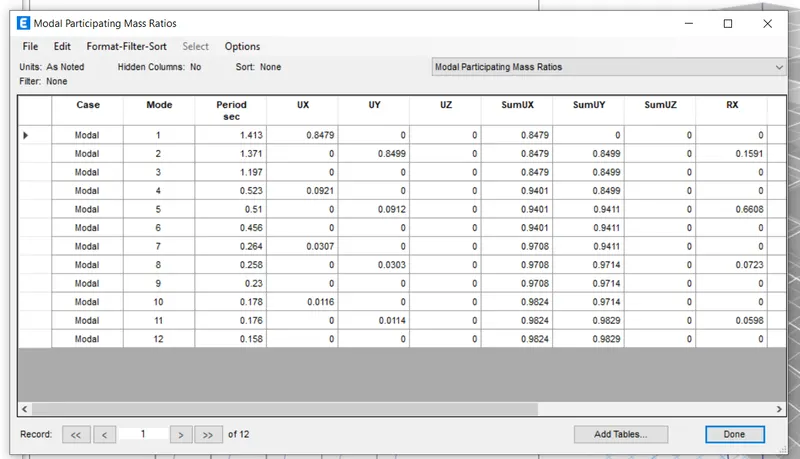
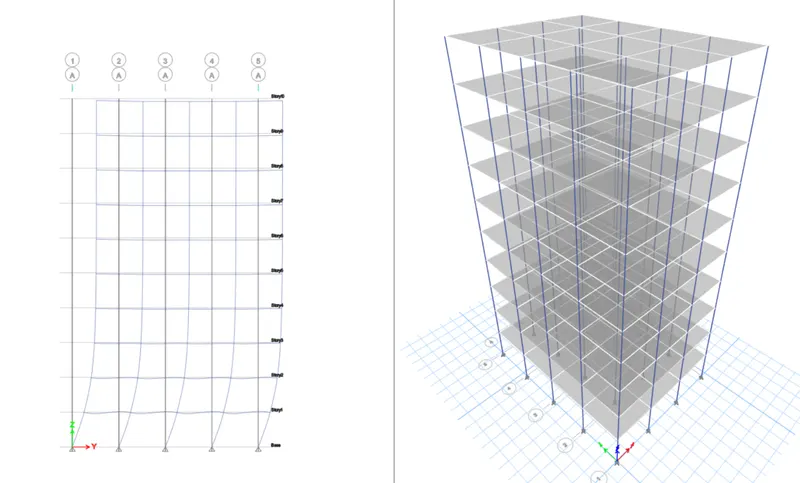
F)
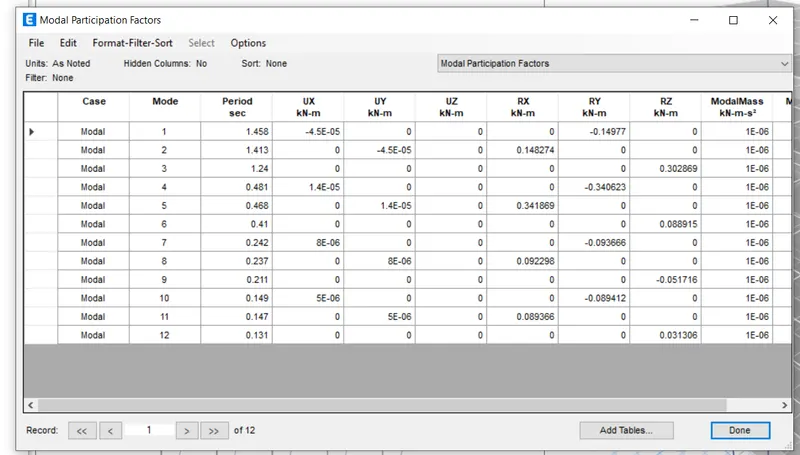
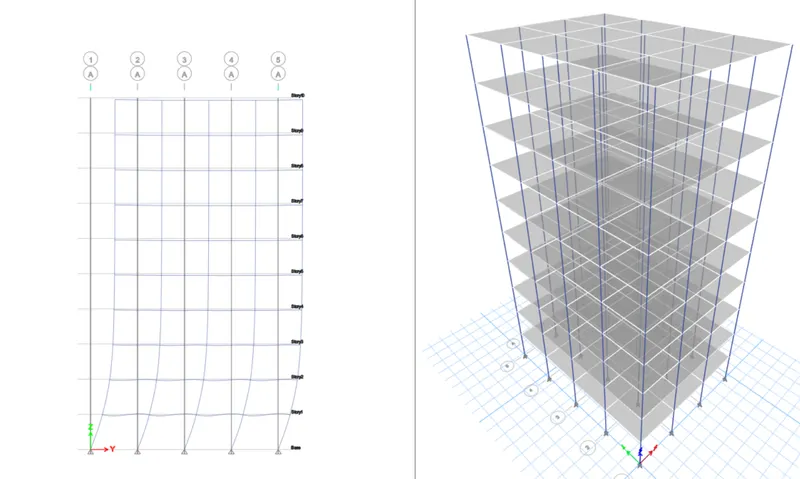
G)
H)
J)
K)
Factors Influencing the Natural Period of Building
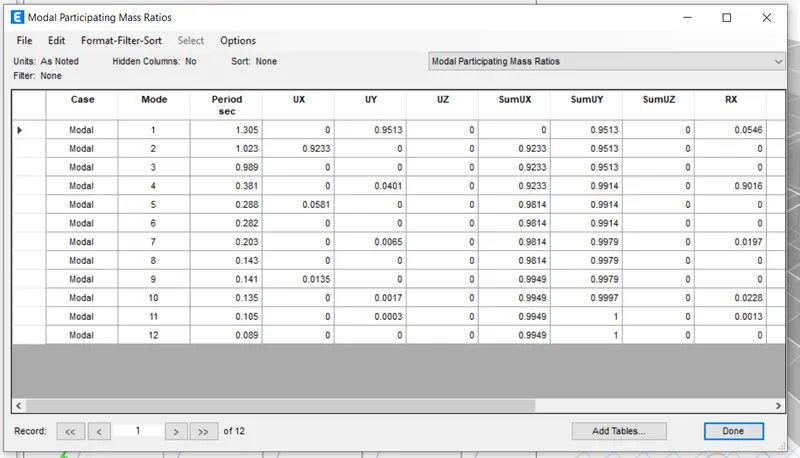
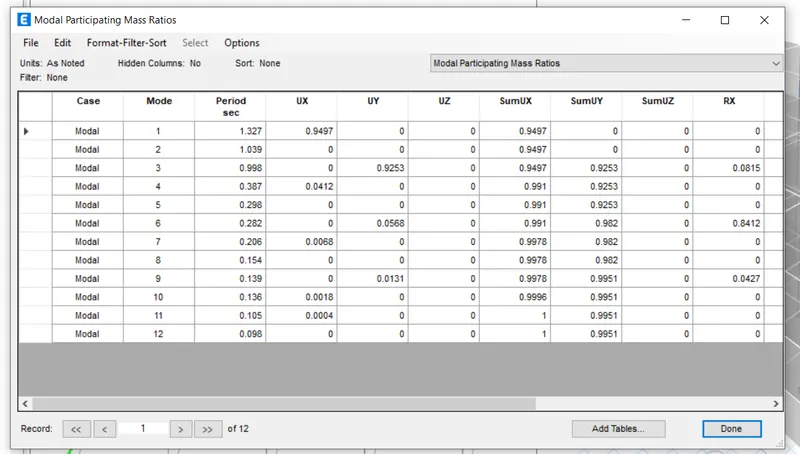
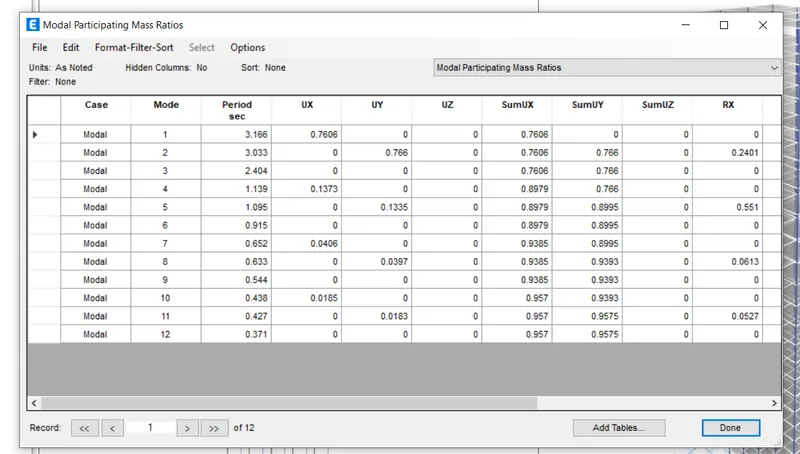
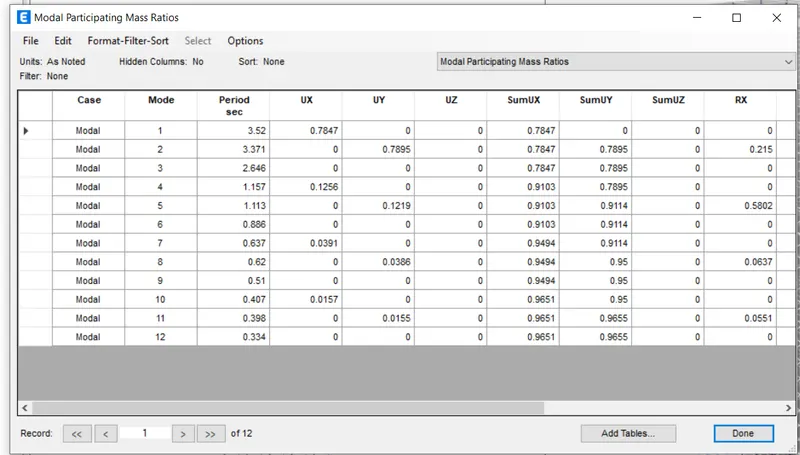
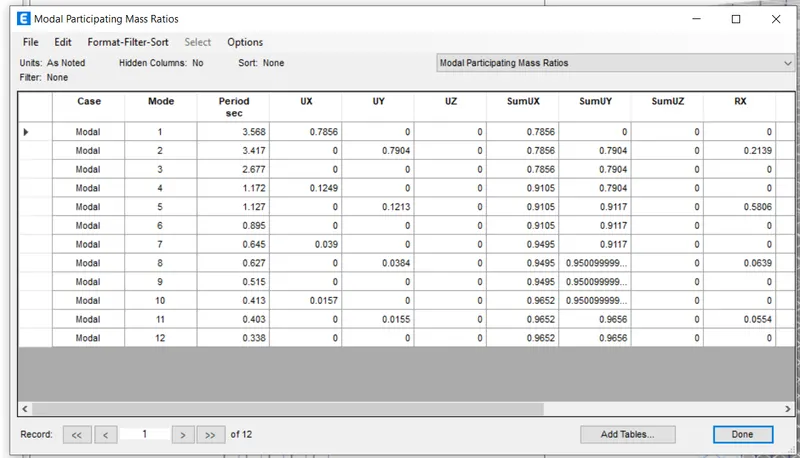
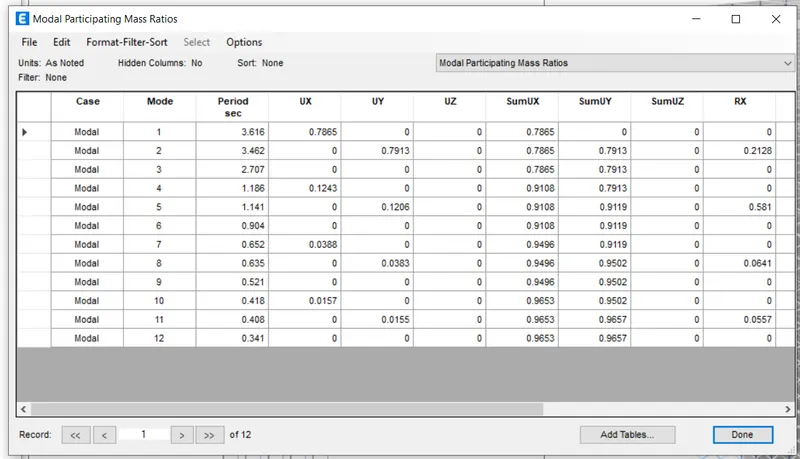
Effect of Stiffness:Comparing fundamental natural periods of buildings E & F as well as G & H, the increase in the column size of the building gratually increase the stiffner of the building. While comparaing with E&F the building F has higher stiffner since the column size is higher. Also E & F are 10 story building while comparitivly with G & H this has 25 story with higher column size
In this case with Period the building G & H has higher stiffer.
Effect Of Mass: Comparing fundamental natural periods of buildings H, J and K , these are 25 story building in which the mass of the building gets automatically increased to which results in increase in natural period. But the application of imposed load gets differ in the 3 buildings J has 10% of imposed load higher than the H and the K building has 20% of the imposed load higher than the H. So the mass of the building gets incread in J and K than that of H. So the natural period of J and K is more than the natural period of K.
Effect of Building Height on T: Fundamental natural periods of Buildings A, B, F and H change with change in building height
As the heigth of the building increases the stiffness gets reduced and the mass gets increased hence the natural period also increases so these asre different story were the building H has the higher story to which ha the higher period
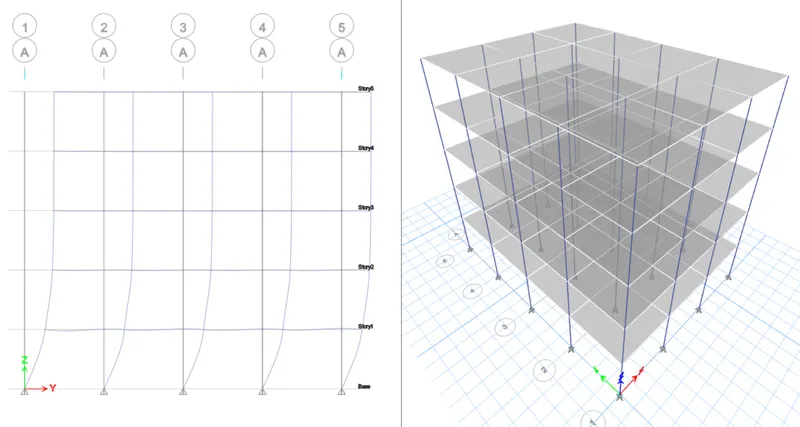
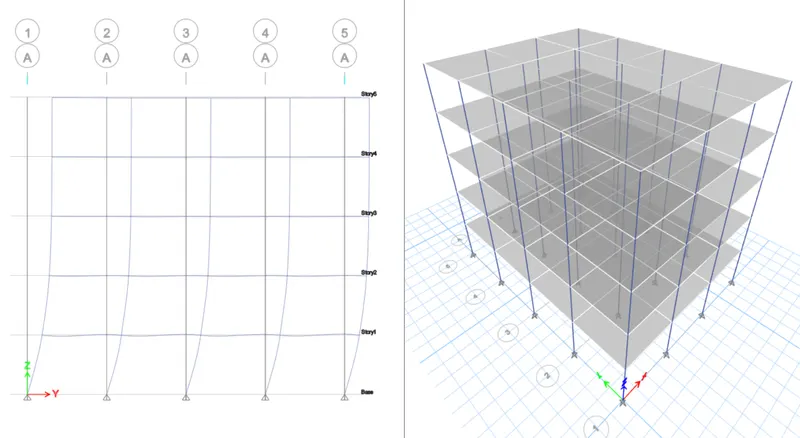
Effect of Column Orientation on T: Fundamental natural periods of Buildings B, C and D change with change in column orientation, the building C and D has the same story of building but with different orientation of column. one with the longer side in X direction and the other has the longer side in the Y direction. Th longer direction of column section has amaller period than that of smaller direction
Factors influencing the mode shape of oscillations
Effect of Flexural Stiffness of Structural Elements on mode shapes: Compare fundamental mode shape of Building B in two situations when flexural stiffness of beams relative to that of adjoining columns is very small versus when it is large.
Strength of the building increases with increase in flexural stiffness, the mode shape changes with respect to flectural to shear behaviour. The flextural stiffness of the beam would be small with the adjoining column. the beam strength exceeds then the flextural stiffness of the beam also exceeds.
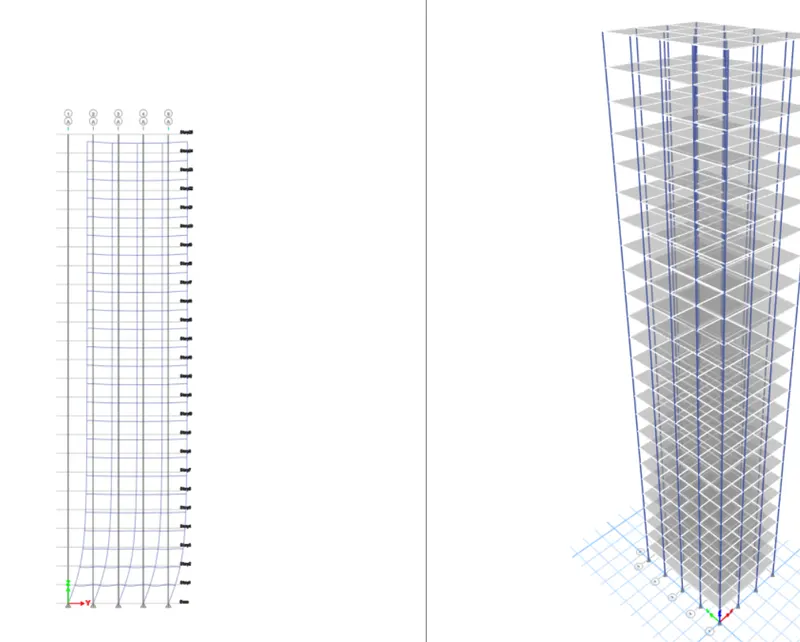
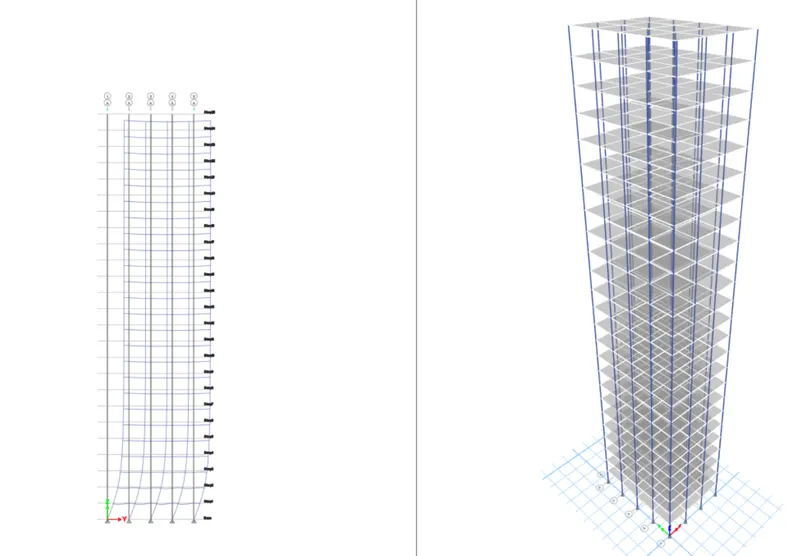
Effect of Axial Stiffness of Vertical Members on mode shapes: Compare fundamental mode shape of Building H in two situations when axial cross-sectional area of columns is very small versus when it is large.
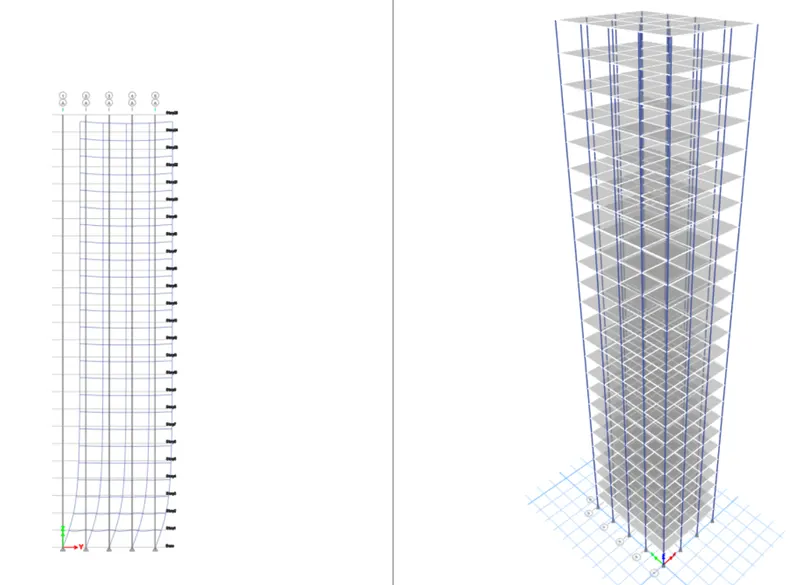
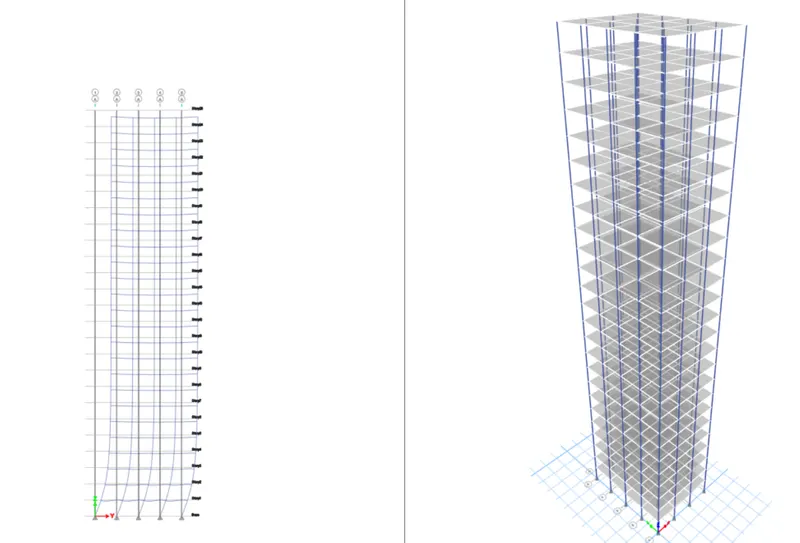
Depends on the stiffness the mode shape differ, the major stiffness of the building is througn the axial stiffness of the bilding in which the most axial load the mode shape differs. the Building H has 25 story heigth so the axial load of the building increae wi the increase in the mode shape of the structure
Effect of Degree of Fixity at column bases on mode shape: Compare fundamental mode shape of Building B in two situations when base of columns is pinned versus when it is fixed.
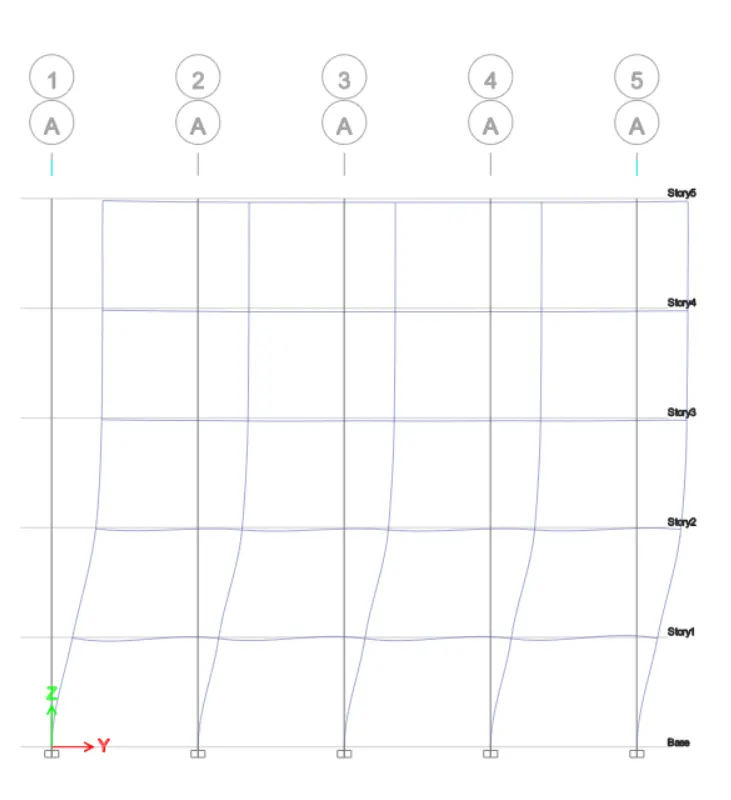
mode shape wen fixed
In hinged connection the are free of rotation so it acts as shear type where as the fixed connection is arrested on rotation so the flextural behaviour is done.