Project 1
Part A:
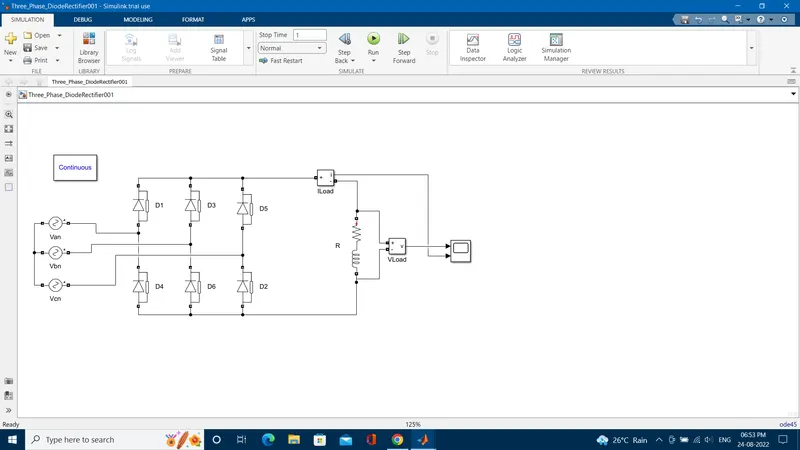
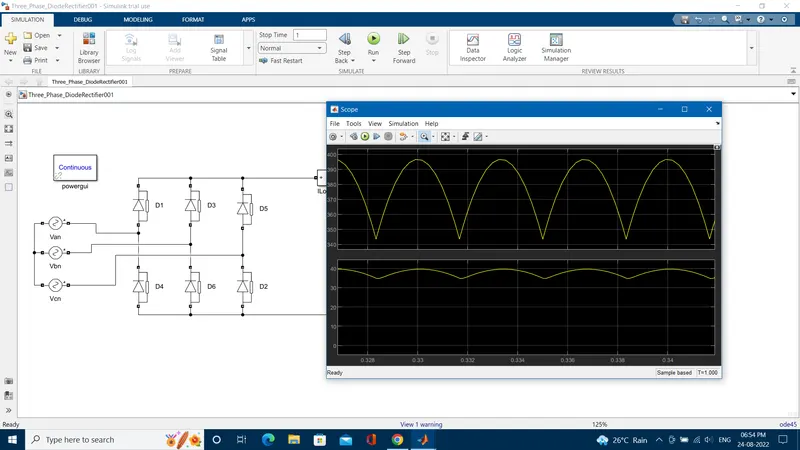
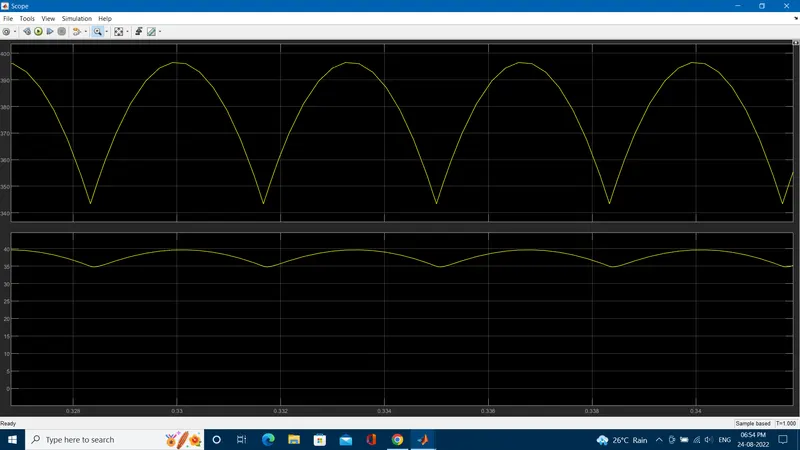
The three-phase diode rectifier is supplying approximately 2.2 kW load with VLL=208V at 60 Hz, Ls=1 mH and Cd=1100 μF, where Cd is the DC side capacitor. Design the circuit in one of the simulation platforms (MATLAB or Ltspice/Symmetrix) and obtain the circuit waveforms. Based on their simulation studies find out the following:
Average dc voltage output, peak-to-peak ripple, the input current THD, DPF and PF and average DC. Also, give the selected devices with justification
ANSWER:
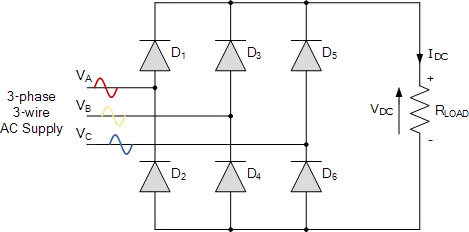
A three-phase diode rectifier converts a three-phase AC voltage at the input to a DC voltage at the output. To show the working principle of the circuit the source and load inductances (Ls and Ld) are neglected for simplicity.
As with single-phase rectification, three-phase rectification uses diodes, thyristors, transistors, or converters to create half-wave, full-wave, uncontrolled and fully-controlled rectifier circuits transforming a given three-phase supply into a constant DC output level.
_____________________________________________________________________________________________________________________
Part B:
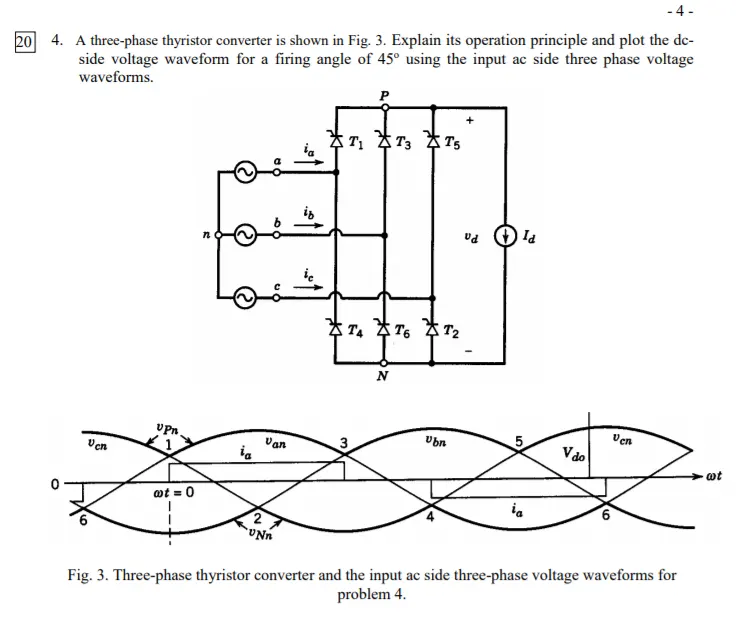
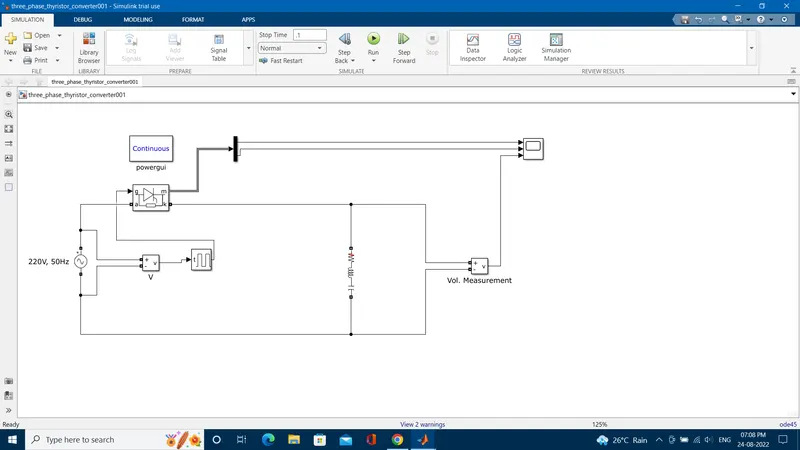
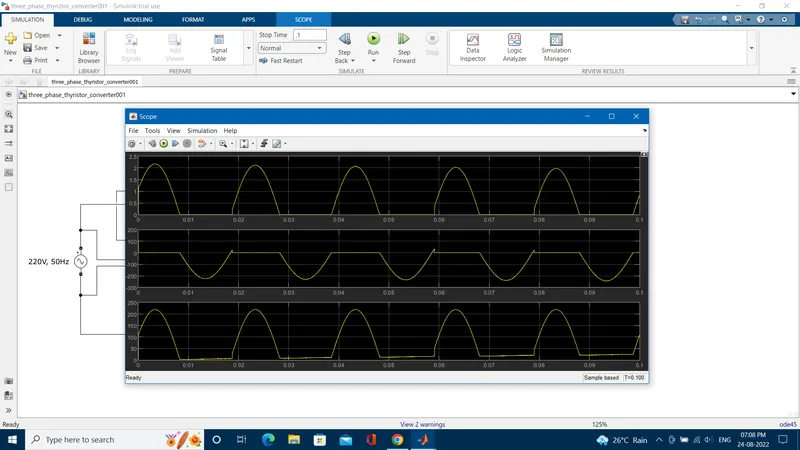
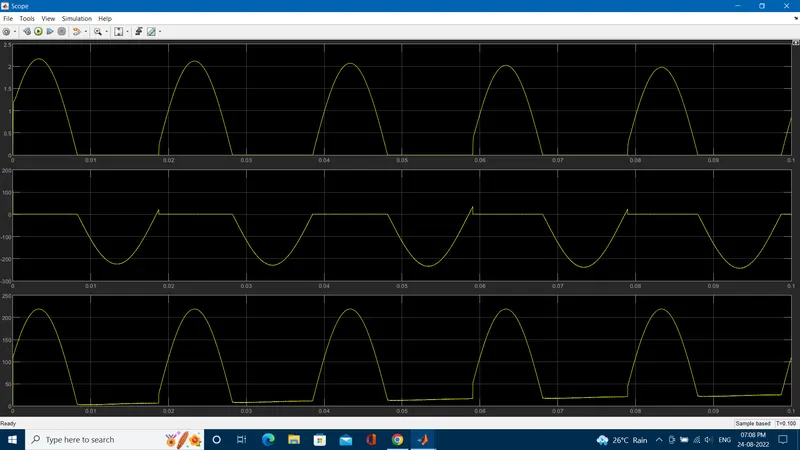
A three-phase thyristor converter is supplied by a 480V (line-line), 60 Hz source. Its internal inductance Ls1=0.2 mH. The converter has a series inductance Ls2=2.0 mH. The load is represented as an RLE load with Ld=5 mH, rd=0 and Ed=600V and the delay angle is α=20°. Using the simulation obtain vs, is and vd waveforms and calculate Is1, Is, DPF, PF and % THD. Also, give the selected thyristor based on the simulated studies with proper justification.
ANSWER:
CD Automation's 3-phase thyristor controllers can be used on most heater types including variable resistances such as molybdenum disilicide, silicon carbide and short wave infrared (SWIR) loads. Fast fuses, as well as voltage, current and power sensing, are integrated into these assemblies.
Advantages of a three-phase rectifier over a single-phase rectifier: The transformer utilization factor is high. More efficient than a single-phase system. The power output and therefore rectification efficiency are quite high.
Working principle. A single-phase thyristor rectifier converts an AC voltage to a DC voltage at the output. The power flow is bidirectional between the AC and the DC side. The circuit operation depends on the state of the AC source and the firing angle α of the 2-pulse generator.