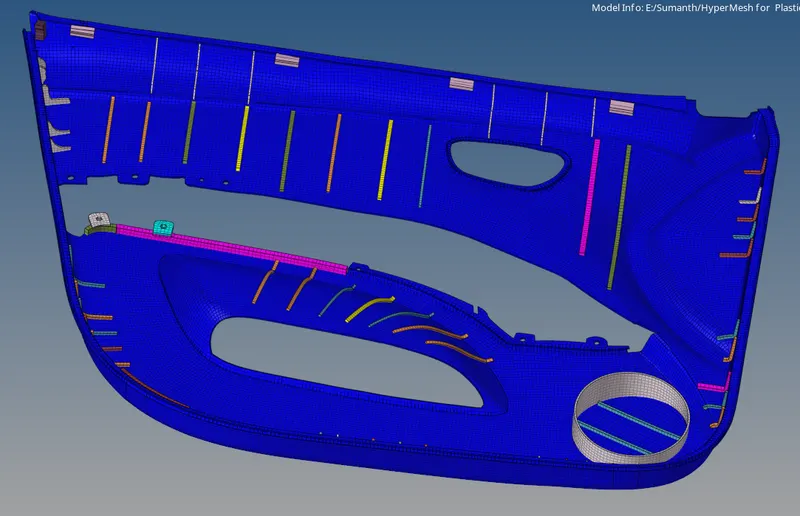
Meshing Side Door of An Automobile using HyperMesh.
Objective:
- To clean up the geometry.
- Extract mid-surface of the model.
- To mesh the model.
Theory:
All real life objects are continuous.Means there is no physical gap between ant two consecutive particles.As per material science,any object made of small particles,particles of molecules,molecules of atoms and so on and they are bonded together by force of attraction.Solving a real life problem with continuous material approach is difficult and basic of all numerical method is to simplify the problem by descritizing it.In simple words, nodes work like atoms and gaps are filled by an entity called element.Calculations are made at nodes and results are interpolated for elements.
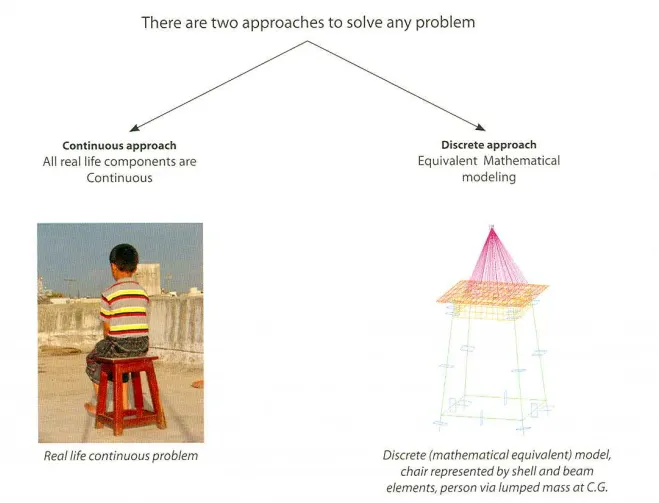
Different types of numerical methods are,
- Finite element method.
- Boundary element method.
- Finite volume method.
- Finite difference method.
Types of elements in Meshing:
- 1D element:
Used for geometries having one of the dimensions that is very large in comparision to the other two.
Example:Long shaft,rod,beam,column,spot welding,bolted joints,springs etc.
- 2D element:
Used when the two dimensions are very large compared to the other one.2D meshing is carried out on a mid surface of the part.2D elements are planar.Thickness is assigned as additional data.Mathematically,the element thickness specified by the user is asiigned half on the element top and half on the bottom side.So,it is necessary to extract the mid surface and then mesh on the mid surface.
Example:Thin shell plate,plastics etc.,
- 3D element:
Used when all the dimensions are comparable.element types like tetra and hexa are used.
Example: Engine block,crankshaft etc.,
- Other:point element,concentrated mass(conMi),damper or damping co-efficient.etc.,
Advantages of FEA:
- High visualization of results.
- Design cycle time decreases.
- Very less number of prototypes.
- Testing time and iterations wil be less.
Abstract:
Here we use a Dodge Neon Car's side door to mesh.This door model consists of several ribs and complex features.We take out the mid-surface using different feautures available in HyperMesh.The door model is meshed with the below mentioned Quality criteria and asiigned thickness to it.
| S.N | Quality Criteria | Value |
| 1 | Aspect Ratio | 5 |
| 2 | Skewness | 45 |
| 3 | Warping | 15 |
| 4 | Taper | 0.5 |
| 5 | Min. Length | 2mm |
| 6 | Max. Length | 6mm |
| 7 | Min angle Quad | 45 |
| 8 | Max angle Quad | 135 |
| 9 | Min angle Tria | 20 |
| 10 | Max angle Tria | 120 |
| 10 | Tria % | 10 |
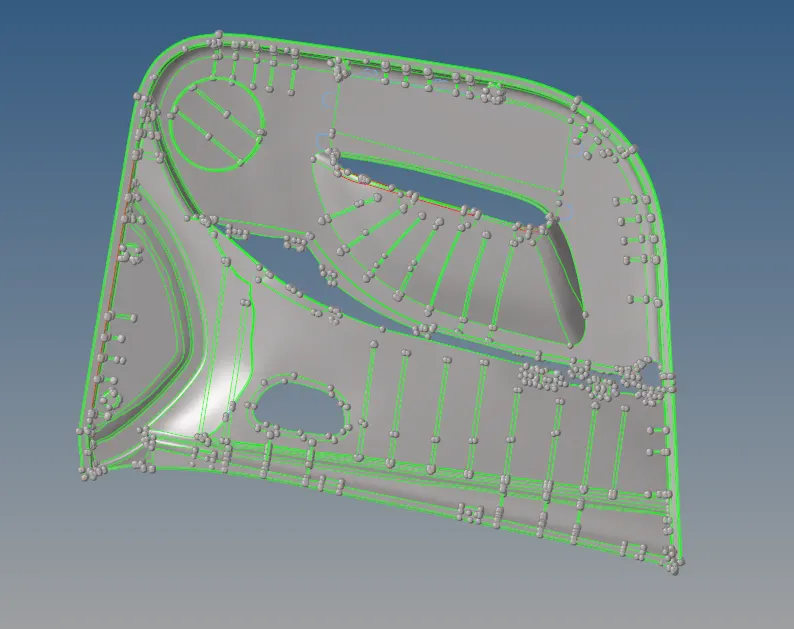
Procedure:
1.Import the model.
2.Check for geometry errors and rectify it.This clean up is done automatically and manually
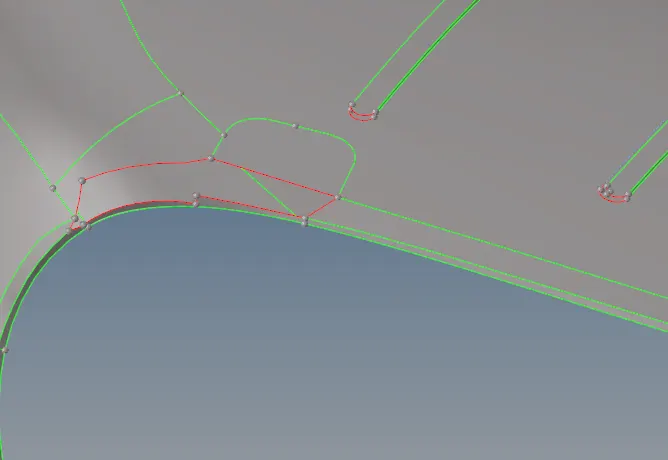
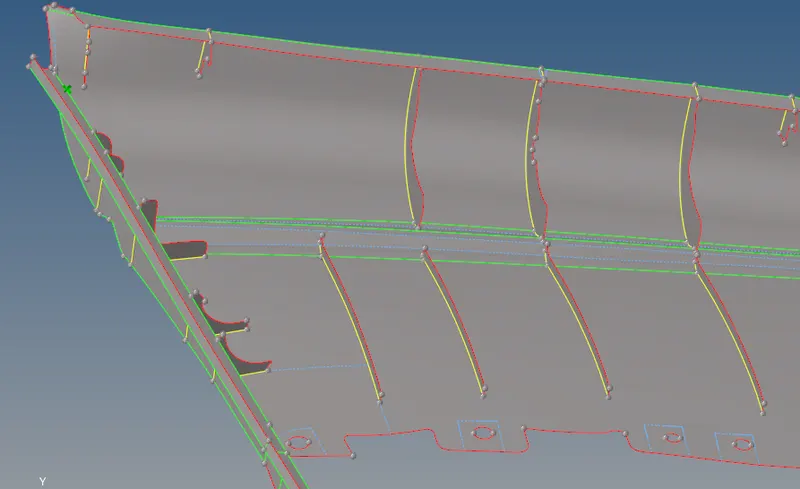
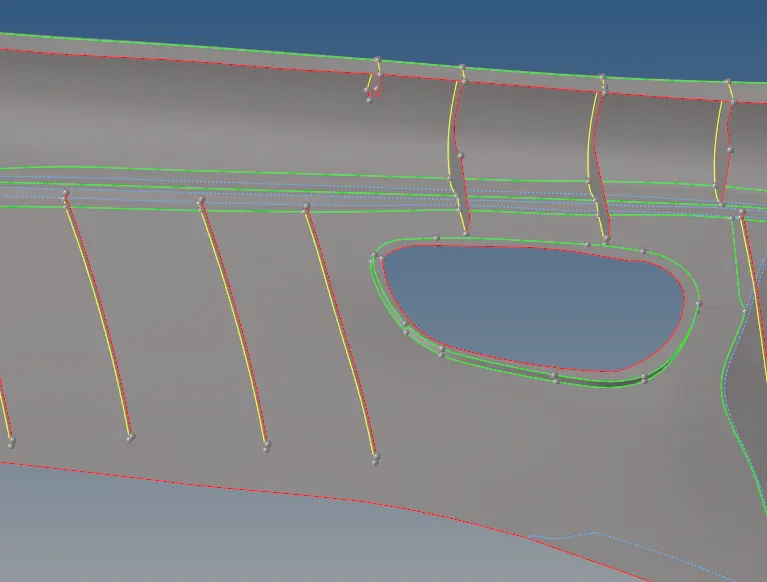
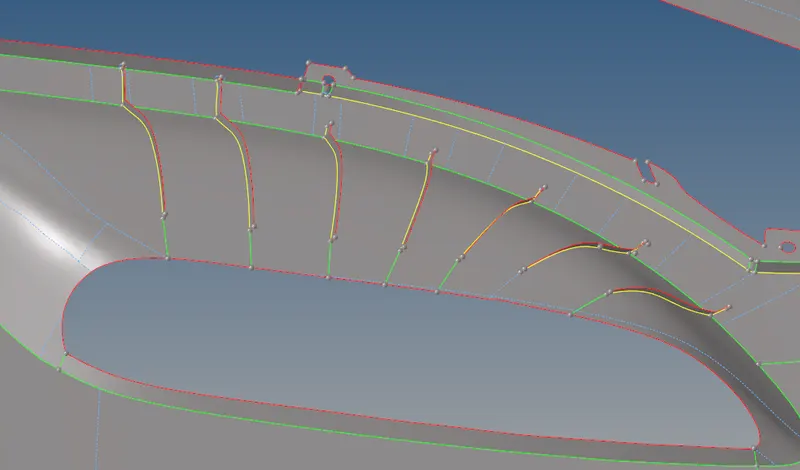
3.After geometry cleanUp,We need to take out the mid surface for this model.As there are so many ribs and complex features,We use manual mid-surfacing as auto-mid surface won't be that much accurate.
So we take out the mid surface using Offset method in Hypermesh.Then they are extended and joined one together.
 |
 |
 |
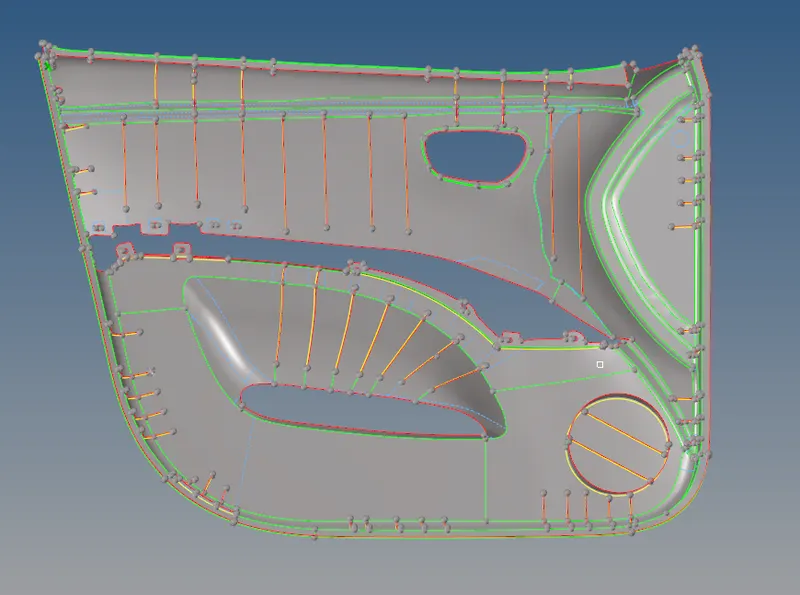
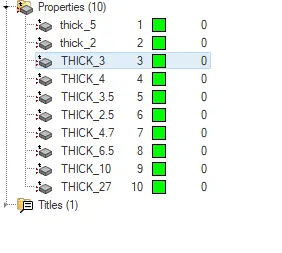
4.After Taking out the mid surface thickness should be assigned of parent surface.For that we create property card for each and every sub-components of the door.
5.To Mesh the component,We need to go to 2D elements>Automesh and set the target element length as 4mm.
After meshing, mesh consists of quality failures and tria concentrations.We remesh those areas to get rid of these quality errors.
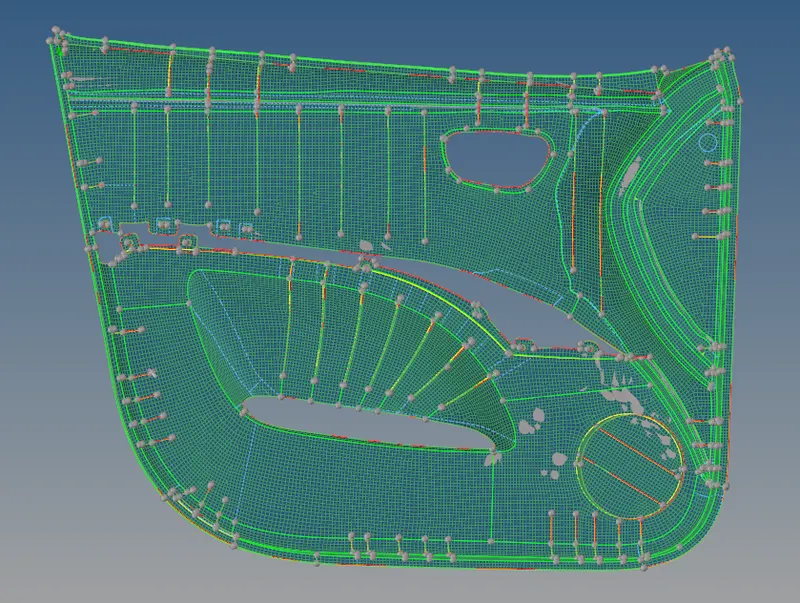
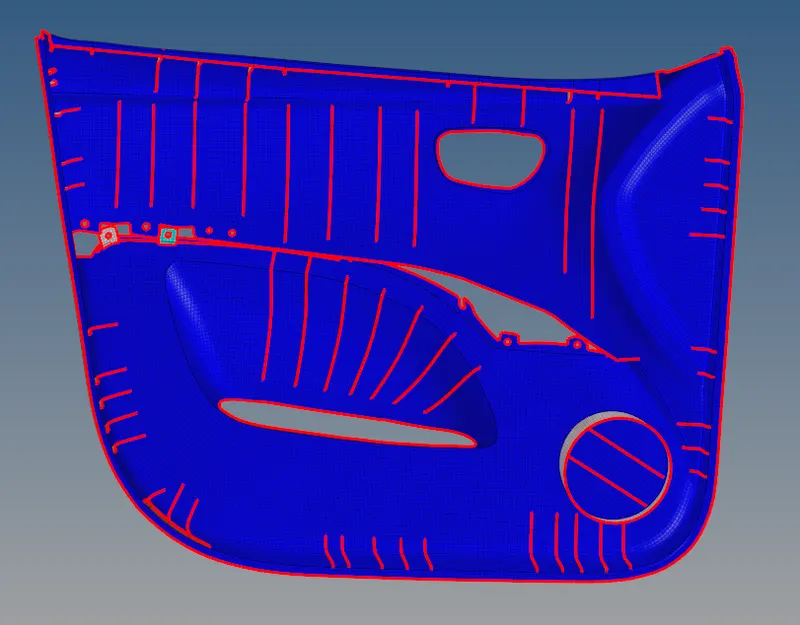
6.After Meshing,We need to look for connectivity of elements.Elements are checked and connectivity issues were resolved.
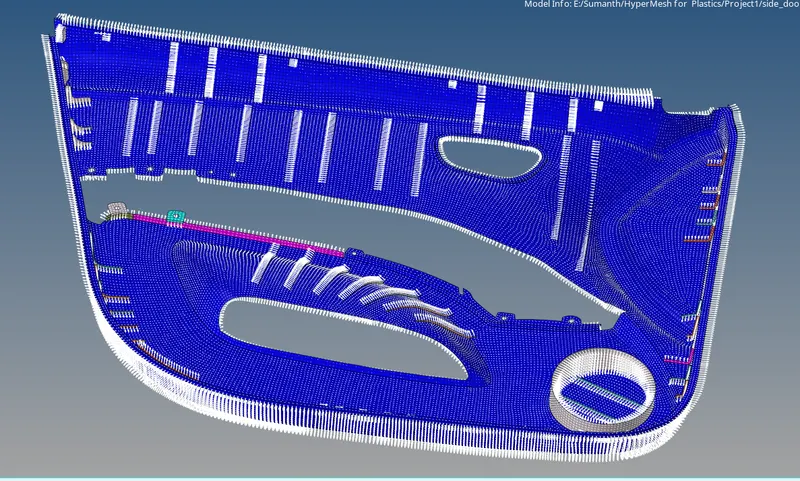
7.Then we need to check for normals direction as it will have a bigger role in the analysis.Akk the normals are in the same direction.
RESULTS:
We get a quality meshed car door ready for further analysis.