Literature review – RANS Derivation and analysis
Introduction:
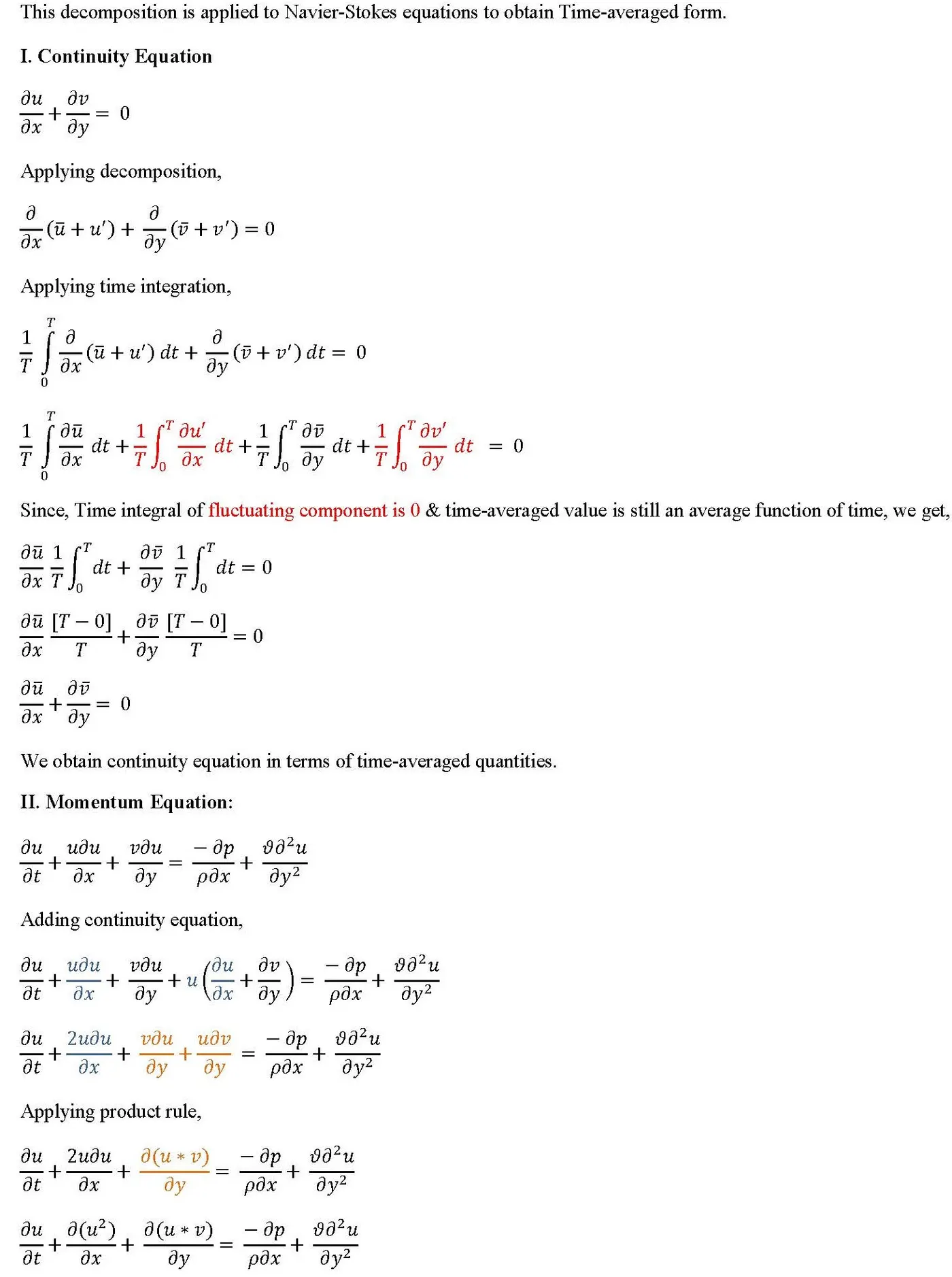
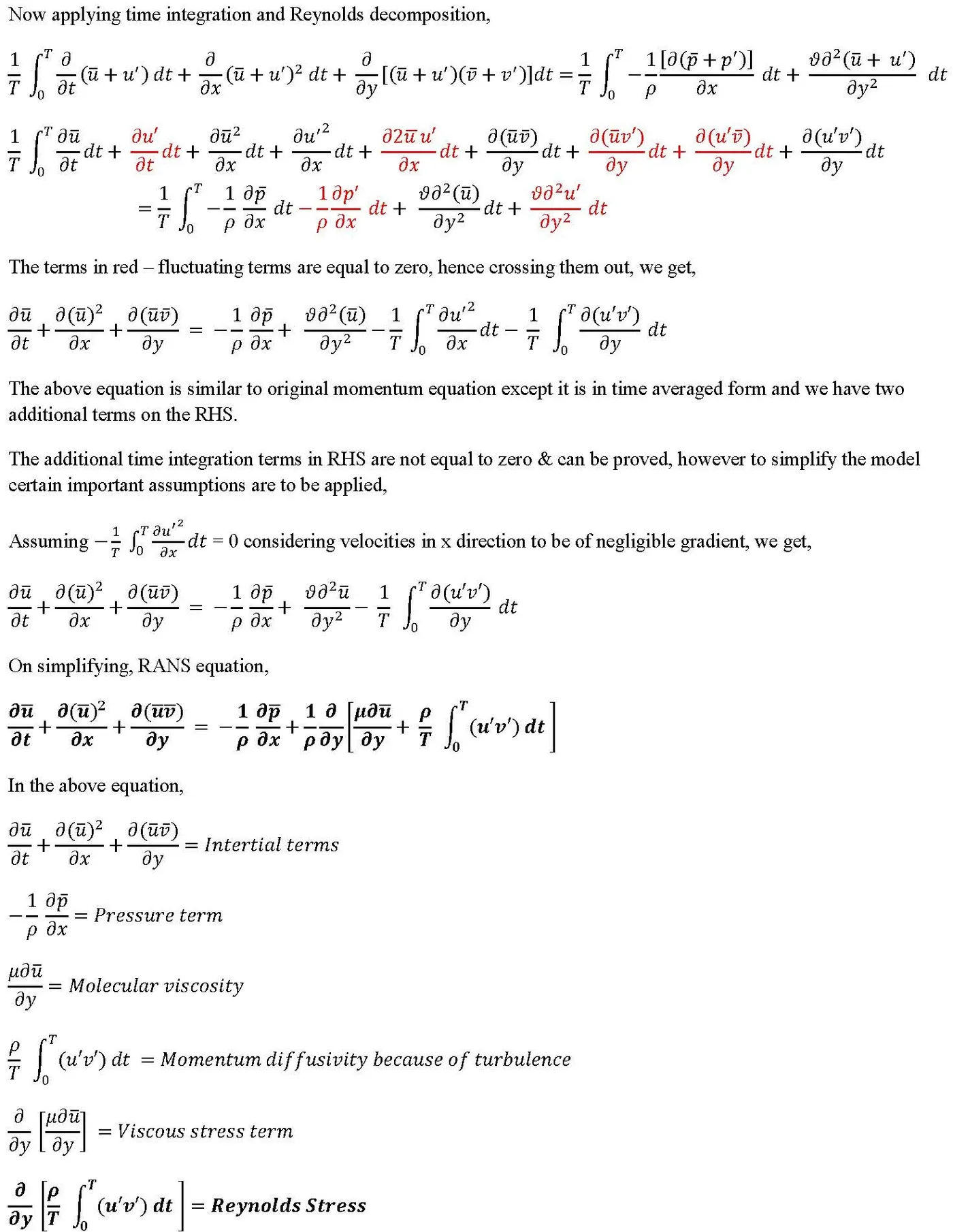
The Reynolds-averaged Navier–Stokes equations (or RANS equations) are time-averaged equations of motion for fluid flow. The idea behind the equations is Reynolds decomposition, whereby an instantaneous quantity is decomposed into its time-averaged and fluctuating quantities, an idea first proposed by Osborne Reynolds. The RANS equations are primarily used to describe turbulent flows. These equations can be used with approximations based on knowledge of the properties of flow turbulence to give approximate time-averaged solutions to the Navier-stokes equations
Due to fluctuating velocity component, the fluid layers experience additional turbulent shear stress, known as Reynolds stresses. There is momentum exchange due to convective transport by the eddies which causes faster moving fluid layers to be decelerated and slower moving layers to be accelerated. And in presence of temperature or concentration gradients, the eddy motions will also generate turbulent heat or species concentration fluxes.
Derivation:
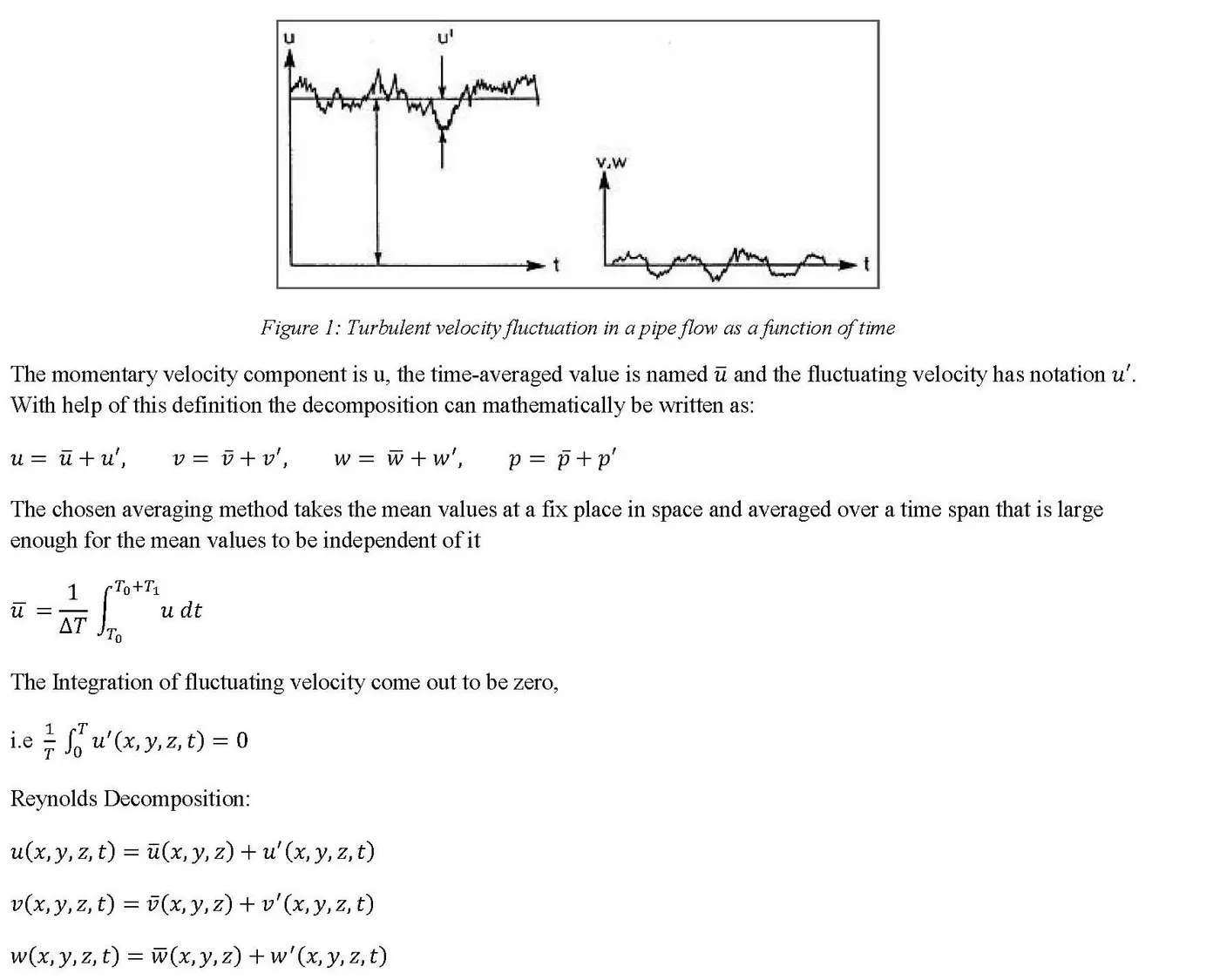
In order to be able to take a time-average, the momentary value is decomposed into parts mean value and fluctuating value. This is shown graphically in Figure 1.
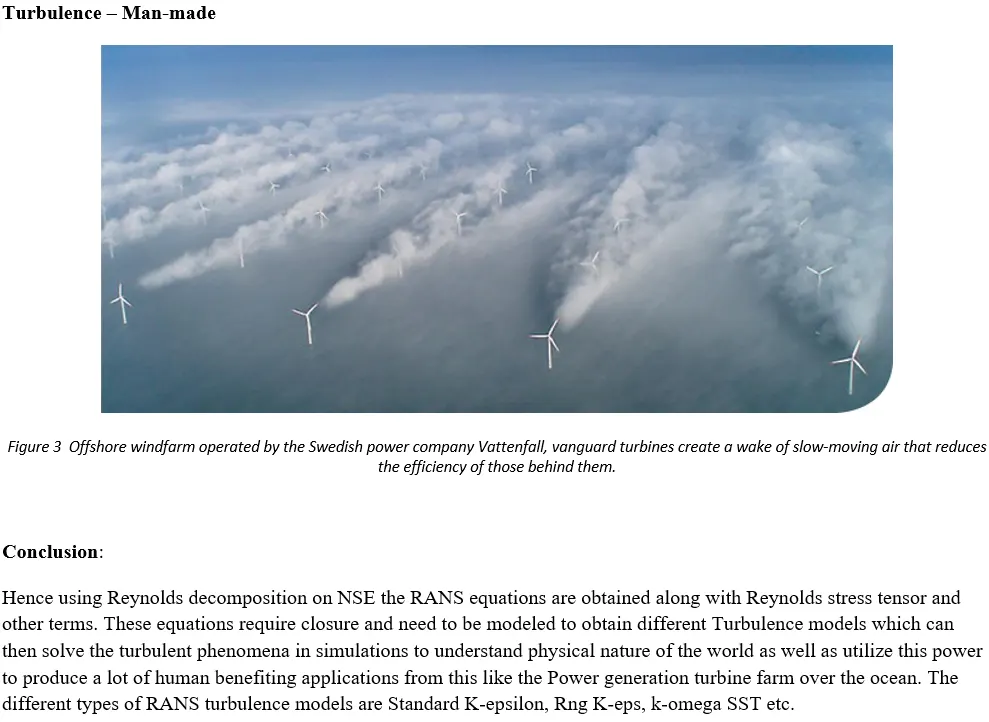
keywords - TURBULENCE, AERODYNAMICS, CFD, CAE, NUMERICAL-ANALYSIS, RANS, REYNOLDS STRESS.