Introduction to National Building Code and Steps in a Construction project
CHALLENGE NO-5
- Why are building codes or standards essential for the modelling/ efficiency of drawings in Revit?
A building code is a set of norms that govern construction of buildings by stipulating minimum standards. Building codes are intended to further safety, welfare and health of the residents of a building. In India, the guidelines for building activities are set by the National Building Code of India. The standardized norms in the National Building Code of India guide construction of most types of buildings across India.
Building codes are generally intended to be applied by architects, engineers, interior designers, constructors and regulators but are also used for various purposes by safety inspectors, environmental scientists, real estate developers, subcontractors, manufacturers of building products and materials, insurance companies, facility managers, tenants, and others. Codes regulate the design and construction of structures were adopted into law
- From the National Building Code list, the groups that will be essential to you when you begin modelling in Autodesk Revit.
Groups essential for modelling-
(Parts in NBC)
PART 3- DEVELOPMENT CONTROL RULES AND GENERAL BUILDING REQUIREMENTS- It covers the development control rules and general building requirements for proper planning and design of layout and building level to ensure health safety, public safety, and desired quality of life. It provides provisions for covered area, plinth area, FAR, land use classification, size of rooms etc.
PART 4- FIRE AND LIFE SAFETY- It covers the requirements of fire prevention, life safety in relation to fire and fire protection of building. The code specifies planning and construction features and fire protection features for all occupancies that are necessary to minimize danger to life and property.
PART 5- BUILDING MATERIALS- It covers the requirements of building materials and components and criteria for accepting new or alternate building materials and components.
PART 6- STRUCTURAL DESIGN- This part through its seven sections provides for structural adequacy of building to deal with both internal and external environment, and provide guidance to Engineers / Structural Engineers for varied sag of material / technology types of building design.
PART 7- CONSTRUCTIONAL PRACTICES AND SAFETY- It covers the constructional practices in buildings; storage, stacking and handling of materials and safety of personnel during construction operation of all elements.
PART 8- BUILDING SERVICES- This part through its five elaborate sections on utilities provides detailed guidance to concerned professionals or engineers for meeting necessary functional requirements in buildings.
PART 9- PLUMBING SERVICES- This part through its two sections gives detailed guidance to concerned professionals or engineers with regard to plumbing and other related requirements in building.
PART 10- LANDSCAPING, SIGNS AND OUTDOOR DISPLAY STRUCTURES- This part provides aesthetic details to the architects or engineers for the decoration of the building.
- List the five major steps that occur in project cycle. The steps should include from conceptualization of project to maintenance and final stage.
Initiating/ Conception Stage-
This process helps in the visualisation of what is to be accomplished. This is where the project is formally approved by the sponsor/client, initial scope defined, and stakeholders identified. This process is performed so that projects and programmes are not only approved by a sponsoring body, but also so that projects are aligned with the strategic objectives of the organisation. Where this is not performed, projects may be started and carried out haphazardly, with no real stated goal or objective.
Planning Stage-
This is a crucial process in project. The planning process is at the heart of the project activity cycle, and gives guidance to stakeholders on where and how to undertake the project. The planning stage is where the project plans are documented, the project deliverables and requirements are defined, and the project schedule is created. It involves creating a set of plans to help guide your team through the implementation and closure phases of the project. The plans created during this phase will help the project team manage time, cost, quality, changes, risk and related issues.
Executing Stage-
This process is also known as the implementation phase, in which the plan designed in the previous phase of the project activity cycle is put into action. The intent of the execution phase of the project activity cycle is to bring about the project’s expected results. Normally, this is the longest phase of the project life cycle, where most resources are applied. During the project execution, the execution team utilises all the schedules, procedures and templates that were prepared and anticipated during prior phases. Unexpected events and situations will inevitably be encountered, and the project manager and project team will have to deal with them as they arise.
Monitoring and control Stage-
This process oversees all the tasks and metrics needed to guarantee that the agreed and approved project that is undertaken is within scope, on time and within budget so that the project proceeds with minimum risk. This process involves comparing actual performance with planned performance and taking corrective action to yield the desired outcome when significant differences exist.
Closing Stage-
This is considered to be the last process of the project activity cycle. In this stage, the project is formally closed and then a report is produced to the project sponsor/client on the overall level of success of the completed project. The closing process involves handing over the deliverables to the sponsor/client, handing over documentation to the owners, cancelling supplier contracts, releasing staff and equipment, and informing stakeholders of the closure of the project.
- Give examples of different disciplines involved in construction of a project.
(A). Civil Engineer- Civil Engineers are generally responsible for designing, constructing and managing various construction projects such as roads, building, tunnels, bridges and other.
Functions of Civil Engineer-
- Manage, design, develop, create and maintain projects
- Conduct on site investigations and analyze data (maps, reports, tests, drawings and other)
- Carry out technical and feasibility studies
- Draw up blueprints according to technical specifications
- Assess potential risks, materials and material and labor costs
- Provide advice and suggestions to resolve problems
- Oversee and mentor staff
(B). Structural Engineer- Structural engineers are primarily concerned with designing and constructing buildings and structures that are safe and capable of withstanding the elements to which they will be exposed, as well as improving the structural integrity of new and existing buildings.
Functions of Structural Engineer-
- preparing reports, designs and drawings
- making calculations about loads and stresses
- selecting appropriate construction materials
- providing technical advice
- obtaining planning and/or building regulations approval
- liaising with relevant professional staff such as architects
- monitoring and inspecting work undertaken by contractors
- administering contracts
(C). Geotechnical Engineer- Geotechnical engineers research and study soil to evaluate its suitability for foundations. They investigate and assess construction sites, conduct lab tests, create designs for structures, supervise construction, and write and present reports. They work on such projects as designing tunnels, roadways, retaining walls, and earthen dams, as well as help to create strategies for the clean-up and management of contaminated sites.
Functions of Geotechnical Engineer-
- Perform geotechnical analysis and study to assess construction site condition.
- Plan and conduct geotechnical exploration effectively.
- Perform field and environmental investigations for construction projects.
- Analyse geotechnical findings, perform appropriate calculations and prepare data reports to Manager.
- Develop proposals and determine cost and schedule for investigations.
- Provide direction to technical team in field inspection activities.
- Interact with customers and team members to complete the assigned project on-time.
(D). Environmental Engineer- Environmental Engineers are problem-solvers who find innovative solutions to environmental issues. Their primary duties include collecting and analysing environmental data, studying human influences on the environment, and improving environmental conservation management.
Functions of Environmental Engineer-
- Designing technology for pollution control and waste management.
- Collecting and analyzing environmental data.
- Carrying out site assessments to determine the environmental impact of commercial activity.
- Studying human influences on the environment.
- Improving environmental conservation management, including recycling, public health, and water and air pollution.
- Identifying critical research areas such as renewable energy, climate change, and food and water security.
- Undertaking environmental protection projects such as designing air pollution management systems.
- Ensuring design projects comply with environmental and health regulations.
(D). Fire Protection Engineer- Fire engineers design and provide advice on both new buildings and buildings undergoing refurbishment in respect to fire safety measures. Their role is to help protect life, property and the wider environment from risk of fire and to help ensure that projects meet industry codes and legislative requirements.
Functions of Fire Protection Engineer-
- Identifying possible fire-related risks and reducing or eliminating them.
- Making designs, calculations, sketches and/or diagrams to help prevent fire or fire spread (‘fire strategy’).
- Incorporating fire safety procedures into designs – such as sprinkler systems, emergency exits and fire alarms – to minimise the risk of injury and loss of life in the event of a fire, taking into account both the structural integrity of the building and human behaviour.
- Making recommendations for the materials used in the construction or refurbishment of a building.
- Keeping up to date with regulations and legislation.
- Visiting project/construction sites to advise on the installation or implementation of the designs.
- Providing advice that feeds into decisions on safe building occupancy levels, fire evacuation plans.
- How are buildings classified? Place the following buildings under each category.
CLASSIICATION OF BUILDINGS-
- Residential buildings
- Educational buildings
- Assembly buildings
- Institutional buildings
- Mercantile buildings
- Business buildings
- Storage buildings
- Industrial buildings
- Hazardous buildings
- Residential Buildings:
These are the buildings in which sleeping accommodation is provided for normal residential purposes with or without cooking or dining or both facilities
- Educational Buildings;
These shalls include any building used for school, college or day-care purposes involving assembly for instruction, education or recreation.
- Institutional Buildings;
These shall include any building or part there of which is used for purposes such as medical or other treatment or care of persons suffering from physical or mental illness or disease, care of infants, convalescents of aged persons and for penal or correctional detention in which the liberty of the inmates is restricted. Institutional buildings ordinarily provide sleeping accommodation for the occupants
- Assembly Buildings:
These shall include any building or part thereof where a group of people gather for recreation, amusement, social, religious, political, civil, travel and similar purposes.
- Business Buildings:
These shall include any building or part of a building which is used for transaction of business, for the keeping of accounts and records for similar purposes.
The principal function of these buildings is transaction of public business and the keeping of books and records.
- Mercantile Buildings:
These shall include any building or a part of a building which is used as shops, stores, market, for display and sale of merchandise, either wholesale or retail.
7.Industrial Buildings:
These shall include any building or part of a building or structure in which products or materials of all kinds and properties are fabricated, assembled or processed
- Storage Buildings:
These shall include any building or part of a building primarily used for the storage or sheltering of goods, wares or merchandise.
- Hazardous Buildings
These shall include any building or part of a building which is used for the storage, handling, manufacture or processing of highly combustible explosive materials or products which are liable to burn with extreme rapidity or which may produce poisonous fumes or explosions.
PLACING OF BUILDINGS UNDER CATEGORY-
Four-unit apartments- Residential Building.
School with capacity of 1000 students- School Building.
A single unit Shop- Mercantile Building.
Multi story Shopping complex- Mercantile Building.
Steel machine factory- Industrial Building.
- Distinguish the roles of Design team and Management team.
FUNCTIONS OF DESIGN TEAM-
- Formalization of design brief in consultation with the owner.
- Site investigation/survey.
- Preparation of alternative concept designs.
- Selection of a concept in consultation with the consent of owner.
- Sizing the system.
- Development of design.
- Integration of architecture, structure and services.
- Synthesis of requirements of each discipline.
- Interaction with each other and with the owner.
- Preparation of preliminary designs and drawings and obtaining owner’s approval.
- Preparation of preliminary cost estimates for approval of owner.
- Preparation of work-breakdown structure and programme for pre-construction activities.
- Assisting client to obtain approvals of the Authority.
PROJECT MANAGEMENT TEAM-
- The objective of project management or construction management is primarily to achieve accomplishment of project in accordance with the designs and specifications in a stipulated time and cost framework, with a degree of assurance prior to commencement and satisfaction on accomplishment.
- The teams shall be responsible for day-to-day execution, supervision, quality control, etc and shall ensure inter-disciplinary co-ordination during the construction stage.
- The team shall be responsible to achieve satisfactory completion of the project with regard to cost, time and quality.
- Refer to NBC, Identify the modelling requirements for the project .
- Height Limitations.
- Area Limitations.
- Room sizing.
- Wall height Thickness based on fire life and safety.
- Passageway requirements
STANDARDS FOLLOWED WHILE DESIGNING-
- The floor to floor height of residential building is 3000 that is 3 mts.
- Area of habitable room should not be less than 9.5 sqm
- Min area of WC should be 1 sq.m
- Min area of bath should be 1.20 sq.m
- Minimum passage way width should be 1m.
- Ventilation area is given properly.
All the conditions are follows while designing of the residential unit.
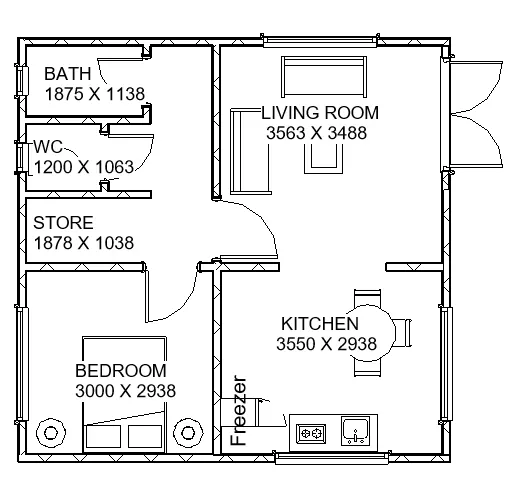
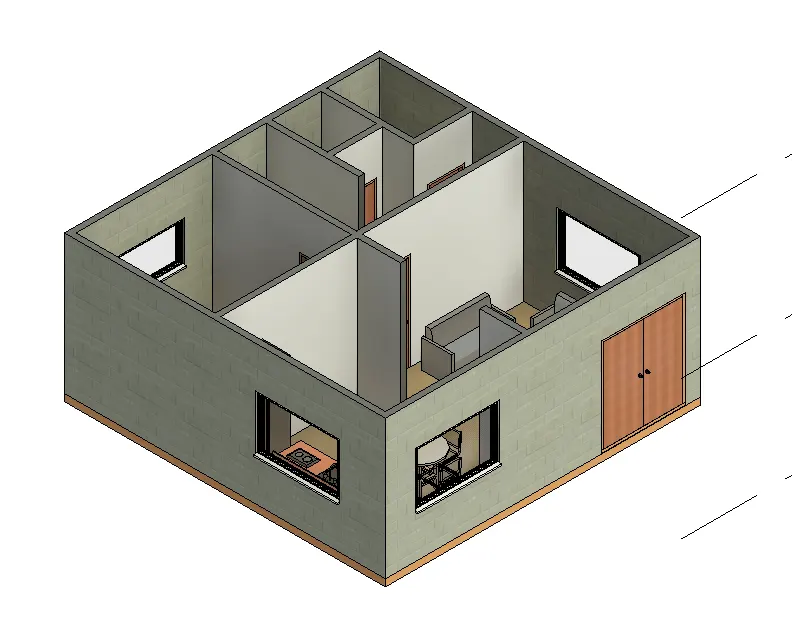
- We have identified requirements for modelling from question 7, Use these numbers from code book and verify the numbers used in modelling the unit from week 2 to week 4. If the numbers are not reasonable, use the numbers obtained from the code book to create a revision of the mode. This model resembles the actual modelling requirements for Project 1 of course work.
All the numbers from the code book are Verfying with the design standards followed while Designing of the residential unit.
All the numbers are reasonable from the standards.
No need to change the numbers.
Hence the model resembles the actual model requirements according to the National Building Code.