Identification of Cracks
Q1) Ans (a)
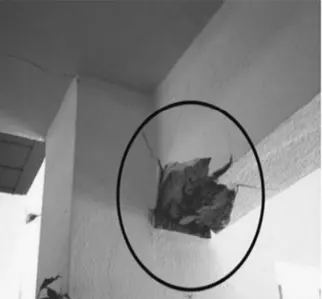
observation:
* In this picture we observe that, concrete get damage/ broken and reinforcement are visible at the bottom of beam.
* The concrete spalled beyond the reinforcement that is indicates the segaration.
* The top portion of beam is not exposed due to covered from the slab projection so it's look safe and no major issue/ severe issue in the top of the beam.
* Crack developed in bottom and gradually increasing towards the top. the reinfocement is still active at the support tab so there is no crack in top of beam.
Conclusion:
* At the time of earthquake, the stress on the beam is reversal, so this is a kind of flexural failure.
* During the eartquake, beam gets in tension zone and the structural feel in the compression due to the stress reversal support at top.
* The bottom reinforcement at the beam lost their elastc limit, so that it is impossible to repair the bottom crack.
Ans (b)
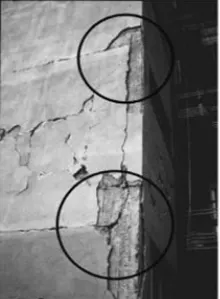
Observation:
* In this picture we observed the cracks developed in column- beam corner.
* Looks like the crack is much wider that have developed through the column beam joint.
* In this picture, the beam has separated from the column.
Conclusion:
* The reinforcement of the beam is not sufficient to anchor the vertical rebar of the column, that is insufficient development length of rebar.
* The lateral movement cannot be satisfied due to inssufficient anchorage length of beam rebar so its keeps on separetad from column
* It is very tough to provide the development length is casted concrete between two members, so it is not repairable
Ans (c)
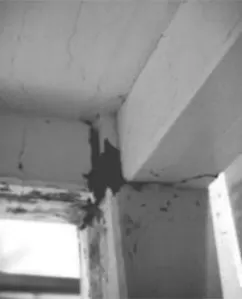
Observation:
* In this picture we observe that, cracks generated in column- beam junction
* The cracks occurred in the entire width of the beam.
* Some cracks have developed in slab along the direction of beam.
Conclusion:
* This is a plastic hinge failure, the deformation in beam means no capability to resists the moment and its permit to free rotation
* The plastic hinge failure is happenend at the joint only, so the damage occurs in the junction.
* The main reason of damage are cyclic lateral loading and stress reversal at the junction.
* To recover from the damage, we can strengthen the column- beam junction.
Q2) Ans (a)
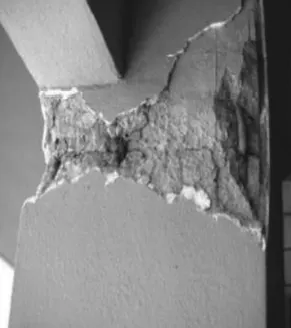
Observation:
* In this picture we observe that, the column has damage from the top, bottom of column is safe.
* The damage is all around the face of column
* No damage found in beam
* It is a most outer or external columns of the building
Conclusion:
* From these observation its clear, this is a soft storey failure, technically plastic hinge formation at column
* Due to lateral movement in the building and absince of walls, columns got affected because of plastic hinge formed at the upper side of the ground floor.
* Based on spall out the concrete from column and the severity of column is to be decide either repairable or non- repairable.
Ans (b)
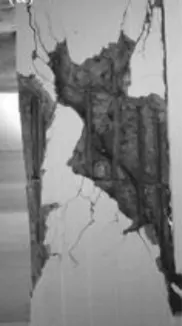
Observation:
* The breakage of concrete has diagonally developed in column, so this is not a crack it's a completely crushed and concrete detached from column
* Lateral and longitudinal reinforcements are visible. rebar has not damaged and not separated .
Conclusion:
* By observing the picture, we can conclude this is a pure shear failure because the crack is in diagonal direction and the complete concrete had spalled and crushed
* The shear reinforcements were not sufficient so it had detached and spalled throughout the columns. it had compelled concrete to breakdown into pieces.
Ans (c)
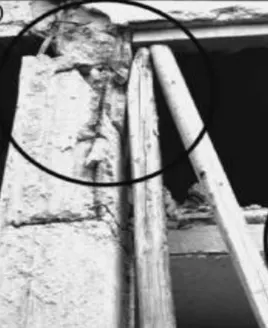
Observation:
* From the given picture, we can observe that the column is completely fail
* Damage happen at top of column and bottom of column is safe
* As per picture, there are two slabs connected with the columns and the space between both slab is not the floor hight so this is probably for mechanocal equipments
Conclusion:
* From the observation we can conclude that the failure is short column failure.
* The column is attached with intermediate slab and the height of columns is not similar then the other columns, so there is the heavy shear load on the column.
* This failure is not repairable.