Hood design-Week 2
HOOD DESIGN
Aim:
To create a hood Outer panel, hood Inner panel and the hood necessary reinforcements with the design parameters.
Objectives:
- Hood outer panel with hem
- Develop of hood inner panel
- Develop all the necessary reinforcement
- Position of latch & stricker
- Provide a mastic date
- Provide the Emboss definition
- Explain about manufacturing process like deep drawing
Hood and its components:
Hood
The hood (North American English) or bonnet (Commonwealth English excluding Canada) is hinged cover over the engine of motor vehicles that allows access to the engine compartments or trunk (boot in Commonwealth English) on rear-engine and some mid-engine vehicles for maintenance and repair.
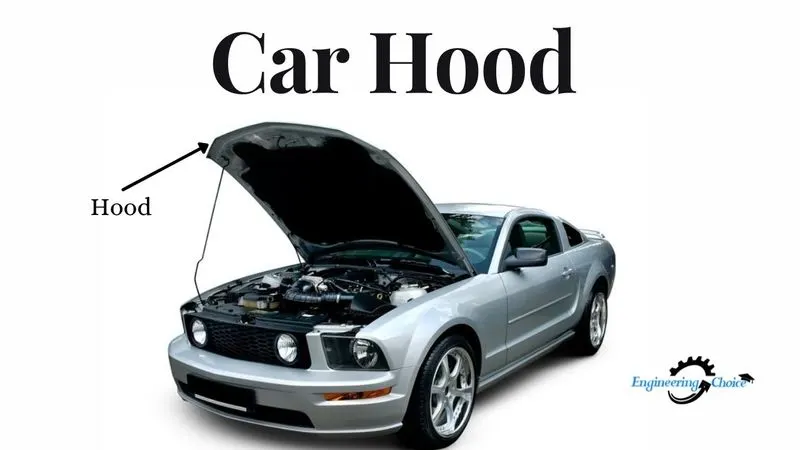
Types of Hood :
- Support rod hood
- Gas stay hood
1. Support rod hood
A hood stay an apparatus for an engine room for a car, which can safely keep on engine hood in an open state if an external force is generated due to vibration, wind and can faciliate an opening/closing operation of the engine hood.
It is basic and most commonly used support rod hood for low cost and mid-range cars, since its cars effective.
The maximum distance a rod can be bent is less than 35mm
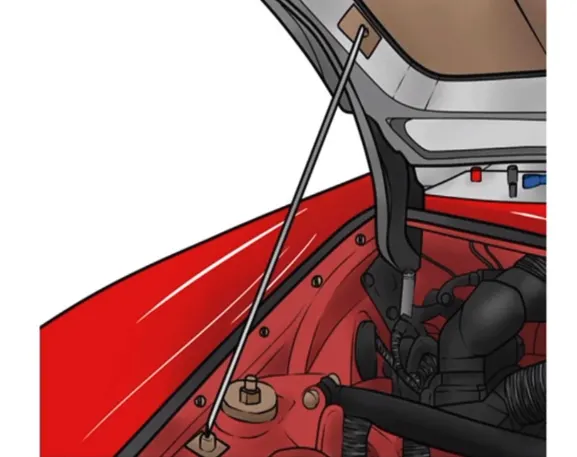
Gromets are used to fix the support rod
2. Gas stay hood
This type of hood support does not require much of Man power and is very useful when the weight of the hood is more and difficult to lift. This is usually seen in bigger cars and also it is expensive. This gas stays are provided in the back door to all cars segments these days.
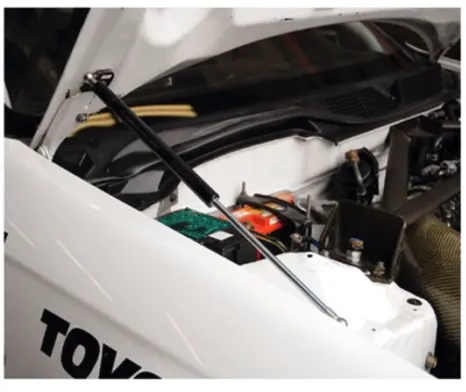
Stud ball is used to fix the gas stay
Components of the hood
1. Reinforcements
In hood to accomodate Latch and Stricker and Hinges will have to remove some material which will result in loss of strength of the material locally . Hence to improve strength locally we provide these reinforcements.
These reinforcements provided in the latch and stricker area is called Latch and stricker Reinforcements and the reinforcements provided in the Hinge area is called Hinge Reinforcements.
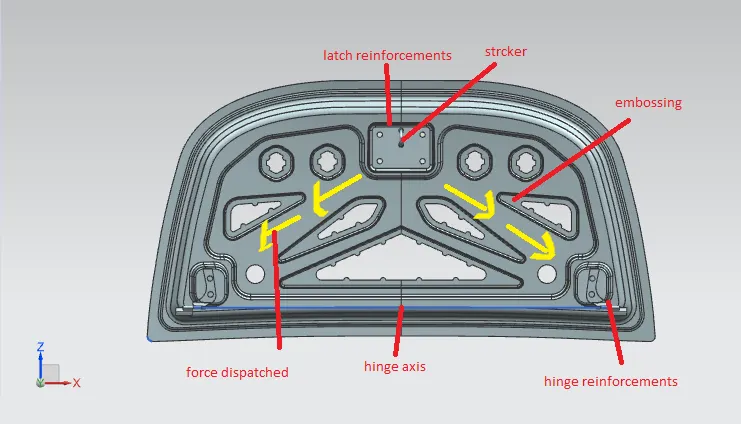
1.1 Latch and Stricker
Latch and stricker is used for locking the hood with the car. Its usually placed on the space provided on the inner panel.
1.2 Hinge
Hinges are used to connect the hood and cowl panel of an automobile. It enable the opening and closing operation of the hood.
The hinge should be made strong enough to handle the weight of the hood and also to handle the force action on it during the collison.
2. Latch Trajectory
The hinges should be usually placed on both sides of the hood in such a way that the strike fits exactly into the hole provided.
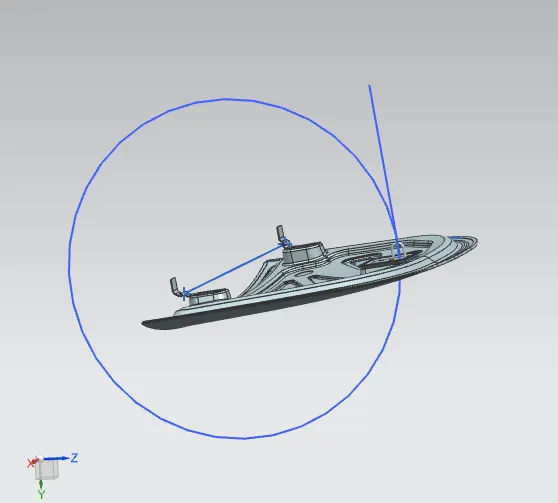
To ensure this the following conditions are follows:
1. Both the hinges should be on the same axis.
2. The centre of the stricker's circular trajectory should be always perpendicular to the hinge axis.
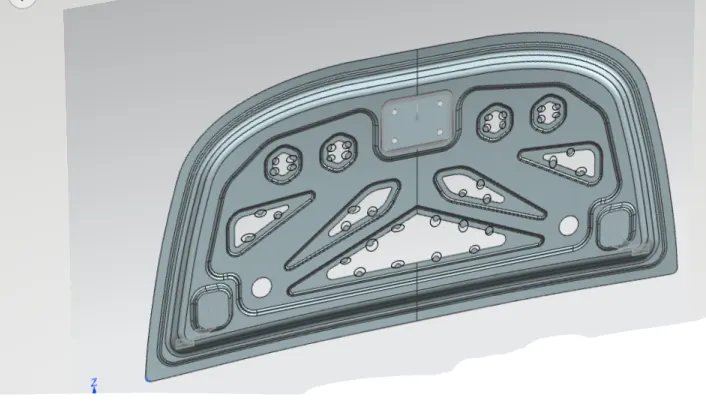
3. Mastic data
It is the hard rubber kind of materials which is placed in between the outer and inner panel which oozes out and helps in holding the outer and inner panel together
It is placed in the inner panel in such a way that it covers the whole hood.
These seals can improve strength locally of about 80mm in dia.
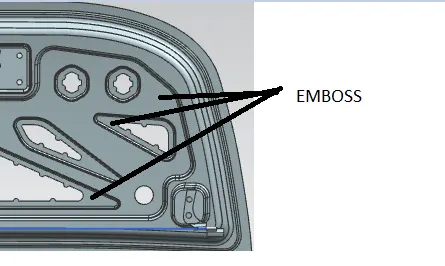
4. Emboss defintion
The implement of embosses are very important on the inner hood since it plays a important role in saving human life during a crash from the front.
The embosses are designed in Y & V direction so that during the crash the forces dissipiates outwards or towards the hinge. This will reduce the impact on the passengers in the front.
Adding embosses also adds aesthetic values, improve traction & also good heat throughout the surface.
DEEP-DRAWING PROCESS
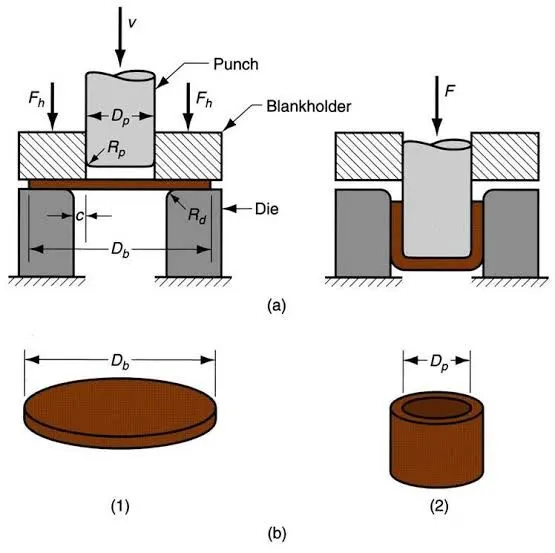
Manufacturing of Deep-drawing process
The deep-drawing of sheet metal is performed with a punch and die. The punch is used to achieve the desired shape. The die cavity matches the punch. However, it is slightly wider, allowing for passage and clearance is the lateral distance between die edge and punch edge.
The sheet metal called a blank, is placed over the opening of the die, where a blank holder surrounding the punch applies pressure to the entire surface of the metal, except the area under the punch then moves towards it and make contact. The punch forces the sheet metal into the die, forming its shape.
In this process, there are several circumstances to consider when manufacturing an enclosure:
- Material type
- Thickness
- Corner radius
- Bottom radius
- Shape
Both mechanical and hydraulic presses are used in the deep draw manufacturing process, Precision punches and dies are tools usually made of steel and iron. However, materials for punches and dies can span from plastics to carbides. Deep drawn parts are usually created at speeds of 4"-12" per second.
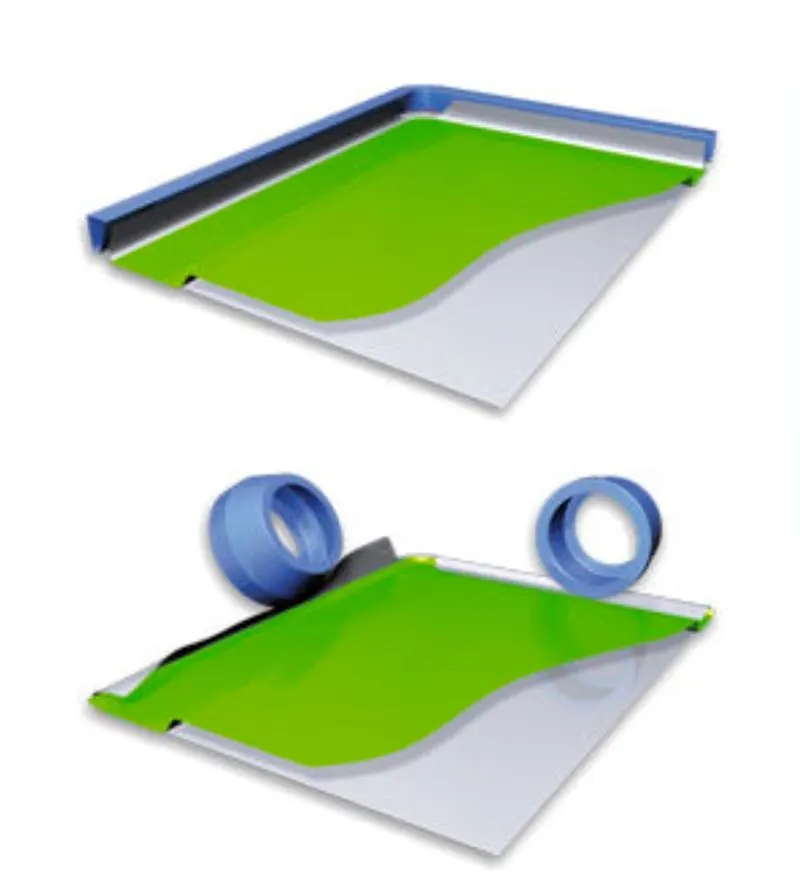
HEMMING:
hemming is a forming operation in which the edges of the sheet are folded or folded over another part in order to achieve a tight fit. Normally hemming operations are used to connect parts together, to improve the apperance of a part and to reinforce part edges.
In a car part production, hemming is used in assemply as a secondary operation after deep drawing, trimming and flanging operations to join two sheet metal parts (outer and Inner) together. Typical parts for this type of assemply are hoods, doors and fenders.
These are two types of hemming process
- Conventional die hemming
- Roll hemming
DATA:
Inner hood has been designed by following the master data:
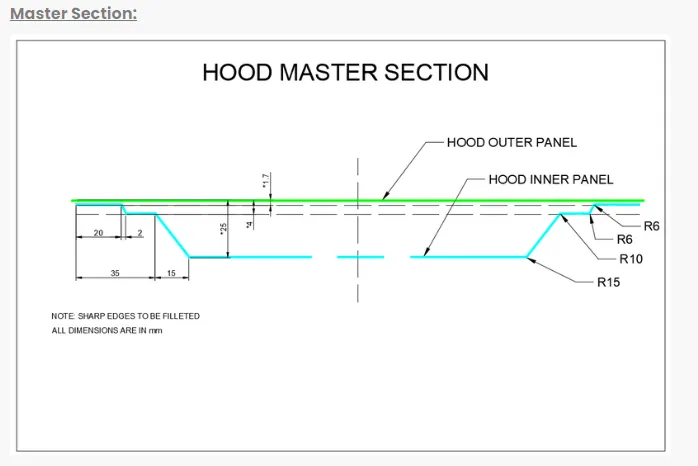
Hood thickness:
- Outer panel thickness - 0.75mm
- Inner panel thickness - 0.75mm
- Reinforcements thickness - 1.5mm
DESIGN:
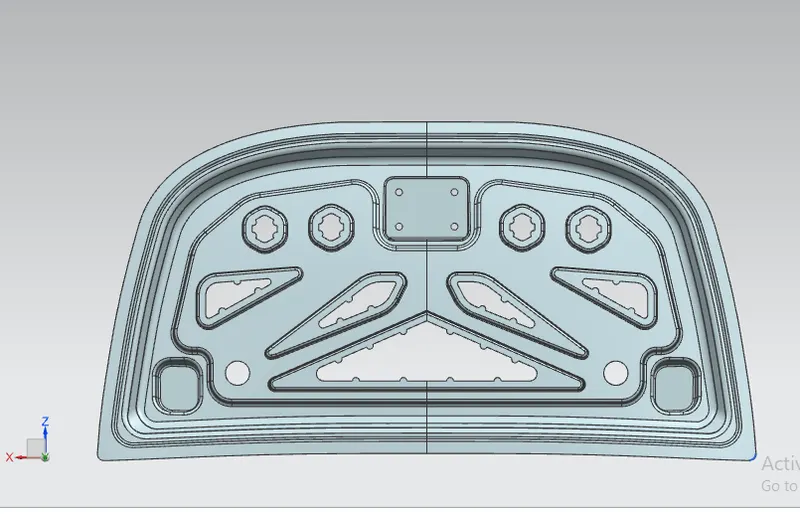
Inner panel:
The inner panel supports the outer panel. It consists of embosses & holes. Embosses provide stiffness as well as it dissipates energy towards reinforcement.
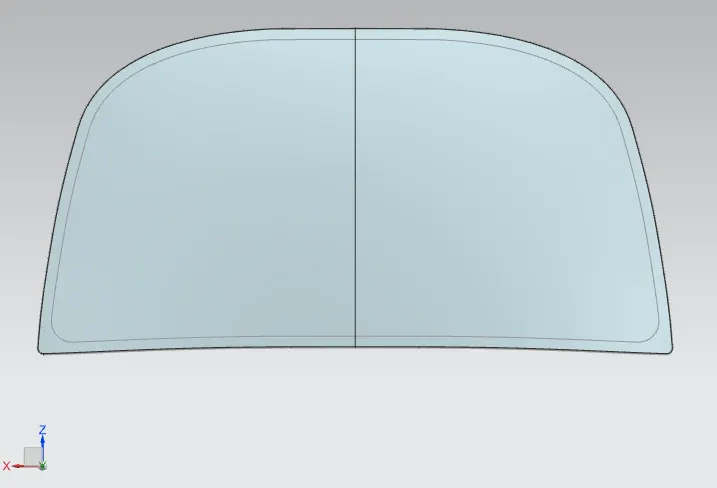
Outer panel:
Outer panel is nothing but a outside cover for engine and its a used to make a car looks good.
Hemming:
The outer panel & Inner panel can't join by any welding process if we did it will leave a spot on the outer panel and it will spoil the look of a car, so, to join inner and outer closure panels togethet we use the Hemming process.
It is the process of bending/folding the flange of the outer panel the inner one.
The flange of the outer panel is bent over the inner panel in progressive steps by means of the roller hemming head.
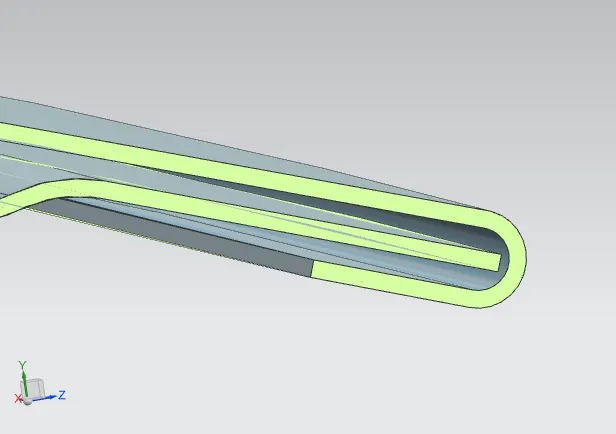
Relief Rear Section
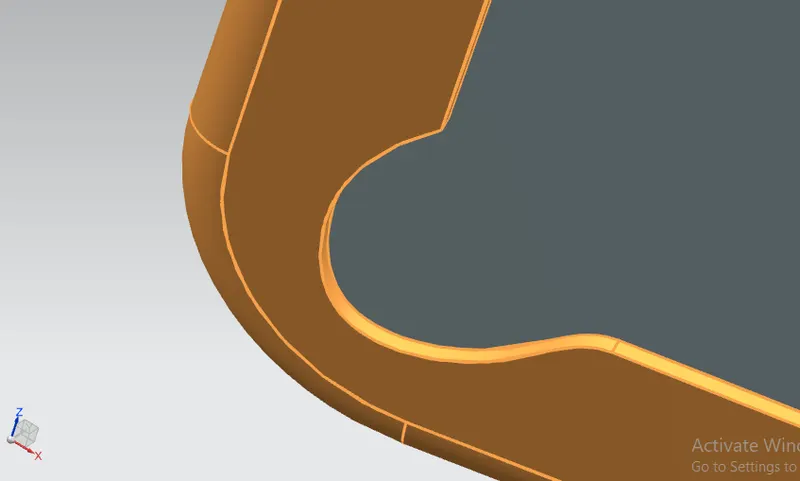
Front Relief:
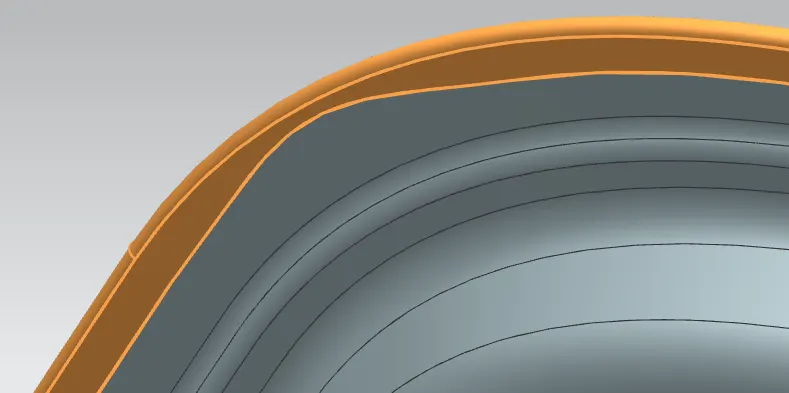
All Parameters are dimensions in mm
Conclusion:
All the parts of the hood are designed based on the required conditions & given dimensions.
Thank you