Hood design-Week 2
HOOD DESIGN
Aim- The main aim of this project is to come up with design for hood as per master section that satisfy the manufacturing requirement and as well as NCAP
INTRODUCTION -
HOOD- HOOD or bonnet is the hinged cover over the engine of the motor vehicle that allow access to the engine compartment for maintenance and repair ,In general hood typically made of aluminium or steel sheet ,the hood also meet up several design requirement ,they give a great deal to protect customers
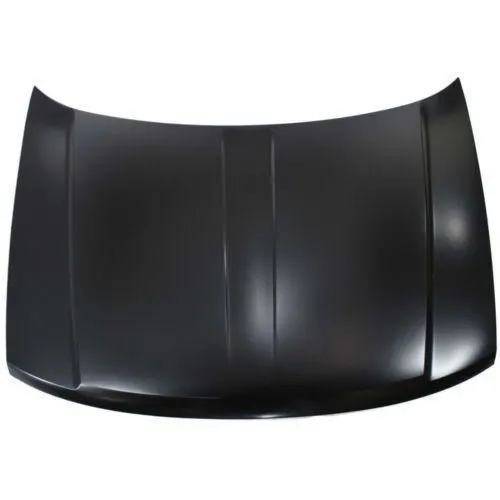
hood outer panel
PARTS OF HOOD ASSEMBLY
1.Hood outer panel
2.Hood inner panel
3.Hinge and its reinforcement
4.striker and its reinforcement
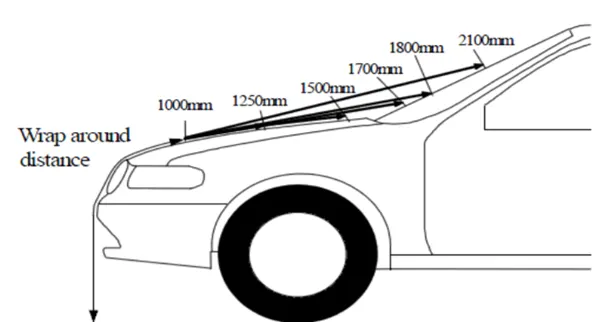
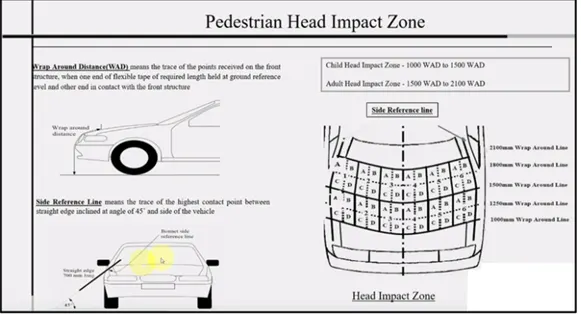
PEDESTRAIN SAFETY - In Japan and Europe, regulations have come into effect that place a limit on the severity of pedestrian head injury when struck by a motor vehicle.This is leading to more advanced hood designs, as evidenced by multicone hood inner panel designs as found on the Mazda RX-8 and other vehicles. Other changes are being made to use the hood as an active structure and push its surface several centimeters away from the hard motor components during a pedestrian crash. This may be achieved by mechanical (spring force) or pyrotechnic devices.
MATERIAL SELECTION- Material Selection of Hood Design Assembly: Hood is typically made out of steel or aluminum, although aftermarket manufacturers may manufacture hoods out of fiberglass, carbon fiber, or dry carbon. Grade 304 stainless steel and Grade 302 mild steel for the outer and inner panel.
| MATERIAL | ULTIMATE TENSILE STRENGTH (MPa) | YIELD STRENGTH(mpa) |
| STEEL | 340-1520 | 210-1250 |
| ALUMINIUM | 195 | 90 |
Opening angle of hood:
Opening angle is one of the important criteria while opening hood.It can be varies from country to country because of their required standards and model of the car.All the persons are not in similar height.The average height of persons can also be differ from country to country.So taking that parameters into consideration the opening angle can be defined.As the opening anlge is more which impacts the more head injury while opening angle is less reduce head impact.
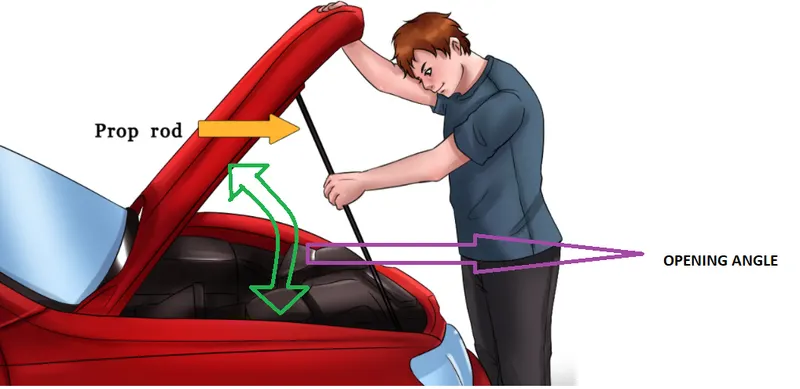
Generally they are two types of supports are used to lift the hood-
- Support Rod
- Gas stay.
Support rod-
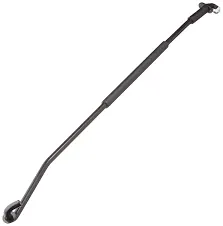
Support rod is basically a long cylindrical steel rod used to lift the hood manually.It is very simple in design and cheap in cost.One end is connected at the side of engine compartment with outer mounting and other end is hooked to the inner mounting of hood during opening condition.While the hood is in closed condition,the support rod is disconnected from inner mounting and placed in provided space of support rod at engine compartment.But the only thing is to incorporate the support rod on the opposite of battery in engine compartment because if in some cases the battery needs to servicing.At that time it is difficult to remove the battery because of support rod position.So it can be positioned on opposite of battery compartment.Support rod are commonly used where the hood weight is less and can able to lift by manually
GAS STAY- Gas stay is also working as support rod but in many vechile hood is quite larger and heavy so there we use gas stay

HOOD INNER PANEL- The hood panel of the vehicle has a form in which an outer panel and an inner panel are combined, and has a frame structure for rigidity reinforcement in order to ensure hood rigidity and durability
Hood inner panel is a engineering surface where we can attach latche,striker and hinge, support rod, etc.
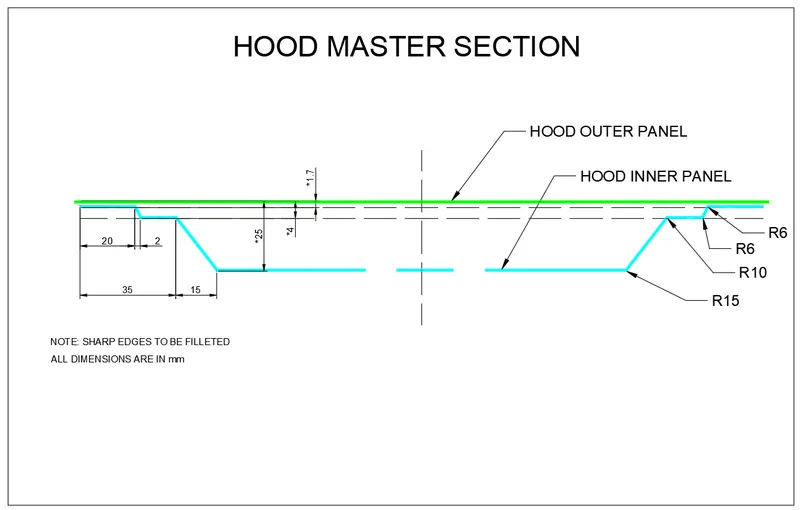
During hood design we follow certain commands and master section for this
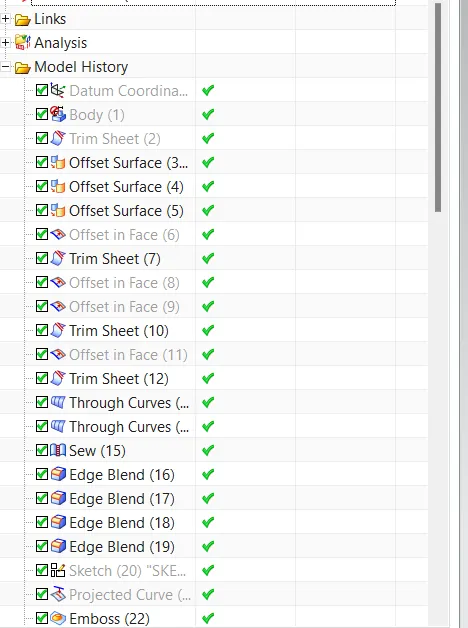
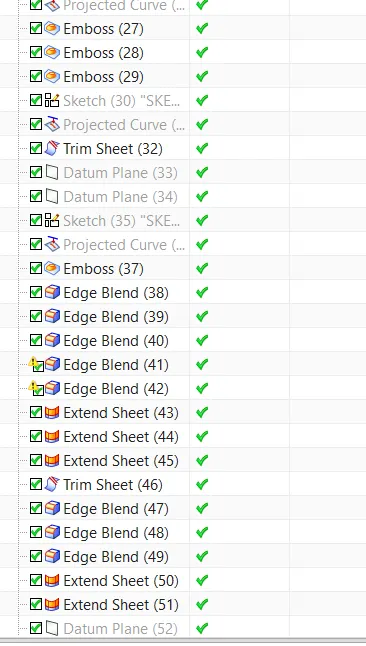
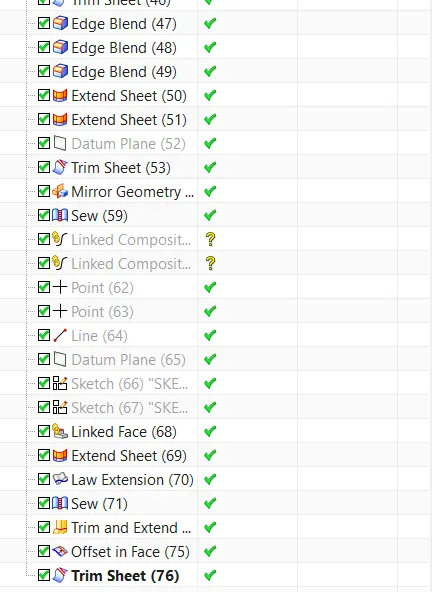
As per tree structure we create inner panel and attach hinge and striker to the panel and also emboss and reinforcement .
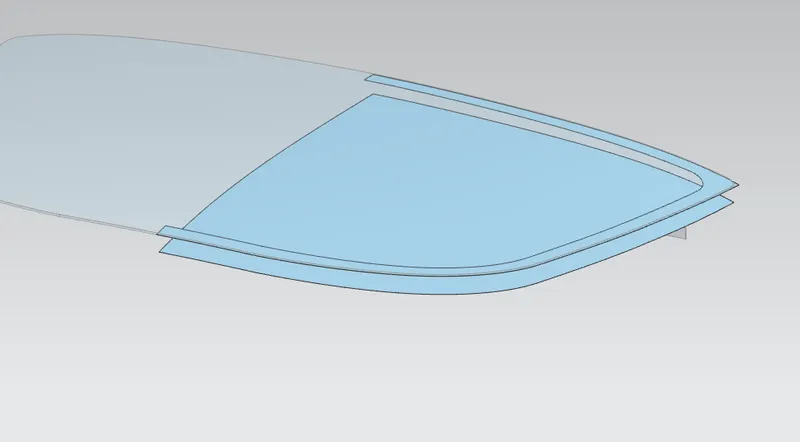
After offset at 1.7,4&25 mm for creating an inner panel
after that we join the surface by using the command through curve mesh
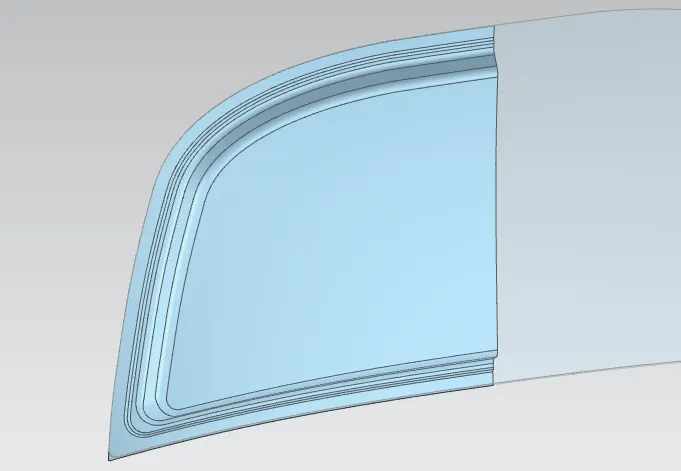
after using through curve mesh we join the surface
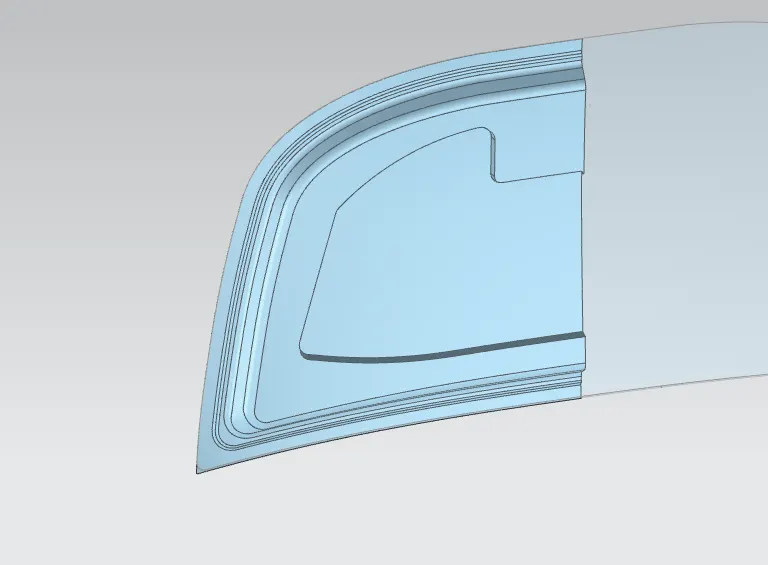
After joining the surface we created emboss surface by using law extension and trim ,
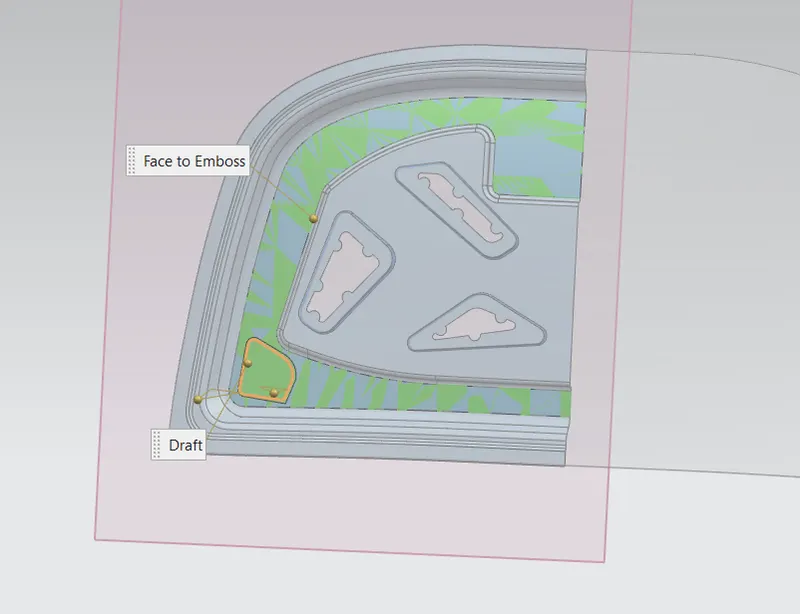
after that at new datum plane we create a emboss for hinge ,the surface where we attach hinge should be flat
Hinges are used to join two parts together while allowing them to rotate relative to each other.So the proper Positioning of hinges palys a major role for opening the hood.
Few things to be consider while positioning hinges:
- The surface where the hinges to be mounted on the inner panel must be flat,otherwise it leads to loosening of fastners and resulting in NVH issues(Noise, vibration,Harshness).
- Both the hinges on their respective sides must be in the same centreline axis.
Striker position-
For proper opening and closing of hood,the striker should be positioned perpendicular to the trajectory of the hood and the surface where the striker to be mounted on the inner panel must be flat in order to avoid NVH issues.
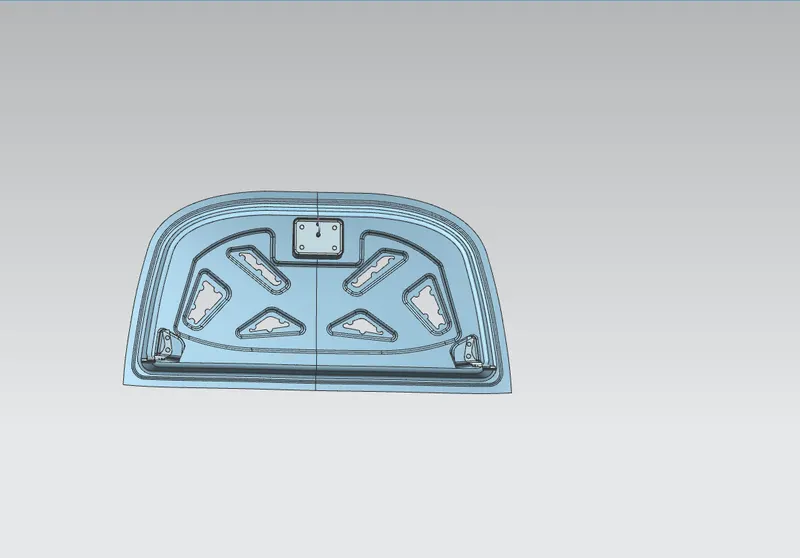
after that we attach the hinge and striker to the inner panel
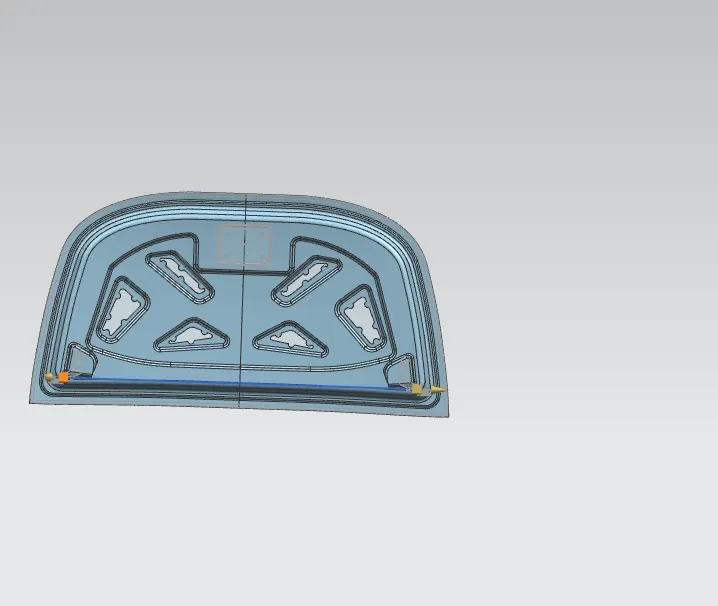
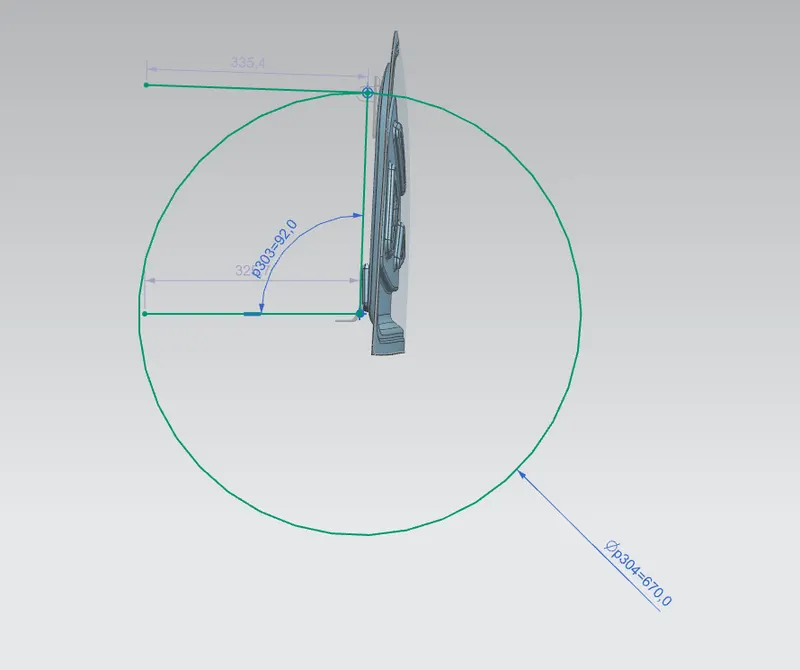
firstly we create hinge axis and create a cicular path at which hood will rotate by using this we attach striker to inner panel ,
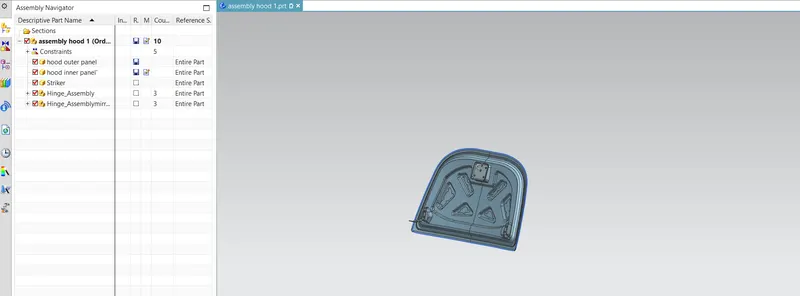
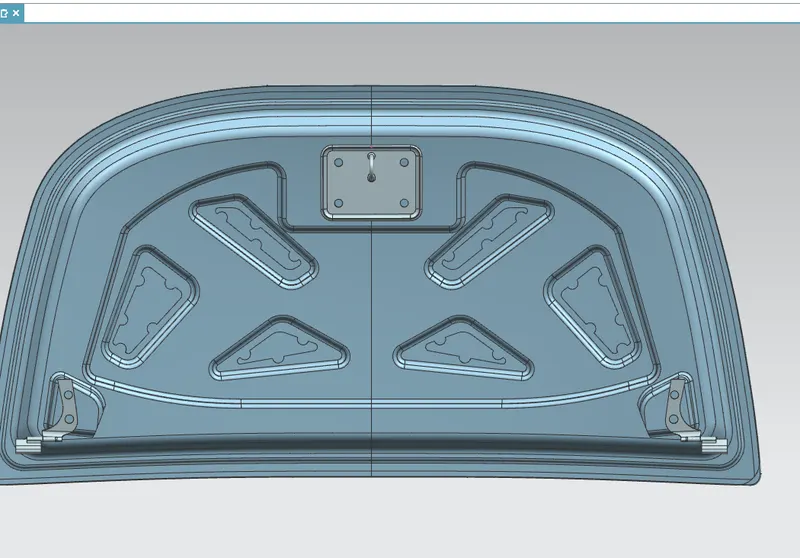
after that we get our final surface ,by using hemming process we attach both surfaces
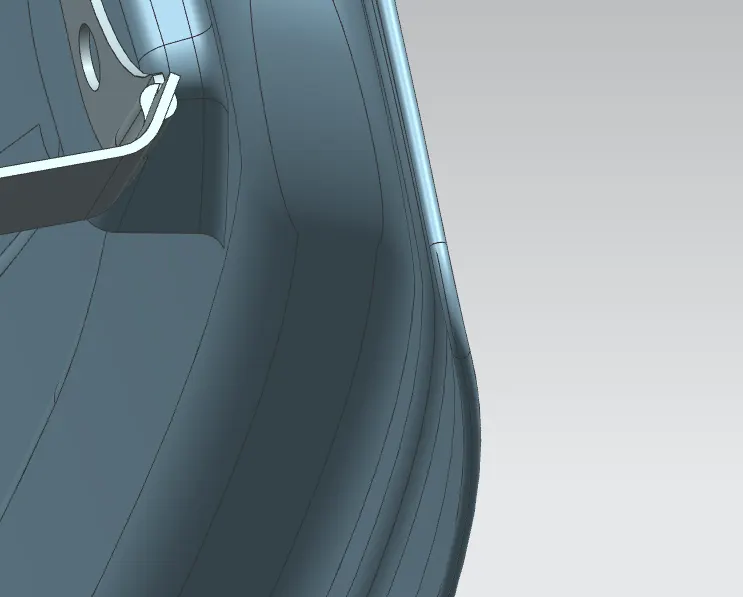
Sheet metal embossing is a stamping process for producing raised or sunken designs or relief in sheet metal. This process can be made by means of matched male and female roller dies, or by passing sheet or a strip of metal between rolls of the desired pattern. It is often combined with foil stamping to create a shiny, 3D effect.
Advantages-
- Stiffening and strengthen the sheet metal.
- Ability to maintain same metal thickness before and after embossing&
Ability to produce unlimited patterns on the sheet.
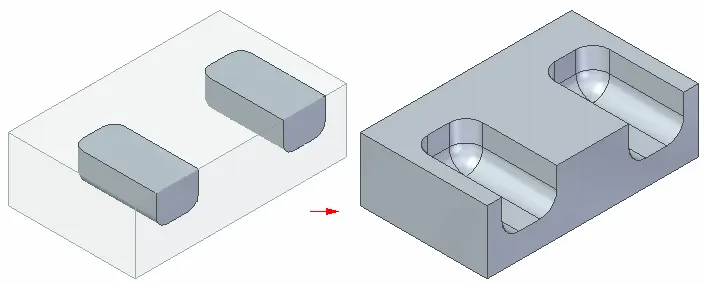
Many manufacturing industries like automobile industries, air craft industries, marine industries etc. are largely associated with sheet metal working. There are many products which we used in our daily like metal doors, metal desks, metal can, roof sheets etc. are sheet metal product.
There are various processes which are used to forming or shaping sheet metal. These processes can be classified into three ways.
- Sheet Metal cutting process
- Sheet Metal Bending Process
- Deep Drawing
Deep Drawing Process:
Deep drawing is a process of converting metal sheet into cylindrical or box shaped structure with or without changing its length and thickness. Many cylindrical parts like metal can, pots, container for food and beverages, kitchen sinks, automobile fuel tank etc. are deep drawing product.
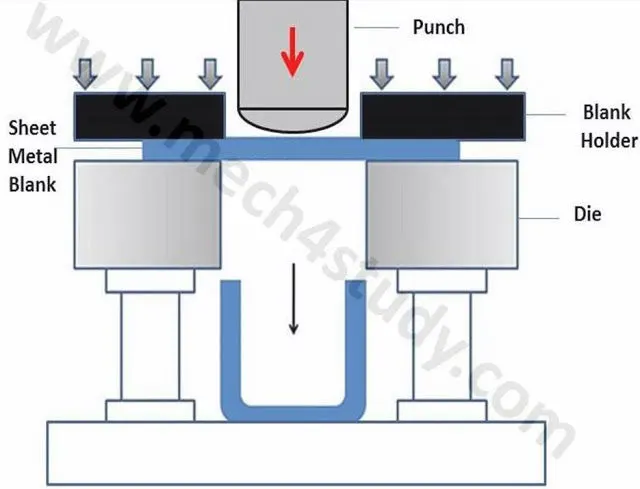
Circular Die:
Sheet metal blank is placed over a circular die opening. This die is made by either tool steel or cast irons. Sometimes carbides and plastic are also used for die material.
Blankholder:
It is a part which hold the sheet metal blank at its required place. It provides necesery holding force during drawing. This force should not be as high which can cause tear of sheet metal during operation and also not too small which can cause tearing problem.
Punch:
This part provides necessary downward force at the blank. It travel downward and forces the blank into the die cavity to forming a cup shape. The diameter of the punch can be denoted by Dp
Blank:
The sheet metal cut piece which is used for deep drawing is known as blank. It is placed over an circular open die. The diameter of the blank is denoted by Do.
Working Process:
The blank is placed over an open circular die with the help of blank holder. The blank holder provides a necessary force to hold the blank. The punch which is attached with a mechanical or hydraulic press moves downward and provide a necessary drawing force at blank. This force tends to deform metal sheet and forces it into the die cavity and convert it into a cup shape structure. If this force is high it causes elongation of cup wall to thin and if excessive, it causes tearing of sheet. So the punch force should remain a certain limit to avoid tearing during operation.
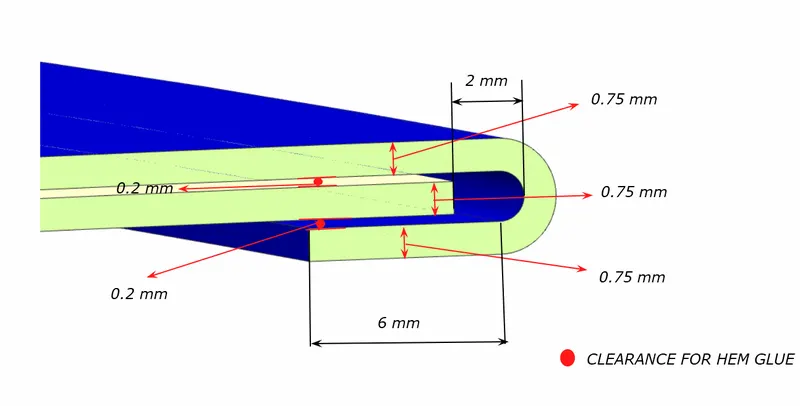
HEMMING- Hemming is a sheet metal forming process in which sheets are joined by bending it to 180°. Automotive body panels and automotive parts such as deck-lids, trunk-lids, doors, hoods and tailgates are formed by hemming process.