Hood design-Week 2
HOOD DESIGN
OBJECTIVE:
To design outer panel of Hood with Hem and develop the Inner panel with all necessary reinforcements definition then positioning of Hinge, striker and create provision for mastic sealant points.
Theory:
The Hood or the Bonnet of a car is considered as the frontal BIW enclosure component. Bonnets are designed to reduce air resistance as the air flows around the car. The design of the bonnet is vital since it affects the aerodynamic flow around the car. Apart from this, bonnets are also designed to meet several other requirements. They serve a great deal of purpose in protecting the passengers inside the car and the pedestrians in the event of an accident. It also acts as the cover for the engine.
The hood or the Bonnet consists of the following parts:
Hood outer panel.
Hood inner panel.
Latch and Striker re-enforcement.
Hinge re-enforcement.
Requirements:
Hood Thickness and manufacturing considerations.
Outer Panel Thickness = 0.75mm
Inner Panel Thickness = 0.75mm
Reinforcement Thickness = 1.5mm
Minimum fillet radius = 3mm+Thickness (example: When thickness of inner panel is 0.75mm we need to maintain minimum fillet radius 3+0.75=3.75mm.)
No sharp corners inside the component.
No curvatures lesser than 5mm.
Small embosses should not exceed the maximum depth of 6mm (staying on the safe side)
Mounting areas and welding areas need to be flat.
Provide appropriate corner relief on the area of curvature.
Functional and Safety Requirements:
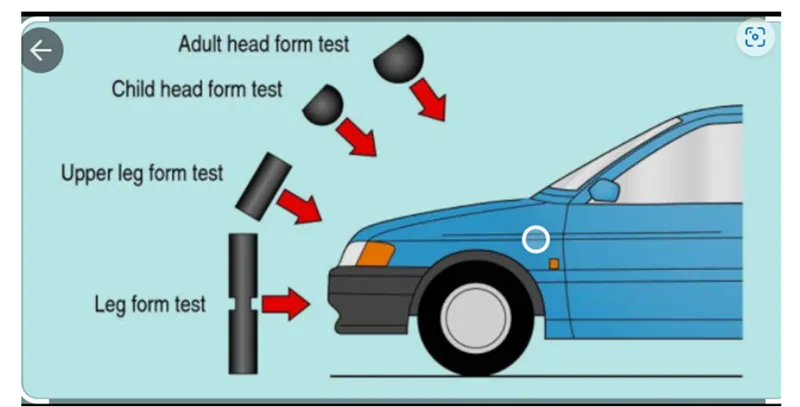
The most important safety requirement to be considered while designing the Bonnet is the frontal collision requirements.
The design intention of the hood according to the frontal collision requirement is that the hood crushes and dissipates forces in the upward direction and to the hard points on the hood thereby deflecting the force on to the body and not the passengers.
The second major function of the hood is the opening and closing of the hood. This is done with the help of the latch and striker. To position the latch and striker effectively, we first position the hinge and draw the hinge axis. Now, using the hinge axis from the centre we draw a big circle to the position there we need to place the latch.
Procedure:
Master section creation:
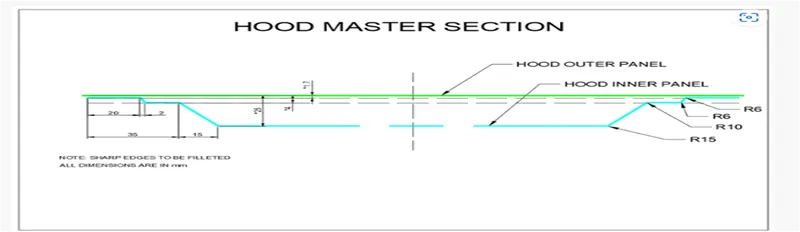
The master section is created based on the requirements received from the marketability team and the manufacturing requirements that we saw before. Below is the image of the master section used for the design.
Geometry and Emboss creation:
The geometry is created based on the master section that was provided above. After performing the initial stages of design, we will provide local embosses to strengthen the component. The component will be strengthened based on the master section. When a force impacts the hood from the front, it travels in an upward direction. The component is designed in such a way to divert the impact force direction away from the passengers.
Latch and Hinge reinforcements:
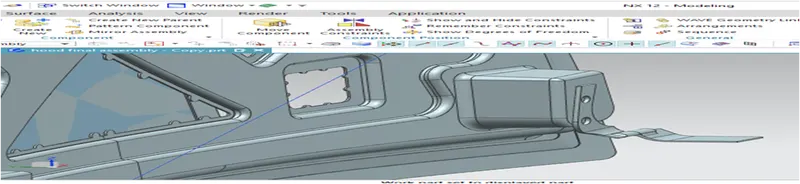
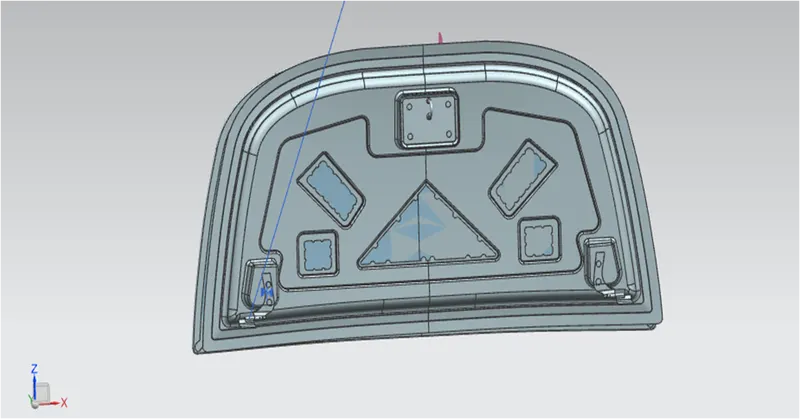
After designing the hood inner panel, we need to place the Latch and hinge as explained in functional requirements section, while the development of the inner panel, we also need to develop some additional reinforcements for strengthening the area where we are going to mount the Latch and Hinge parts. These re-enforcements are made from sheet metal of thickness 1.5mm.
Hemming and Corner Reliefs for the outer panel design:
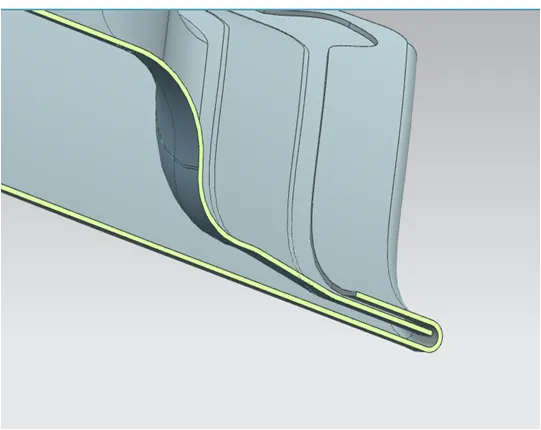
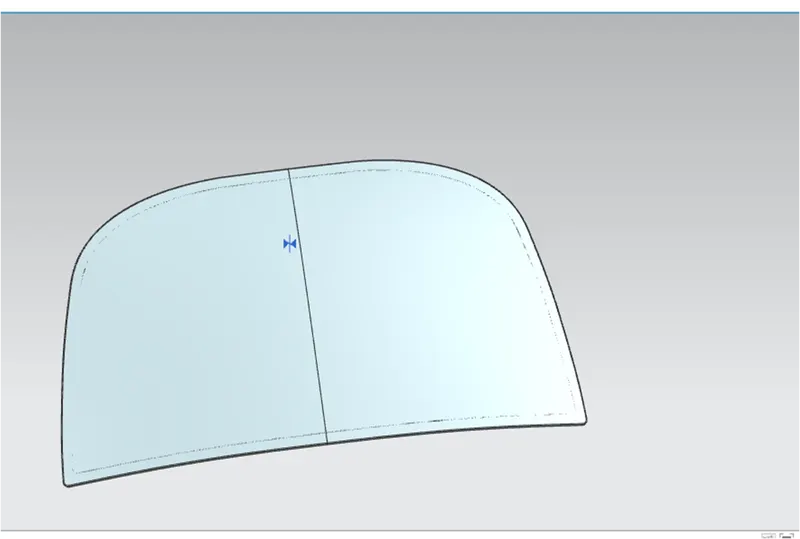
Hemming is the process of joining both the outer and inner panel together. The hemming process roles and wraps the hood outer panel around the inner panel and holds it tightly together. The gap between the hemming flanges of hood outer panel to inner panel will be filled with sealants to make the joint as waterproof. After the hemming is done, we need to provide corner relief at the corners of the hood so that the part can be produced without defects. See the below pictures of Hemming and the reliefs provided at the corners.
ASSEMPLY PIC :
Conclusion:
I learned to design of Hood or Bonnet that satisfies the industry manufacturing, functional requirements and as well as Euro NCAP (New Car Assessment Program) standards which defines the automotive safety regulations. To develop Hood design I used NX cad softwere.