Hood design-Week 2
DESIGNING OF HOOD BY USING SIEMENS NX CAD
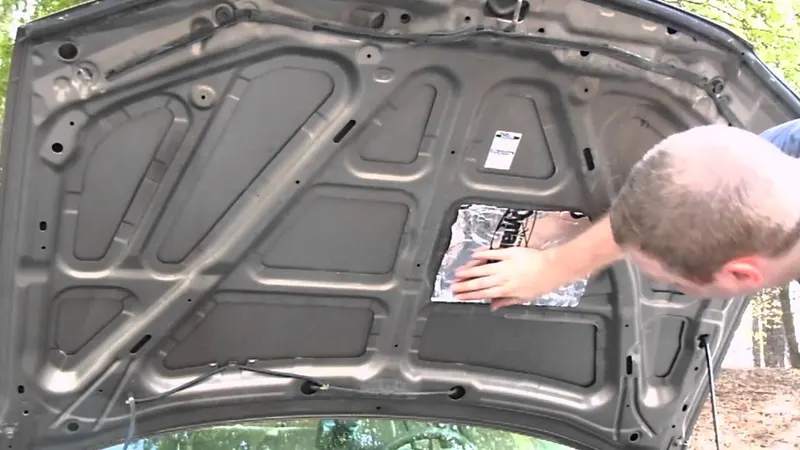
- A car hood, also referred to as a bonnet in some other countries, is the hinged cover that rests over the engine of a front-engine vehicle.
- Its purpose is to provide access to the engine for repair and maintenance. A concealed latch is typically used to hold down the hood.
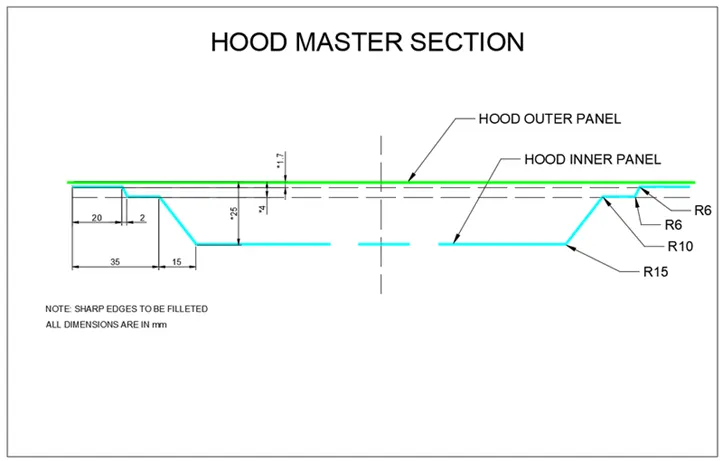
MASTER SECTION FOR DESIGNING OF HOOD
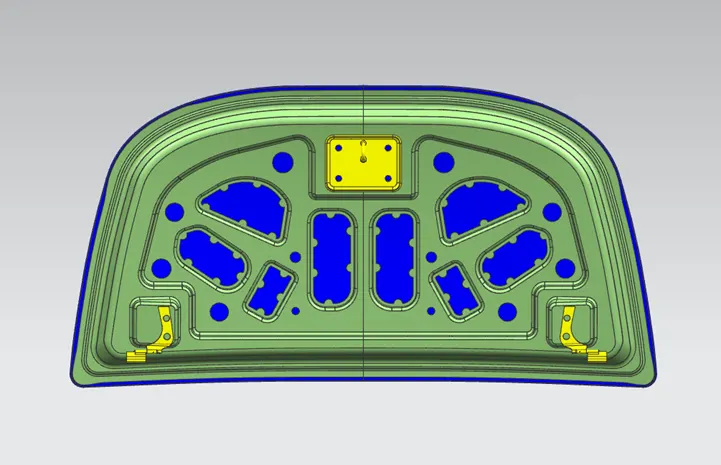
HOOD
INNER PANEL
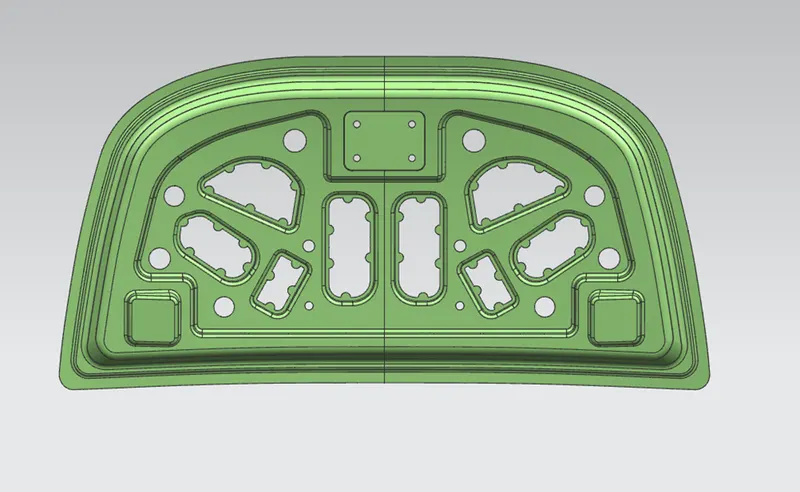
- A hybrid hood inner panel for a vehicle is provided to improve rigidity, durability, and pedestrian protecting performance by comprising a composite structure in which a multi-cone structure and a frame structure are individually arranged on the front and the rear.
- The inner panel of the hood is not visible to the customer but this is the engineering feature of the outer panel.
OUTER PANEL
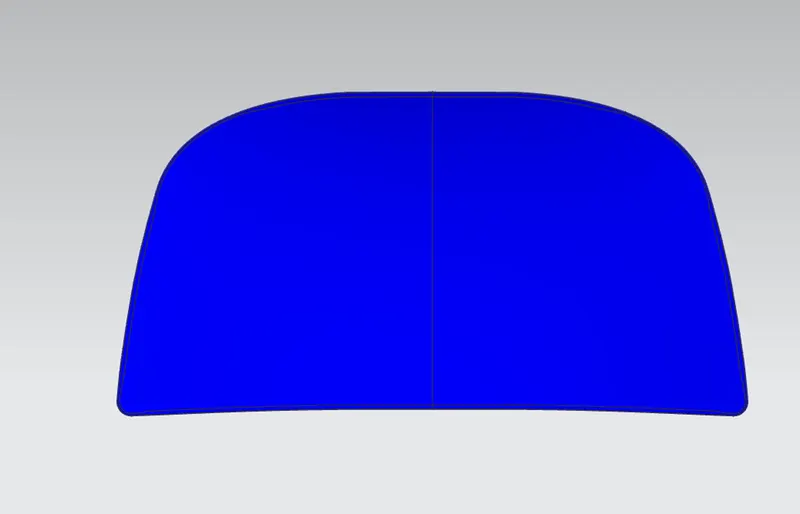
- Car hood panel is one of the most important components of the BIW (body in white), it is considered as the closure sheet-metal component.
- A hood panel consists of two panels that are hemmed together to form the automotive hood assembly.
- The outer panel has the aesthetic look to it but on its own is very weak and not capable of handling force during impact.
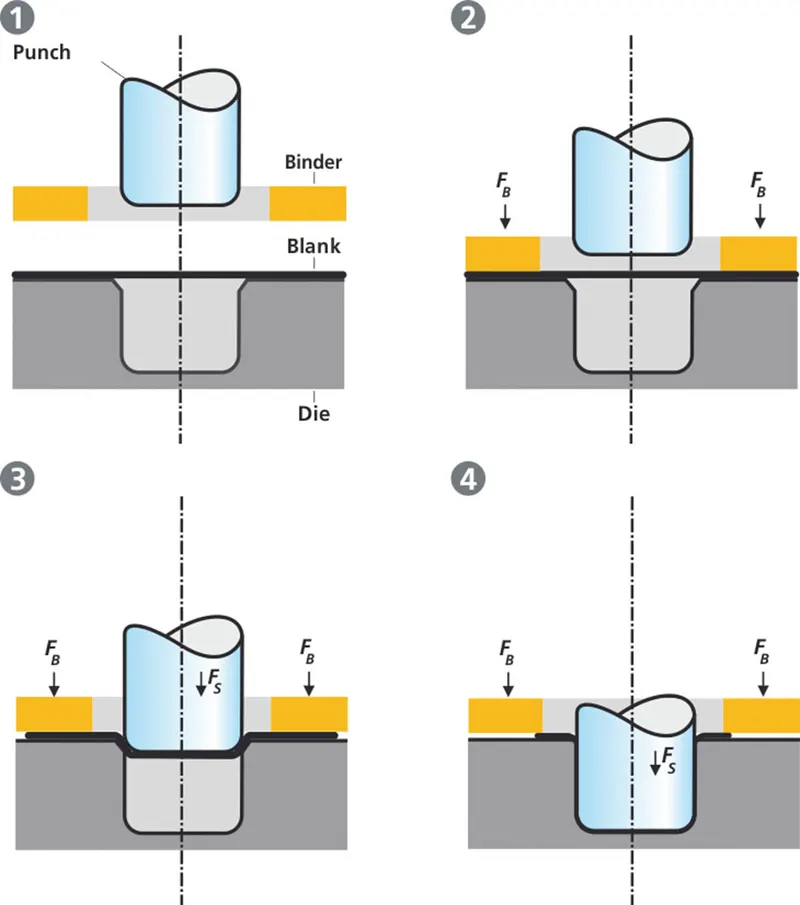
- The production process of the outer panel of the hood mainly includes blanking, deep drawing, trimming, turnup, and side turnup. Among them, deep drawing is a key process to ensure the quality of parts.
EMBOSSING
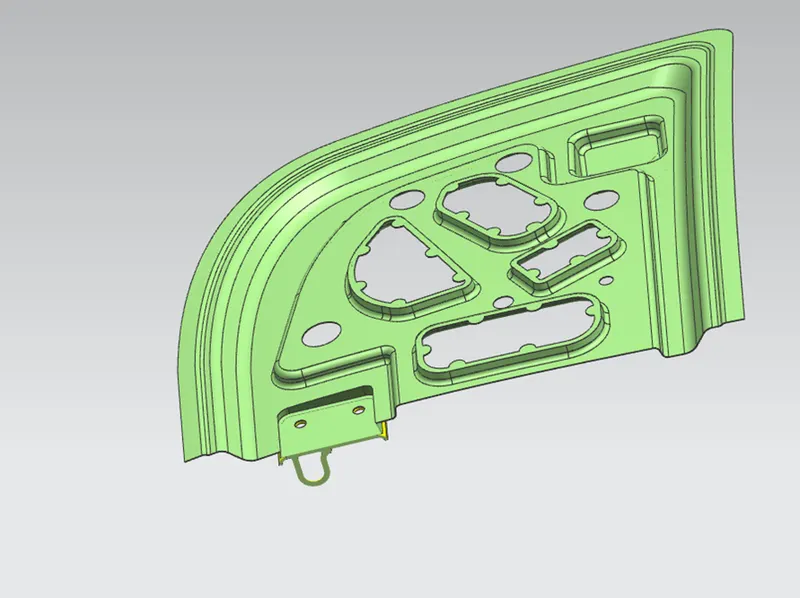
- Embossing is a metal stamping process for producing raised or sunken designs or reliefs by passing metal sheet or strip between rolls of the desired pattern. The process enables repeated production without variation and does not change the metal’s wall thicknesses.
LATCH STRIKER
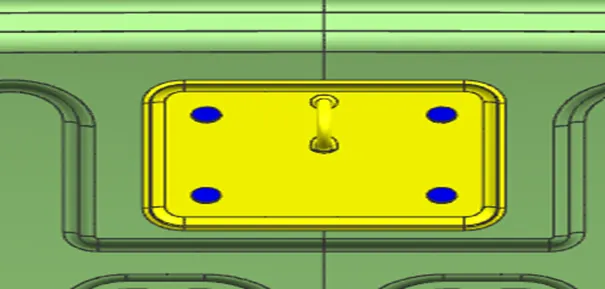
The hood latch Striker assembly is installed in the car for locking the vehicle’s bonnet. Suppose the hood latch assembly is not installed on the vehicle. In the 1950s, the car used manual hood locks for keeping the hood in one place. But today, due to technological advancements, hood latches have been introduced into the automotive space.
HINGE
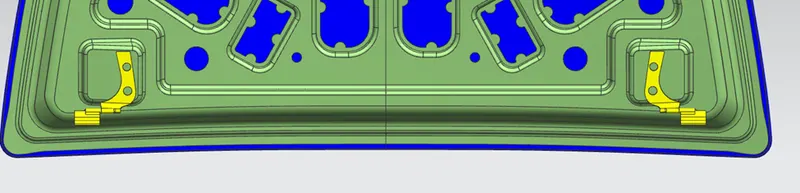
- The hood hinge is a pivot and bracket mechanism that makes it possible for you to open and close your hood. Each car typically has a pair of hood hinges installed in the front of the vehicle.
MASTICS
- Mastic sealant points must be between inner and outer panel.
- Mastic Sealants are used to Join Inner and outer Panel as welding both panel will neglect the elegant look of outer panel. So the joining of Both the panel is done by Hemming and Mastic sealant.
- Each Mastic Sealant can hold strength up to 80 mm Diameter so for safe design the strength Diameter must overlap each other.
REINFORCEMENT
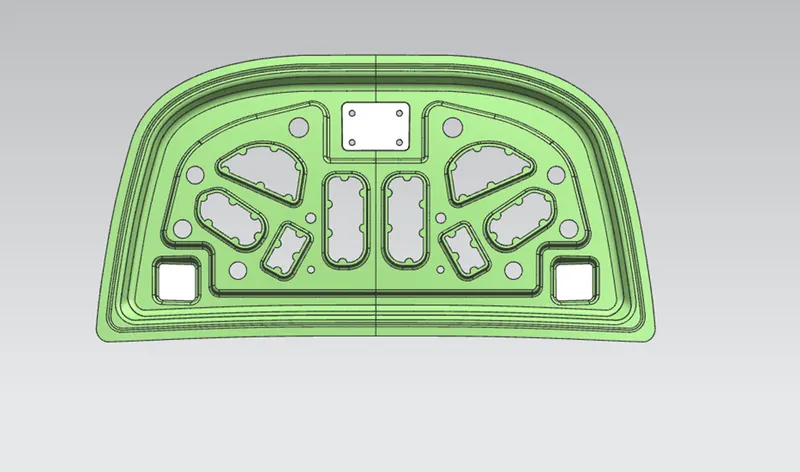
- Vehicle hood reinforcement structures as provided to reduce impact in collisions.
- In one embodiment, the structure is to include a lower reinforcement panel configured to mount to a vehicle chassis and an upper reinforcement panel welded to the lower reinforcement panel wherein the deflection of a front deformable wall of the upper reinforcement panel is configured to trigger deflection of rear deformable wall of the lower reinforcement panel.
Distribution of force while in impact:
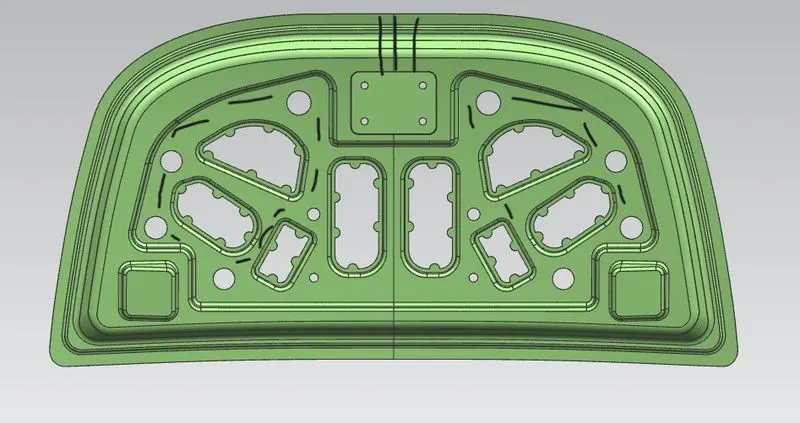
- The distribution of force is transferred by the embosses provided in the inner panel part of the hood. The cutout in the inner panel reduce the risk of the impact in the outer panel by providing the more space by providing the bending which is passes through the inner panel of the hood
Latch trajectory
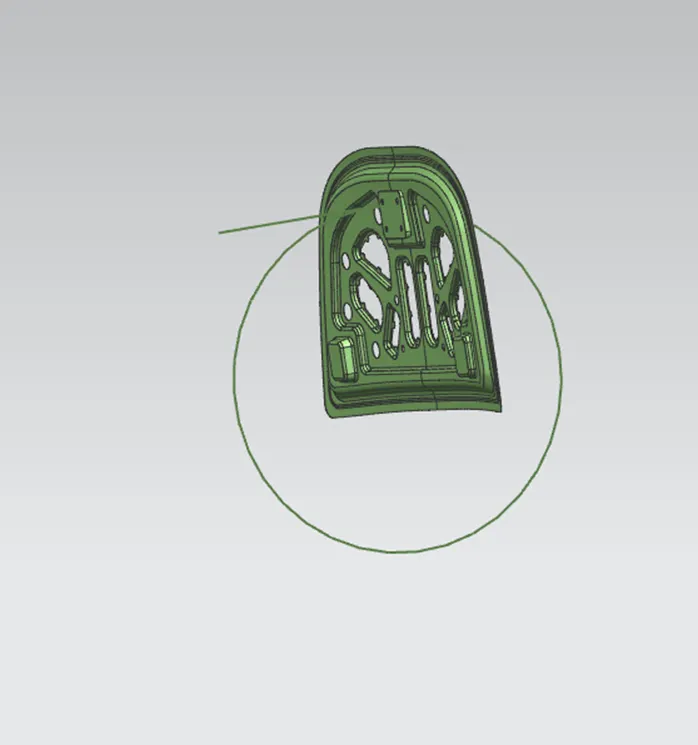
- The latch trajectory is the path which the striker will follow when the hood is open/closed while pivoting on the hinge axis.
- The latch trajectory is taken as a circle with the hinge axis as the center of the circle. The striker is placed 90 degree such that it is tangent to the circle.
HEMMING
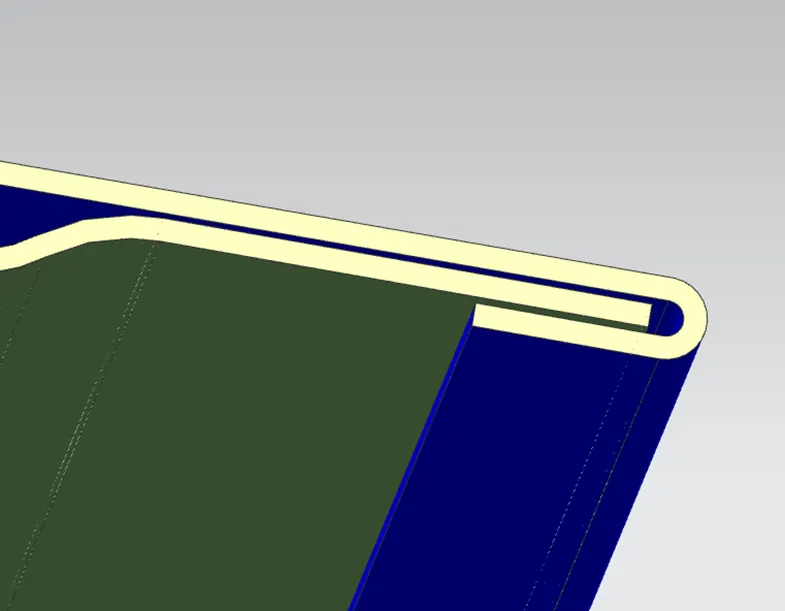
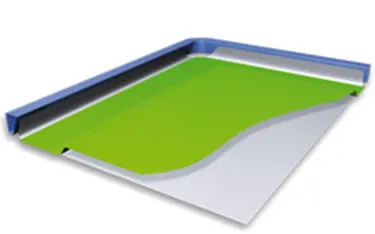
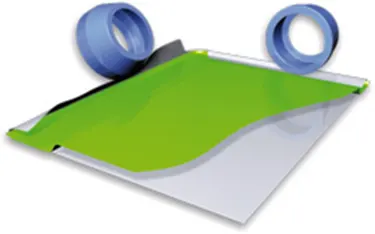
- Hemming is a forming operation in which the edges of the sheet are folded or folded over another part in order to achieve a tight fit. Normally hemming operations are used to connect parts together, to improve the appearance of a part and to reinforce part edges.
There are various types of hemming operations:
Conventional die hemming
Roll hemming
DEEP DRAWING
Process definition:
- The deep drawing process is a forming process which occurs under a combination of tensile and compressive conditions. A flat sheet metal blank is formed into a hollow body open on one side or a hollow body is formed into a hollow body with a smaller cross-section.
GAS STAY
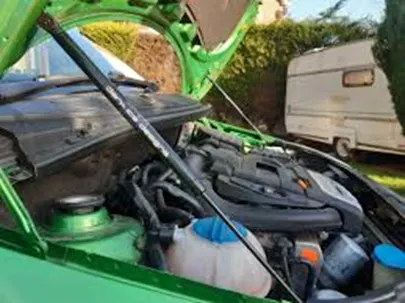
gas stays are used to hold the hood when it is in open condition.
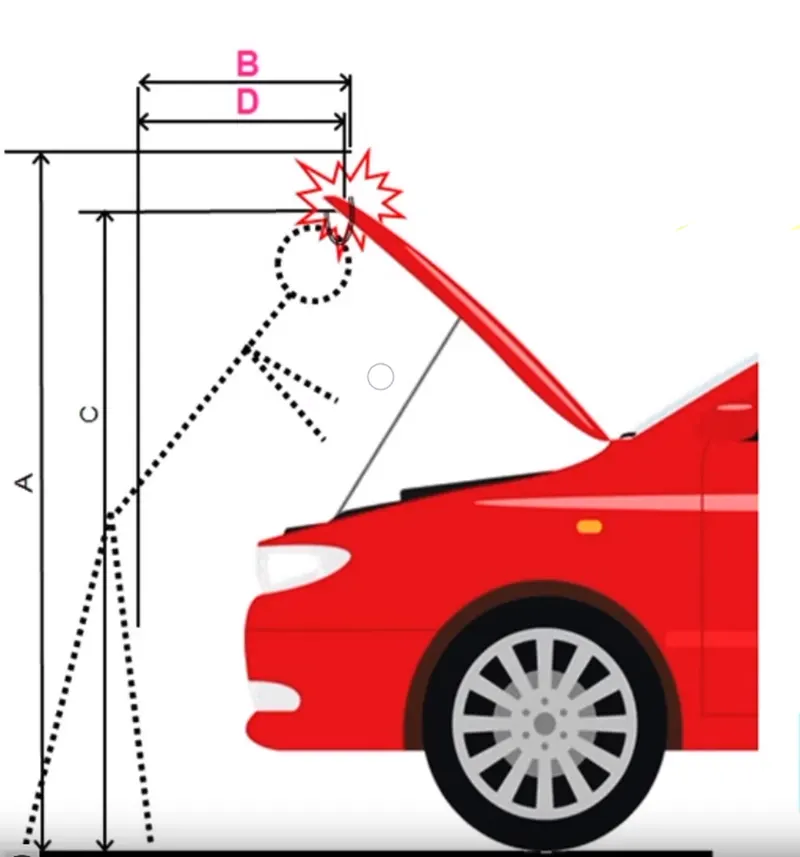
- The gas stay must be in the length to avoid the collision in head and hood part of the car.
- The length of the gas stay can be specified by the average height of the humans in which country the manufacturer are going to launch the vehicle.
PEDESTRIAN SAFETY
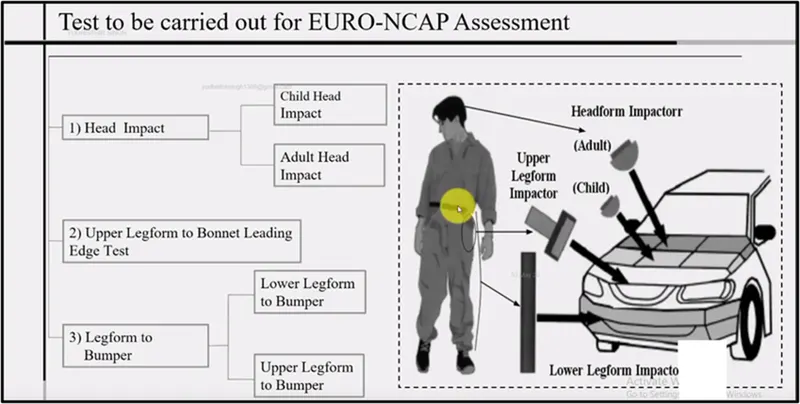
- Euro NCAP the European car assessment program is European car safety performance assessment program based in Leuven and founded in 1997.
- They published safety reports on new cars and awards star ratings based on the performance of the vehicle in a variety of crash test including front side and pole impacts and impacts with pedestrian. The top rating is 5Star
- So here in Hood we separate the whole area of hood into several small part / region during frontal crash. Hood is the major portion a person is gonna come in contact with. So Euro NCAP specified some guidelines under which we distribute hood region into several parts and try to get more green region.
FRONTAL RELIEF
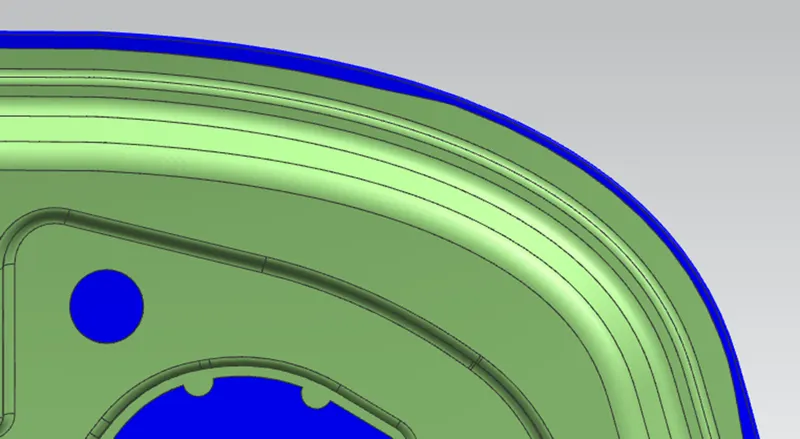
REAR RELIEF
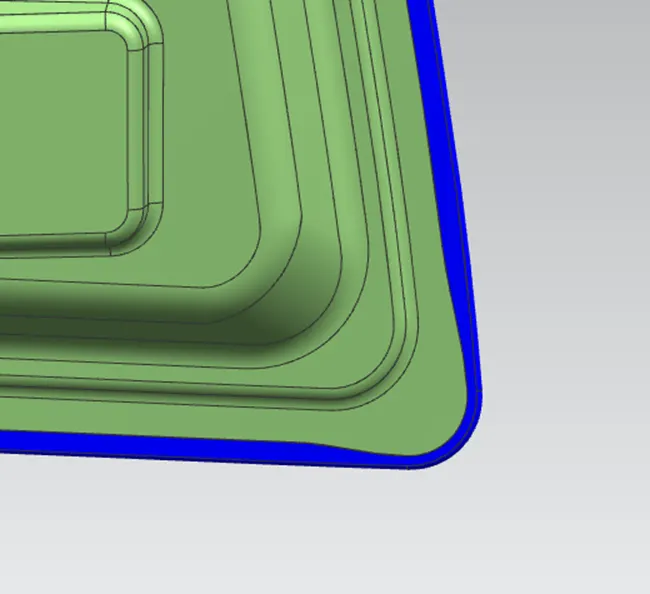
- Reliefs are used to reduce the stress of outer panel while making the hemming process.
DESIGNING PROCEDURE FOR HOOD
Important command used to design hood
TRIM SHEET: In Siemens NX, trim sheet command used to trim off a portion of a sheet body using curves, faces, or datum planes. can modify or create new sheet.
OFFSET SURFACE: Use the Offset Surface command to create an offset of one or more existing faces.
OFFSET FACE: Use this command to create offset curves on one or more faces from connected edges or curves on the surfaces.
BRIDGE CURVES: Use the Bridge Curve command to create, shape, and constrain bridge curves between curves, points, surfaces, or surface edges. You can also use this command to create symmetric bridge curves across a datum plane.
THROUGH CURVE MESH: Use the Through Curve Mesh command to create a body through a mesh of sections in one direction, and guides in another direction, where the shape fits through the mesh of curves
FACE BLEND: To provide a dedicated type for blending along intersection edges of bodies combined with a Boolean feature.
EDGE BLEND: Edge blend command use to round sharp edges between faces. The radius can be constant or variable.
SEW: Use the Sew command to join two or more sheet bodies into a new single sheet body. If the collection of sheet bodies encloses a volume, a solid body is created.
EMBOSS: Emboss command use to create an embossing by modify a body with faces made by projecting a section along a vector, with options for end cap location and shape.
MIRROR GEOMENTRY: Mirror Geometry is the command, copies and pastes bodies on the model by mirroring through plane or surface.
THICKEN: Use the Thicken command to offset one or more connected faces or sheets into a solid body. Thickening occurs by offsetting the selected faces along their face normal, and then creating sidewalls. The Thicken command is similar to the Offset Face command.
These are the commands used by me to design the BIW of hood.