Automotive Hood design | BIW
AUTOMOTIVE HOOD DESIGN
Here we are going to understand and design the concept of automotive hood. The hood or bonnet is the hinged cover over the engine of motor vehicles that allows access to the engine compartment or trunk for maintenance and repair
On front-mounted engine cars, the hood may be hinged at either the front or the rear edge, or in earlier models, it may be split into two sections, one each side each hinged along the centerline. A further variant combines the bonnet and wheel arches into one section and allows the entire front bodywork to tilt forwards around a pivot near the front of the vehicle.
Material
Hoods are typically made of the same material as the rest of the bodywork This may include steel aluminum, fiberglass, or carbon fiber. However some aftermarket companies produce replacements for steel hoods in fiberglass or carbon fiber to make the vehicle lighter.
The main factors for selecting the material, especially for the automobile body, are numerous and include thermal, chemical or mechanical resistance, easy manufacturing and durability. Affordability is an important issue in vehicle manufacturing, which includes factoring in the costs associated with a car’s complete life–cycle, including manufacturing, operating and disposal costs.
Design aspects
Boundry conditions for designing hood {bonet}
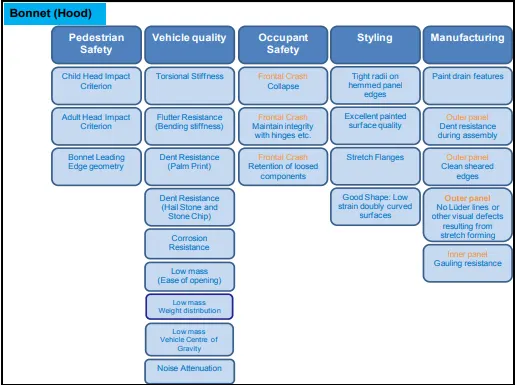
Evaluation of pedestrian safety for a bonnet must be carried out in the context of its surrounding elements:
- Vehicle styling, size (wrap around distance “WAD”) and under bonnet clearance to other elements (considered as hard points).
- Local bonnet stiffness is influenced by mounting point stiffness such as hinges, bump stops and latches.
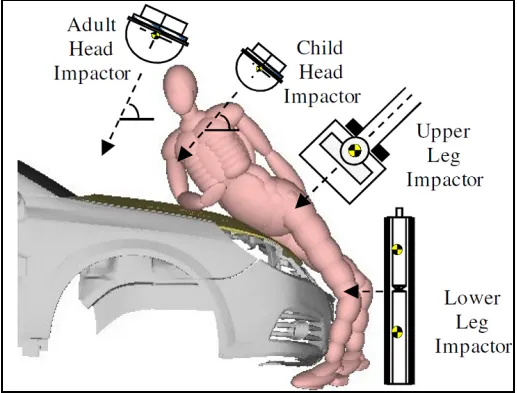
- This is better understood by superimposing the kinematics of a dummy onto the test conditions.
Design spesifications
Master sketch
Hood Thickness Information
- Outer Panel Thickness = 0.75mm
- Inner Panel Thickness = 0.75mm
- Reinforcement Thickness = 1.5mm
Hood components
hood inner pannel:
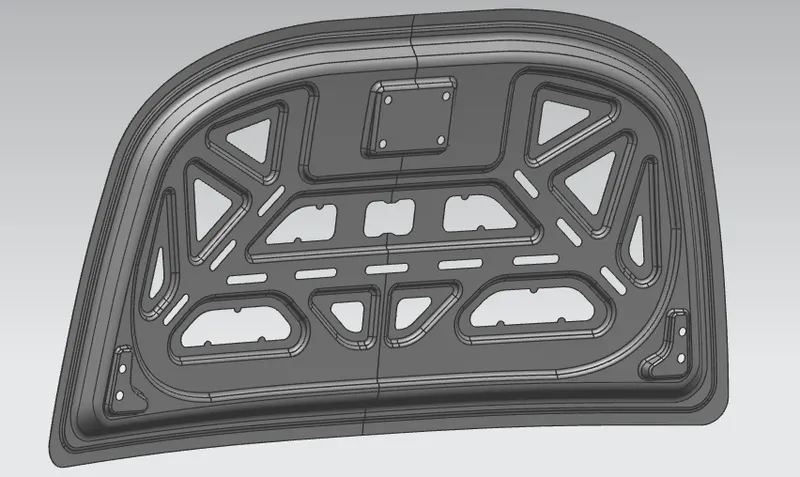
The hood inner panel is required to have a high initial reaction force against the impact exerted on the hood in order to enhance the energy absorption capacity. The hood is further required to minimize a reduction of a reaction force by deformation in collision.
the research and designing changes are only done on inner panel for pedestrian and driver saftey
the other components like latch and hinge reinforcements are attached to the hood inner panel
hood outer panel:
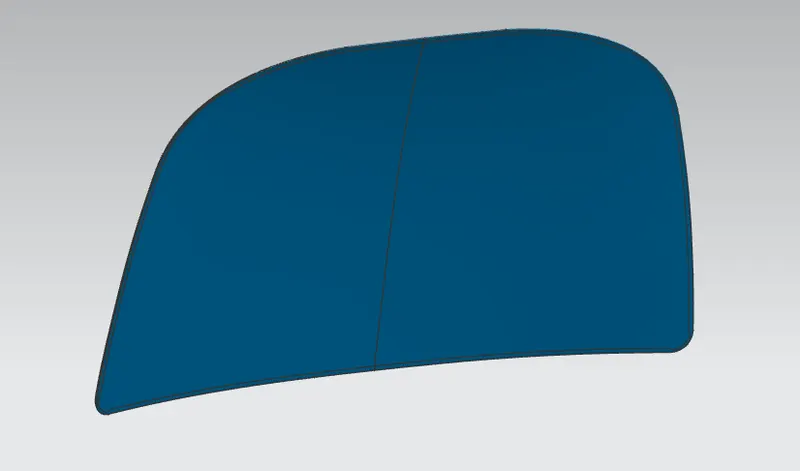
Hood outer patel is for styling and hemming is done over edges of the panel to hold the inner pannel.
hinge assembly:
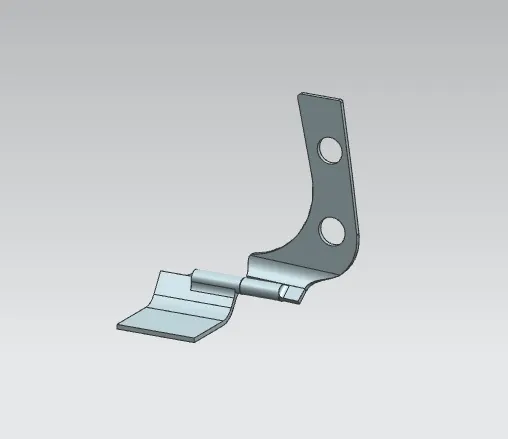
hinge is a component which is used to connect hood and the car body. It helps the hood to open in a circular trajectry.
latch:
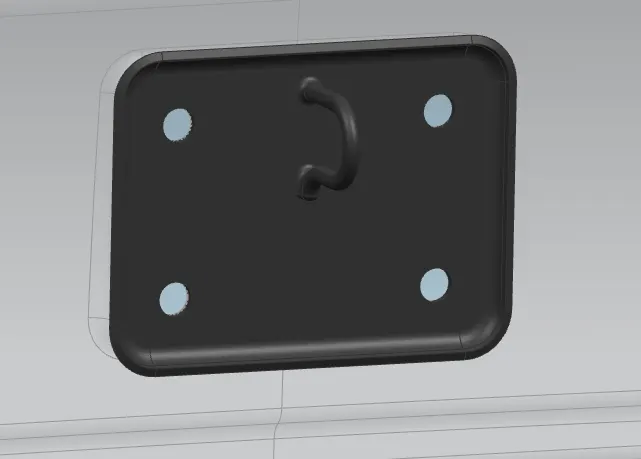
Latch is a fastening component which is attached to the inner panel of hood.
the latch is fixed perpendicular to the hinge axis for the smooth fastening of latch and striker
Manufacturing processes
The processes involved in manufacturing hood are with sheet metal are
Embossing
Hemming
Deep drawing
punching
Embossing in sheet metal
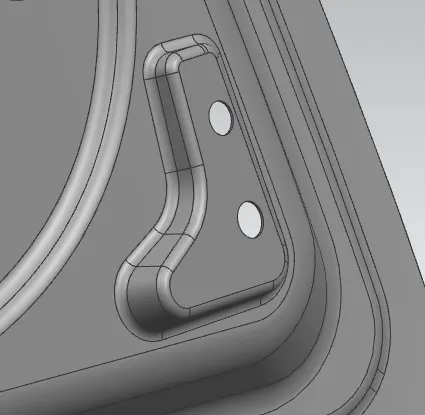
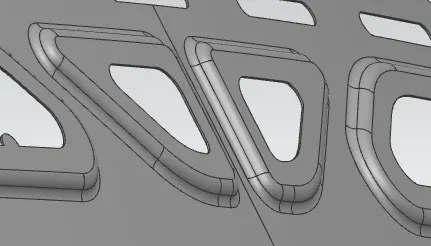
Sheet metal embossing is a stamping process for producing raised or sunken designs or relief in sheet metal. This process can be made by means of matched male and female roller dies, or by passing sheet or a strip of metal between rolls of the desired pattern. It is often combined with stamping to create a shiny, 3D effect.
The metal sheet embossing operation is commonly accomplished with a combination of heat and pressure on the sheet metal, depending on what type of embossing is required. Theoretically, with any of these procedures, the metal thickness is changed in its composition.
Hemming in sheet metal
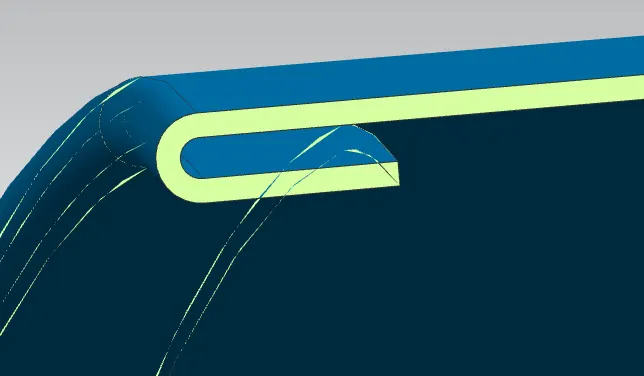
Hemming is a sheet metal forming process in which sheets are joined by bending it usually to 180°. Automotive body panels and automotive parts such as deck-lids, trunk-lids, doors, hoods and tailgates are formed by hemming process
Hems are commonly used to reinforce an edge, hide burrs and rough edges, and improve appearance
- rear relief front relief
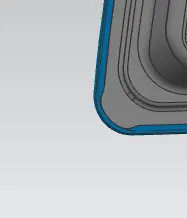
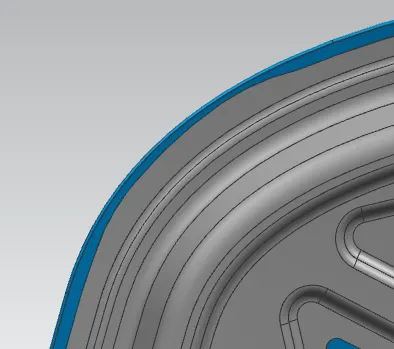
during hemming process relief is given at the corners for better operation
Deep drawing in sheet metal
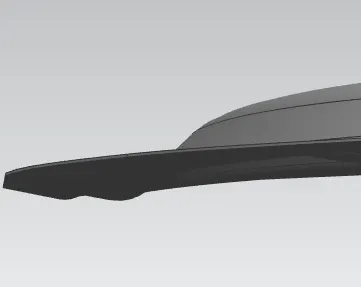
Deep drawing is a sheet metal forming process in which a sheet metal blank is radially drawn into a forming die by the mechanical action of a punch.
Punching in sheet metal
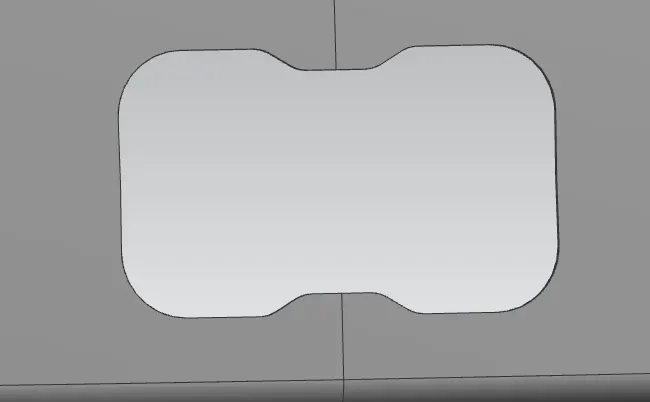
Punching is a machining process that involves the removal of scrap metal from a sheet of raw metal. It requires the use of a punch press to compress a tool through a sheet of raw metal. While punching is typically performed using sheet metal.
Latch trajectry
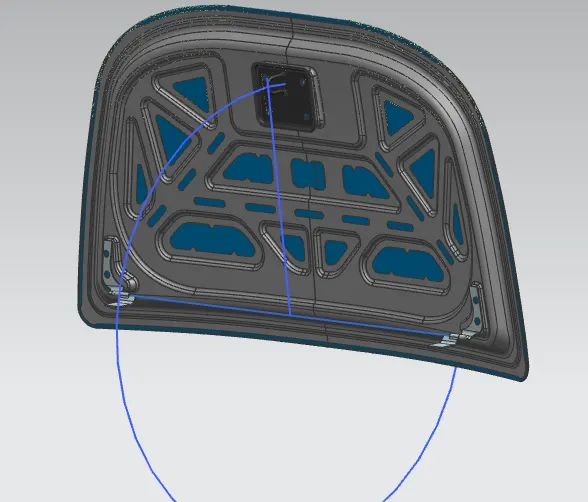
latch is aligned perfectly for smooth fastening with striker, with the help of circular trajectry which is created frpm the center of hinge axis.
Mastic data
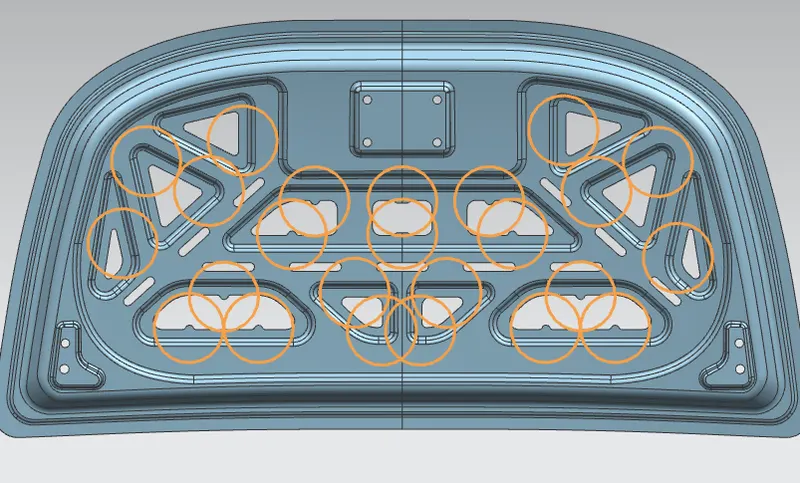
Mastic sealant is used between the inner and outer panel of the hood to reduce vibration and noise. Mastic sealant is a gel-like substance, which gets solidifies when heated.
these mastic sealants are of 80mm diameter
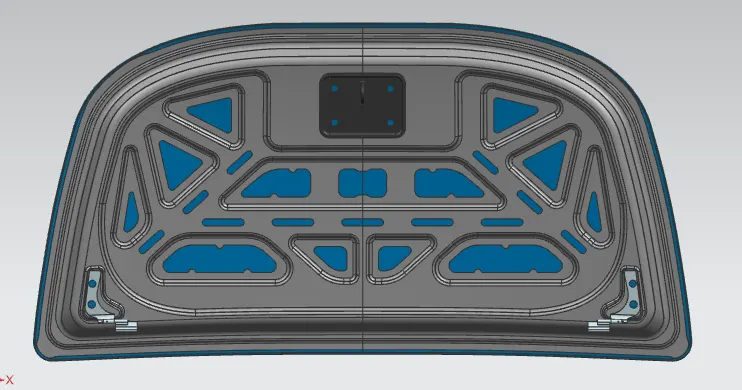
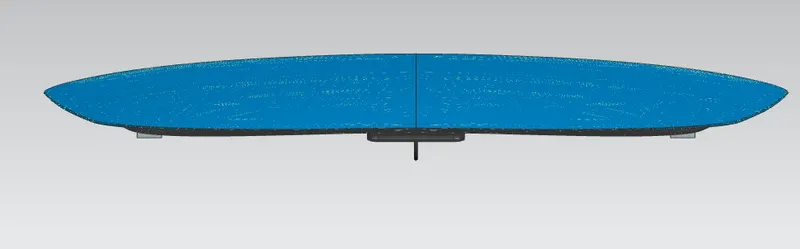
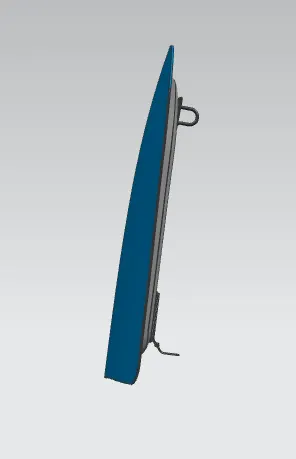
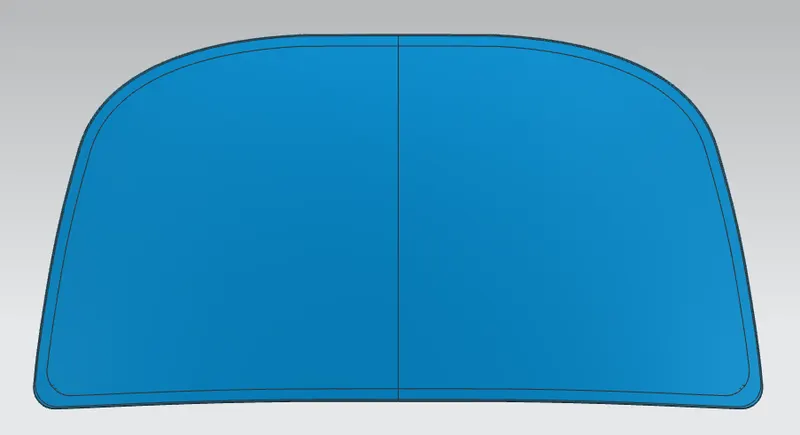
Hood assembly design images
Conclusion
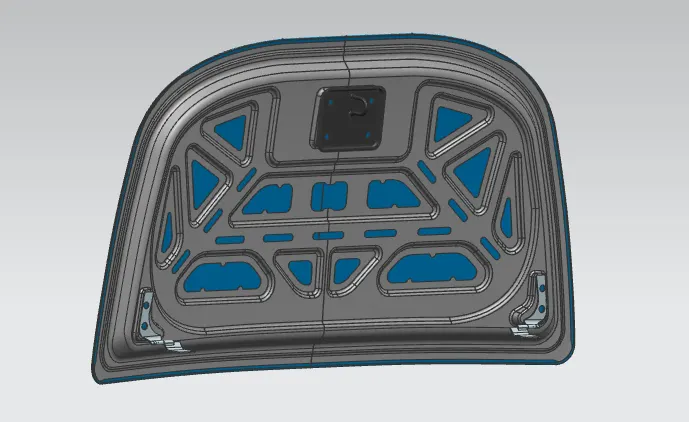
The automotive hood assembly design has been designed using NX CAD considering all the design parameters.