Hood design-Week 2
HOOD DESIGN
About Hood:
- A hood or bonnet is the hinged cover over the engine of motor vehicles. Hoods can open to allow access to the engine compartment, or trunk (on rear-engine and some mid-engine vehicles) for maintenance and repair.
- The hood is also considered as another type of door in a vehicle as it consists of an outer panel and inner panel.
- The inner panel provides strength while the outer panel functions as the metal cover wherein the outer panel provides aerodynamics and asethetic features to a vehicle.
Hood Components :
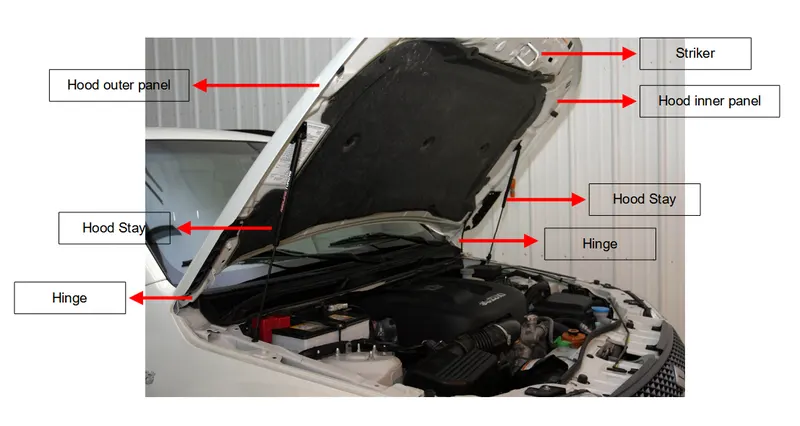
a) Hood outer panel : It is a panel which provides asthetic appearnace to the hood on the external side.
b) Hood inner panel : It is a panel located on the inner side towards the engine room providing structural support to outer panel and also acts a force reducing member during collision by crumbling. Both outer and inner panel forms the hood completely.
c) Stiffener Pad : It is a rubberised material which is placed between the hood outer panel and inner panel to provide localised rigid area.
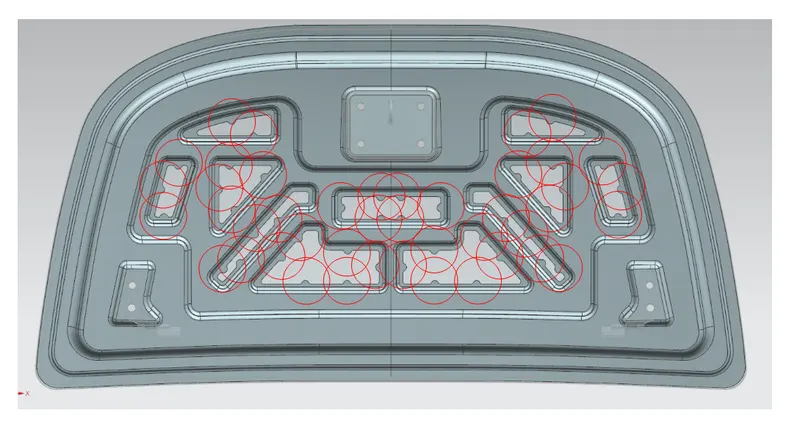
d) Mastic Point : It is a adhesive material and expand upto 60- 80 mm diameterically on curing. Its is used to join hood outer panel and hood inner panel and perferably replaces the stiffener pad. The mastic points are provided on the hood inner side panel.
e) Striker : The striker is part which keeps the hood latched on to the vehicle body. A latching mechanism locks the striker when it hits. The striker is mounted to hood inner panel using fastners.
Hood Based External Component :
a) Hood Stay or Hood Balancer : A hood stay or balancer is an apparatus for an engine room of a car which can safely keep an engine hood in an open state even if an external force is abruptly generated and can facilitate an opening/closing operation of the engine hood. There are two types of hood stay used and it consists of a support rod and gas stay. Either one of these is used in vehicle.
b) Hinges : The hinges are components that connects the hood to the vehicle body and also provides rotational motion for hood opening and closing.
Objective :
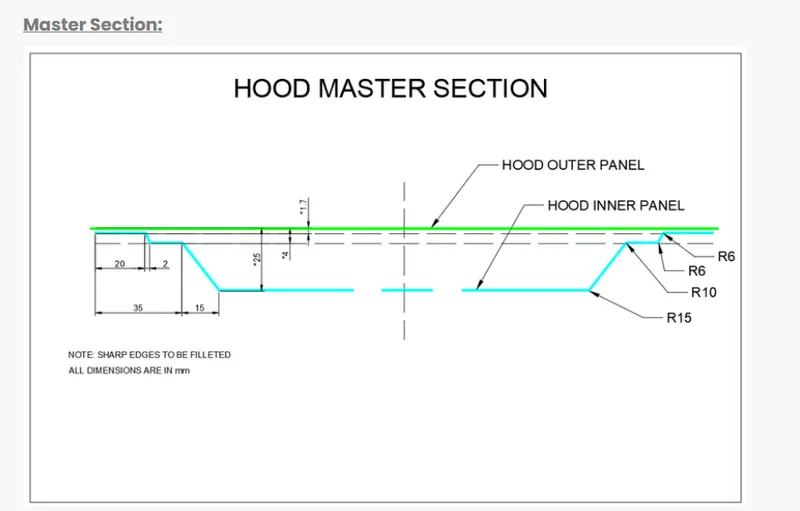
- To design Hood outer panel, Hood inner panel and necessary reinforcement based on the masters section.
- To create an assembly of hood outer panel, hood inner panel, latch, hinge and reinforcements.
Design Consideration & Parameters For Hood:
- The two major design consideration and parameters for Hood design consists of
- Hood Head zone for Lock striker and Lock Striker trajectory.
- Safety Rating.
- The other design consideration is mastic point and parameters that required to be followed consists of master section, hemming data and relief section for front and rear of hood outer panel.
a) Hood Head zone for Lock Striker
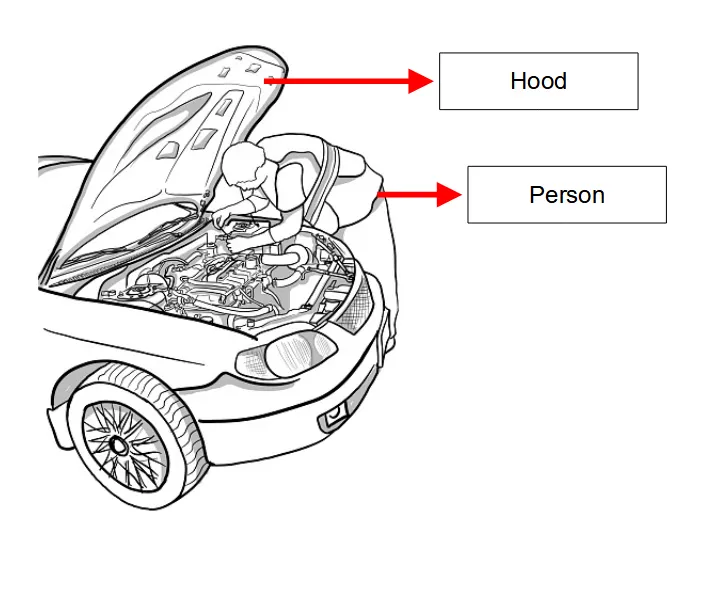
- The purpose of automotive engine hood is arranged to be opened for the purposes of inspecting the engine room, making repairs, replenishing engine oil etc.
- Since the height of the each person varies depending upon region. It is important that the Lock striker position and hood height from ground shall be maintained accordingly based on region to not cause head injury to person doing inspection or repair.
- The Hood head zone is also a marketbility consideration. The hood head zone also depends upon hood support rod accessbility.
- Apart from hood head zone the other criteria is striker trajector which plays important role for hood latch mechanism.
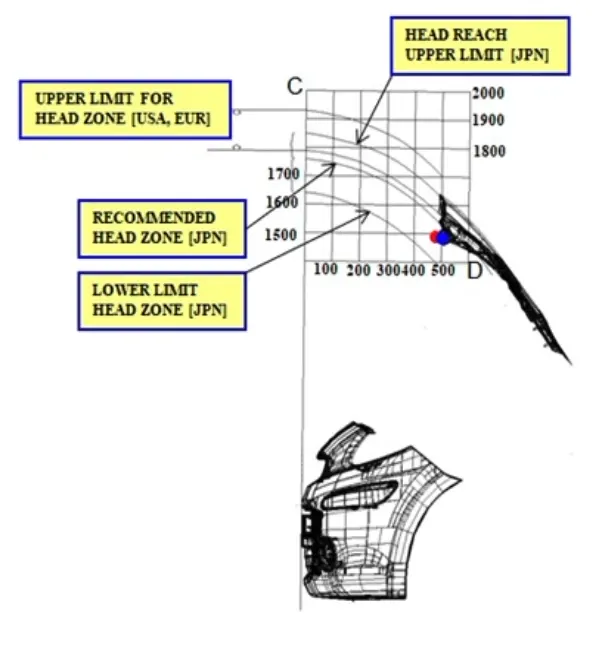
- The different head zone or head reach area is mentioned in the below image.
b) Safety Rating
- The hood design influence the safety rating. Therefore provides the safety for pedestrian as well as the passengers.
- The hood design for pedestrian contains of ceriteria which may help to provide better safety rating.
- As far as passengers safety the hood design must be such that the force of collision shall move away from center of vehicle and also shall negate the collision force. Based on this parameters the safety rating of the vehicle increases.
- Design of Hood for better pedestrian rating
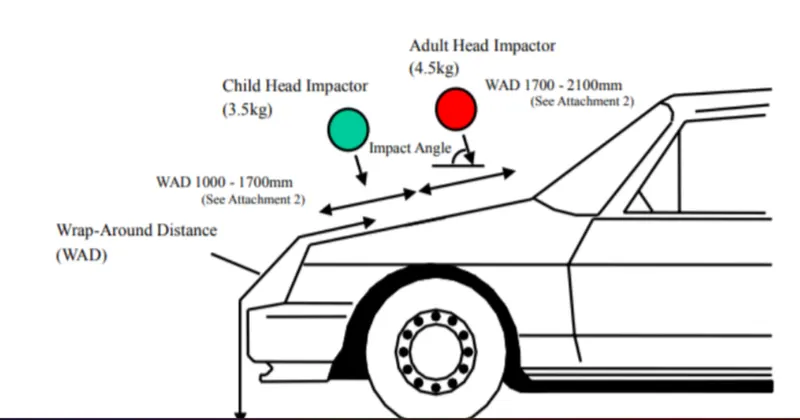
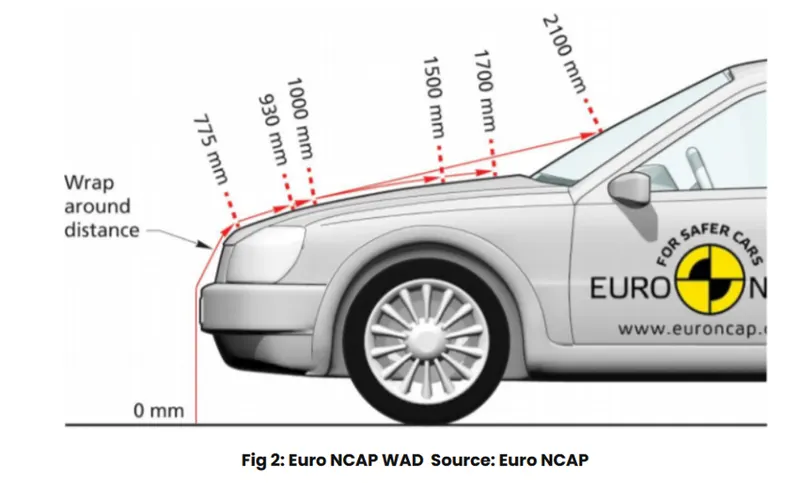
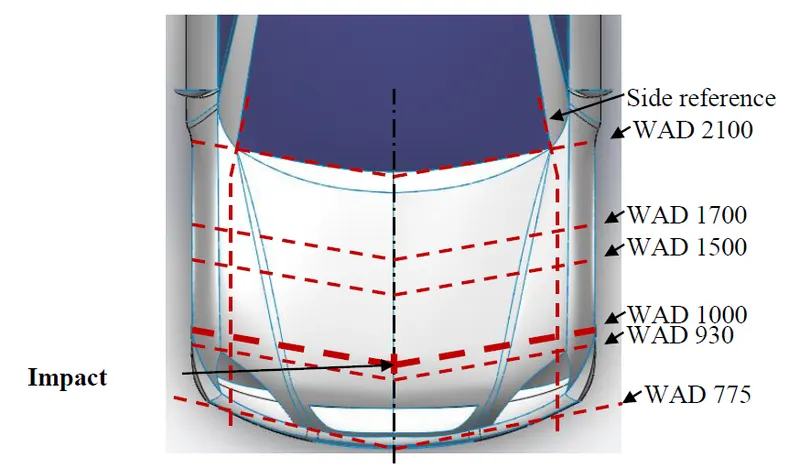
- The severity of the injury caused by the frontal crash depends on the type and shape of the vehicle, speed of the vehicle and the movement of the pedestrian relative to the vehicle. In addition, to these parameters, the wrap around distance plays a major role in the safety measurement of a pedestrian.
- Warp Around Distance - When a car crashes on the pedestrian, the whole human body wraps around the front shape of the car and the head impacts on the bonnet or the windscreen. The distance on which the head impacts on the car from the ground is called as the Wrap Around Distance. The warp around distance is also taken from side reference line.
- Design for Hood crumbling
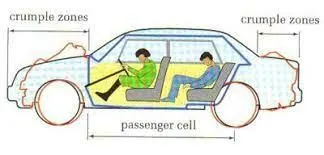
- The Hood is designed to crumble during collision this is to reduce the transmission of force to the interior portion of the vehicle to safeguard passengers.
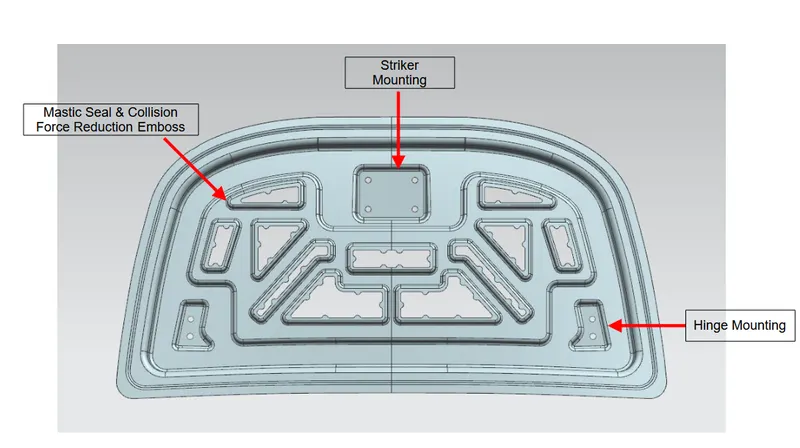
c) Mastic Point : The mastic point are provision provided in the hood inner panel for placing mastic seal. Each provision is provided based on strength to be provided at sections between the hood inner and outer panels and stiffness area of the mastic seal. The stiffness area is around 60 to 80mm in diameter.
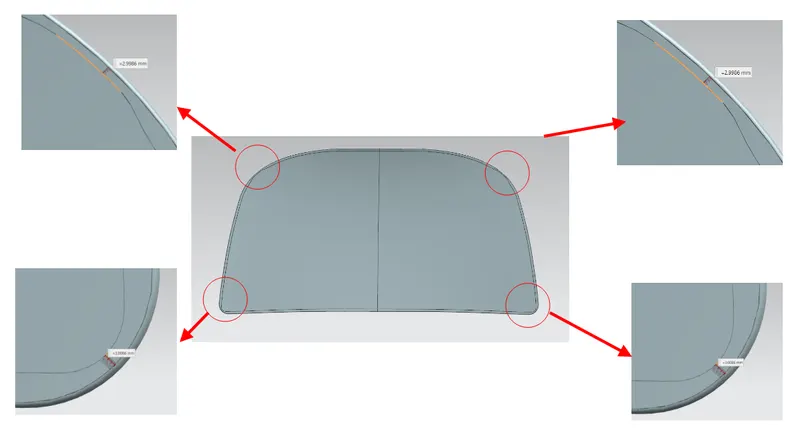
d) Corner relief : The corner relief is provided for hood outer panel. It is provided to avoid spring back during hemming process.
- Given Data :
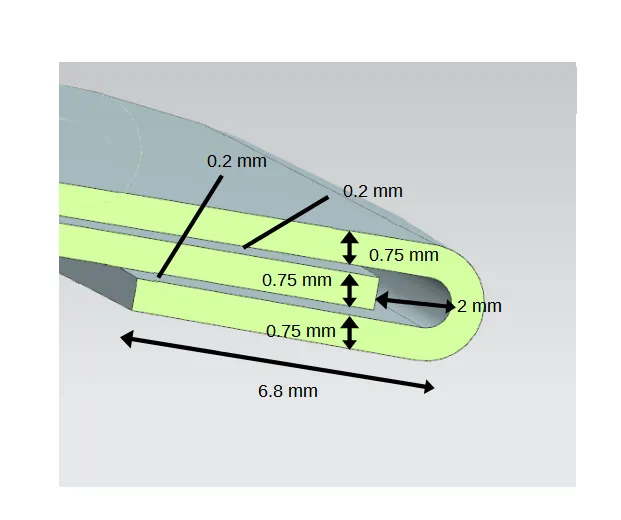
- Outer Panel Thickness = 0.75mm
- Inner Panel Thickness = 0.75mm
- Reinforcement Thickness = 1.5mm
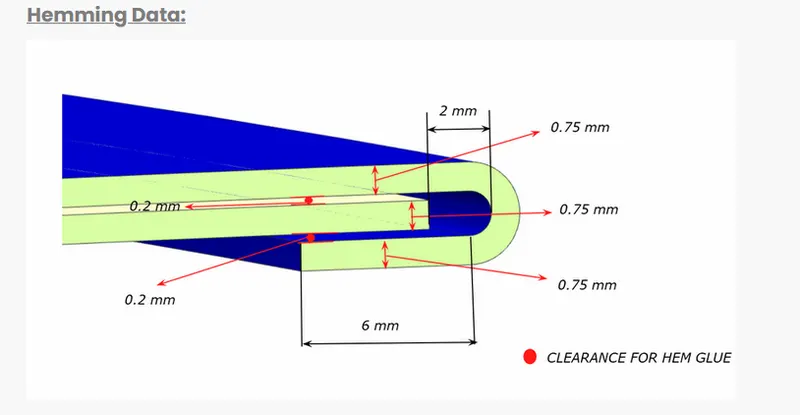
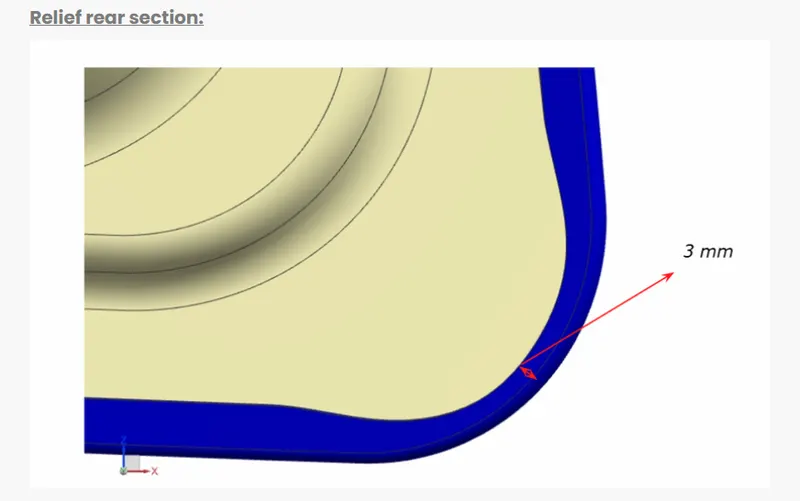
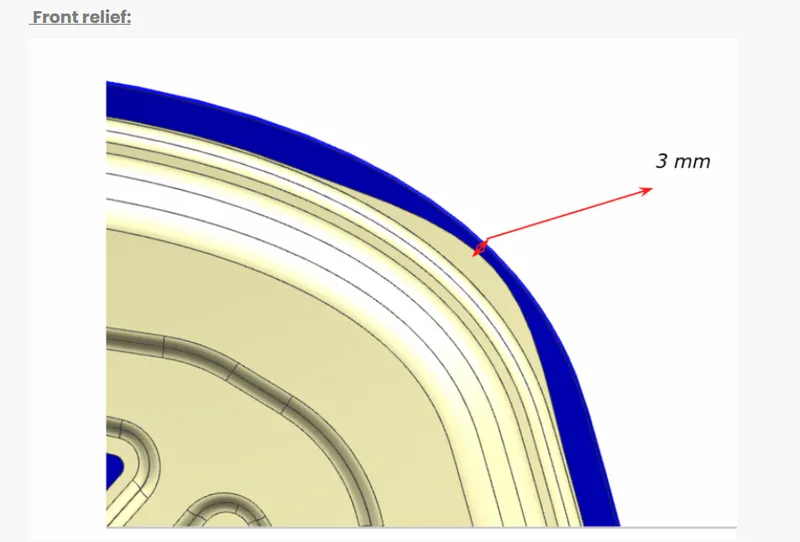
Designed Hood
Isometric View
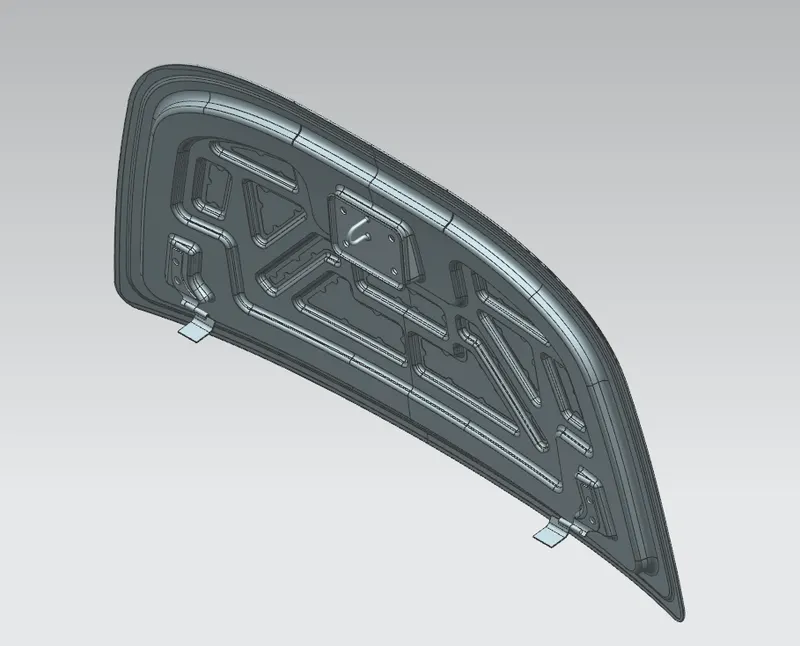
Hood Outer Panel With Corner Relief
Hinge Inner Panel
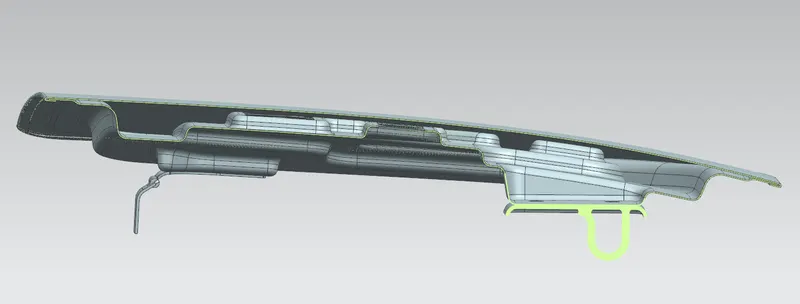
Hood Assembly Cut section View
Hood Hemming
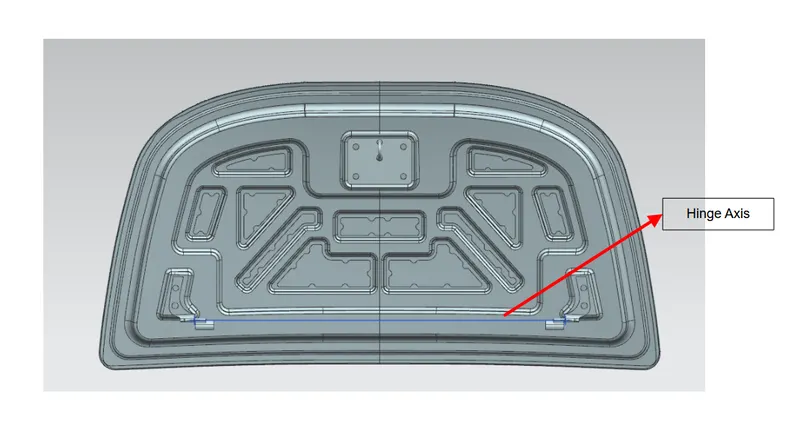
Hinge Axis
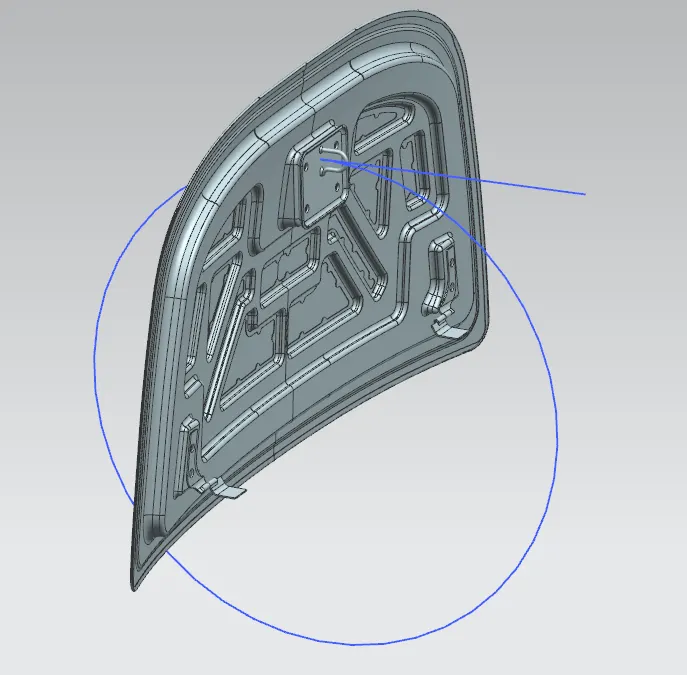
Latch Trajectory
Mastic Point
MATERIAL FOR HOOD
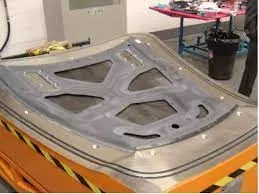
The perferred material for hood manufacturing consists of aluminium, fibre reinfoced plastic, carbon fibre, and steel.
SHEETMETAL
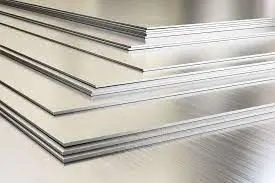
Sheet metal is metal formed into thin, flat pieces, usually by an industrial process. Sheet metal is one of the fundamental forms used in metalworking and it can be cut and bent into a variety of shapes. The thickness of sheet metal starts from 0.5 mm and goes up to 6 mm.
MANUFACTURING PROCESS
The various manufacturing method for sheetmetal can be classified as
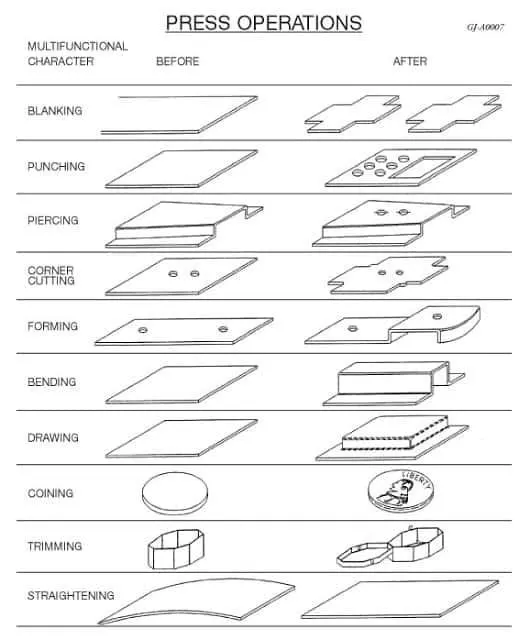
(a) Cutting and Shearing- Here the sheets are cut by using various tools. Blanking, piercing, perforation, notching etc. are various types of shearing operations.
(b) Bending Operation- The sheet metals are straining around a straight axis.
(c) Forming- Flanging and tube forming are forming operations to give shape to the sheets.
(d) Drawing Operations- Cupping, drawing, deep drawing are all drawing operations in which sheet metals are given cup or shell type shapes.
(e) Reducing Operations- Necking type of operations.
(f) Squeezing- For example coining operation is done in closed dies applying large force.
Press Work:
Press is a method of forming sheet metals and plates by cold working into required shapes by applying large force through press tools. The presses may be manually or power operated.
(a) Hand Operated Press:
It is small press which is operated by hand. As the arm of the press is rotated, the ram moves up or down and the stored energy is transferred in doing work on the sheet metal. Hand presses are used for small jobs.
(b) Power Press:
For large jobs and where high production is required hand operated presses are not suitable and power presses are used. There can be many types of power presses on the basis of power used—electric motor driven, pneumatic or hydraulic press etc. or on the type of jobs to be done like-shearing press, coining or punching press etc.
(c) Die and Punch:
The sheet metal work on the press would require die and punch depending on the type of job. Die and punch for making a circular disc. The die and punch are made of materials harder than that of the sheet metals.
(d) Hand Tools:
For sheet metal working following hand tools are used:
(i) Measuring tools—Like steel rule, folding rules, flexible, push- pull rule, vernier caliper, micrometer, thickness gauge etc. are used to measure the parts during manufacture.
(ii) Straight Edge—It is used to scribe long straight lines.
(iii) Scriber—It is a long thin rod with pointed end and handle at the other side. It is used to mark lines on the sheet metal.
(iv) Divider—Used to draw small circles.
(v) Trammel Compass—It is used to draw large circles on sheets.
(vi) Punch—To locate centre or to make mar.
(vii) Hammer—Used for forming.
(viii) Mallets—These are soft hammers with rubber, raw hide, soft metals etc.
(ix) Miscellaneous tools like chisels, scissors etc.
Typical Sheet Metal Working:
Drawing Operation :
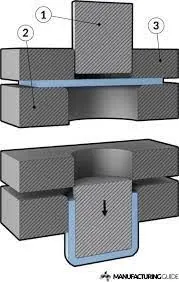
(a) It is a forming process by pushing a punch against a flat sheet and forcing it into a die to take the required shape. Or in other words drawing is the operation of producing thin walled, hollow shaped parts from sheet metal. Both the die and the punch have shape of the part to be manufactured . Classifications of drawing operations could be cupping, redrawing and deep drawing. Components like cups, shells, household utensils etc. can be made by drawing.
(b) In the drawing operation soft material are used since the material is required to undergo large permanent deformation to acquire the intended shapes in the presses. Drawing operations could be for cup making or deep drawing.
(c) For making cup shapes on the press first a circular blank of proper size is taken. The die is usually open from the bottom side and has an ejector system placed below a pad for the removal of the component after pressing it into shape. The pressure pad ensures smooth flow of the blank over the die/punch.
(d) The ratio of the diameter of the blank (D) and that of the cup (d) is called draw ratio (Did). If draw ratio is greater than about 1.8 then the cup cannot be drawn in one draw. Such items may require redrawing in several steps.
(e) In drawing operations lubricants are extensively used.
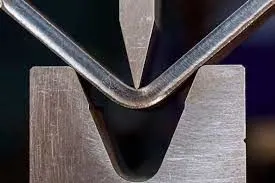
It is a forming operation performed on a press to bend a sheet metal or a strip through required angle.
Bending:
Salient features of bending are:
(a) It requires a press and tooling to do the bending operation.
(b) The sheet metal strip is permanently deformed to the required shape.
(c) When the sheet metal is pressed for bending in the die the outer portion is stretched while inner sides (towards the punch) are compressed.
(d) The radius of the corner should not be small i.e., the angle at the bent should not be too sharp—otherwise material can crack at the bend.
(e) After removal of the bent component from the press there is usually spring back up to about 4 degrees depending on the material hardness. Hard material have greater tendency to spring back while softer materials have less tendency to recover shape.
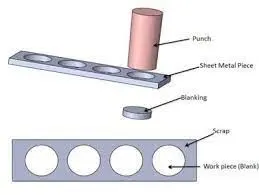
(a) Blanking is an operation of cutting an object of given shape from sheet metal strip. It may or may not be necessary to perform further operations on the blank. Piece detached from the metal strip is called blank. Examples are discs, washers.
(b) Blanking operations are extensively used in sheet metal working to make components like washers, discs etc. If needed other operations may be combined with the blanking operation. Blanking is usually the first operation in sheet metal.
Blanking:
(c) A blanking operation to make disc from a steel strip would require-
(i) A press
(ii) A punch and die with clearance at the lower side so that the disc can fall down freely.
(iii) The material for blanking operation is usually hard.
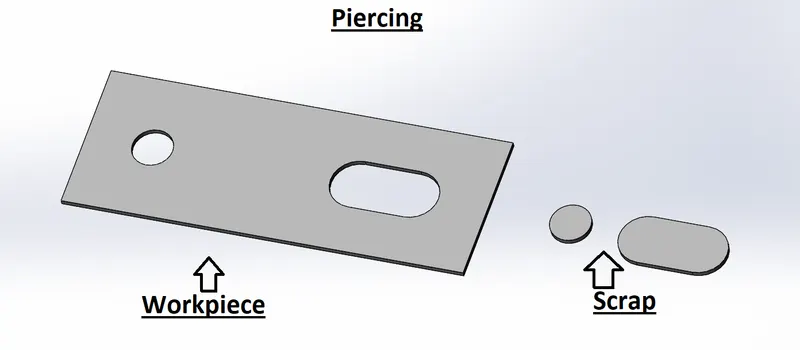
It is a distinct process of making a hole in sheet metals.
Piercing:
It is characterized by:
(a) The punch is sharp and pointed tool which is able to penetrate or pierce through the sheet metal.
(b) There is no scrap from the hole.
(c) The hole has rough flanges around the hole.
Notching:
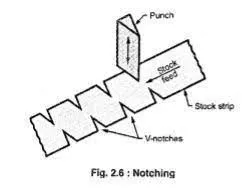
Notching is removing small quantity of material from the edges of a sheet metal part. Notching may be done to avoid overlapping of material after bending at the seams. Proper notching would give the sheet metal joints a better fit.
NEW CAR ASSEMENT PROGRAM (NCAP) ORGANISATION :
The NCAP organisation varies based on country and each country has its own NCAP organisation whereas some countries follow some globally famous NCAP organisation standards. The major organization of NCAP consists of Global NCAP and Euro NCAP.
GLOBAL NCAP - The Global New Car Assessment Programme (Global NCAP) is a project of the Towards Zero Foundation, a UK-registered charity. The programme aims to promote the sale of safer cars in developing markets by empowering consumers with objective information about the safetu of vehicles. Global NCAP supports the UN sustainable development goals and the target to halve road deaths and injuries by 2030 (50 by 30), and the full implementation of the Global Plan for the UN's Decade (and Second Decade) of Action for Road Safety especially the recommended activities for vehicles.
VISION
(i) Our long-term aspiration is for a world free from road fatalities and serious injuries.
(ii) By 2020 we want to see all new cars in production exceeding minimum United Nation crash test standards, for pedestrian protection, and for electronic stability control. (Note: This is consistent with our Road Map 2020 proposals launched in 2015).
(iii) We support the further democratisation of vehicle safety by encouraging the best practice application of automotive design and technology in all regions of the world.
(iv) We support the promotion of consumer information to encourage a worldwide market for vehicles that are both safer and more environmentally friendly.
EURO NCAP - The European New Car Assessment Programme (Euro NCAP) is a European voluntary car safety performance assessment programme (i.e. a New Car Assessment Program) based in Leuven (Belgium) formed in 1996, with the first results released in February 1997. It was originally started by the Transport Research Laboratory for the UK Department of Transport, but later backed by several European governments, as well as by the European Union. Their Slogan is "For Safer Cars". Euro NCAP has created the five-star safety rating system to help consumers, their families and businesses compare vehicles more easily and to help them identify the safest choice for their needs.
Conclusion:
The Car Hood was designed successfully based on given data and according to design for manufacturing.