Hood design-Week 2
Objective:
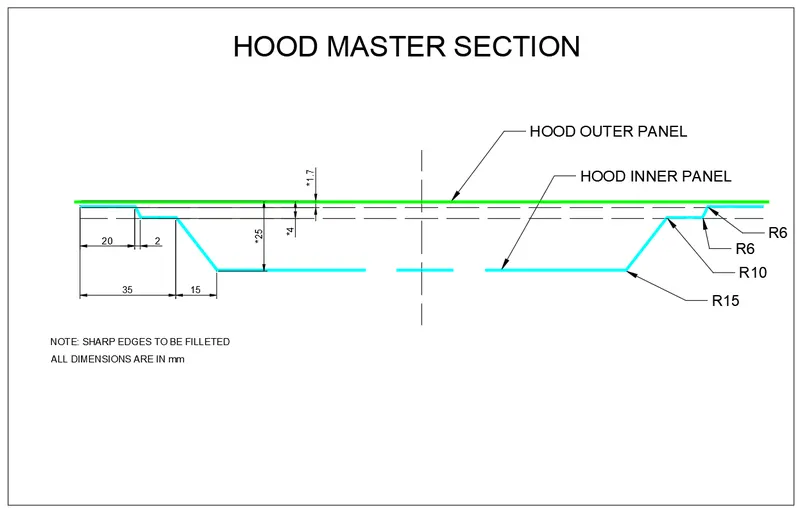
Design hood outer panel, inner panel and reinforcements with the given outer hood skin, master section and design parameters.
Introduction
The hood or bonnet is the hinged cover over the engine of motor vehicles. Hoods can open to allow access to the engine compartment (or trunk on rear-engine and some mid-engine vehicles) for maintenance and repair. In design perspective hood should meet some specific conditions like pedestrian safety, hood head zone for the lock striker, force distribution when subjected to frontal collision (occupant safety), manufacturability etc.
A typical hood assembly consist of hood outer panel, inner panel, latch and striker, hinge, hood stay. Hood stay is an apparatus for supporting the engine hood of a moto vehicle in its open position. The purpose of opening the engine hood is for inspecting engine room, replenishing cooling water and engine oil, changing parts and making repairs etc. Common types of hood stays are Support Rod and Gas Stay. Support rods are manually operated and they are cost effective and simple to design whereas gas stays require no man power but they are costly. Hood are typically made out of the same material as the rest of the bodywork. This may include steel and aluminium. Deep drawing, hemming, blanking and piercing are the common sheet metal operations that are used in manufacturing hoods in automotive industries.
Hood Thickness Parameters:
- Outer Panel Thickness = 0.75mm
- Inner Panel Thickness = 0.75mm
- Reinforcement Thickness = 1.5mm
MASTER SECTION
COMPONENTS
- HOOD OUTER PANNEL:
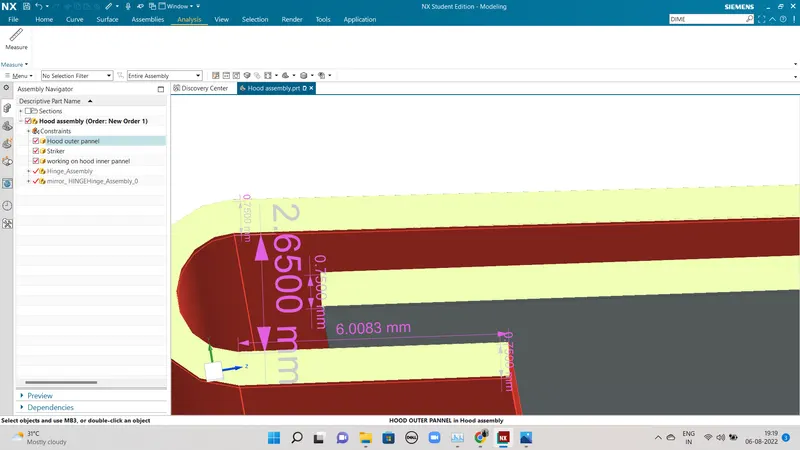
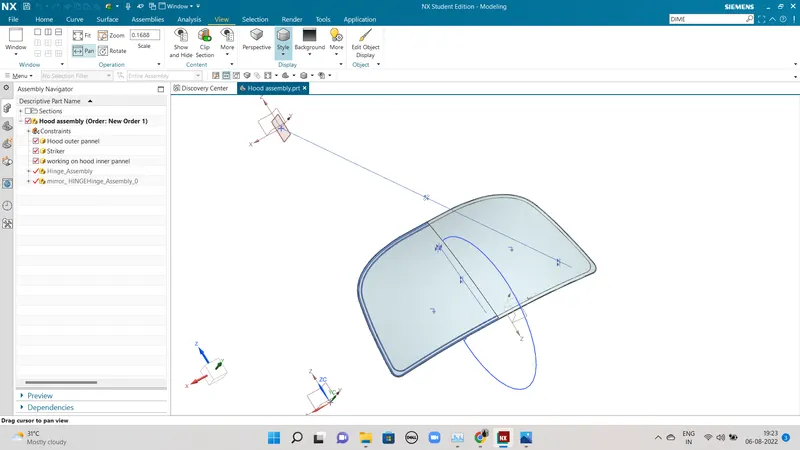
Outer panels are the aesthetic elements of a car. The shape, position and size of the hood should satisfy the safety norms. So while designing the hood we should give more importance to pedestrian safety. The outer panel is attached to the inner panel by hemming. So, it is necessary to provide required hemming flange and reliefs for the hemming operation. We also provide mastic sealants between outer panel and inner panel to reduce vibration and increases the strength of the hood
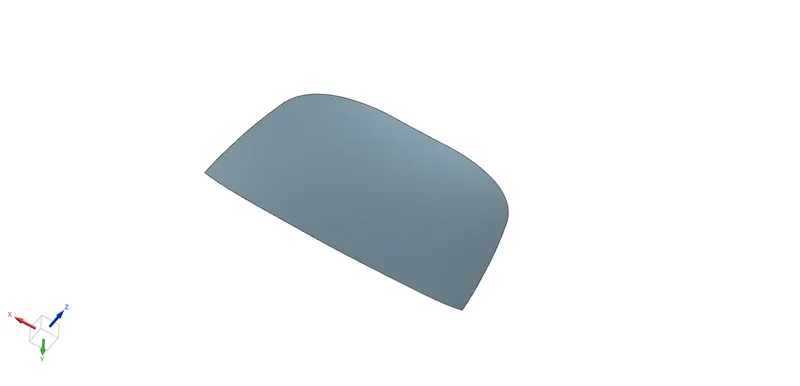
FIG: HOOD OUTER PANNEL
- HOOD INNER PANNEL:
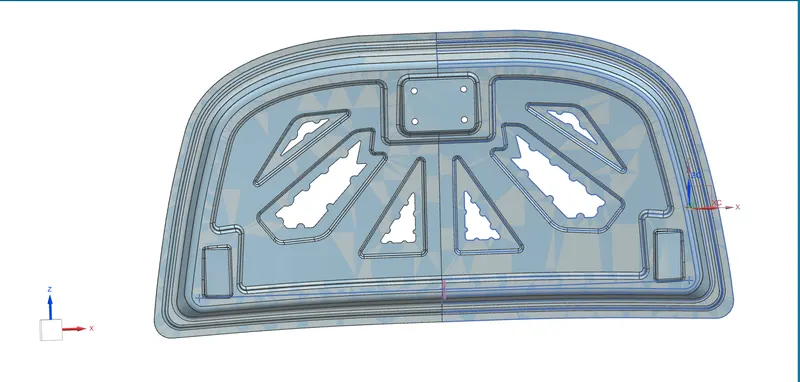
Inner panel is the part that gives strength and rigidity to the outer panel. and we created the emboss for the latch and hinge
- STRIKER:
A hood latch is a very simple component. It's basically the fastener that keeps your hood closed shut. This latch ensures that your hood is securely connected to your vehicle and that it doesn't pop open unexpectedly in driving.
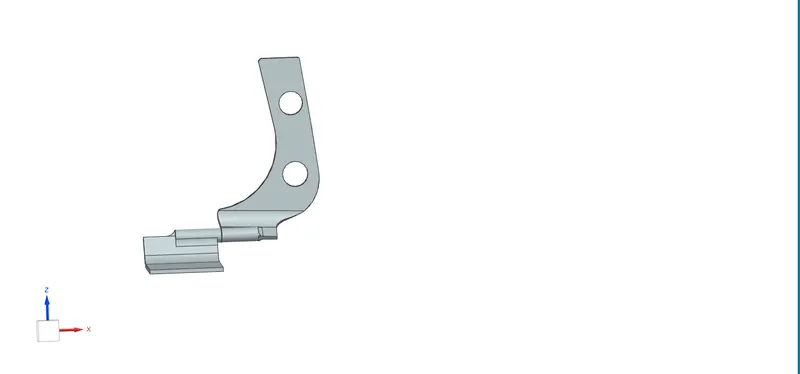
- HINGE:
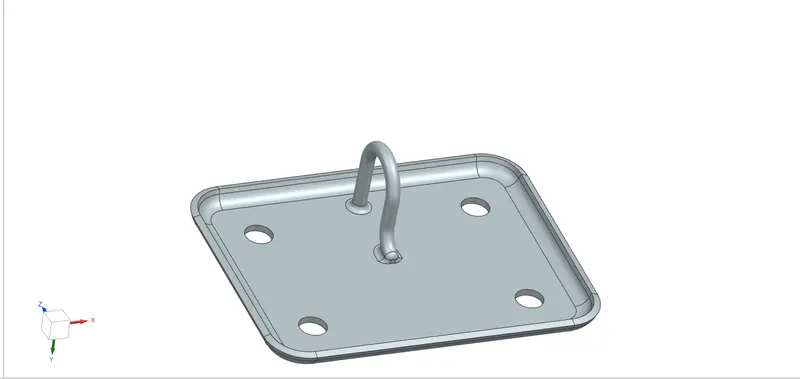
The hood hinge is a mechanism that makes it possible for you to open and close your hood. This part allows the hood panel to move up and down, similar to how a hinge allows the movement of doors and windows. Each car typically has a pair of hood hinges (driver and passenger side) installed in the front of the vehicle.
Latch Trajectory
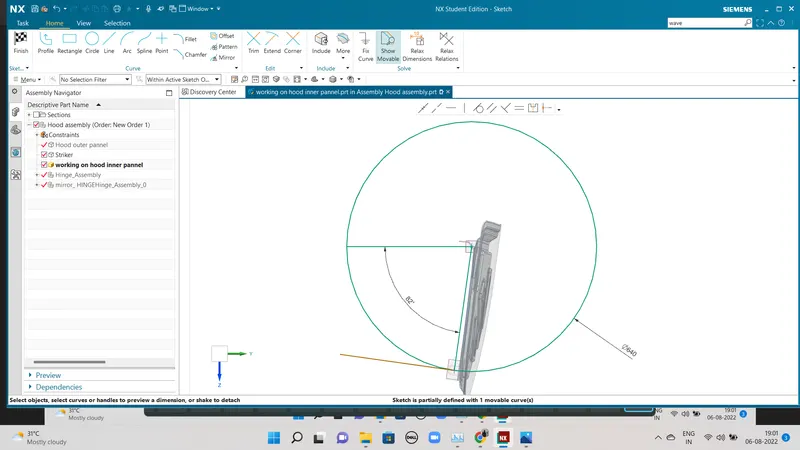
Latch trajectory is given by the circle drawn from the hinge axis point. Hinge axis point is the centre point of the hinge axis. First, we can fix either the latch or the hinge. If we have fixed the hinge position then we should plot the Trajectory circle for the latch. For proper mating condition the striker axis through the tip of the striker should be tangential to the latch trajectory.
Mastic:
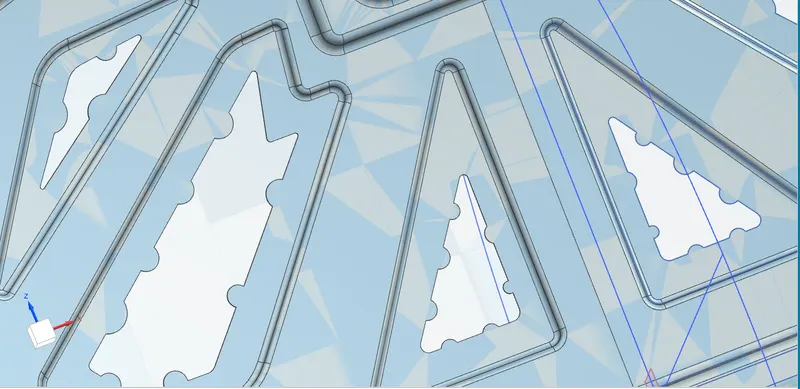
Hood commonly possess large surface area and hemming can only be provided through its boundary. We cannot use other joining techniques like welding, riveting etc because they leave marks on the outer panel which spoil its aesthetic appearance. So, mastic sealants are used to stick the inner surfaces of outer panel and inner panel. Mastic sealants are elastic compound that behave like rubber
HAMMING REAGION:
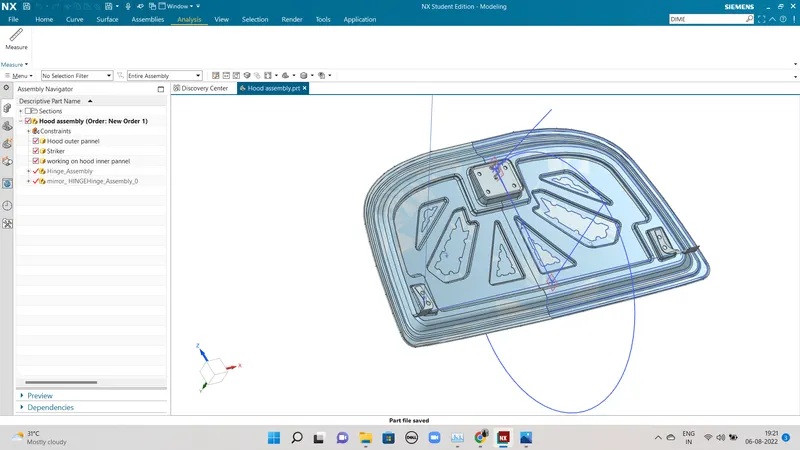
FINNAL ASSEMBLY:
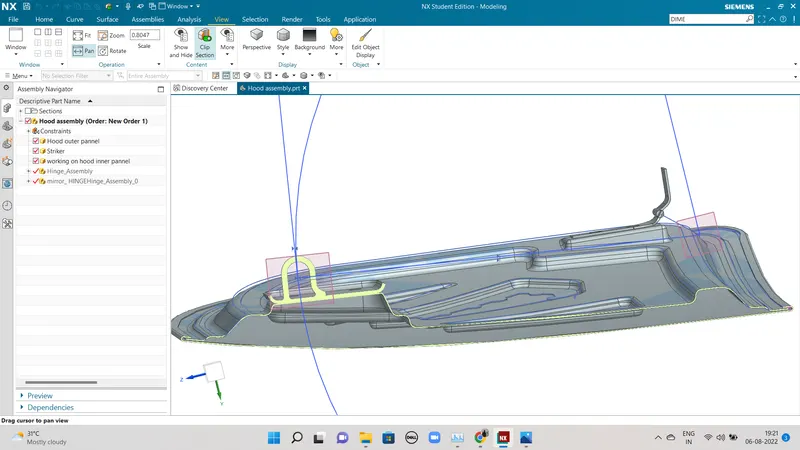
HALF SECTION VIEW:
CONCLUSION:
Hood assembly is completed as per the givien parameters using NX cad softwear