Hood design-Week 2
Aim - To design the hood of a car using the data provided.
Given data -
Hood Thickness Information
- Outer Panel Thickness = 0.75mm
- Inner Panel Thickness = 0.75mm
- Reinforcement Thickness = 1.5mm
-
Master Section:
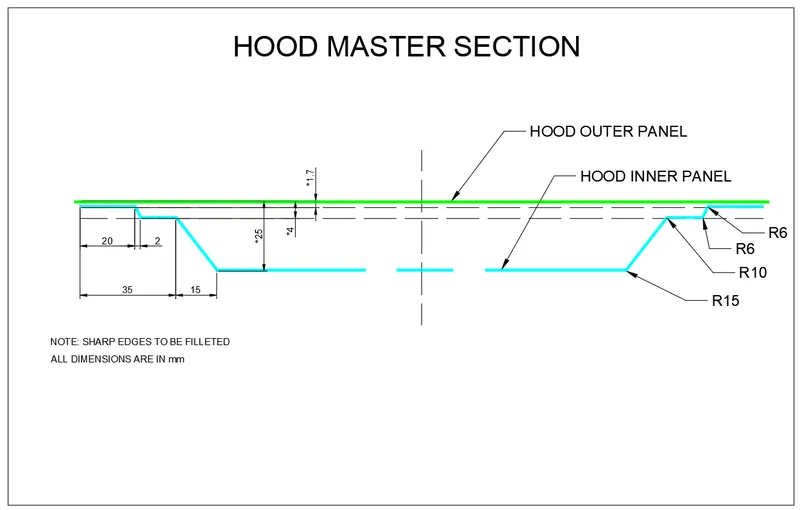
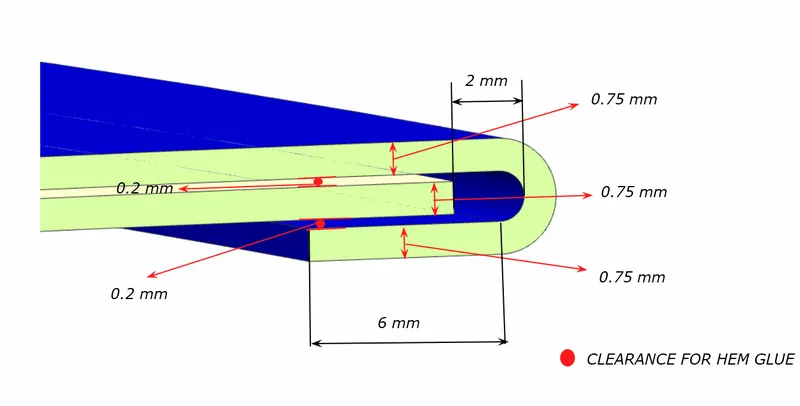
Hemming Data:
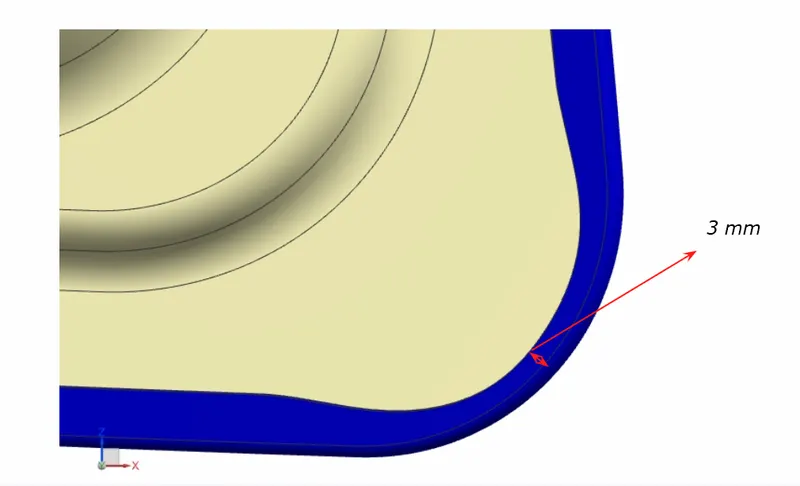
Relief rear section:
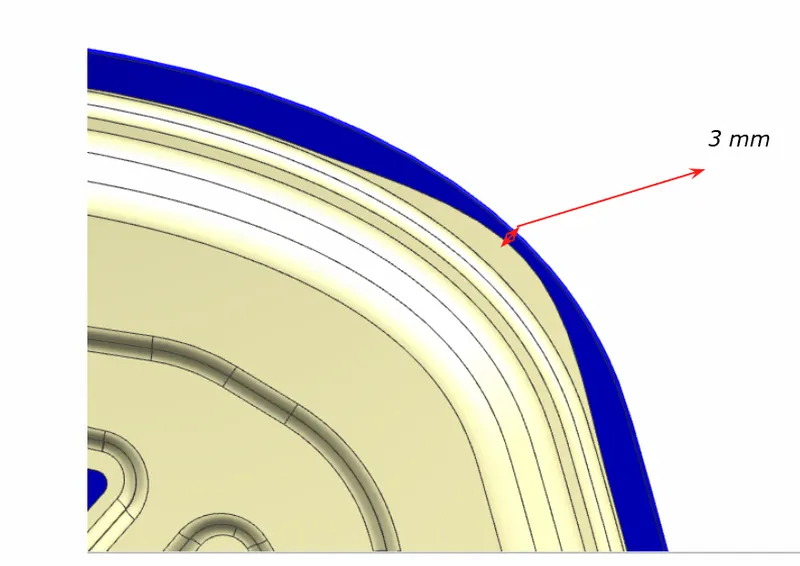
Front relief:
About -
Hood of a car - A car hood, also referred to as a bonnet in some countries, is the cover of sheet metal (Steel, Aluminium etc.) hinged to the vehicle frame for pivoting between open and closed positions. It is generally a feature of a front engine car and acts as a cover for engine and other components. A car hood is meant to protect the performance parts of a car.
In the closed position, the hood generally encloses a compartment housing an engine and other vehicle components (Battery, Electronis etc.). In the open position of hood, the engine and other components are exposed to allow access for service and maintenance.
Hood also acts s a shock absorber in case of accidents where the high impact is absorbed by the hood upto some extent thereby protecting the people inside the car.
Without hood all inside crucial compnents of a car would be susceptible to damage through environmental factors like moist air, sea breeze, rain and solid particles which can hamper the performance of a car and in the long run may cause costly damage. Aerodynamic performance of a car is also significantly affected in the presence of a car hood in the form reduced air drag over the car, thereby giving smooth and efficient driving experience.
Hood of a car is also responsible for reducing the noise of engines in case of conventional cars. In modern day cars which are electric, hood design is done keeping in mind the safety of inside passengers, thereby designing the hood to restrict and deviate the damage by impact upto some extent away from passangers.
Hood material and its desired properties - Generally, goods are made up of the same material as the rest of the surface body of a car.
This may include materials like : Steel, aluminium, fibre glass, carbon fibre, Polymer composite etc.
The properties that are desired in a hood material are as follows - High Strength, Lightweight, Good corrosion resistance, High modulus of Elasticity, Good hardness. Altogether, a material which makes the hood strong and long lasting with the ability to be easily fabricated as per the desire is considered a good material for hood manufacturing.
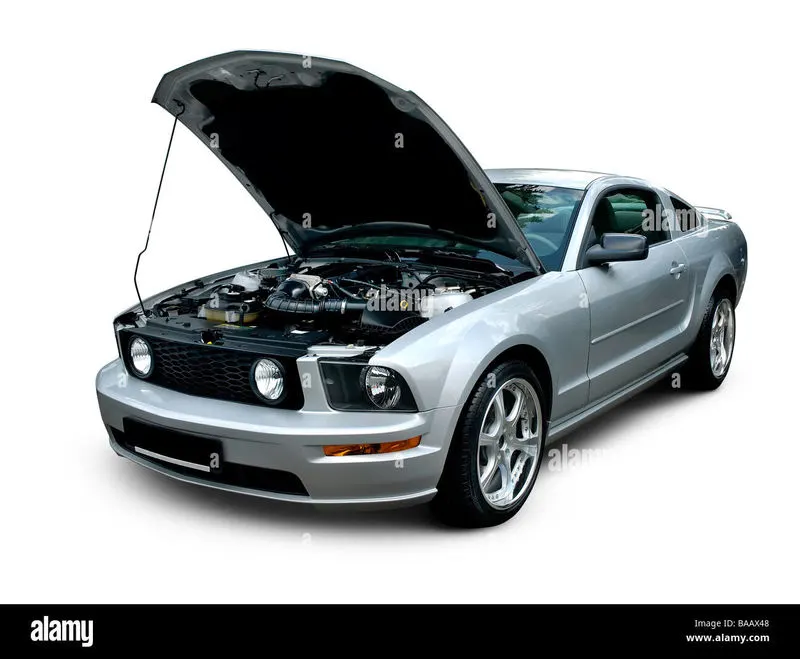
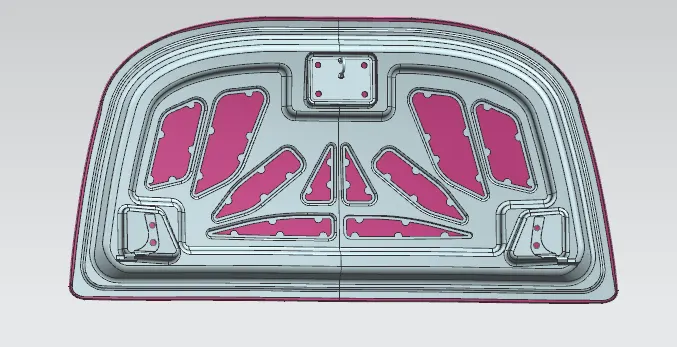
Image - Hood of a car in NX software
Considerations for designing the hood of a car - Hood as it looks simple is a bit complex to design. The complexity is attributed to various factors that must be considered to ensure safety of car components, passangers inside the car and pedestrians. These factors are as follows -
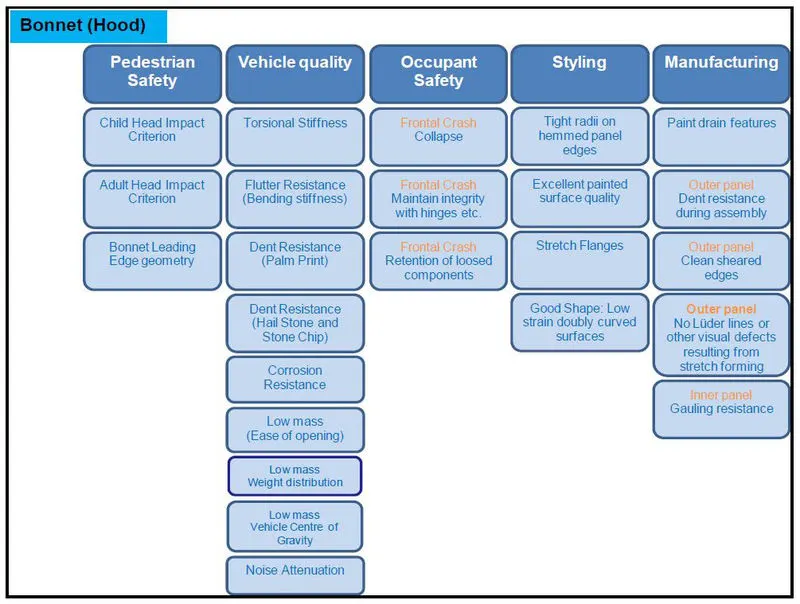
Image - Design factors of a hood
Componenets of a Car hood - The hood of a car generally includes Hood outer panel, Inner hood panel, Striker and Latch, Hinges.
- Hood outer panel - It is a sheet metal cover which has a streamline and smooth structure for minimsing the air resistance and for providing good aesthetics. Overall, it affects the performance of a car in the form of reduced air drag. Its aesthetic design can make the car have in its arsenal a cool selling feature.
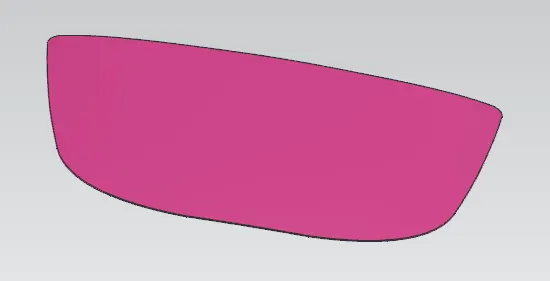
Image - Hood outer panel
- Hood inner Panel - It is a panel which is attached to the outer panel of hood and is underneath it. It is responsible for provding strength to the hood of a car. While having in mind the strength of the hood panel, another important factor i.e light weight hood is considered. Light weight hood has its effect on the efficiency of a car. Lighter the car is, the more efficient it is. One more imprtant factor is pedestrian safety. During a frontal collision of a car with a pedestrian, it is crucial to have a hood which would absorb the impact caused by pedestrians body, thereby reducing the injury to the pedestrian. Keeping these factors in mind the inner hood panel is designed.
Emboss definitions - Embossing have an effect of raising a surface above the surface in low relief. It is done through deep drawing operation on the inner hood panel. Embosses act as attenuaters to the force of impact which travels towards the occupants inside the car. Giving dfinisions to embosses helps in deviating the force of impact away from the passengers and towards the hinges which are attached to the frame of the vehicle. Cutouts are provided on the embosses so that the hood crushes upon absorbing the force of impact due to collision.This significantly reduces the force of impact before it reaches the occupants inside the car.
Deep drawing - It is a sheet metal forminng pocess in which a sheet metal blank is radially drawn into a forming die by the mechanical action of punch. Examples - Kitchen sink, Cold drink cans etc.
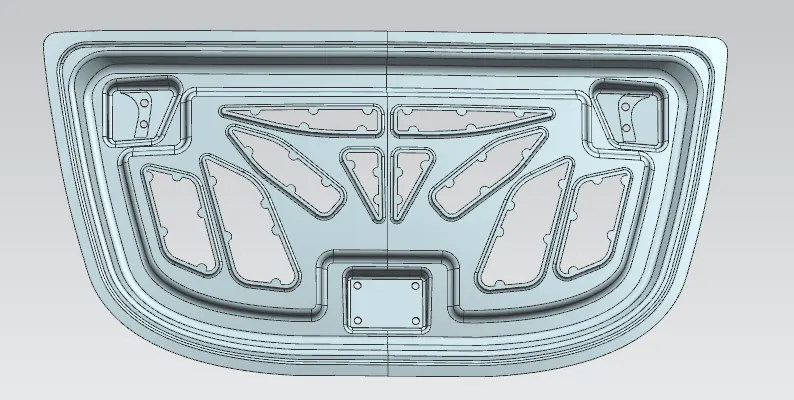
Image - Hood inner panel
To take into account the crucial factor of pedstrian safety some pedefined methodologies are leveraged in designing the car hood. One of such methodologies is Euro NCAP which is an acronym for European New Car Assesment Program. Besides assessing how well cars protect their occupants, euro NCAP tests how well they protect those vlnerable road users like pedestrians and cyclists with whom they can collide.
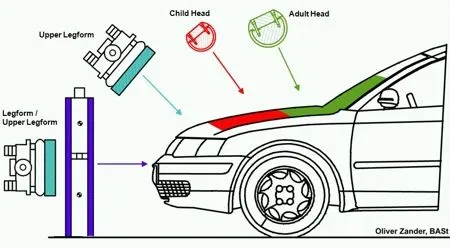 Image - An overview of Euro NCAP test and assesment procedure
Head impact - To estimate the potential risk of head injury in the eventuality of a vehicle colliding at front with an adult or a child, a series of impact tests are carried out a certain speed of the car. Impact sites are then assessed and the protection offered is rated as good, average, marginal, weak or poor. The procedure promotes energy absorbing structures, deformation clearance and deployable protection systems such as pop-up bonnets and external airbags.
Upper leg impact - The shape of the hood leading edge can play a critical role in the eventuality of a vehicle impact with a pedestrian and contribute to injuries to the pelvis and femur. Energy absorbing structures and a more forgiving geometry is envisioned to overcome the negatives of the test i.e mitigating the injury.
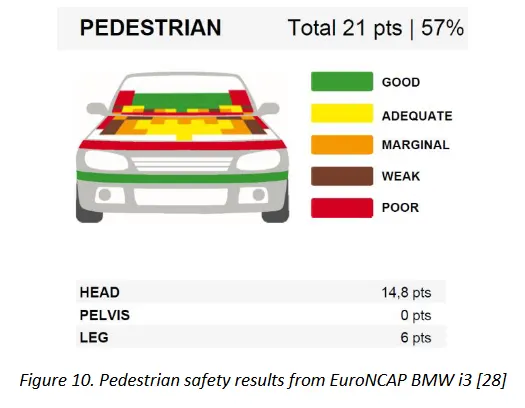
Areas on the hood are then classified as good, adequate, marginal, weak and poor based on the results. Green area in this case shows good safety to the pedestrian from head injury on the corresponding area. Similary, red areas indicate danger to pelvis. Based on such assesment the hood of a car is designed keeping in mind overall safety of occupiers of the car along with pedestrians on the road.
- Mastic points - On the inner hood panel mastic points are given. Mastic sealants are elastic compounds that are elastic like rubber. It is provisioned between the outer and the inner panel. At the beginning it is in the paste form, but after going through a hot furnace bath it turns solid, thus joining the outer and the inner panel of hood. It generally offers strength to the panels in its vicinity of 80 mm radially.
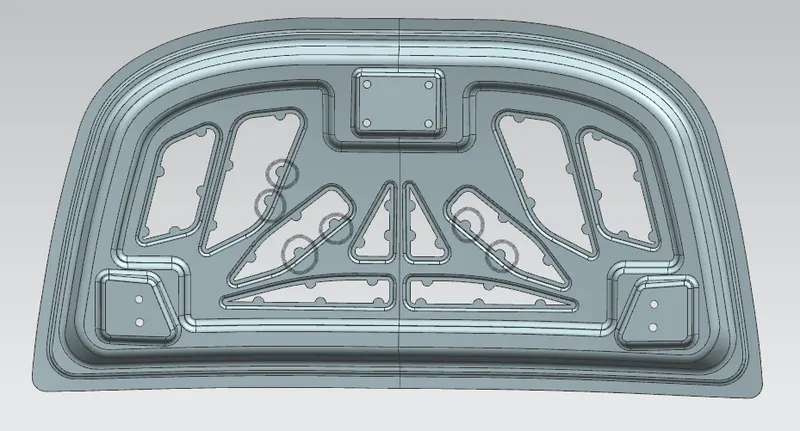
Image- Some mastic points on inner hood panel
- Striker and Hinge - A latch and striker is a mechanism which holds the hood in its closed position. For the hood to close properly it is necessary that the axis of the striker be perpendicular at every point on its circular trajectory. The rotation of hood is referenced at the axis of hinges. The trajectory of hood is shown in the form of circle on which the axis of striker is perpendicular at every point on the trajectory. Hinges are the points on the hood that connect the hood to the vehicular frame and are responsible for pivoting of the hood in the form of opening and closing of it.
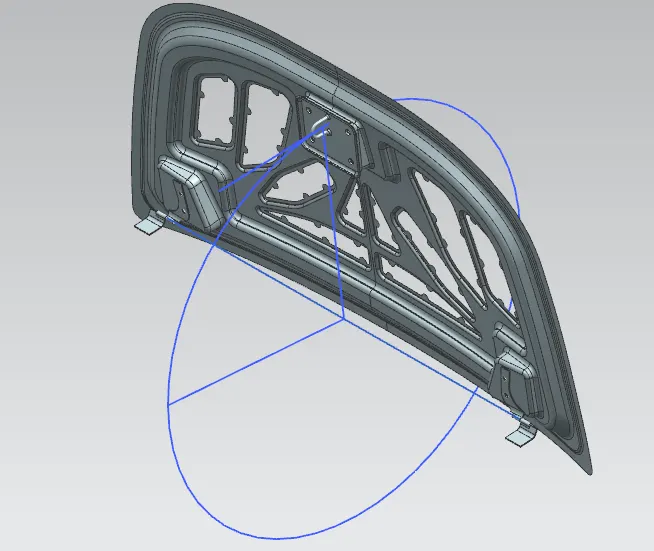
Image - Trajectory of striker
Striker and hinge reinforcements - Reinforcements as the name suggests are provided for reinforcing the area where striker and hinges are assembled on the inner hood panel. The need for reinforcements arises from the thinness of sheet metal used. Thus, they provide local strength to the panel.
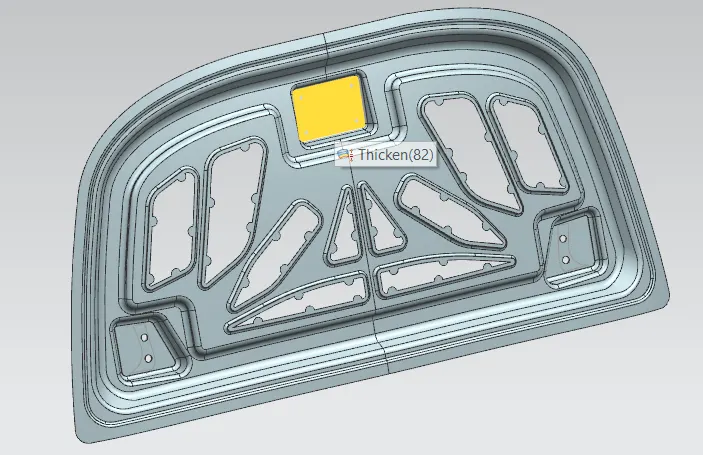
Image - Thicken reinforcement
- Hemming and relief on outer panel - It is a feature on the outer panel. It is done for connecting the inner panel to the outer panel. It is a significant alternative over joining process which invlve invasive operations on the outer panel, thereby ruining its aesthetics. Relief is provided at bends to minimise stress concentration on the hemming flange.
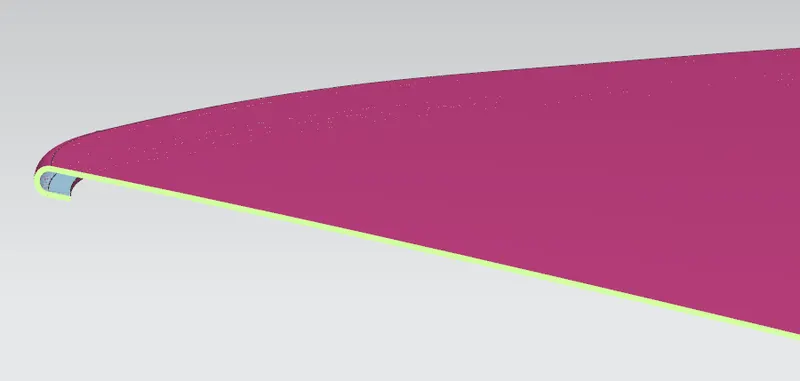
Image - Hemming on outer panel
- Draft analysis - Draft analysis is done to assess if the drawing operations in the panel can be carried out or not. A positive draft angle ensures that the drawing operation is feasible on the hood inner panel. Green colour shows that the draft angle given is positive and drawing operation on panel is possible.
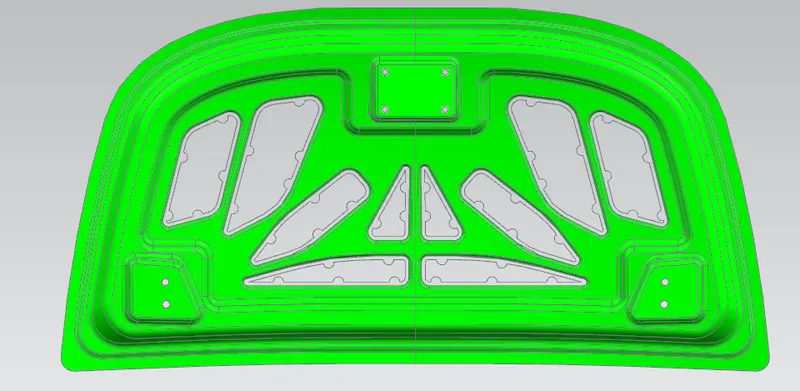
Image - Draft analysis
- Conclusion - The complete design as per requiremnets is done in NX CAD and the files have been attached about the same.