Hood design-Week 2
Objective:
To design Hood outer panel, Inner Panel and the Necessary reinforcements by the given master section.
Introduction:
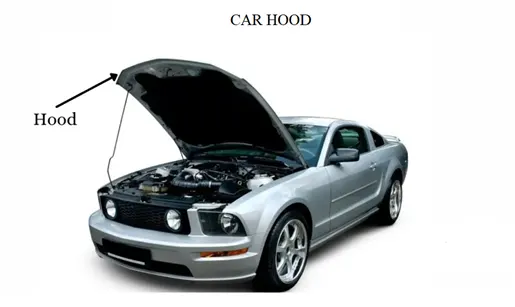
A hood or Bonnet of a car is used as a cover for the engine compartment. Hood design is a very important process since is has to aerodynamic in nature so that air could flow around the car easily and the drag coefficient can be reduced. The hood design should also look aesthetic as it will give a decorative and luxurious look to the car. The bonnet of the car is also generally used to access some essentials parts like engine, radiator etc.
The hood of any car contributes a lot in pedestrian’s safety as well during any incident of collision. It is designed to minimize the damage on pedestrians in case of any accident. The hood plays an important role in passenger’s safety as well during any collision incident. It is designed in such a way that the impact of collision moves sideways instead of going to the passenger’s cabin.
Hood Components:
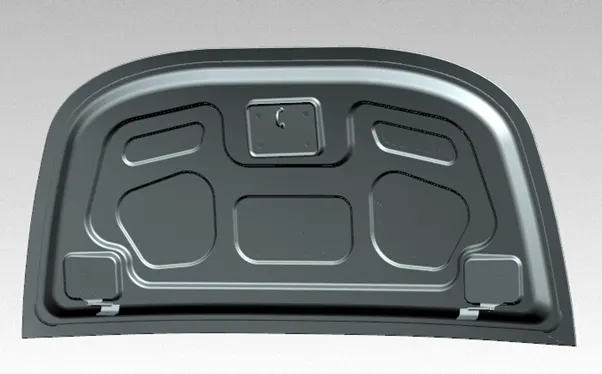
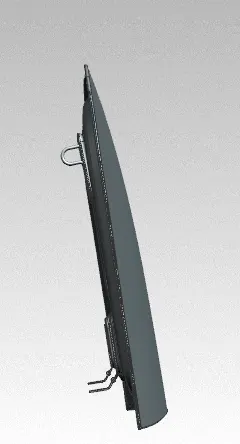
A hood assembly consists of Inner hood panel, Outer hood Panel, the embosses, Striker mechanism and a pair of hinge assembly.
Hood Outer Panel:
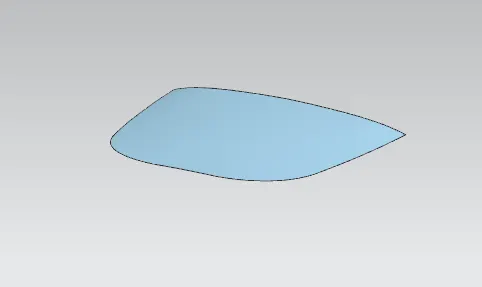
Outer panel is a piece of sheet metal which is used as a cover for inner panel and other parts. It is mainly responsible for the visible design and looks of the car. It is joined to the Inner panel with a process known as hemming. Welding is not used to join them to maintain the aesthetic look of the vehicle.
Hood Inner Panel:
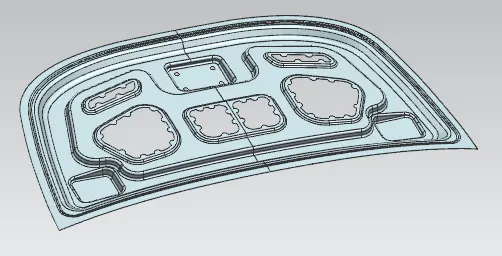
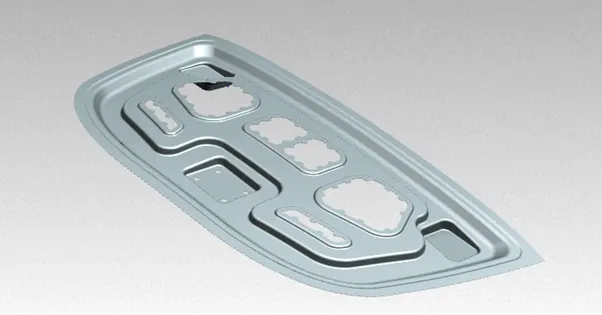
Inner panel is very important part of the hood assembly. It has different embosses and holes at different places. The embosses and holes are used to transmit the collision impact towards the sides of the vehicle and also to provide stiffness to the inner panel. The Inner hood panel is also used to hold the striker and hinges.
Striker Mechanism:
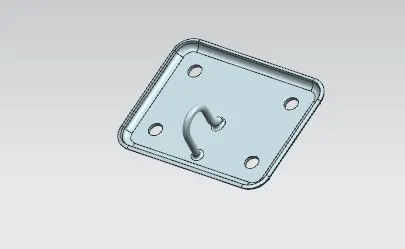
Striker mechanism acts as a lock for hood or bonnet. It is attached to the inner panel of the hood.
Hinge Assembly:
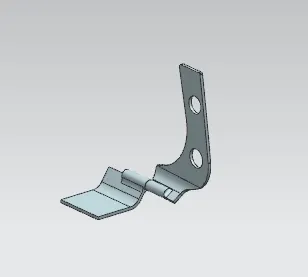
Hinge is connected to the inner panel of the hood. It gives mobility to the bonnet and lets it close and open.
Latch Trajectory:
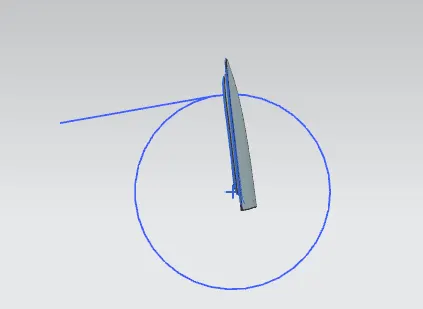
Latch trajectory represents the pathway of the hood covered while closing or opening. It is a circular curve with center on the line joining both the hinge axis. It has a radius equal to the distance from its center and to the striker. For proper mating condition, the striker axis should be tangential with the circle.
Mastic Data:
Normally, hoods have a big surface area and only the boundaries can be joined using the hemming process. Other joining methods, such as welding, riveting, etc., are not an option since they create markings on the outer panel that detract from its aesthetic appeal. Therefore, the inner surfaces of the outer panel and inner panel are adhered using mastic sealants. Mastic sealants are rubber-like elastic compounds. It is applied between the inner and outer panels at predetermined locations. Each mastic sealant has an 80mm radial area that it affects. As a result, the mastic points are positioned so that they cover the more vibration-sensitive parts away from the hemming. Hence it covers the area which are more vulnerable to the vibrations and are away from the hemming region.
Emboss:
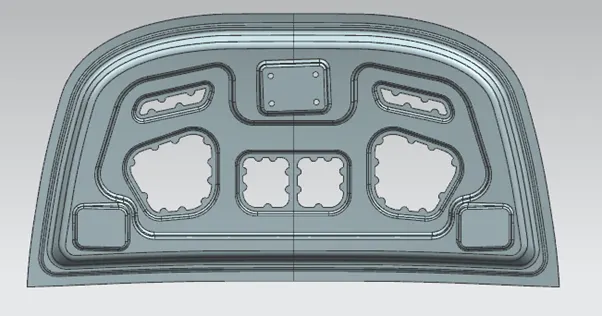
The inside panel features a variety of embosses. These embosses enable us to increase the inner panel's rigidity. The size and shape of the embosses also affect how the force distribution from a frontal collision is directed. The embosses are designed in such a way that it always distributes the force away from the passengers. The embosses in this illustration are constructed so that the force is applied to either side of the automobile.
Deep Drawing:
Deep drawing is a sheet metal forming technique in which a sheet metal blank is mechanically drawn in radial direction into a forming die by the Punching action. It is thus a material retention shape transformation process. When the depth of the drawn part is greater than its diameter, then the process is referred to as "deep drawing." This is accomplished by drawing the part again and again using a series of dies.
Hemming:
Hemming is the process used to join the inner panel and outer panel together. During this process the outer panel is rolled downwards and joined to the inner panels. The outer panel holds the inner panel from the boundaries.
Final Assembly:
Design Parameters:
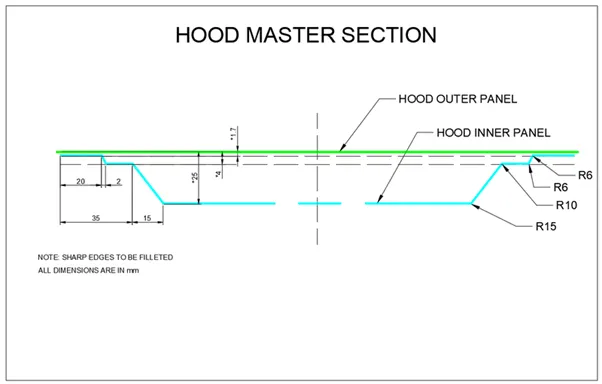
Following are the parameters and the Master section which were used to design the hood:
Hood Thickness Information:
- Outer Panel Thickness = 0.75mm
- Inner Panel Thickness = 0.75mm
- Reinforcement Thickness = 1.5mm