Design of backdoor
Aim: Use the provided styling surface to come up with a back door design, use appropriate design methodologies, and provide the necessary reinforcements and embosses.
Back Door: A door which is located at rear side of the car to give access to the luggage, spare wheel etc. It can be operated manually or by using electric power.
Back door Assembly: The back door assembly consist of mainly the following parts:
- Inner Panel
- Outer Panel
- Hinge and Reinforcements
- Viper Motor Reinforcement
- Latch & Striker and its reinforcements
Manufacturing Process: The main manufacturing processes involved in the the development of Back door are:
- Deep Drawing
- Embossing
- Hemming
Design Of Back Door: The designing process of a backdoor starts with the repair of the given Class A surface. Since the given surface is in IGES Format, it might contain some gaps or discontinuity. It is very essential to repair the surface before moving any further to avoid errors in later stages. It is done by sewing all the body parts together and checking any discontinuity. If any error is found, the body is deleted and a new surface is created in its place using bridge curves and Through curve mesh commands.
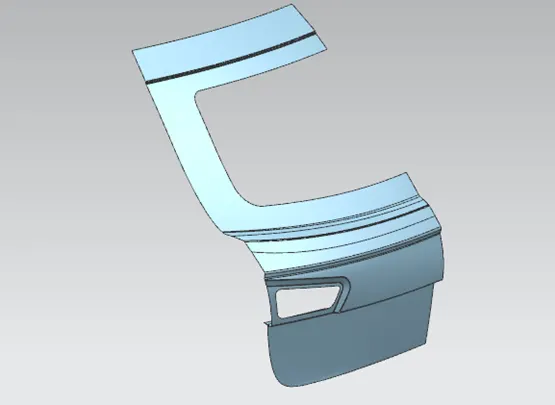
The Given Class A Surface
After repairing the surface, It was divided in two different parts:
- Upper outer Panel
- Lower Outer Panel
A tooling axis was created before starting the design. It represents the direction of tools during manufacturing processes. Tooling axis helps in designing the door in a way that it will be easier for it to manufacture.
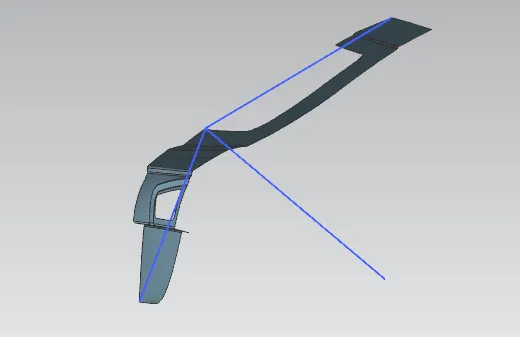
Tooling Axis
Sealing Flange: Sealing Flange is the area where rubber sealing strip is attached. It is designed by Offsetting the outer panel and trimming it according to the styling surface.
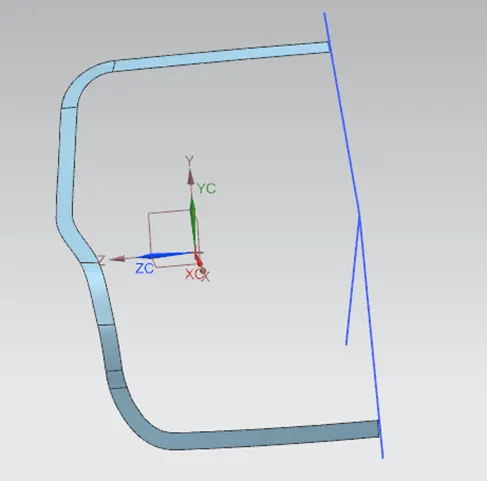
Sealing Flange
After that Backdoor inner panel flange and windshield area were also created and joined together to create half door. Embosses were created on the half door to provide strength. Another flange was created to join the inner panel with outer panel with the help of Mastic.
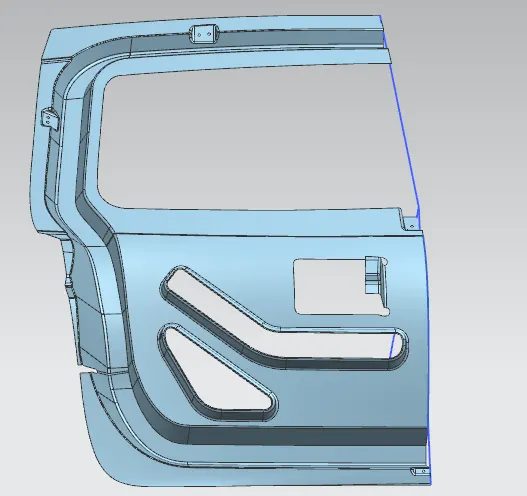
Half Door
After this Latch and Stricker mounting, Hinge mounting, Gas stay mounting and Wiper Motor Mounting were created and thickening was applied to the surface.
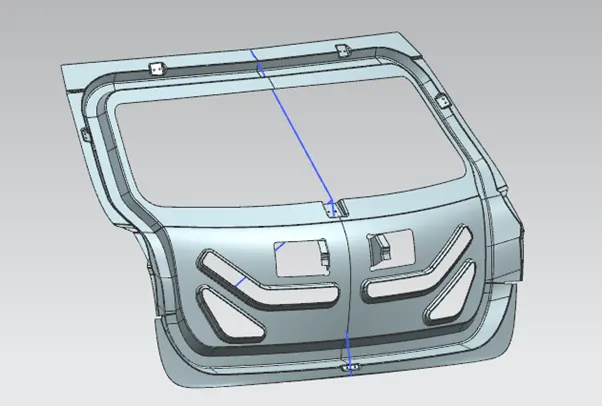
Backdoor
To Increase the Local area strength, we have designed reinforcements for every Mounting areas.
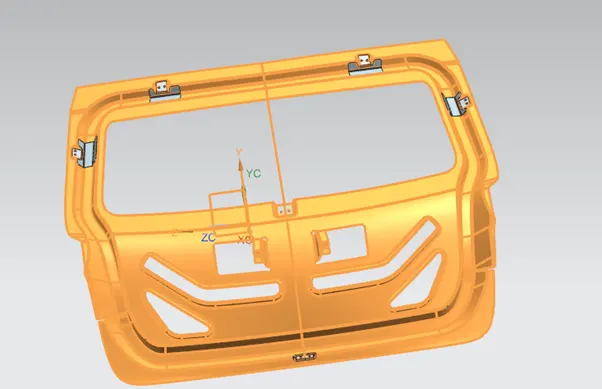
Reinforcements
After that, hemming surface was generated in outer panel using bridge curve and swept command to join it with the inner panel and the relieves were provided near sharp edges to avoid stress concentrations.
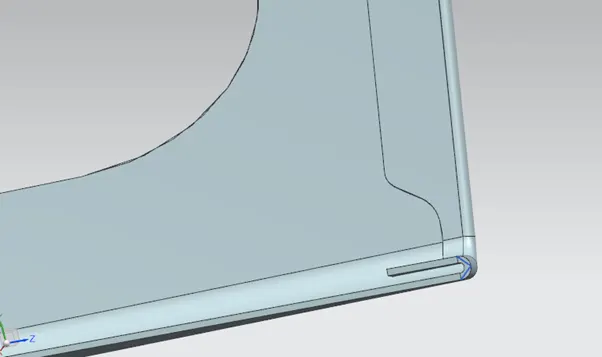
Hemming Operation
Draft Analysis: Draft analysis is done to check whether the design can be manufactured using the given tooling axis.
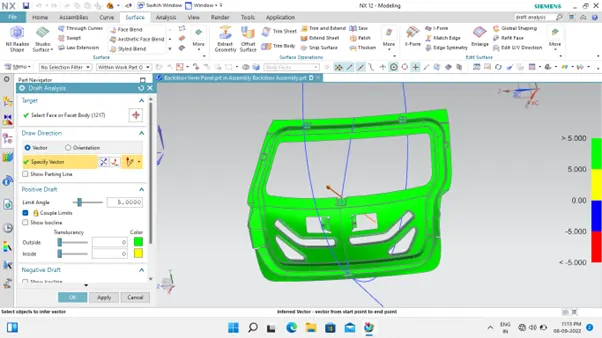
Draft Analysis
Conclusion: The backdoor was designed using the given styling surface and draft analysis was performed.