Hood design-Week 2
Abstract
This report presents the design and assembly of the car hood(bonnet) along with the justifications being carried out.
Objective
To Design a car hood in NX CAD using the given master section and design parameters
Introduction
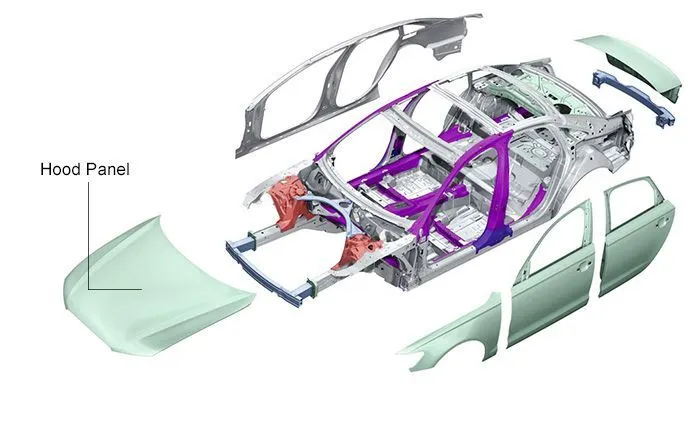
The car bonnet is an important component that is utilized for several purposes at the front. It gives access to the engine compartment which enables the repair and maintenance of many parts namely the car engine, radiator, etc. Therefore, the bonnet must be designed suitably and it should minimize the hindrances from the disturbance caused by the external environment on the hood and its components below it. When the car is in running condition, the resisting forces from the air act on the hood therefore the design of the bonnet should be made aerodynamic to reduce the air resistance. Hood assembly includes inner panel, outer panel, hinges, latch, and reinforcements. The upper and stiffener panels are joined through the process of hemming or both panels are joined by using the adhesive namely mastic. Spot weld can be made where it will be necessary. Sandwich construction of the hood structure will increase the capability of the hood’s ability to absorb the energy impacted by the external forces which are acting on the bonnet. The bonnets of most vehicles are fabricated using the sheet metal structure, a good energy-absorbing structure so it causes substantially a small threat.
Components
The car hood consists of the following components
- Hood inner panel
A hood inner panel of a vehicle provides to improve rigidity, durability, and pedestrian protecting performance by a frame structure is individually arranged front and rear.
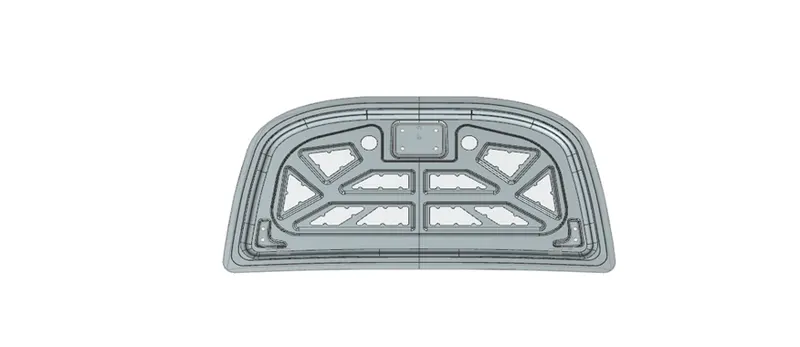
1.1Data to be used for Hood inner panel
Inner panel thickness = 0.75mm
Master section
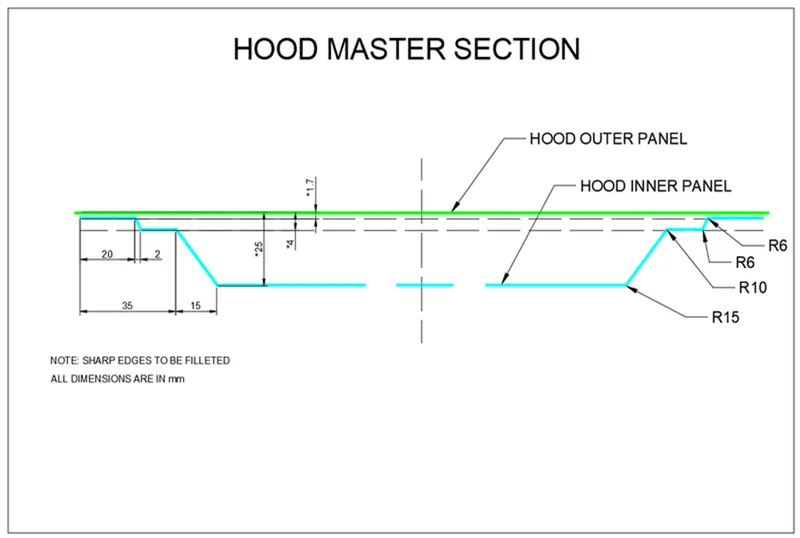
Figure no.2
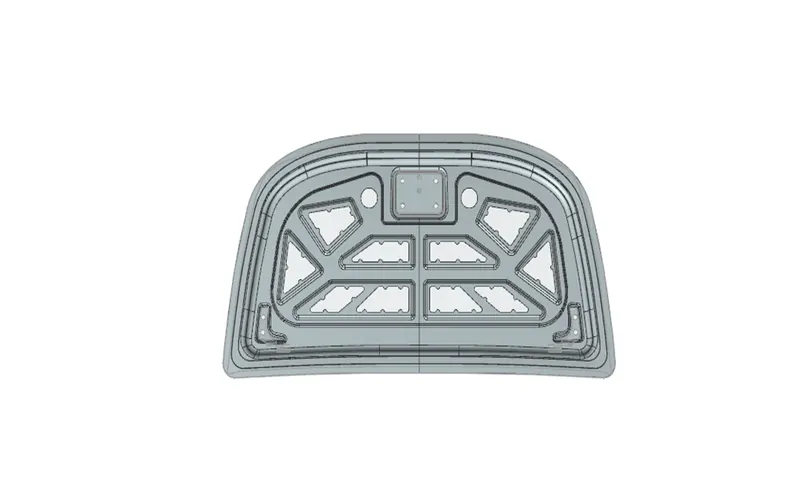
Figure no.3
2. Hood outer panel
The hood outer panel works as a metal cover. The outer panel has the aesthetic look to it but on its own is very weak and not capable of handling force during impact.
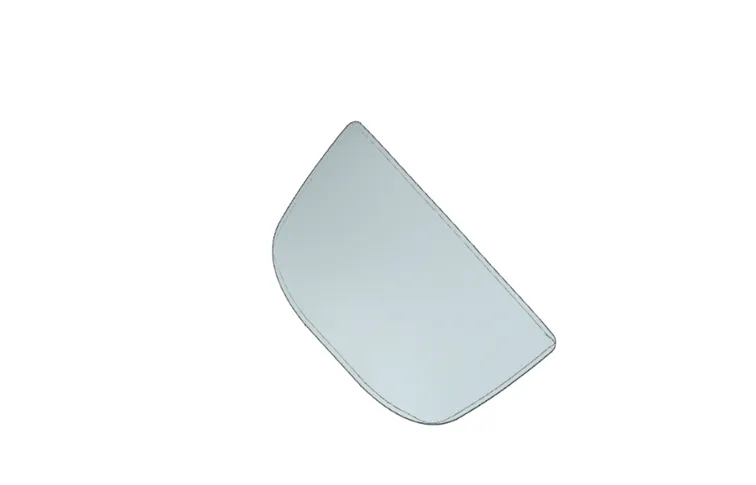
Figure no.4
3. Hinges
A hinge is a machine element that connects two bodies allowing angular moment about a fixed axis of rotation 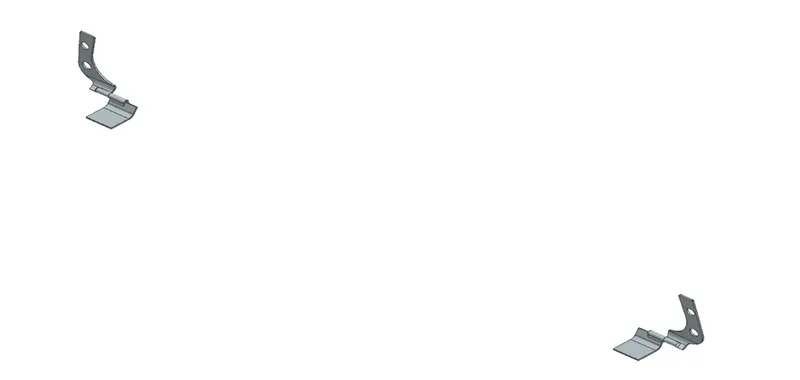
Figure no.5
4. Reinforcement
Reinforcement materials usually add rigidity and improve the strength of the material. in the hood, it is provided at the hinge and latch region. The thickness of the reinforcement is always higher than the thickness of the inner panel of a hood.
4.1Data to be used for Reinforcement
Reinforcement Thickness = 1.5mm
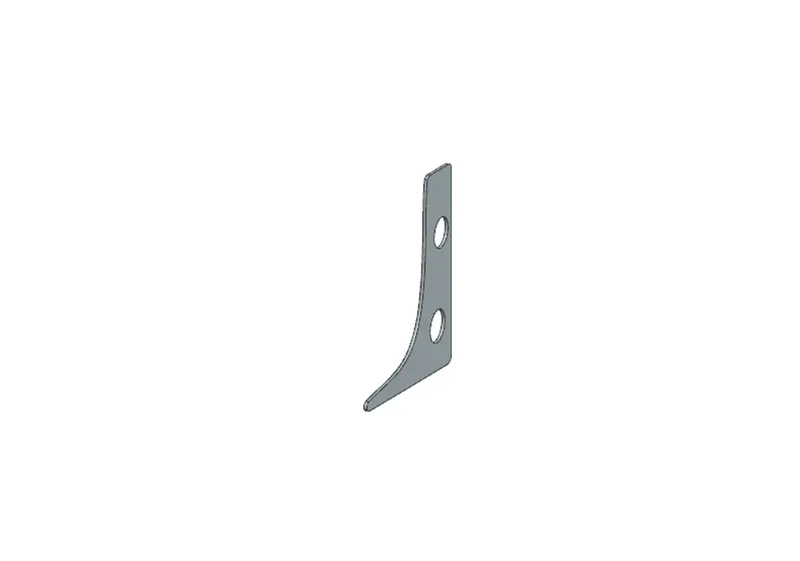
Figure no.6
5. Latch and Striker
This latch and striker mechanism is provided to lock the hood to prevent sudden opening of the hood during driving. Striker engaged with the inner panel of the hood while the latch is attached to the vehicle frame.
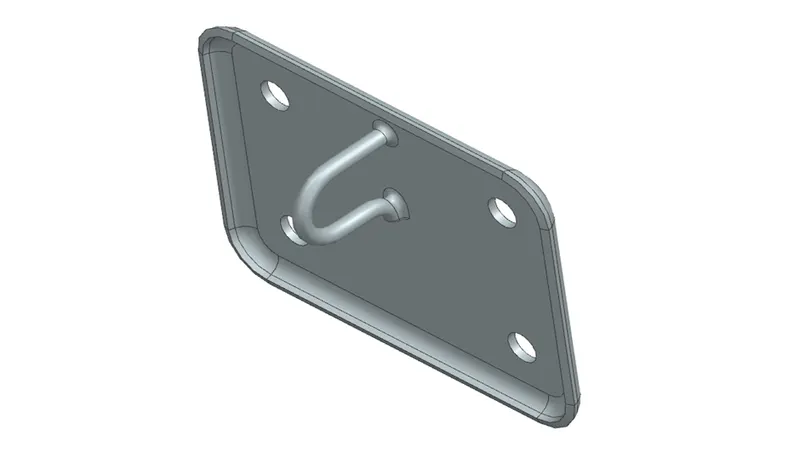
Figure no.7
6. Latch Trajectory
The latch trajectory is the path that the striker will rotate when the hood is open/closed while pivoting on the hinge axis .it is a very important aspect in hood design in order to installation points of the hinge, latch, and striker.
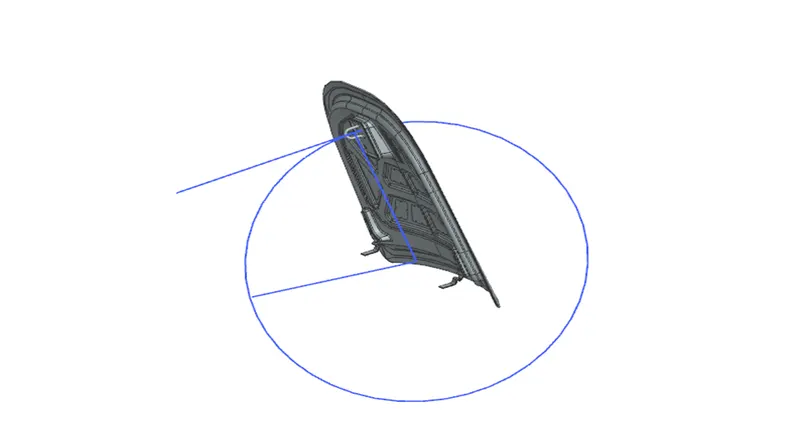
Figure no.8
7.Mastic Sealant Data
Mastic sealant was developed specifically to bond exterior automotive panels to the vehicle’s inner panel structure, such as on roofs, doors, and hoods. we cannot use spot welding or any other joining technics on there because it will produce marks on the outer panel of the hood it will ruin the aesthetic appearance of the car. mastic sealants are synthetic rubber sealer that remains elastic after curing to reduce panel flapping and prevent panel distortion.
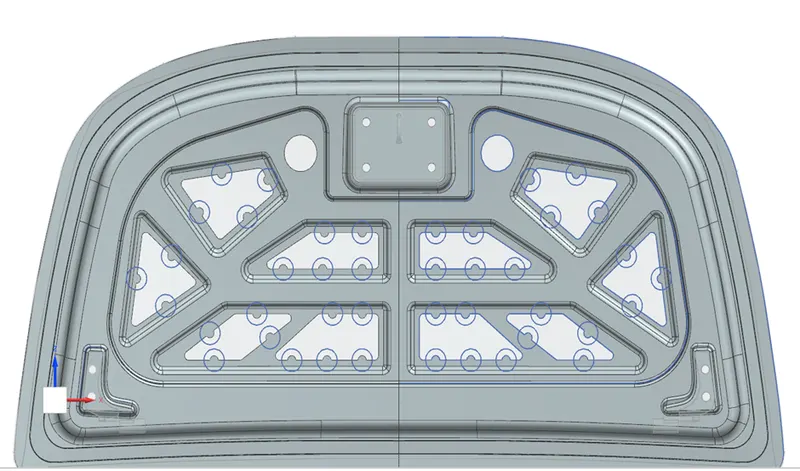
Figure no.9
8.Features used in designing:
- Offset surface - The Offset Surface command to create an offset of one or more existing faces.
- Offset in face - To create offset curves on one or more faces from connected edges or curves on the surfaces.
- Trim Sheet - To trim sheet bodies to intersecting faces and datums, and projected curves and edges.
- Trim body - To trim one or more target bodies using a face or plane.
- Edge blend - The Edge Blend command to round sharp edges between faces.
- Face blend - The Face Blend command to add tangent blend faces between two or three sets of faces.
- Emboss - The Emboss Sheet command to modify a sheet body by adding faces of a solid body, as if the solid body was pressed into the sheet body.
- Sew - The Sew command to join two or more sheet bodies into a new single sheet body.
- Thicken - The Thicken command to offset one or more connected faces or sheets into a solid body.
- Project curve - The Project Curve command to project curves, edges, or points that are external to the sketch, onto the sketch along the normal of the sketch plane.
- Extrude - The Extrudecommand to create a solid or sheet body by selecting a section of curves, edges, faces, sketches, or curve features and extending them a linear distance.
9.Hood manufacturing process
Deep drawing:
Deep drawing, is a sheet metal forming process in which a sheet metal blank is radially drawn into a forming die by the mechanical action of a punch. It is thus a shape transformation process with material retention. The process is considered “deep drawing” when the depth of the drawn part exceeds its diameter. In the Quintus denomination of deep drawing a flat sheet, metal blank is formed over a rigid, shape-defining, movable tool half, pushed against a flexible rubber diaphragm, which is supported by uniform hydrostatic oil pressure. The process results in scratch-free parts regardless of the sheet thickness or complexity of the tool, including undercuts. High forming pressure ensures close tolerance parts direct from the press with little or no secondary hand work required.
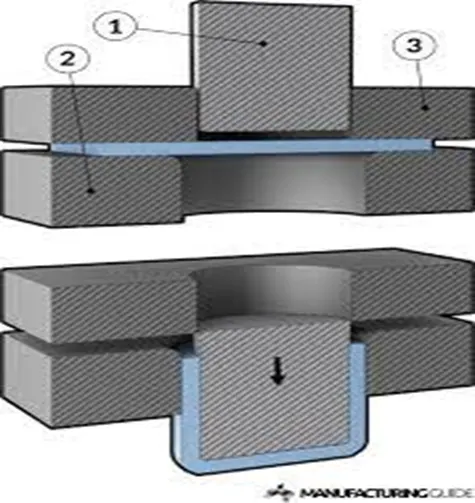
Figure no.10
10. Hemming
Hemming is a technology used by the automotive industry to join inner and outer closure panels together (hoods, doors, tailgates, etc.). It is the process of bending/folding the flange of the outer panel over the inner one. The accuracy of the operation affects significantly the appearance of the car’s outer surfaces and is, therefore, a critical factor in the final quality of a finished vehicle. The Hemming process can be carried out in diverse vehicle components: closures (Hood, doors, tailgates), sunroof, fenders, wheelhouses, and in special applications such as fuel lid, brand, and special parts. Both the outer perimeter and the inner frame of the part can be hemmed.
There are two types of hemming operations
- Tabletop hemming
- Roll hemming
Tabletop hemming
In tabletop hemming or conventional die hemming process, the flange is folded over the entire length with the hemming tool.
Roll hemming
In the roller hemming process, a robot guides a small roller across the flange to fold a sheet onto itself or onto another sheet. The process is oriented to low-volume automotive applications, providing a distinct advantage in manufacturing closures and subassemblies with developed flanges.
11. Result
Final Assembly of the hood
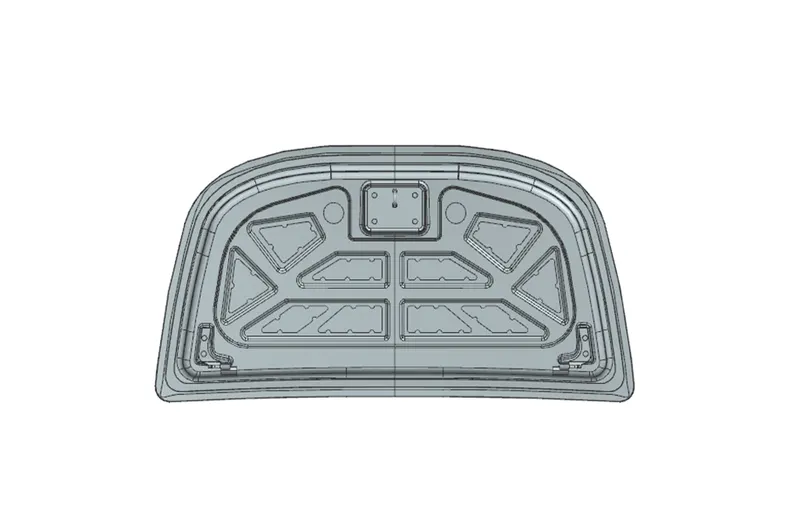
Figure no.11
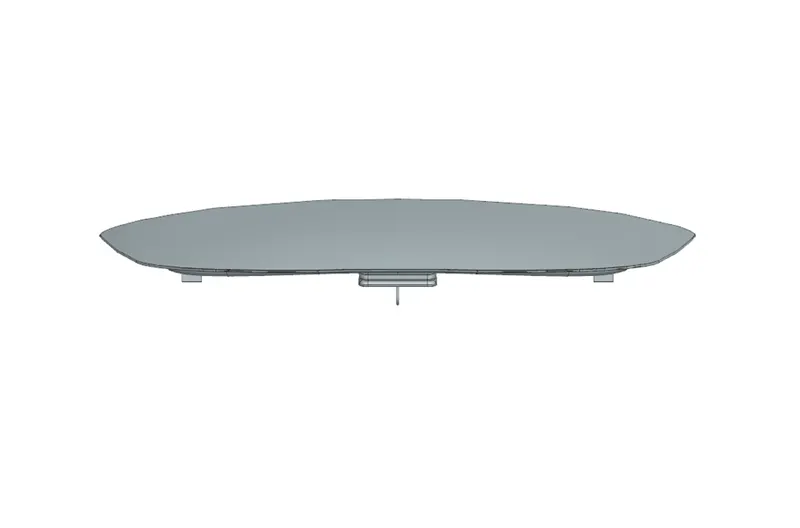
Figure no.12
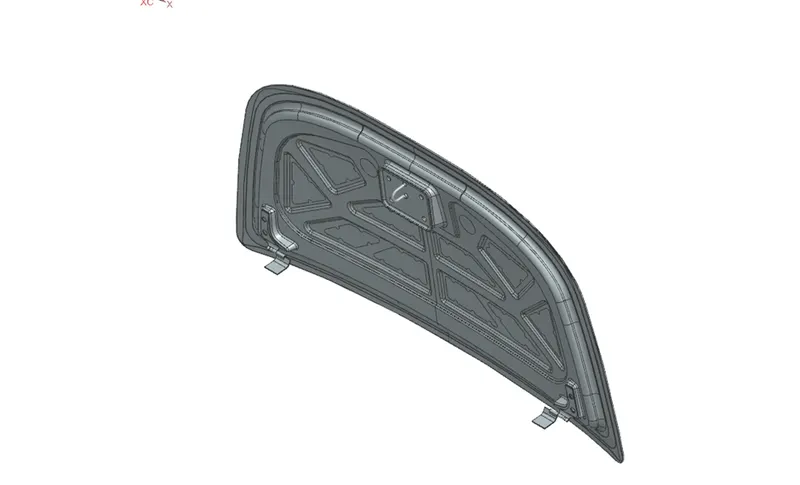
Figure no.13