Hood design-Week 2
Objective :- To design car hood in NX using given master section and provided design parameters.
Introduction
Hood -
The hood (also known as bonnet) is the cover of the engine of vehicle. Hood can open to allow access to the engine compartment for maintenance and repair. While designing the hood, it should meet some specific condition like pedestrian safety,Hood head zone for the lock striker, force distribution when subjected to frontal collision manufacturer etc A typical hood assembly consists of hood outer panel, inner panel, latch and striker,hinge. Hood stay is used for supporting the engine hood of a vehicle in its open position.Commonly two types of hood stay used , support road and gas stay. support road are manually operated and they are cost effective and simple to design whereas gas stay requires no manpower but they are costly.Deep drawing, Hemming, blanking and piercing are the common sheet metal operations that are used in manufacturing hood in automotive industries.
Components :
1) Outer Panel :
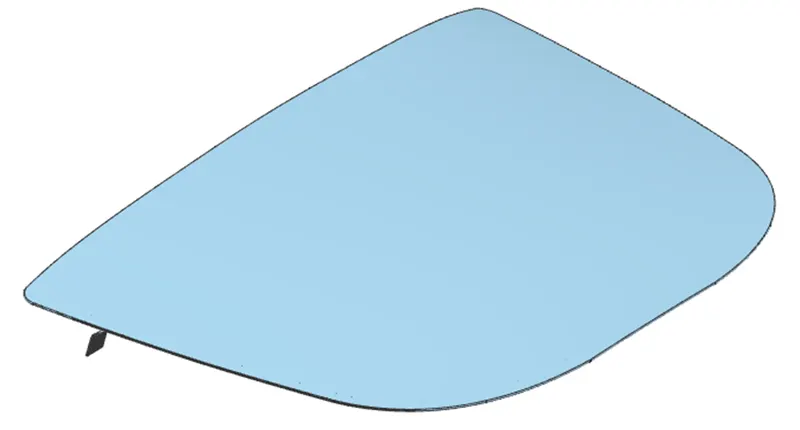
Outer panel are the aesthetic element of a car. It is a styling team who provides the skin for the outer panel. The shape, position and size of the hood should satisfy and safety norms. The outer panel is attached to the internal by hemming. So it is necessary to provide required Hemming flag generally for the Hamming operation. We also provide Mastic sealants between outer panel and the inner panel to reduce vibration.
2) Inner Panel :
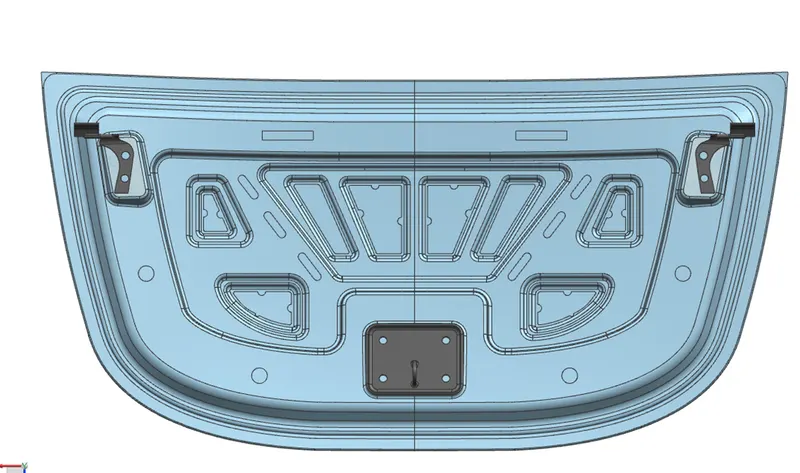
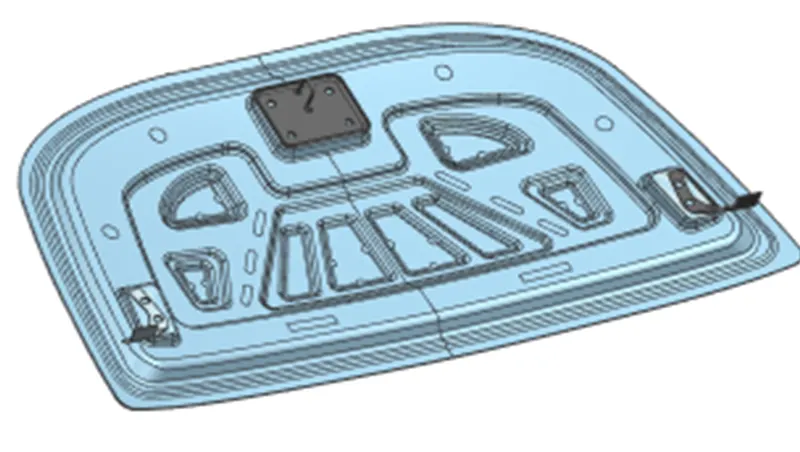
Inner panel provides strength and rigidity to the outer panel. The master section represents the initial shape and size. Then we provide the impose for the latch and hinge element after fixing location.
3) Reinforcement :
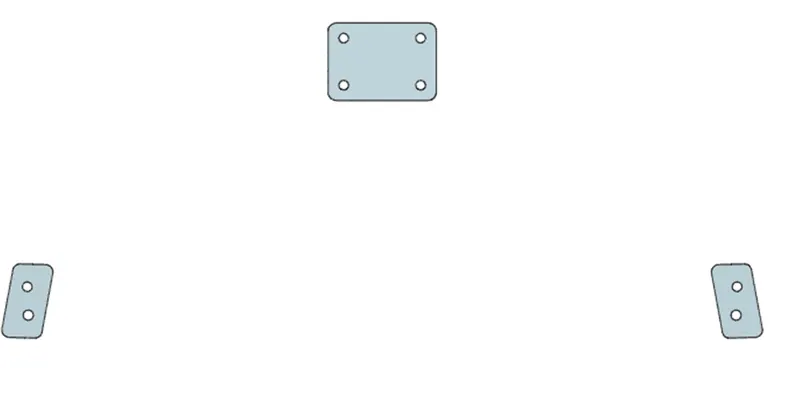
Reinforcement are provided to strengthen the hinge and Latch region. The thickness of the reiforcements will be higher than the inner panel and the value varies according to the cost and requirement. Here 1.5 thickness is given for both hinge and latch reinforcements.
4) Emboss :
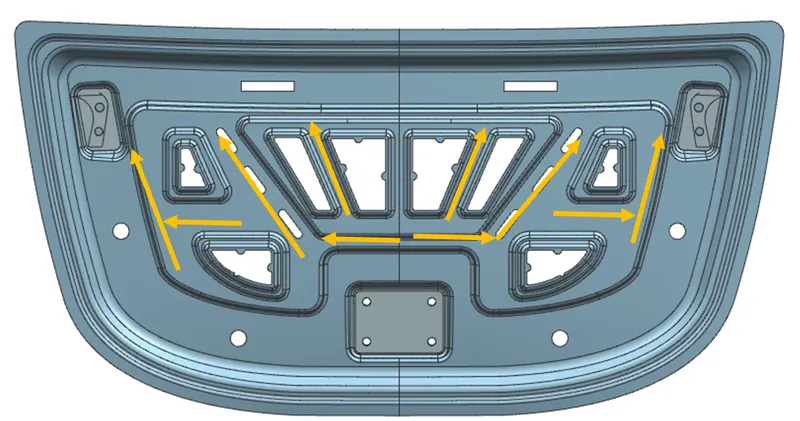
Throughout the inner panel we provide different embosses, by which we increase the stiffness of the inner panel through these imbosses. The shape and size of the embosses also determines the direction of the force distribution during frontal collision. The force should be distributed away from the passengers.
5) Latch Trajectory :
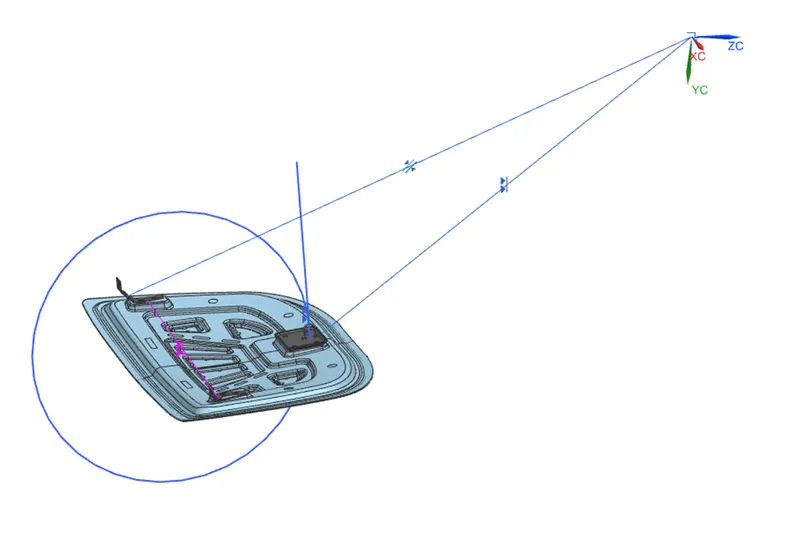
It is very important aspect in hood design, to decide hinge latch installation point. It is the path along which the hood rotates during opening and closing movement. The striker on the hood follow a particular path while opening, closing the hood, which is along circumference of a circle with centre at thr hinge axis.
6) Mastic Sealant:
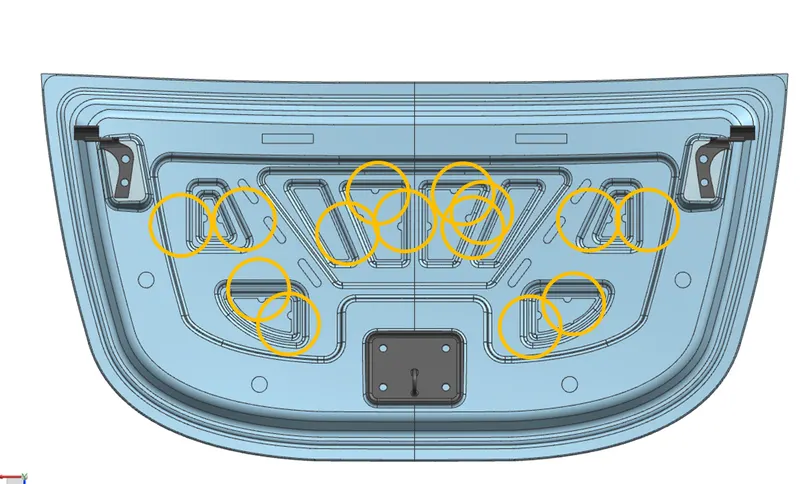
It is generally a hard rubber part, which is introduced as a paste between inner and outer panel of the hood, which will get hardened inside the furnace. Every mastic sealant point will have a tendency to improve the local strength in around 80 mm diameter.
Manufacturing Process :
Deep Drawing -
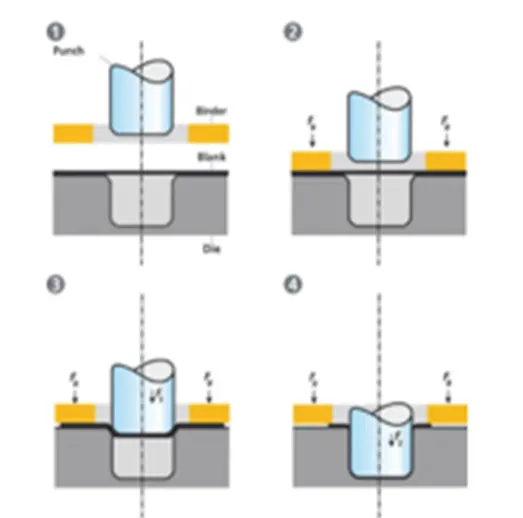
It is sheet metal process in which a sheet metal blanck is radially drawn into a forming die by the mechanical action of a punch. The process is considered deep drawing when the depth of the drawn part exceeds its diameter.
Hemming -
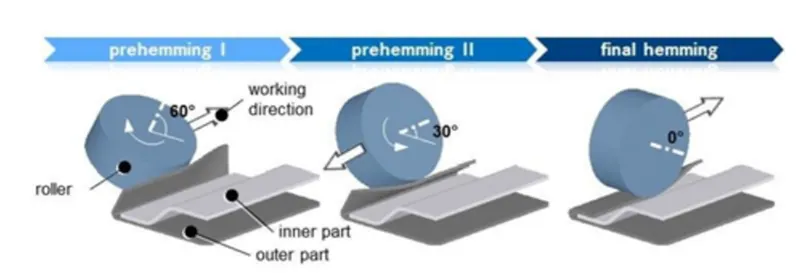
Hemming is a forming operation in which the edges of the sheet are folded over the other part in order to achieve tight fit. In car part production, hemming is used in assembly as a secondary operation after deep drawing, trimming and flanging operation to join two sheet metal together.