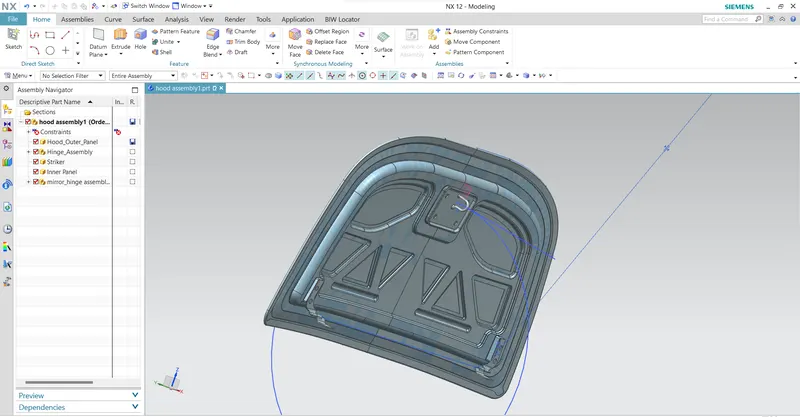
Hood design-Week 2
HOOD
- The hood or bonnet is the hinged cover over the engine of motor vehicles.
- Hoods can open to allow access tho the engine compartment or trunk on rear engine and some mid engine vehicles for maintenance and repair.
- The Hood panel of the vehicle has a form in which an outer panel and an inner panel are connected and has a frame structure for rigidity and durability.
- It is constructed usually by steel sometimes by aluminium in the recent trend like for a sports car performance car it is made up of materials like carbon fibre, fibre glass or stay carbon . Over free decades concerns regarding the severity of a potential pedestrian great injury during collision with a motor vehicle have led to advanced good design on many models.
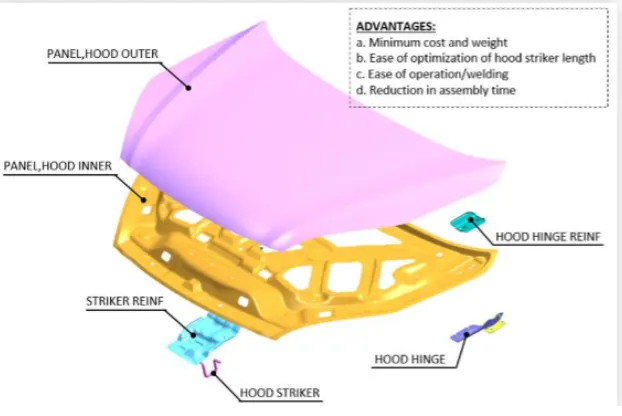
Functional and safety Requirements:
The 1st and most important safety requirement to be considered while designing the hood is the frontal collision requirements.
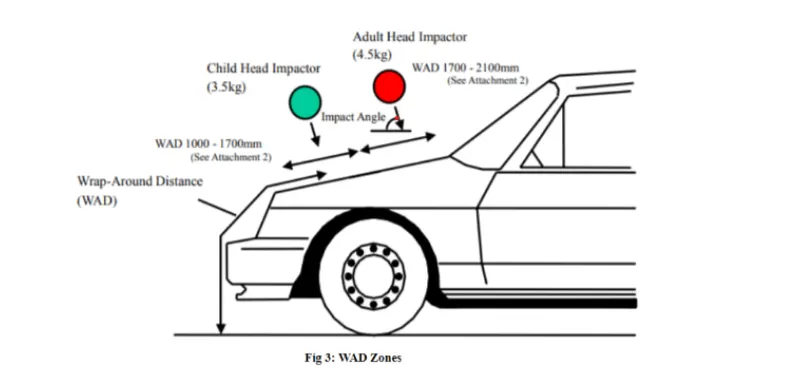
- Regarding the safety of the pedestrians the above image shows the area of impact for a child and an adult .
- it is of ulmost importance that we make sure not to place re_inforcement on the areas is designed with lesser thickness than the adult impact area so that in the event of a frontal collision where a child is involved the bonnet will absorb the impact of the crash and crumble to protect the childs head from absorbing the force.
MANUFACTURING PROCESS:
Deep drawing
- The deep drawing process is a forming process which occurs under a combination of tensile and compressive conditions.
- The flat sheet metal blank is formed into a hollow body open on one side or a hollow body with a smaller cross section .
In the automotive industry , deep drawing is usually carried out using rigid tools.
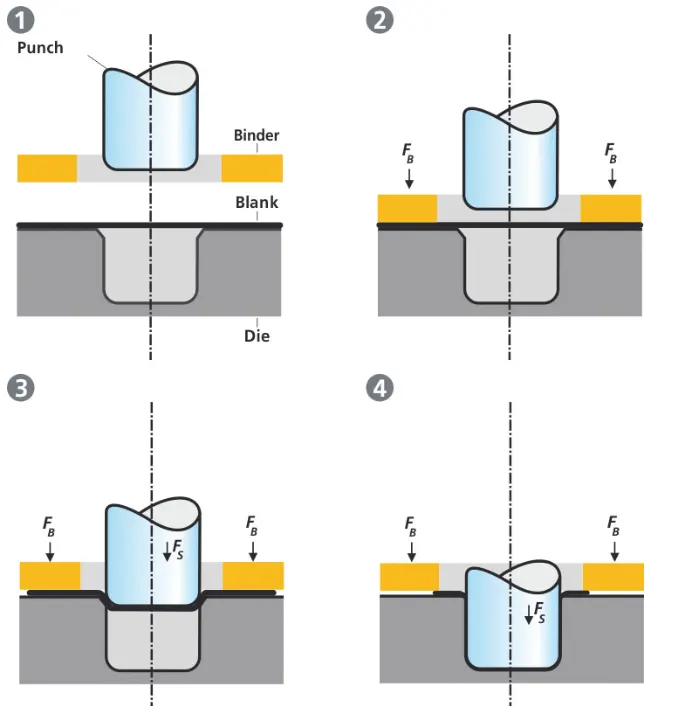
The figure illustrates the deep drawing process. The rigid tools consist of a punch,die,and binder.In the deep drawing the plate holder closes after the metal sheet blank has been inserted.
- Next the sheet is clamped between the die and the binder .This process slows down the flow of the sheet while it is being drawn and thereby prevents wrinkles from forming under the binder . the punch stretches the sheet over the die radius and forms it in the die . The amount of punch force necessary for forming is thereby continually increased up to the lower dead center of the punch.
BENDING:
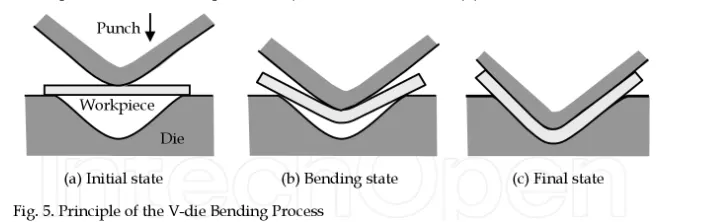
- In the bending , force applied to a sheet metal workpiece to produce a crvature of the surface . Bending is generally used to produce simple curved surafces rather than complex ones. A mechanically operated press drives a punch against sheet metal forcing it into a simple due with enough pressure to produce permanent change in the metal shape.
HEMMING:
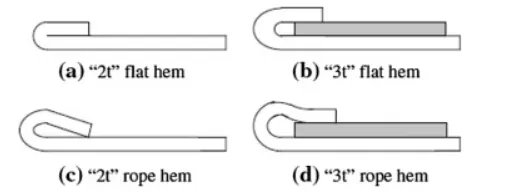
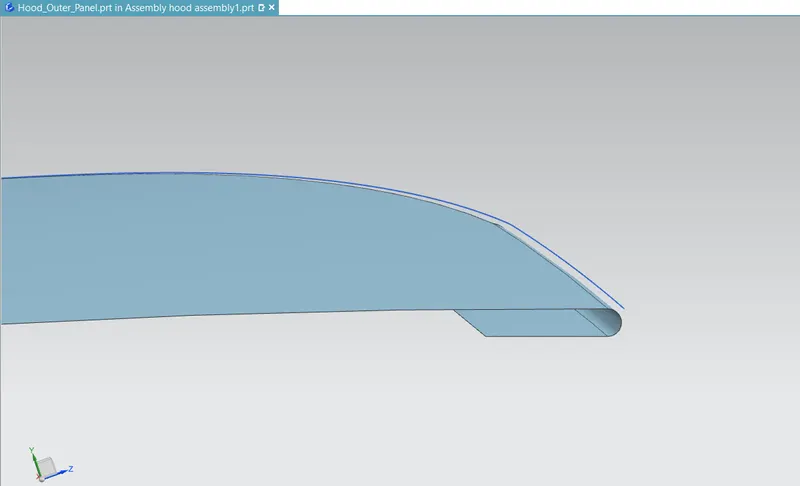
- Hemming is a sheet metal forming process in which sheets are joined by bending it to 180degree.Automotive parts such as deck lids , trunk-lids , hoods and tailgates are formed by hemming process. In this process ,usually a sheet is bent with the help of inner sheet in three stages.
REQUIREMENTS:
Hood Thickness information
Outer panel thickness = 0.75mm
Inner panel thickness = 0.75mm
Reinforcement thickness = 1.5mm
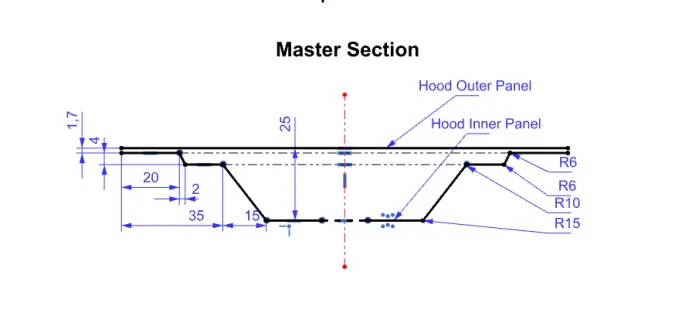
Master section :
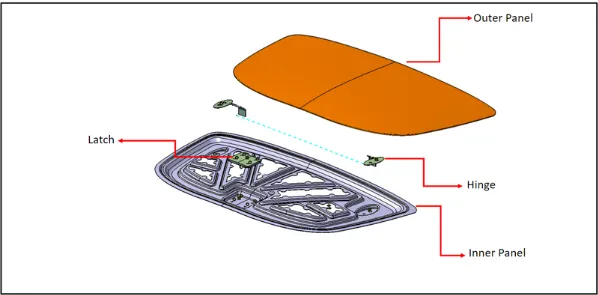
The hood or the bonnet consists of the following parts .
- Hood outer panel
- Hood inner panel
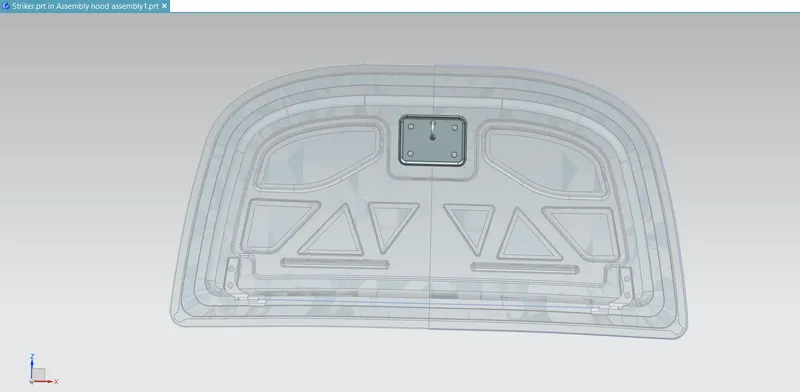
- Latch and striker re-inforcement
- Hinge re-enforcement
- Gas stay re-enforcement
Hood outer panel
- Outer panel provided aesthitic look for hood of car
- Shape and size should be according to safety norms and pedestrian safety.
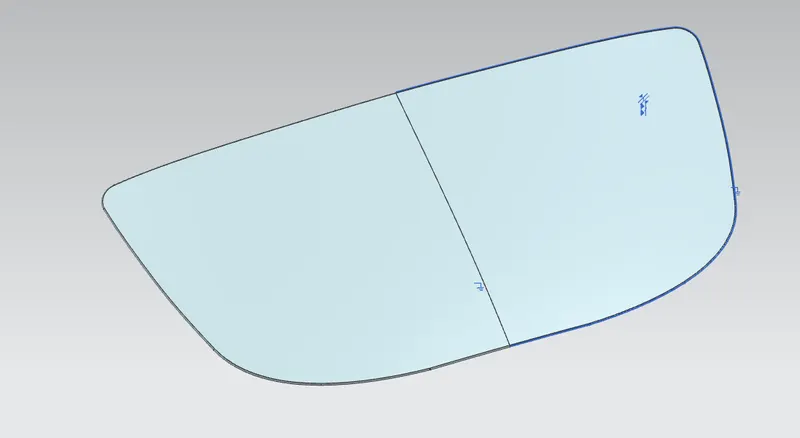
- By hemming process the outer panel is made to attach with inner panel
Hemming:
Hood inner panel
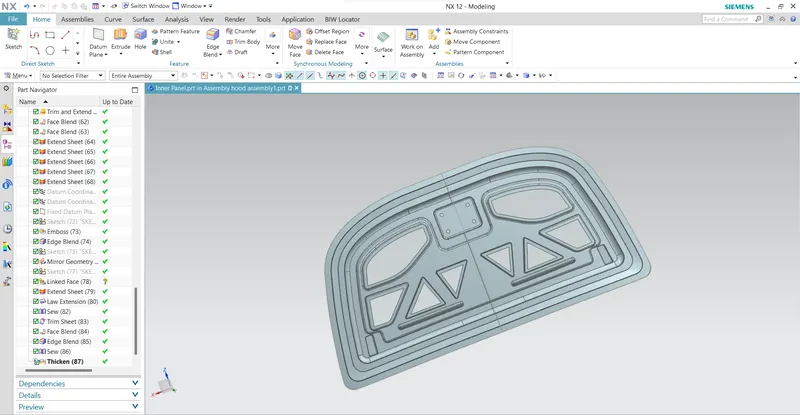
- It provides strength and rigidity to outer panel
- Emboss is done inorder to give strength to the inner panel
- Trim sheet was done on the inner panel to reduce weight and to reduce the impact when car hits the pedestrian.
Latch Trajectory:
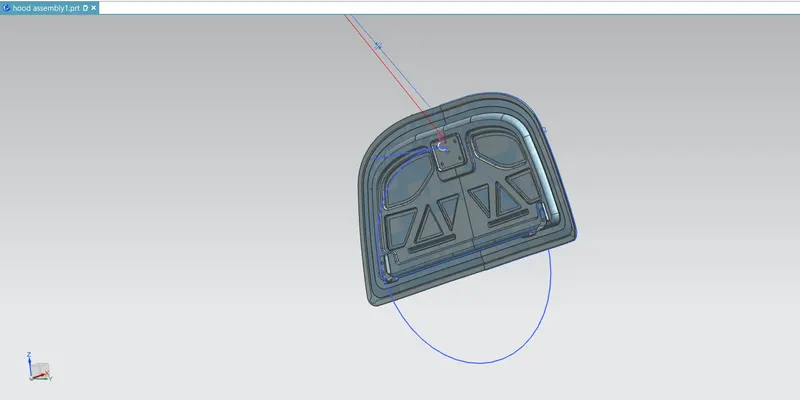
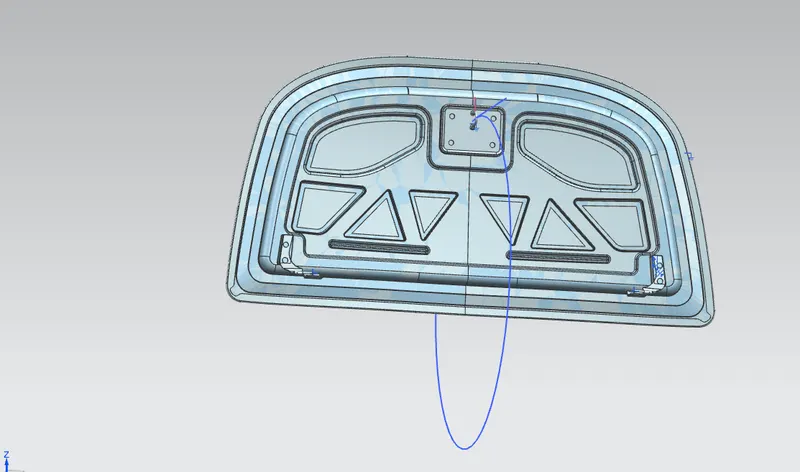
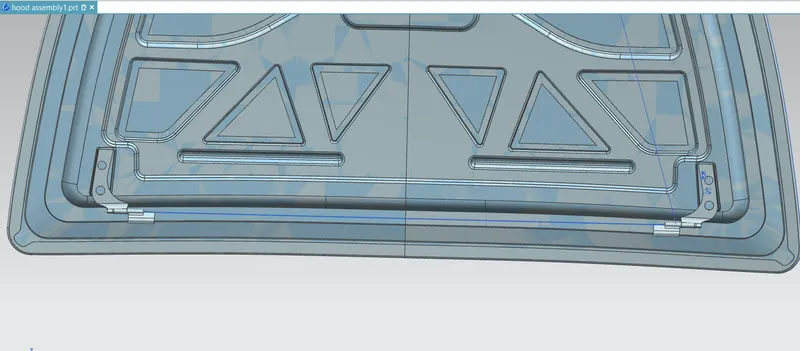
- The other major functional of the hood is the opening and closing of the hood . This is done with the help of the latch and striker. To position the latch and striker effectively , we position the hinge and draw the hinge axis.
- Now using the hinge axis as the center we draw a big circle to the position where we need the latch to be placed . then we draw tangent line to the circle at that point and place the latch in that region.
hood inner panel with latching and striker re-inforcements
HINGE ASSEMBLY:
STRIKER ASSEMBLY:
CONCLUSION:
The hood design comprises of outer panel , inner panel , hinge assembly, striker mechanism. Referring according to the master section various vector are applied on the sheet metal to obtain desired output.