Hood design-Week 2
HOOD
components of hood
- Outer panel
- Inner Panel
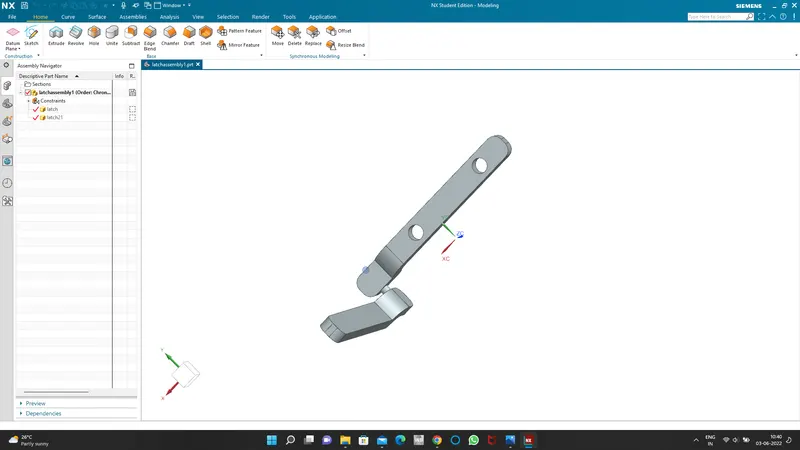
- Latch
- Striker
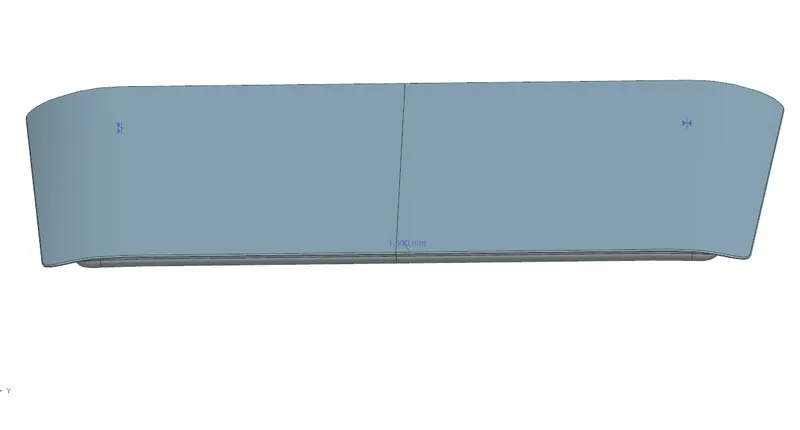
1. outer panel
2. latch and striker trajectory
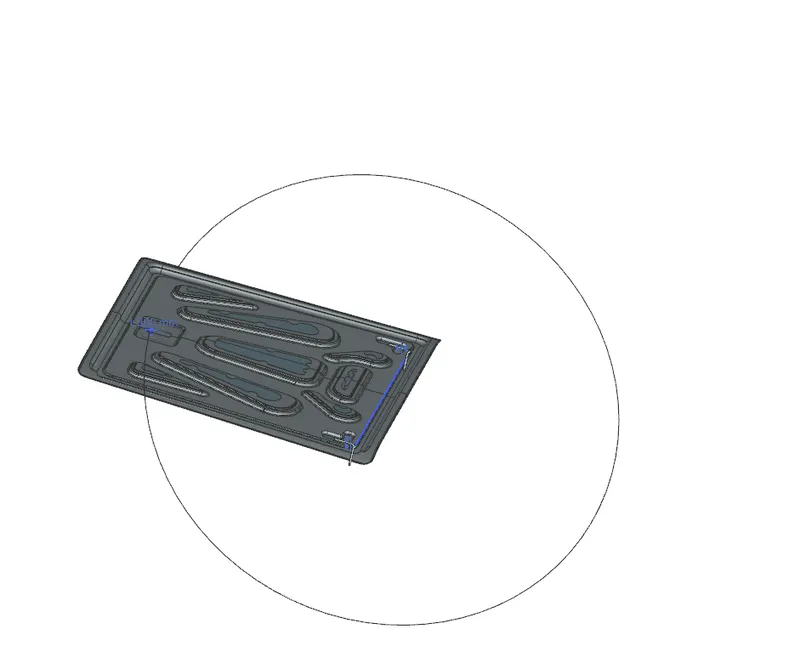
The latch trajectory is the path that the striker will follow when the hood is open/closed while pivoting on the hinge axis. The latch trajectory is taken as a circle with the hinge axis as the center of the circle. The striker is placed 90 degrees such that it is tangent to the circle.
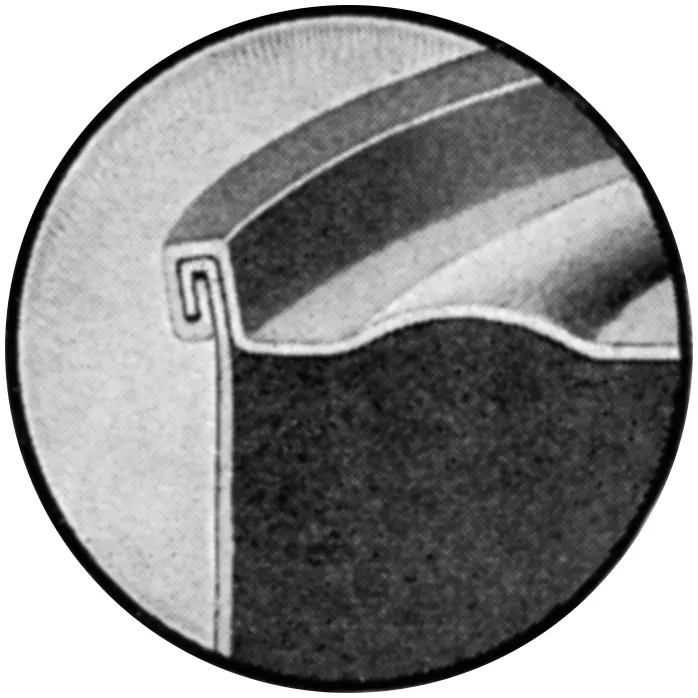
3. Hemming.
Hemming is a sheet metal forming process in which sheets are joined by bending usually to 180°. Automotive body panels and automotive parts such as deck lids, trunk lids, doors, hoods, and tailgates are formed by the hemming process.
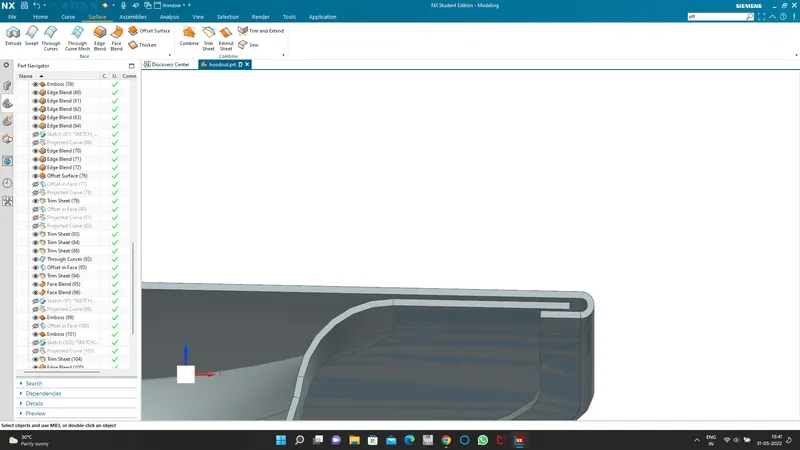
Inner panel thickness=0.75mm
Outer panel thickness=0.75mm
Deep Drawing.
Deep drawing is a sheet metal forming process in which a sheet metal blank is radially drawn into a forming die by the mechanical action of a punch. It is thus a shape transformation process with material retention. The process is considered "deep" drawing when the depth of the drawn part exceeds its diameter.
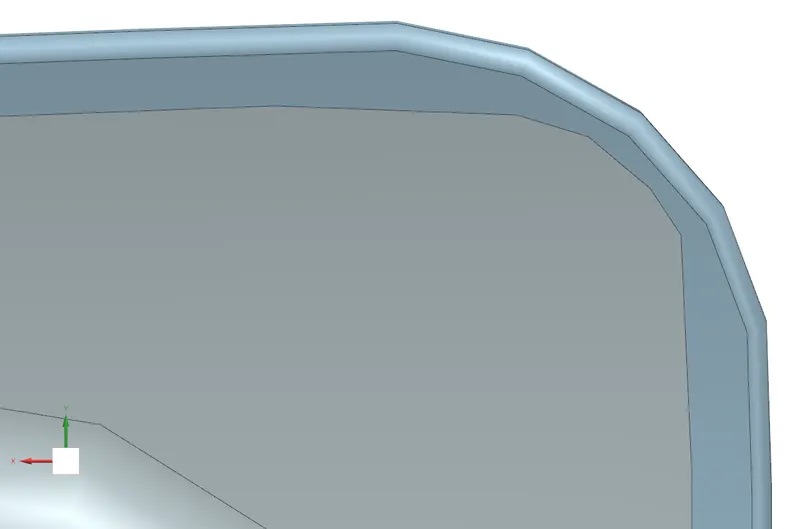
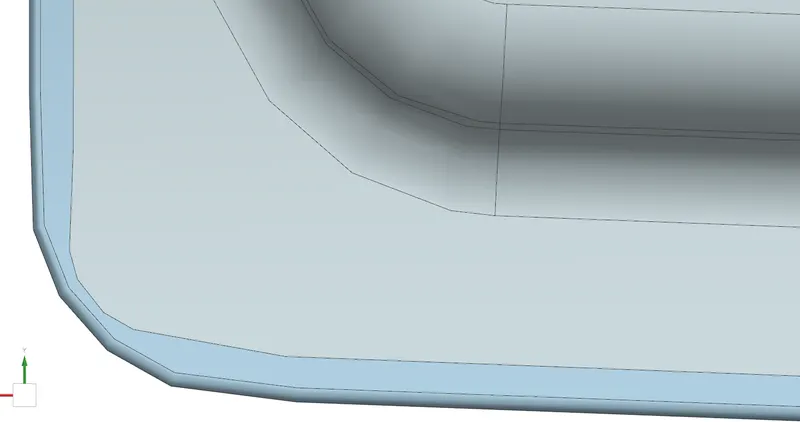
4. Force flow lines
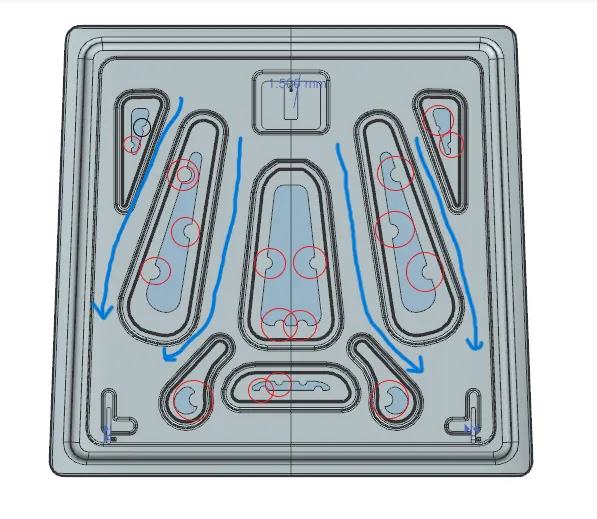
in the figure, we can see that force is directed towards the latch because of the design of the embosses.
Emboss.
Sheet metal embossing is a stamping process for producing raised or sunken designs or relief in sheet metal. This process can be made using matched male and female roller dies, or by passing a sheet or a strip of metal between rolls of the desired pattern.
The metal embossing manufacturing process has these characteristics:
- The ability to form ductile metals.
- Use in medium to high production runs.
- The ability to maintain the same metal thickness before and after embossing.
- The ability to produce unlimited patterns, depending on the roll dies.
- The ability to reproduce the product with no variation.
Embossed metals are used in industry for two reasons: (1) aesthetic, and (2) functional. Aesthetic applications also include appliance panels, building products, elevator panels, garage door panels, automotive trim, metal office furniture, and others.
Functional applications are those in which a performance characteristic is enhanced. This can include a metal product's ability to disperse liquid more effectively, reduce friction and static, increase a metal panel’s stiffness and rigidity, increase a metal surface area for acoustic or heat transfer applications, and improve traction.
Mastic
Mastic is commonly used on construction projects as an adhesive and sealant. It is a popular choice where one surface needs to have adhered to another in a durable bond, or where the area needs to be protected.
5. Latch and striker
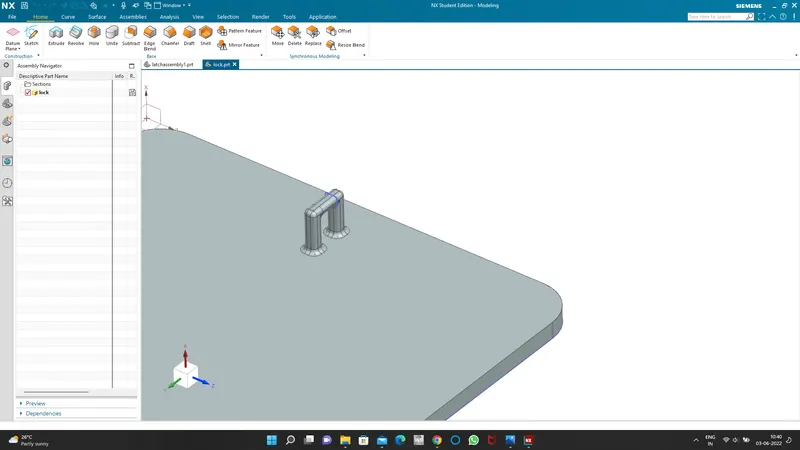
https://drive.google.com/file/d/1KI0BTF_RPZuhAi0G40iBcnfBJ2UzqWnX/view?usp=sharing