Hood design-Week 2
Hood Design - A car hood is a hinged metal cover that rests over the engine of a front-engine vehicle. It protects, covers, and provides access to vehicle parts, such as the engine. Depending on the design of the manufacturer, the hood might be hinged from the front or the rear.
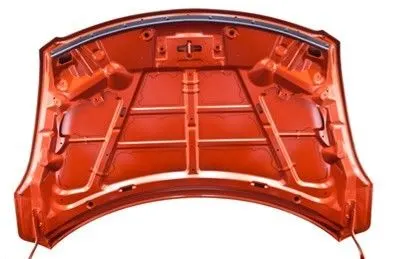
Components – there are several vital components that make up a car hood (bonnet) including:
- Hinges – these are metallic components that allow opening and closing of the hood. The lower end of the hinges is attached to the frame of the car.
- Latch and Striker - hood striker are the U-shaped clips that serve as the anchor for the hood latches. Both latch and sticker are precisely aligned so that the latches catch onto the striker plate when the hood is closed.
- Gas Stay Mounting or Support Rod – either of these components is vital in other to suspend the hood while in the open position. Either the gas stay, or the support rod must be strong enough to support the total weight of the hood without collapsing.
Hood Design Consideration – in the design of the hood, certain factors must be taken into consideration which includes:
- NVH (Noise Vibration and Harshness)
- Gas Stay Mounting
- Latch and Striker point
- Hinge Axis
- Deformable bracket
- Pedestrian ratings
- Euro NCAP regulations
The Opening Angle is also very vital in the design and development of a hood, although the opening angle varies from one region to another.
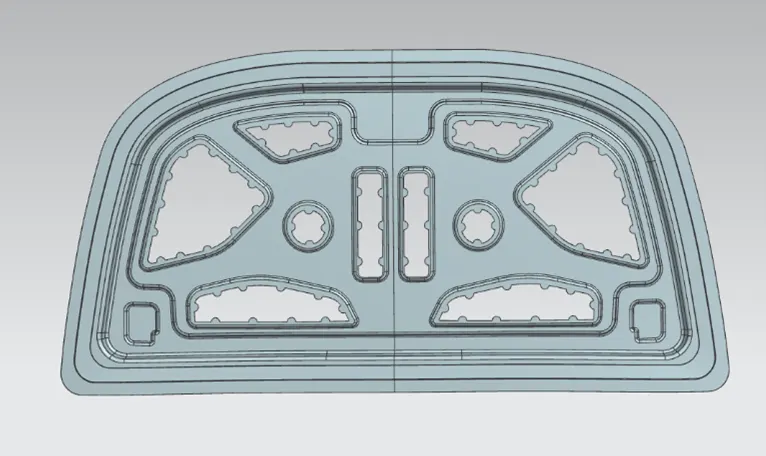
Hood inner Panel Design
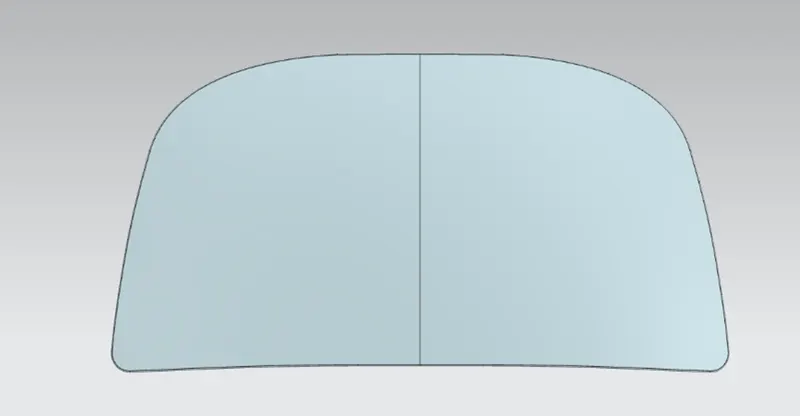
Hood Outer Panel
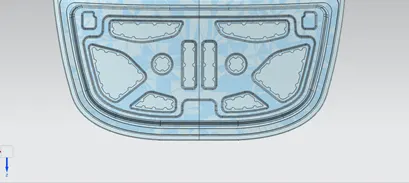
Complete Hood
Materials - Automobile hoods are constructed from steel and sometimes from aluminum. Although aftermarket hoods may be constructed from various other materials, such as carbon fiber, fiberglass.
Latch trajectory – in the process of opening and closing a car hood, the latch must be aligned with the striker point.
Mastic data – mastic seals are placed in between the outer and inner panels of a hood. Since the styling surface of a car hood cannot be spot welded, one of the techniques used to join the inner and outer panel of a hood is by using mastic seals with a diameter of a maximum of 80mm.
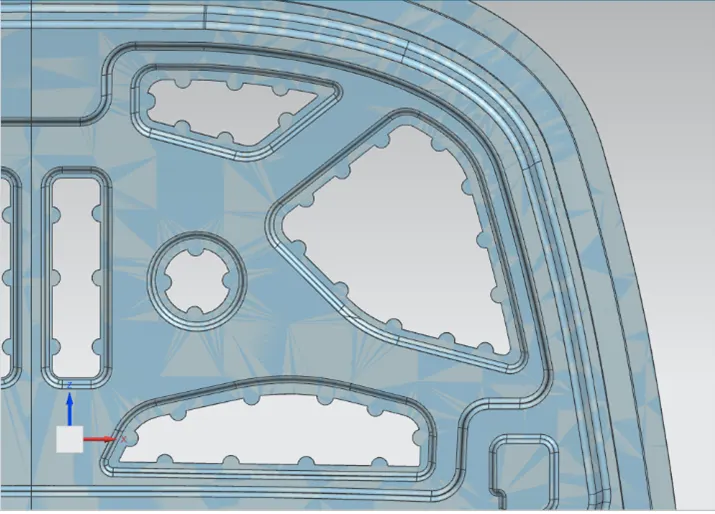
Emboss - An embossed surface reduces the severity of impact to the occupants of an automobile by dissipating collision energy during impact. One of the advantages of embossing a sheet metal is to reduce collision energy during impact.
Manufacturing Processes
- Deep drawing - Through the mechanical action of a punch, deep drawing is a sheet metal forming process that involves radially drawing a sheet metal blank into a forming die.
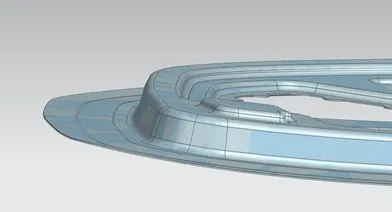
- Hemming - Hemming is a sheet metal forming process in which sheets are joined by bending it usually to 180°. Automotive parts such as hood, trunk-lids, doors, are joined by the hemming process. Hemming is most times used to improve appearance.
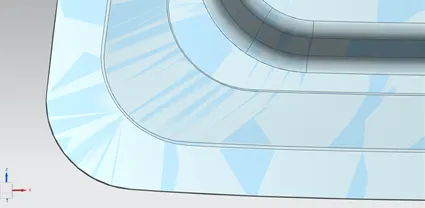
During the hemming process especially at corners, there are always relax zones. These zones are not completely closed like other edges. The relax zones are the solutions to cater for the spring-back effect that might occur during hemming.
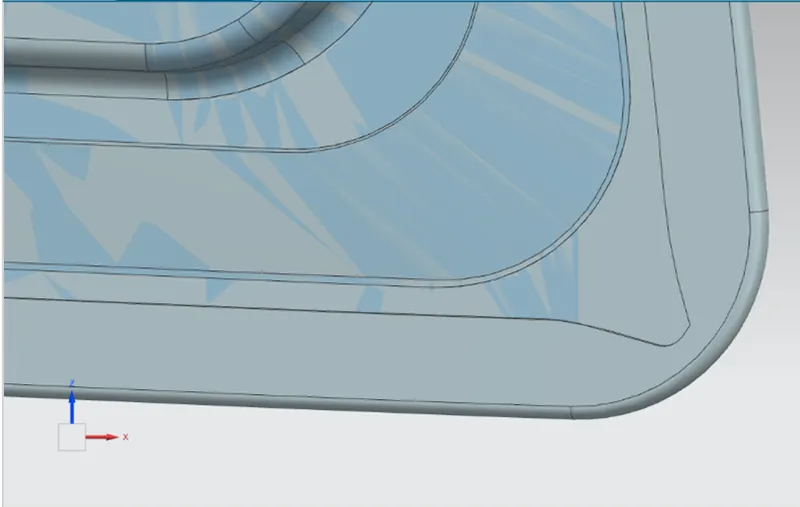
Parameters followed in the design
- Inner panel thickness – 0.75 mm
- Outer panel thickness – 0.75 mm
- Reinforcement thickness – 1.75 mm
Draft Analysis – drafting is important in sheet metal design in other to reduce the rate of wear of stamping tools. A standard of a maximum 7 degrees limit angle is required. Draft analysis is performed on the inner panel of the hood design. The draft analysis is to ensure the inner panel is fully constrained and does not have any negative draft.
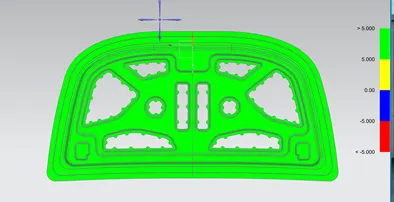
Upon the completion of the draft analysis, regions showing green coloration and perfect while regions displaying yellow coloration might be accepted. However, regions displaying blue and red coloration are not acceptable. Negative drafts are common in regions where embosses are given.