Hood design-Week 2
DESIGNING THE HOOD:
The hood is a aesthetically pleasing aerodynamic part which is used to cover the engine compartment of a car. It consists of a inner panel with the emboss and reinforcements including the hinges and the latch which would be attached to the outer panel by the process of hemming rather than riveting or spot welding which would spoil the aesthetics of the car.
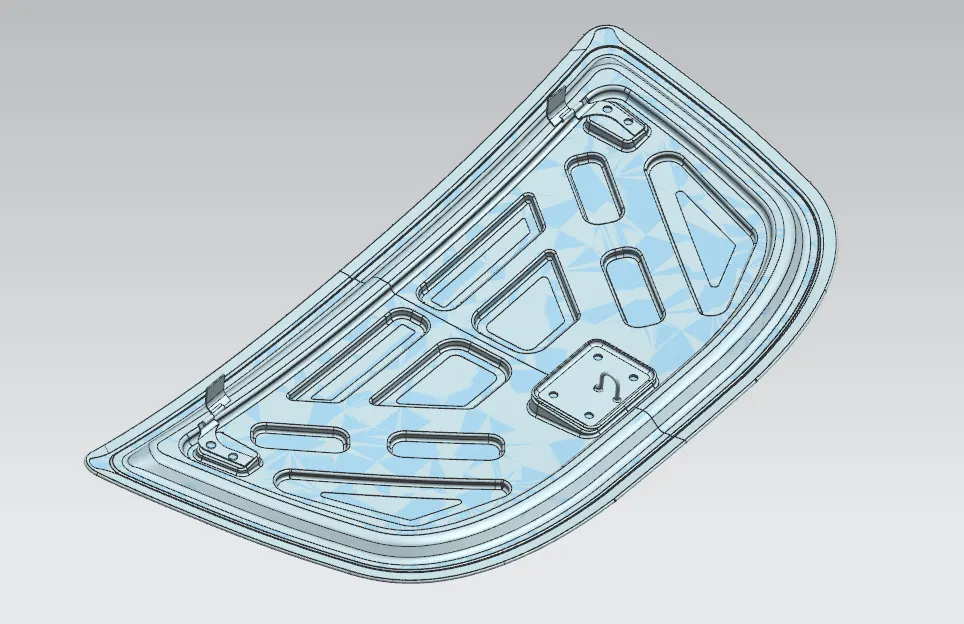
COMPONENTS OF HOOD:
- Outer panel.
- Inner panel.
- Hinge reinforcements.
- latch-Striker reinforcement.
- stiffner pad.
- Gas stay reinforcement. (typical)
DESIGN PROCESS:
- The skin data is accquried from the designing team.
- The inner panel is designed with considerations
- The emboss are made in y fashion.
- The panel are given necessary reinforcements.
- The section modulus is calculated and the process is iterated for improvization.
DESIGN CONSIDERATIONS:
- LATCH-STRIKER TRAJECTORY: A circle is drawn at the bisector of the line drawn to connect the hinges. The circle serves to be the path of movement of the latch which hits the striker.
- DIRECTION OF EMBOSS: The emboss is given in direction dissipating the force toward the hinges.
- HEAD IMPACT ZONE: These are the zones considered where the adult and child pedestrians gets an impact during the collision, these areas are concentrated to be designed soft withount any reinforcements.
- OPENING ANGLE: As per the automotive market the average height of the man is considered to determine the opening angle of the hood.
TEST CONDUCTED:
The basic and foremost test conducted is frontal crash analysis, frontal offset crash analysis. Where the load case is set to the front. The crash is conducted and the protrusion and the impact are computed. The crash happens at a spped range of 40mph.
FMVSS219: It states that nothing enters beyond the windshield into the passenger compartment during a collision.
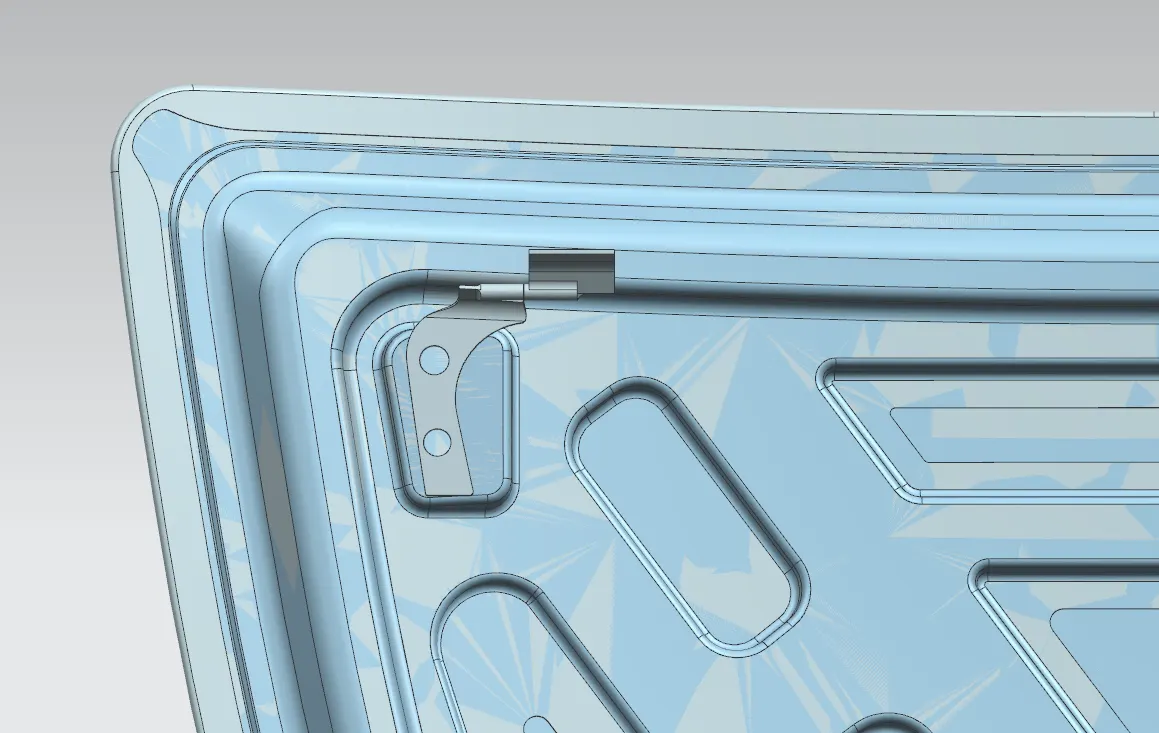
There is a type of hinge which has the four bar linkage. In which during the collision the roof crushes in the z direction avoiding the protrusion into the passenger compartment.
EMBOSS DEFINITION:
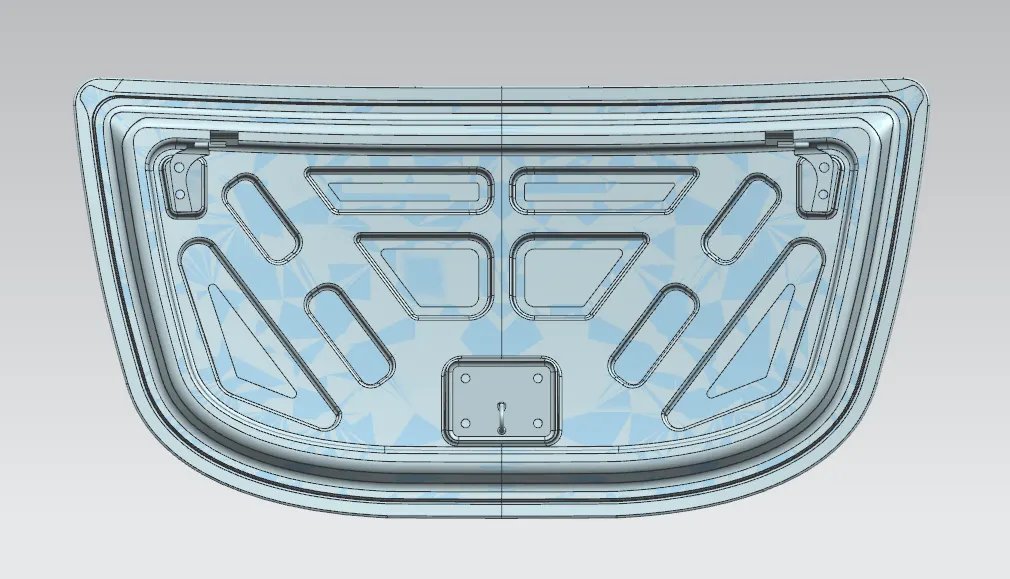
There is no specific criteria to design the emboss. The emboss is made like 'X' or 'Y' in order to dissipate the forces away from the passenger compartment during a collision. The emboss is usually produced where the die is made as per the desired shape of the emboss and it is stamped against the sheet to form the emboss.
The cut outs made in emboss also does a vital role in reducing the effective weight of the hood as well as contrubuting a little towards the material cost.
SPECIAL JOINING PROCESS:
MASTIC:
A mastic sealant is a type of sealant which is introduced into the clearance region between the inner and outer panel and designated spots which seals the panel togeather inroder to avoid squeaks and noises due to vibration during the commute.The mastics are generally 80mm wide and 5 mm thick which, is placed in between the panel under heat melts and binds togeather.
HEMMING:
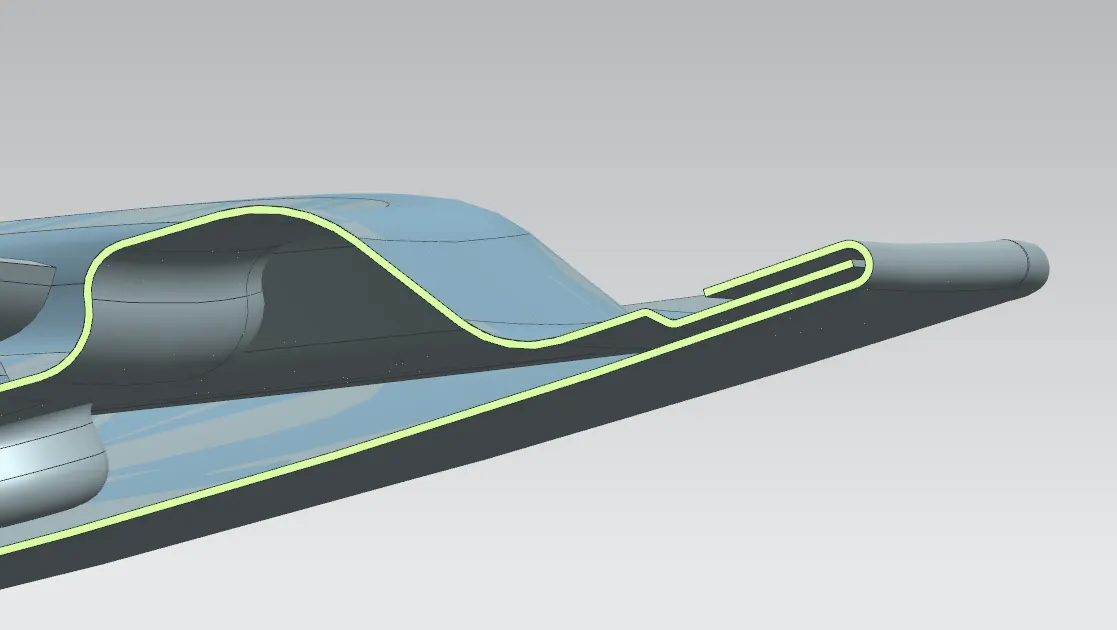
Since, the hood is the aesthetic part. The inner and outer panel are joined togeather by process of hemming. The Hem is shown in the above figure. The hood is housed in a fixtures and rollers are made to pass in a specific orientation to achieve the hem.
The picture above depicts the hem which is done to get the inner panel and outer panel togeather. The inner and outer panels is designed with a thickness of 0.75mm with a minimal clearance. The releif is given at the corners of the hood inorder for the ease of rollers to roll over and achieve the perfection in the process of hemming.