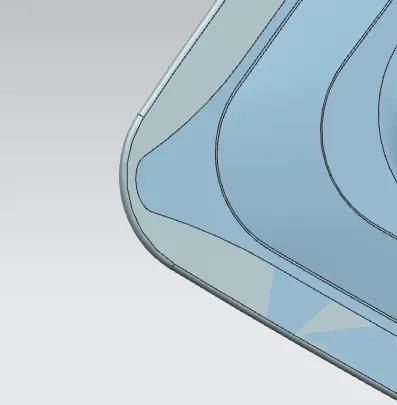
Hood design-Week 2
1: HOOD
The hood or bonnet is the hinged cover over the engine of motor vehicles. Hoods can open to allow access to the engine compartment, or trunk on rear-engine and some mid-engine vehicles) for maintenance and repair
On front-engined cars, the hood may be hinged at either the front or the rear edge, or in earlier models it may be split into two sections, one each side, each hinged along the centre line. A further variant combines the bonnet and wheelarches into one section and allows the entire front bodywork to tilt forwards around a pivot near the front of the vehicle
latch trajectory
Latch Trajectory is the path on which is followed by the Hood during its opening and closing. Here the Circle represents the trajectory. The Line drawn represents the Hinge Axis about which the Hood will open and close. The tangent line created is to ensure that the latch on the stricker is tangent to the trajectory circle.
MASTIC DATA
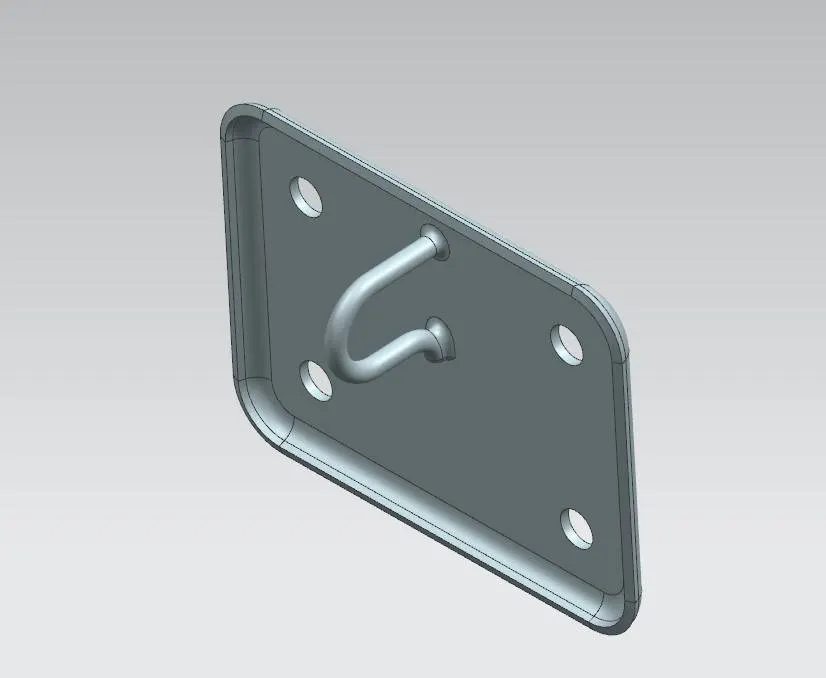
The Mastic sealant or the Mastic point is an elastic compound that behaves like a rubber. The mastic points are defined on the hood inner panel where the hood can easily deform. They help the hood outer panel to come back to its original shape after it gets deformed. The mastic has an influence area of 80mm.
Emboss definitions
The embosses in the inner panel are made according to the diversion of the load path. The emboss depth is kept at a maximum of 5mm to be on the safer side so that the part is manufacturable.
HEMMING
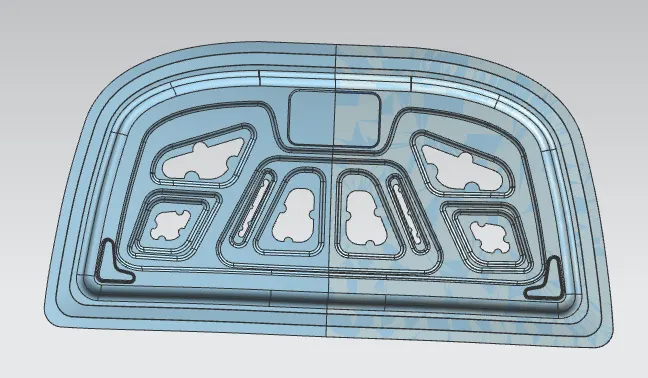
hemming is the process of connecting both the surface of the outer pannel and the inner pannel .this process used to hold the inner pannel bu covering it by the outer pannel
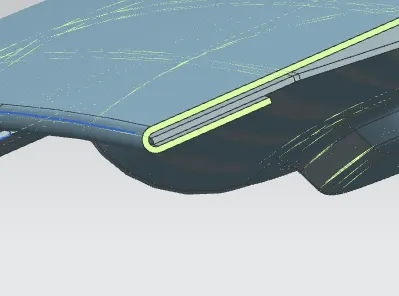
After the hemming process is done, now we need to provide corner relief on the corners of the hood so that the part is manufactural.