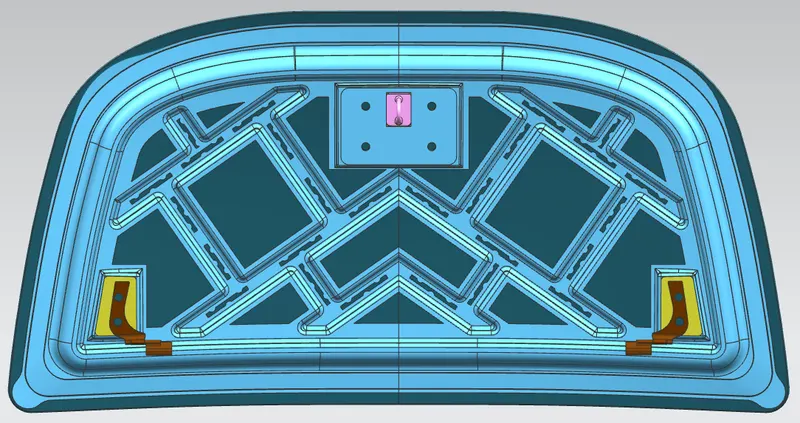
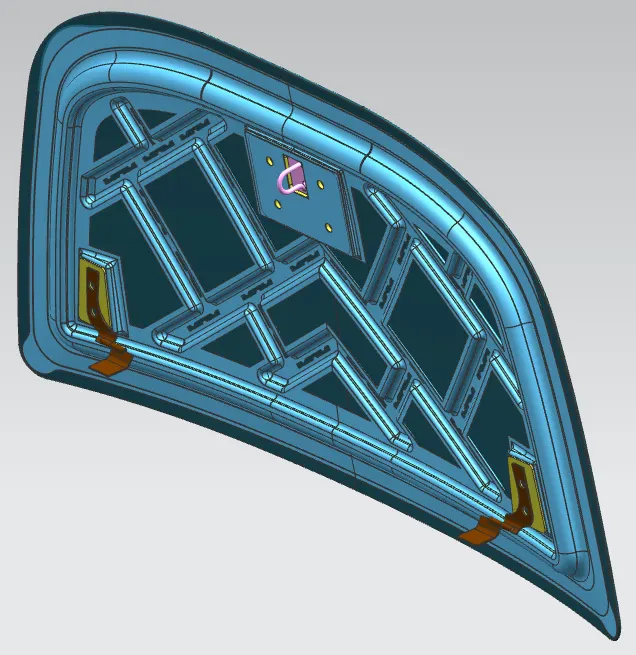
Hood design-Week 2
VEHICLE HOOD DESIGN
HOOD INTRODUCTION:
This is front main part to cover the engine assy. location.
It will operate by automatic or manual to check, if any issue occurs in the parts available below the hood design.
It will reduce the damage to the assy. available below the hood assy. from top side.
This will be available by considering the pedestrian safety and the passenger safety available in the vehicle if accident occurs.
As per international standard for opening and closing the hood will be available by country wise tall and short people.
HOOD ASSY. PARTS:
It consists of Outer panel, inner panel, striker, Hinge assy., reinforcement, Foams.
HOOD ASSY. PROCESS:
Blanking, Cutting, Pressing (Deep draw & Embossing), Mastic glue, Hemming & Assembling.
TYPES OF HOOD SUPPORT & USAGE:
As per regular assy. there are two types of supports are available one is gas stay and another is support rod.
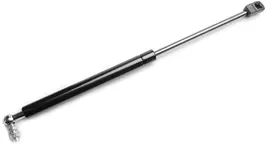
Gas Stay: It will automatically open with available piston cylinder operation by giving little pressure manually. Image is pasted below FYR.
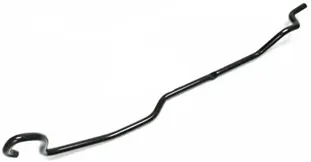
Support Rod: It is fully manual operating by hand and it will fix at the fixed location by using this support rod as per international standard. Image is pasted below FYR.
OBJECTIVE:
To design of hood assy. by using input given by customer and assembling the parts available in the hood assy.
EXPLANATION:
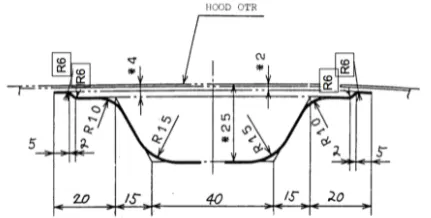
We need to design the hood by using Design parameters given by customer with the help of master section, to do some pressing operation and assembling the small sub parts
- DESIGN PARAMETERS:
Outer panel thickness = 0.75mm
Inner panel thickness = 0.75mm
Reinforcement thickness = 2mm
- MASTER SECTION:
- OUTER PANNEL:
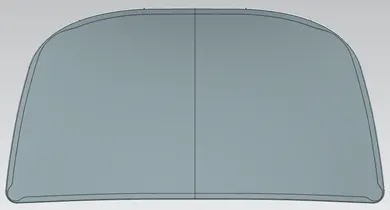
It is an outer cover to the hood assy. and having high surface finish to give aesthetic look.
It will be available above the inner panel and fix by Mastic glue & Hemming process.
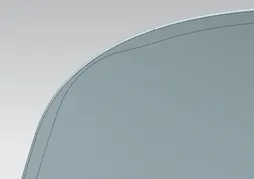
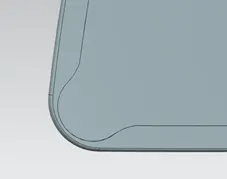
- FRONT & REAR RELIEF FOR OUTER PANNEL:
Edge relief is planning in the outer panel for proper hemming at the radius edges.
- INNER PANNEL:
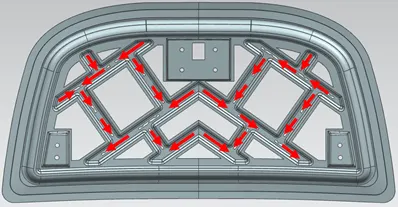
It is a component available below the outer panel and having the guide ways to distribute the Crash force towards the hinge location.
It will be available below the outer panel and fix by Mastic glue & Hemming process.
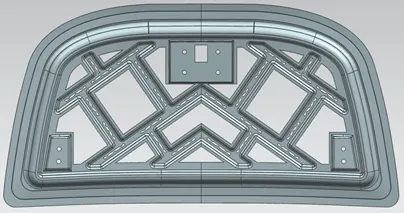
- EMBOSS:
By using this process, we can project the surface parallel to original surface to reduce the weight of the component, to distribute the crash load by giving cavity towards outside.
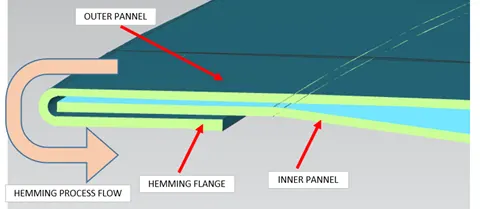
- HEMMING:
Hemming is the process going to be done in sheet metal part to avoid accident at corner edges, to increase the strength, to lock the mating part by types of hemming process and to give smooth edges.
It can be done in the lesser thickness plates and this process can be done by using press brake machine.
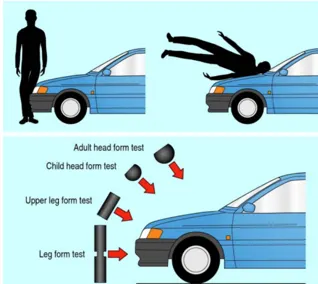
- WARP AROUND DISTANCE (WAD):
While we on driving a vehicle if we hit the pedestrian how the pedestrian will face a issue and how the pedestrian will warp around the vehicle by child wise or adult wise is know as warp around distance.
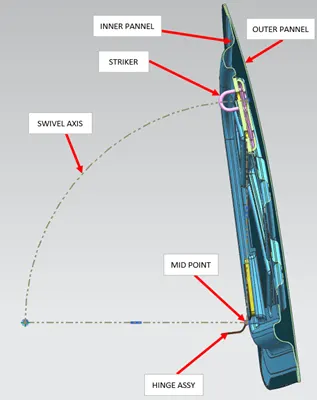
- SWIVEL ANALYSIS:
Operating the bonnet by using hinge assy. axis how the bonnet will lock by using striker is called as swivel analysis.
This has to be done as per international standard, bonnet length as per vehicle design, swivel angle and lock position.
- MASTIC GLUE POINTS:
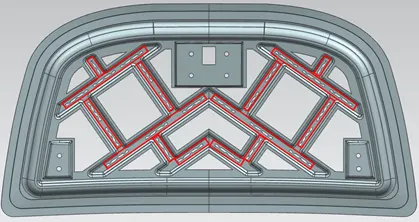
Mastic points is the location where we are going to apply the glue in between outer panel and inner panel except all around corner location.
The gap has to be maintain between panels for gluing is 4mm to 5mm only and the gluing dia is 80mm.
It is process we doing to avoid spot welding and weld impression.
- DRAFT ANALYSIS:
Draft analysis is the main important topic which we need to check the draft of the press component that can be easily taken out from the press machine.
12. ASSY PARTS:
A) REINFORCEMENT:
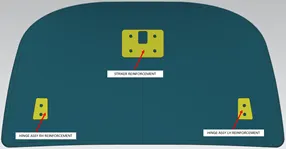
By making cutout in the hood assy. the strength will loss, so that we are need to provide this reinforcement under the hinge and striker.
B) HINGE ASSY.:
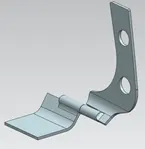
This will help to swivel the bonnet by using fixed axis having concentricity with LH & RH hinge assy.
C) STRIKER:
This is the units which is help to lock the bonnet with the structure lock assy.
CONCLUSION:
As per instruction and knowledge the hood assy. has been created with some standard procedure and input.
SNAP: