Hood design-Week 2
Hood Design
INTRODUCTION:-
- For any inner section there is have outer section , we called it as cover or shield or protection for the inner section.
- For example inner section in our body consists of nerves, muscles ,heart ,bones etc, this inner section was covered with skin is called as outer section or acts a protection layer for inner things.
- The same concept was applicable to mechanical components of an vehicle, however, without outer panel the inner section of an vehicle doesn't mean anything.
- In a vehicle there are various inner sections where should cover by outer panel, like side doors, back door, front door and overall of body of the car.
Here i would like explain in detail importance of front door also called as a FRONT HOOD OR BONNET.
The hood is the hinged cover over the engine of motor vehicles that allows access to the engine compartment.
The hood consists of two panels :-
1) OUTER PANEL :- Outer section or body looks like smooth surface in design allowing enhancing the performance of an car.
2) INNER PANNEL :- This panel we also called it as a fixture for the outer panel which acts as a strengthen to the outer panel.
- In order to improve the vehicle performance, the overall weight of the car should be reduced but, there is no compromise in safety features.
- So while designing any outerpanel of an car it should not only acts a cover,also have to act as guard for the inner passengers as well as pedestrians.
- Due to complexity in design of an car , higher thickness material cant able to form to required complex shape due to elasticity and springback effect of an material and also higher the thickness there is more weight on the body results in reduction in performance of an car.
- In order to overcome from this problem, the concept came into picture called as FIXTURE or BIW FIXTURE(BODY IN WHITE).
SO, here the fixture acts as a inner panel for the outerpanel, the fixture design in such away that have the following functios.
1)Its acts a engine unit protector from environmental issues.
2)Have to protect the passengers as well as pedestrians from frontal crash.
3)Should have less weight in order to improve the performance of an vehicle.
4)Finally should pass the NCAP crash test.
Based on above points my hood was designed as per the below mention parameters.
- Outer panel thickness:-0.75mm
- Inner panel thickness:-0.75mm
- Reinforcement thickness:-1.5mm
- MASTER SKETCH:-
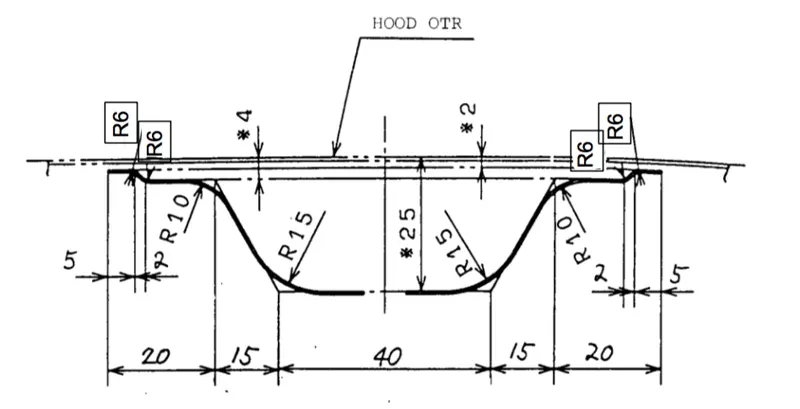
The main operations were carried out during the design of hood was
1)Offset curve on face:- In this operation the curve is created with reference to edge of the surface .
2)Trim sheet:- Unwanted material was removed with reference object curve projected on the surface.
3)Through curves:- Its an command used to create surface between two surfaces with reference to edge of an two sufaces.
4)Law of extension:- Its an command used to create surface with reference to curve projected on the surface.
5)Trim and extend:- This command used to create surface between two parts and eliminating unwanted material.
6)sew:- This command used to form unite body .
7)Hemming:- Its an operation to blend the flange wrap around the surface results to enhance the stiffness of the material.
8)Thicken:- Its an command used to thicken the surface .
9)Assembly constarints:- This command used to assemble the various parts on the body.
The components include in the hood was
- Designing of Hood :-
Hood is the importent part of the BIW components. A hood provides protection and easy access to engine, battery etc. The hood hood consist of two pannels hood outer pannel and hood inner pannel. The hood outer pannel is for the styling factor for the car, no mechnical feature like dent, welding ect. The hood inner pannel design is to to provide strength, rigidity and when crash happens the impact force will be dispersed evenly all over the hood.
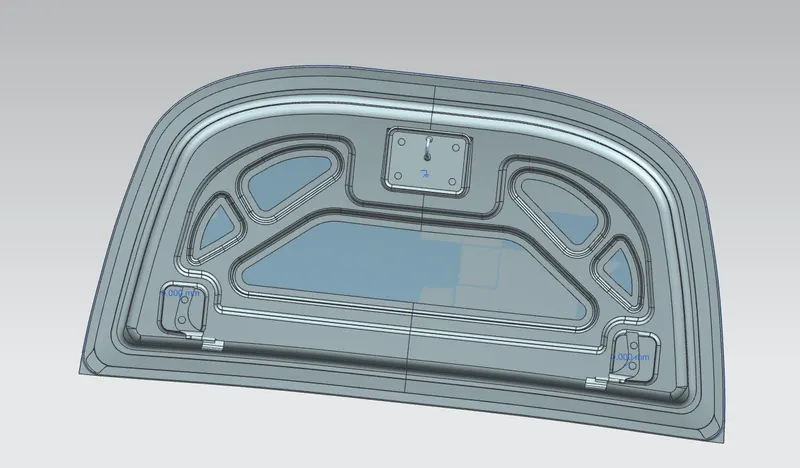
- Latch trajectory:-
This is the part of the hood have a trajectory or hook type design used to lock or unlock from the vehicle engine compartment.
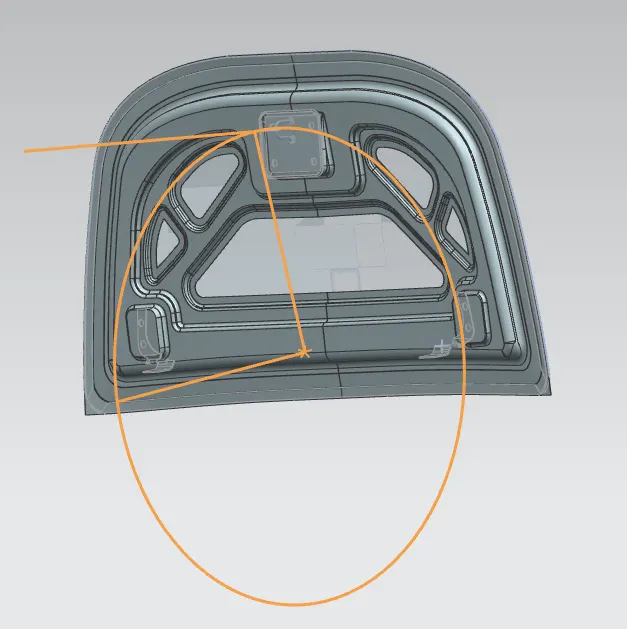
- Hinge assembly:-
This hinge was placed on the hood to give rollover action to tilt up or tilt down the hood.
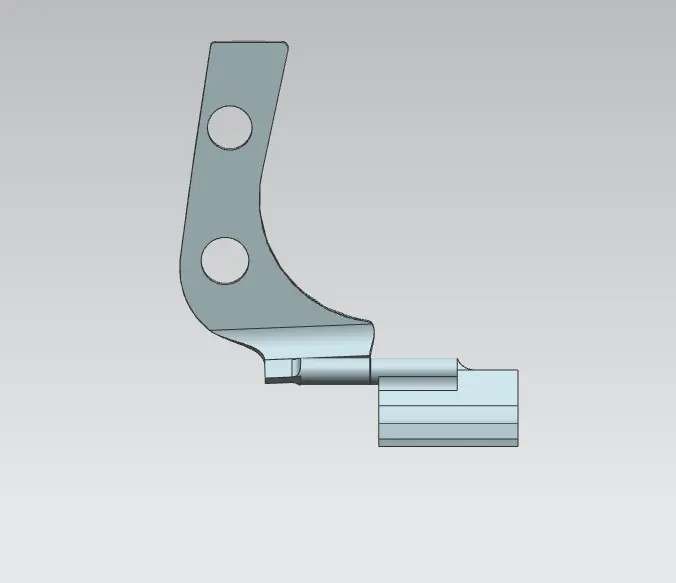
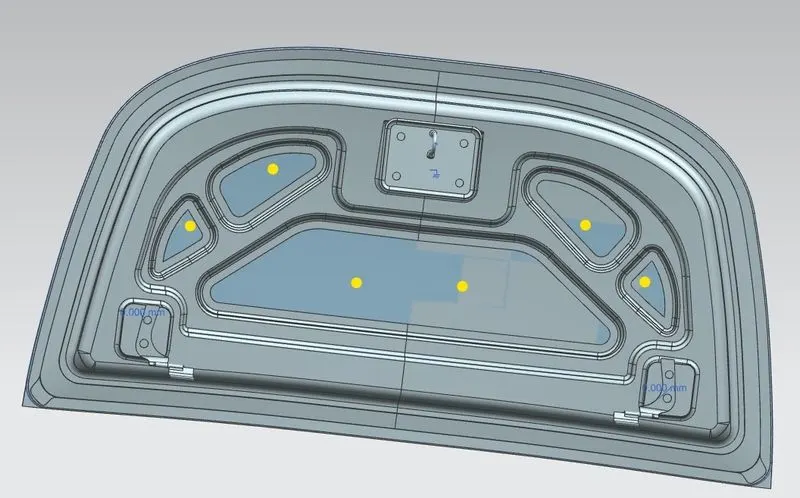
- Mastic Area :-
This will stick both the outer pannel and the inner pannel with gap distance of 5mm, the positioning of the sealent should be in a proper for strengthening purpose.
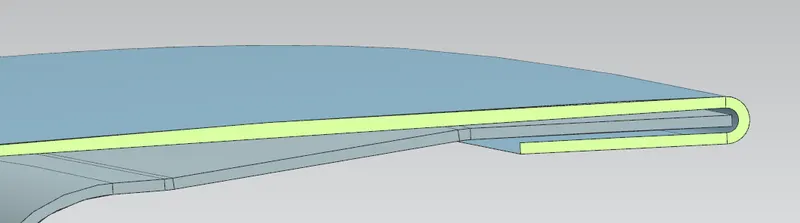
- Hemming :-
Hemming is a folding operation where the edges of the sheet metal is folded over oneother in order to achive a tight fit. It gives a smooth corner and improve the appearance of the part.
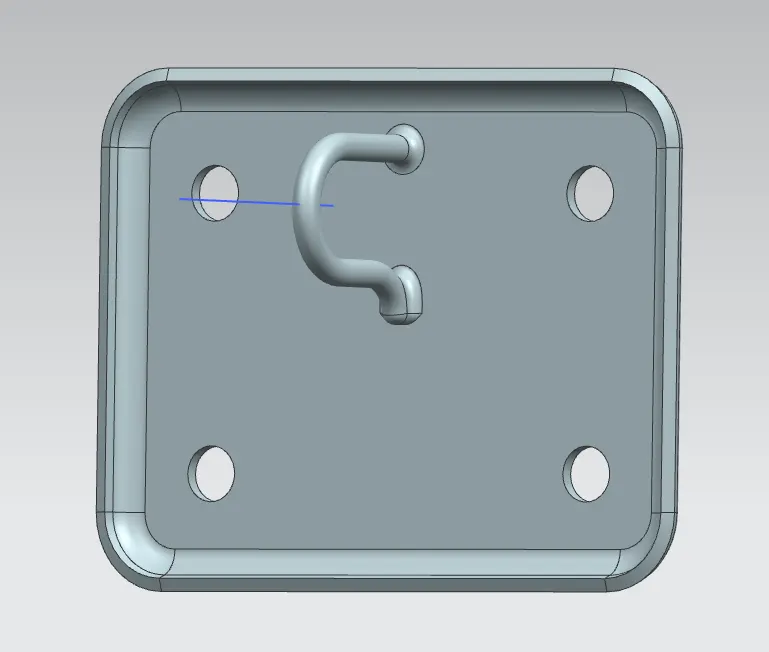
- STRIKER ASSEMBLY :-
The door striker plates are installed in the door jambs, and precisely aligned with the door latches so that the latches catch onto the striker plate when the doors are closed. The door striker plate is made of hardened steel to resist wear as it is subjected to constant contact with the door latch.
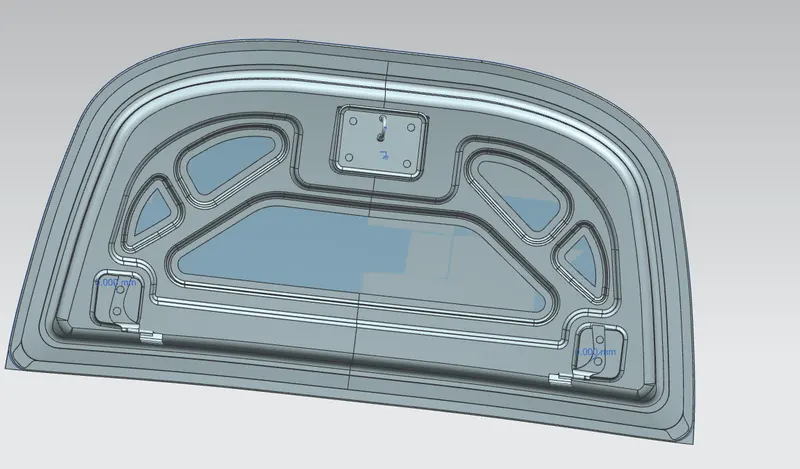
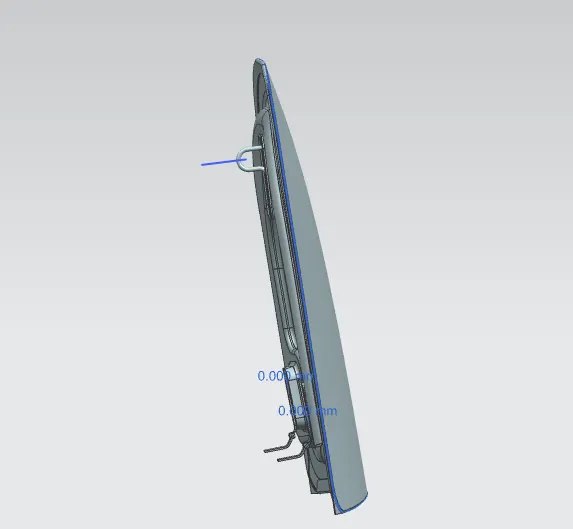
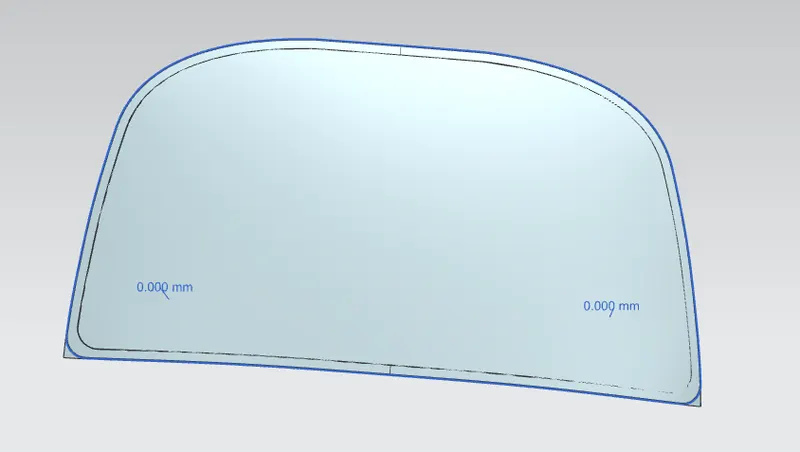
- Final Hood Assembly :-
Front View :-
Side View :-
Top View :-
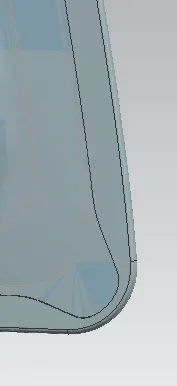
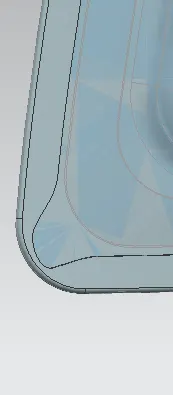
Corner Relieving :-
Conclusion :-
The model of a hood of a car is successfully designed with its design requirements and safety requirements as per Euro NCAP (New Car Assessment Program) to get a good rating for the car.