Hood design-Week 2
INTRODUCTION OF HOOD
HOOD is the hingedcover over the engine of motor vechicles that allows acces to the engine compartment and its the one of the important part of BIW design, Hood had many reveloution for its important and here we are going to see one of its type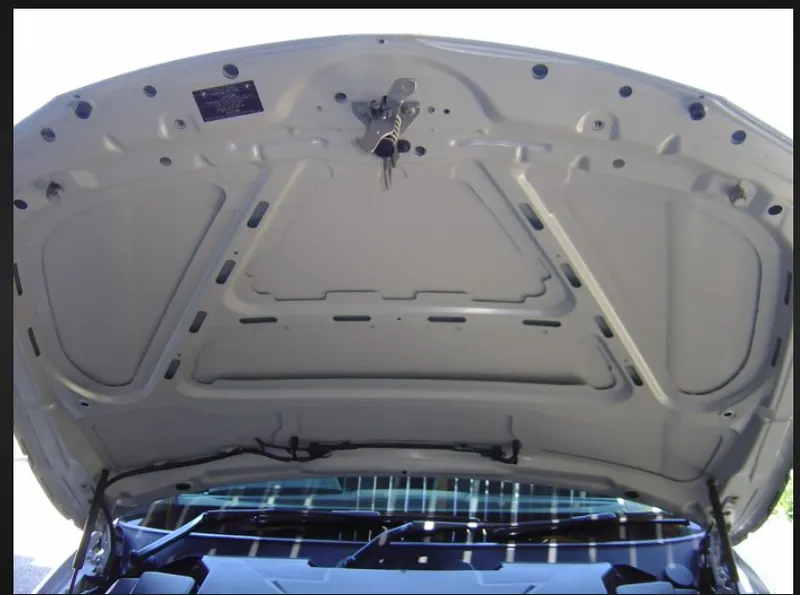
HOW HOOD RELATED TO SAFETY
More than 2,70,000 pedestrians lose their lives on the world's roads each year accounting for 22% of the total 1.24 million road traffic deaths. Because of this problem, there has been increase in awareness of pedestrian safety and strengthening certain regulations and systems to reduce pedestran injuries and prevent accidents. Pedestrian fatalities and injures are mostly caused by traffic accidents. The pedestrian traffic accident is considered a social problem since it results in significant cost to society. More and more effort is still needed to ensure the pedestrian remains unhurt in case of a collision
The primary reason causing pedestrian fatalities is head injury. In pedestrian traffic accidents, leg injury is about 60 per cent, and head injury is about 40 percent. Therefore, leg injury is 20 per cent higher than head injury. However, head injury is more serious because it causes 70 per cent of the fatalities because of obvious reasons of the brain being sensitive and that even a slight impact on the bead can lead to senous circumstances.
The positions of the hood where the pedestrian head impacts are different due to the vehicle's shape or size, the impact speed, and the pedestrian's size. In general because an adult is tall, the majority of adult cases have a head impact to the windshield and upper hood. On the other hand, because a chikl is small the head impacts into the hood.
When a pedestran traffic accident occurs, the pedestrian's head collides with the stiff points of the hood, which does not have enough deformation space to absorb the impact energy. The hood hinge, the washer reservoir, the battery terminal, the cowl and the air cleaner housing reside below the stiff points of the hood. The injury level of the pedestran's head at such stiff points is relatively higher than at the other ports The pedestrian's head is in grave danger at the stuff ports of the hood. Therefore, the injury level must be lowered at the stiff points by eliminating the hard contact between the pedestrian's head and the hood.
HOOD COMPONENTS:
- HOOD OUTER PANEL
- HOOD INNER PANEL
- STRIKER
- HINGE MECHANISEM
- REINFORCEMENTS OF STRIKER & HINGE
HOOD OUTER PANEL
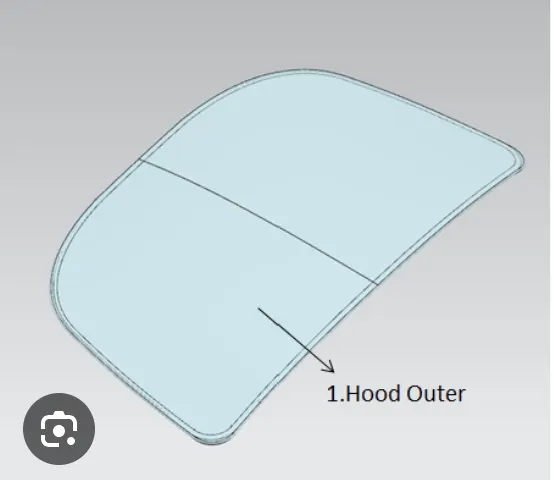
The outer panel is actually called the skin of the vehicle which is designed by the styling team to get a good look for a vehicle by covering the inner panel and engine parts of the car. This part should not be welded to the inner panel but using the sealant and mastic points makes contact between the inner and outer panel which acts as a bond between both and makes the hood stiff.
HOOD INNER
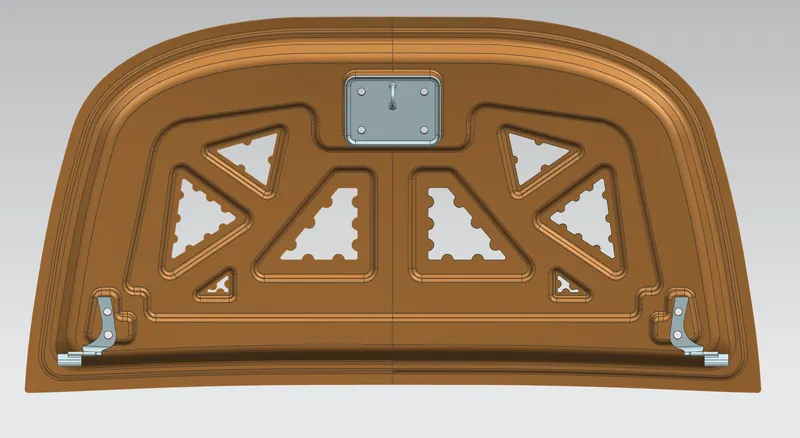
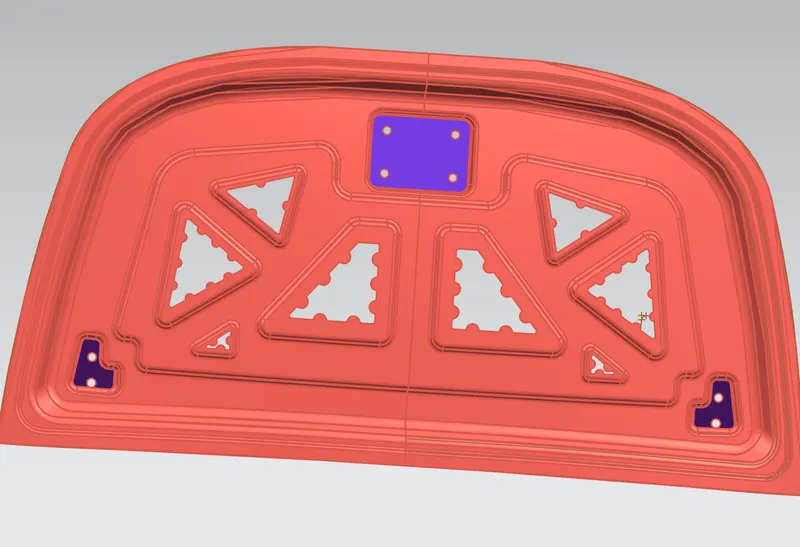
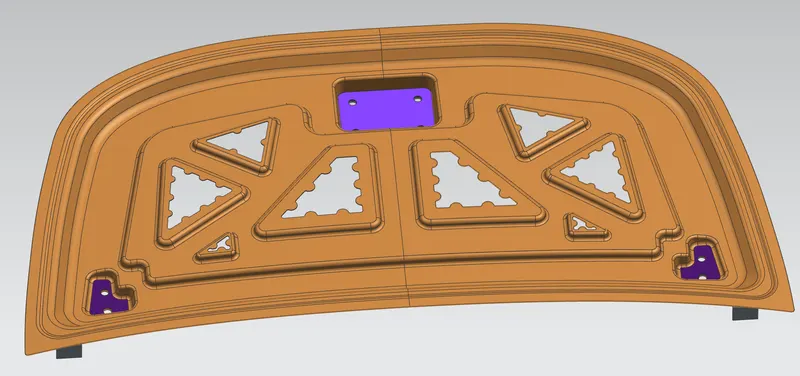
The main part of the hood which gives support to the outer panel of the car and with its embossing shapes dissipates the force in different directions when the vehicle takes crashes to not to injure the men in the car
STRIKER
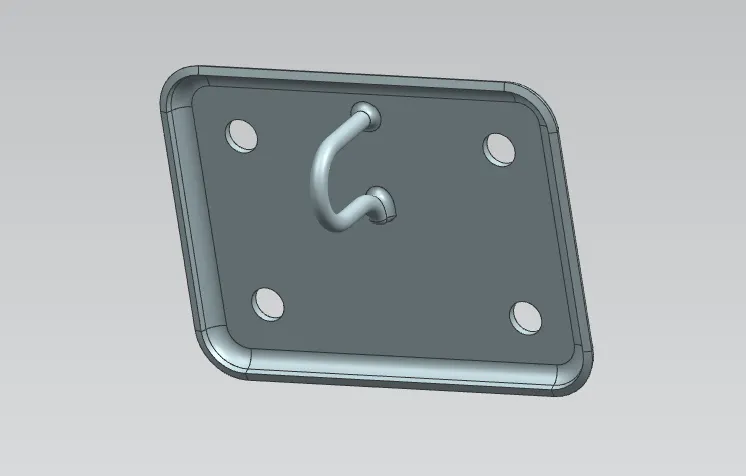
It is a part that helps in locking the hood with the striker which is mounted on the engine block when it is not in use. It plays a major role in opening and closing hood for maintenance of car engine and gives a tight locking position not to create undisturbed noises when the vehicle is running.
HINGE MECHANISEM
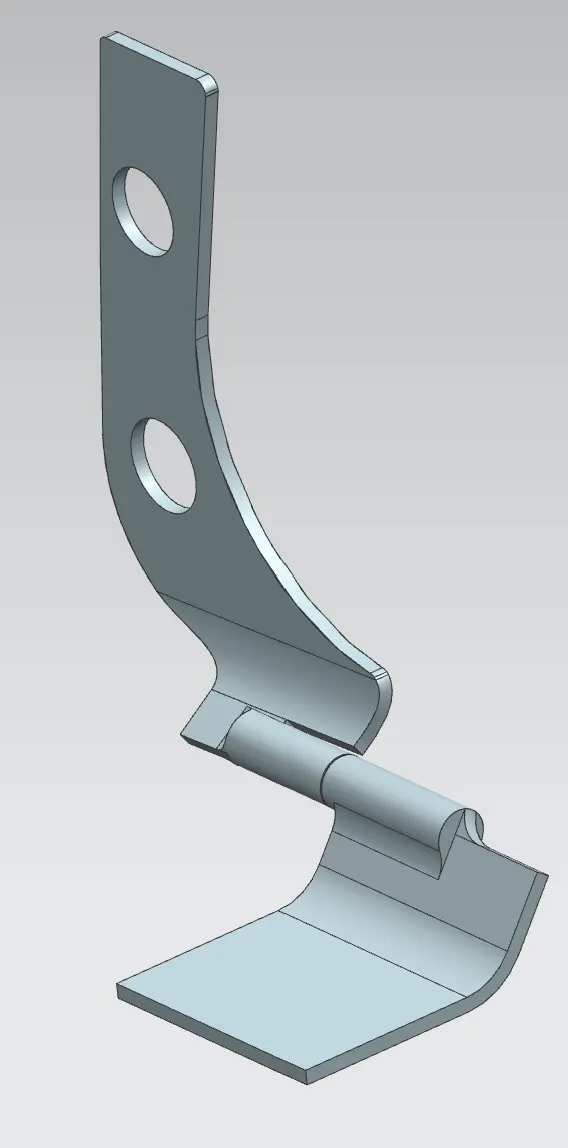
The hinge consists of two parts- hinge at the inner panel and hinge at the engine compartment. This coupling allows the hood to open and close, as well as makes contact between the engine block to the hood. It also controls the lifting of the bonnet mitigates the consequences of a collision between a pedestrian and a vehicle.
LATCH TRAJECTORY
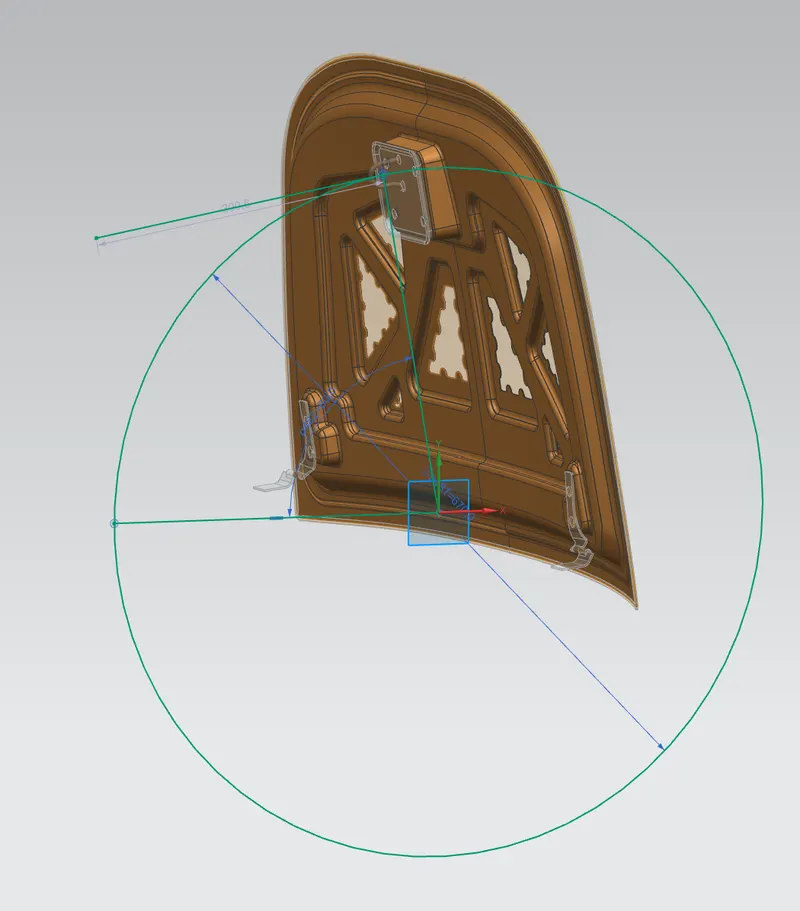
The latch trajectory shows the path of the striker when the hood is opened and closed on a vehicle. The radius of the circular trajectory is determined by the set standard based on the average height of a person. The radius is measured from the hinge axis up-to the latch.
HINGE AXIS
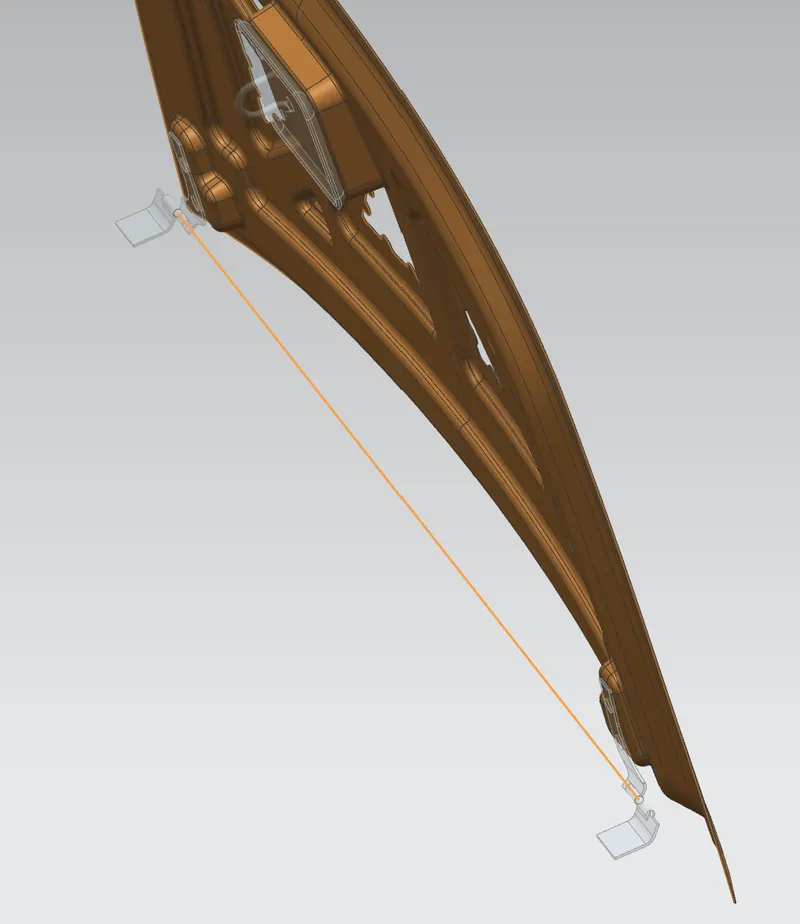
The hinge axis is positioned in such a way that the axis lies in the same line so that it is parallel to the “x” axis plane. This is done in order to position the latch and sticker trajectory motions exactly perpendicular to the hinge axis.
MASTIC POINTS FOR NVH (NOISE VIBRATION AND HARDNESS)
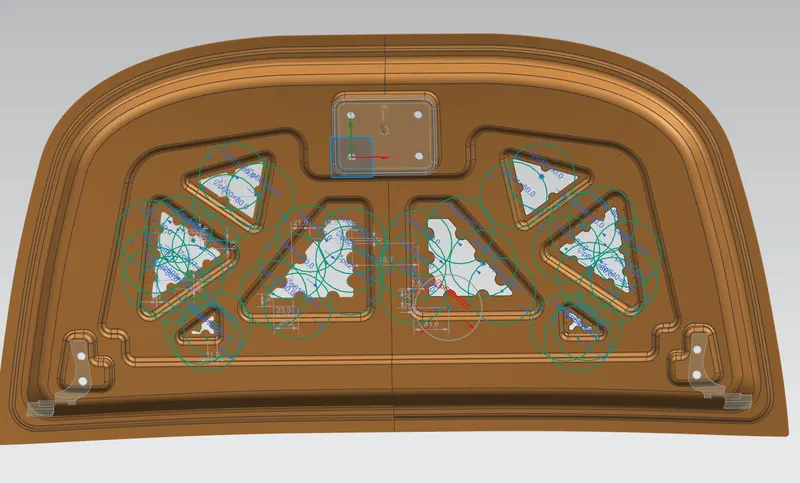
The mastic points are areas where the mastic is placed to attach the outer panel to the inner panel. We cannot use spot welding as it would give a less aesthetically pleasing result. Hence mastics are used to join the panels together as it does not melt the metal itself.
REINFORCEMENTS OF STRIKER & HINGE
The area near hinge and latch has more chances of failure in the hood panel. Hence to avoid any failure, the hinge and latch areas are reinforced with extra material whose thickness is usually determined by the type of vehicle
Hemming In Sheet Metals
Sheet metal is metal, in sheets. It’s thinner than plate metal (.25 in and thicker) but thicker than foil (.006 in and thinner). It’s most commonly available in steel and aluminium, in various gauges (thicknesses). It’s available with various coatings for corrosion resistance or surface finish. Sheet metal is made by taking a large cast ingot and rolling it into a long ribbon of the desired thickness. This long, flat piece of metal is then rolled into a coil and sent directly or cut into sheets before being sent to a machine shop.
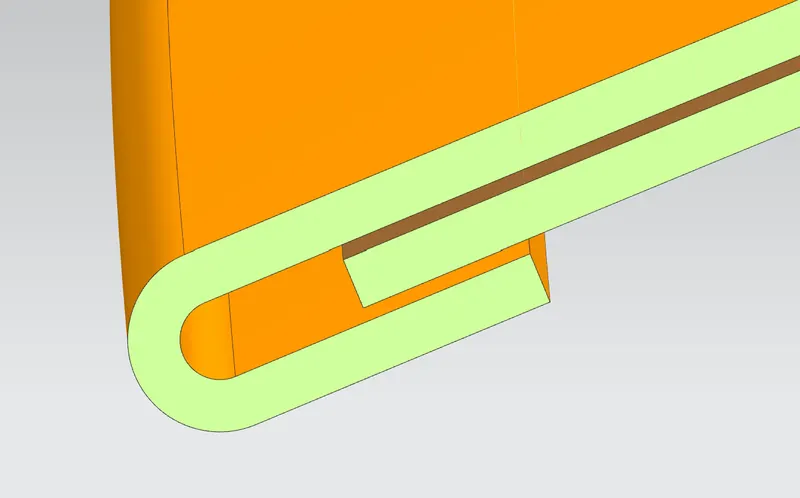
HEMMING RELIF
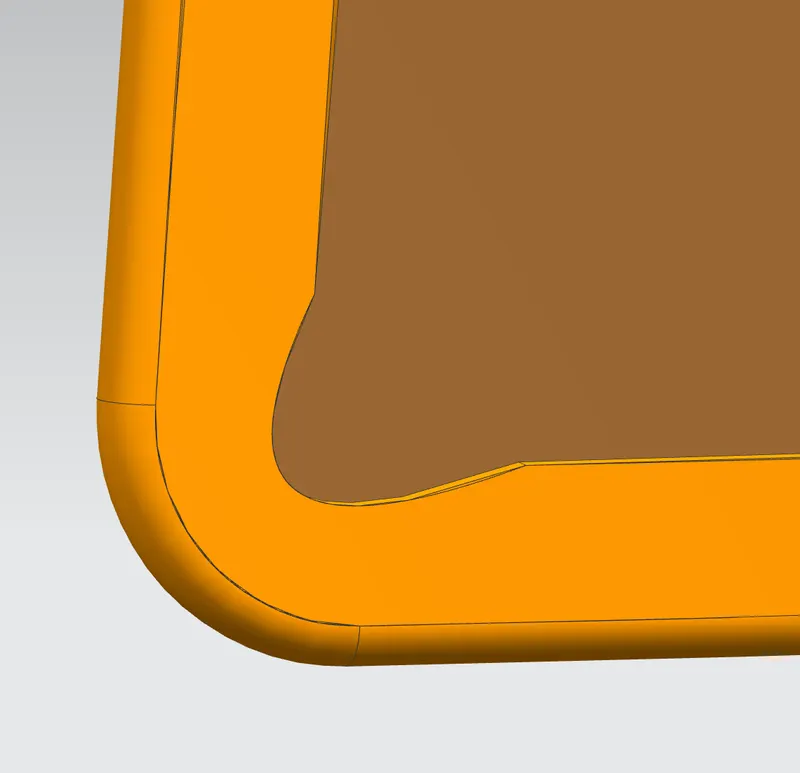
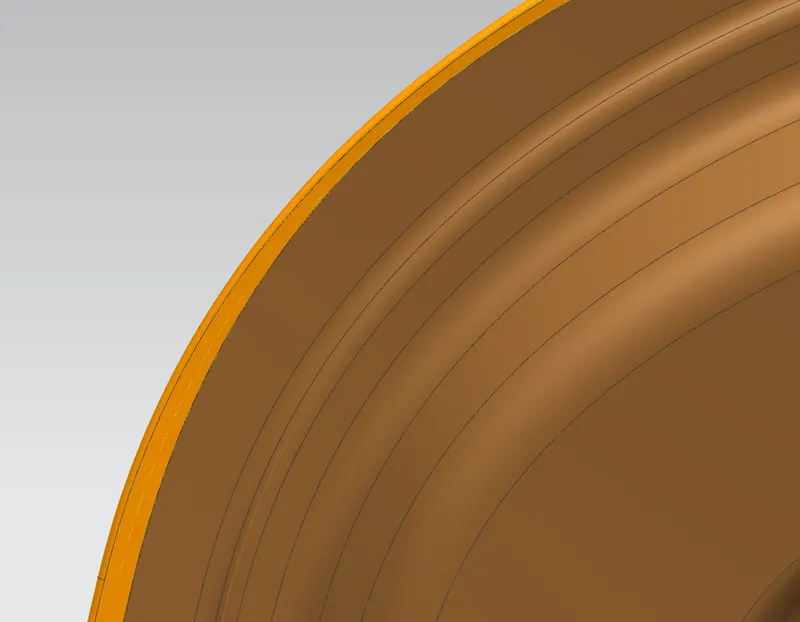
* NOTE (The minumum allowance hemming relif is-3mm)
EMBOSSING
Sheet metal embossing is a stamping process for producing raised or sunken designs or relief in sheet metal. This process can be made by means of matched male and female roller dies, or by-passing sheet or a strip of metal between rolls of the desired pattern. It is often combined with Foil Stamping to create a shiny, 3D effect
DEEP DRAWINGS PROCESS
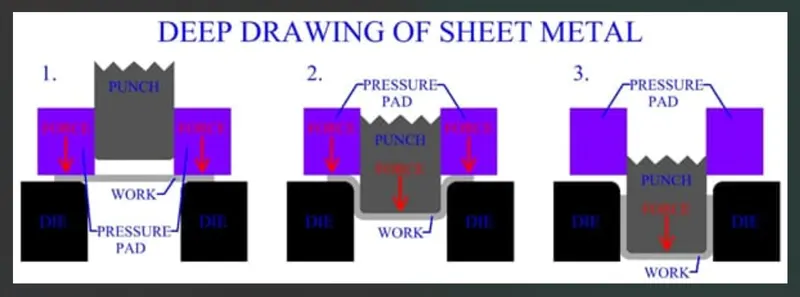
Deep drawing is a sheet metal forming process in which a sheet metal blank is radially drawn into a forming die by the mechanical action of a punch. It is thus a shape transformation process with material retention. The process is considered "deep" drawing when the depth of the drawn part exceeds its diameter. This is achieved by redrawing the part through a series of dies. The flange region (sheet metal in the die shoulder area) experiences a radial drawing stress and a tangential compressive stress due to the material retention property. These compressive stresses (hoop stresses) result in flange wrinkles (wrinkles of the first order). Wrinkles can be prevented by using a blank holder, the function of which is to facilitate controlled.
CONCLUSION
Thus, with the give master section and class A surface model the hood have been designed as per the euro NCAP guidelines Using siemens NX_CAD. The main aim was to improve the pedestrian safety rating by reducing the risk of injuries