Hood design-Week 2
Aim -
- Design hood outer panel, inner panel and necessary reinforcements by following master section mentioned with design parameters.
- Submit assembly of hood outer panel, inner panel, latch and hinge reinforcements. With detailed report of Hood Design which includes a detailed explanation about hood and its components, Latch trajectory, Mastic data, emboss definitions, manufacturing process like deep drawing and hemming, and all the parameters followed in the design.
About –
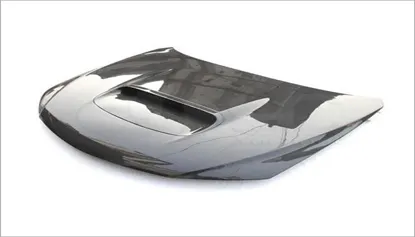
A car hood is also referred a bonnet, its is hinged cover that rests over the engine of a front engine vehicle. Its purpose is to provide access to engine for repair and maintenance.
It is constructed usually by steel sometimes by aluminium. In the recent trend like for a sports car/ performance car it is made up of materials like carbon fibre, fibre glass or dry carbon
Over few decades concerns regarding the severity of a potential pedestrian head injury during a collision with a motor vehicle have led to advanced hood designs on many models.
Such designs may include a multi-cone inner hood panel design. An active structure that is capable of pushing the surface of the hood away from the vehicle's hard motor components in the event of a pedestrian crash is also in use. Pyrotechnic or spring force designs are often used in active-hood design.
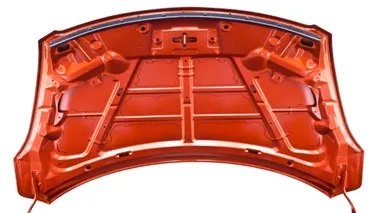
Hood mainly consists 4 components - inner panel, outer panel, latch & striker, hinges. The outer panel is modelled in such a way that It gives good aesthetic looks and inner panel are provided with emboss for equal force distribution radially outward direction. And reinforcements for safety .
Automotive metal forming –
The most important part is that the sheet metal can under go plastic deformation means it can take any form we can imagine.
The process of deformation begins with a blank, a quantity of metal in some basic form that will undergo the change in shape. The blank becomes the workpiece - the piece of metal to be reshaped -- in the metal forming process. For automotive metal forming, the blank is often made of sheet metal, which can be stamped, cut or bent into a shape needed for an automobile's body.
Some of the commonly used sheet metal forming process,
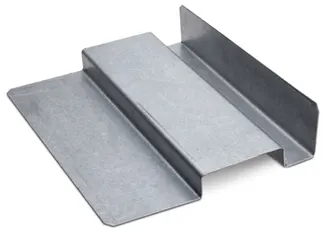
Bending - In bending, force is applied to a sheet metal workpiece to produce a curvature of the surface. Bending is generally used to produce simple curved surfaces rather than complex ones. A mechanically operated press drives a punch against sheet metal, forcing it into a simple die with enough pressure to produce a permanent change in the metal's shape. The amount of pressure is important. If not enough pressure is applied, the metal can simply spring back into its original shape. If too much is applied, it can break.
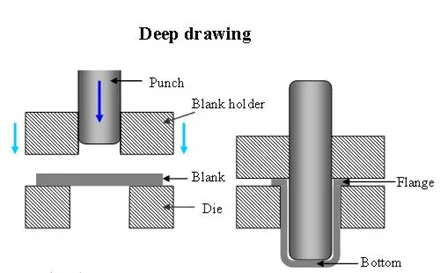
Deep Drawing - In drawing, the sheet metal is forced against a die that has been cut into the three-dimensional, often curved shape that the sheet metal is to take on. In effect, the die is used as a mould for the metal. This technique can produce relatively complex shapes. Once again, pressure is applied to the workpiece using a hydraulically or mechanically operated punch.
Stamping - In stamping, a device called a stamping press is used with a series of dies to cut and form metal into various shapes. This is commonly used to make auto parts such as hubcaps and fenders.
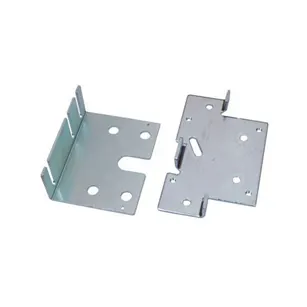
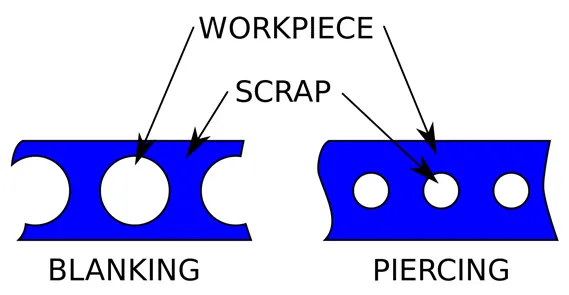
Blanking - is a metal fabricating process, during which a metal workpiece is removed from the primary metal strip or sheet when it is punched. The material that is removed is the new metal workpiece or blank.
Piercing - is a shearing process in which raw metal is pierced with a machining tool, resulting in the creation of a circular or other shaped hole. As the raw metal is pierced, the metal from the newly created hole is considered scrap.
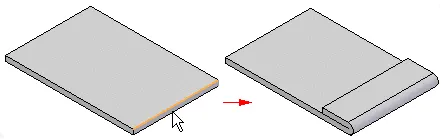
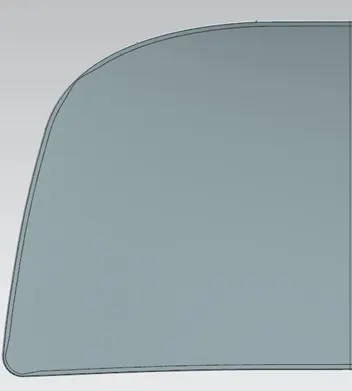
Hemming - It is a sheet metal forming process in which sheets are joined by bending it usually to 180°. Automotive body panels and automotive parts such as deck-lids, trunk-lids, doors, hoods and tailgates are formed by hemming process.
Some of the most commonly used features in designing Hood assembly are,
- Offset surface – creates a body by offsetting a set of faces.
- Trim sheet – trims of a portion of sheet body.
- Law extension – from the edge of sheet metal/ curve a extended sheet metal is created.
- Curve on surface – creates a surface spline on the face of sheet metal.
- Mirror Geometry - creates the exact mirror of sheet metal body.
- Face Blend – adds tangent blend faces between selected set of faces.
- Edge Blend – rounds sharp edges between the faces.
- Projected curve - projects the curve, edges, points on planes or on faces.
- Emboss – modifies a body with faces made by projecting a section along a vector.
- Extend sheet – extend a sheet body by a distance.
- Sew – combines two adjacent sheet bodies making it as one.
- Through Curves – creates a body through multiple sections where the shape changes through pass through each section.
Design parameters considered for Hood Design,
Hood thickness information -
Outer panel thickness - 0.75 mm
Inner panel thickness – 0.75mm
Reinforcement thickness – 1.5 mm
Master Section,
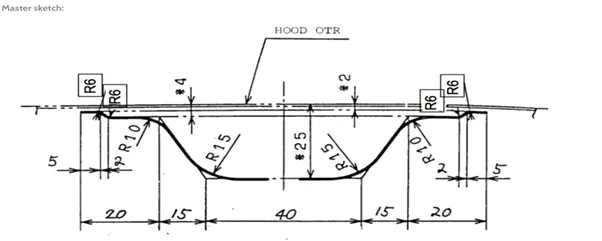
- Hood outer panel –
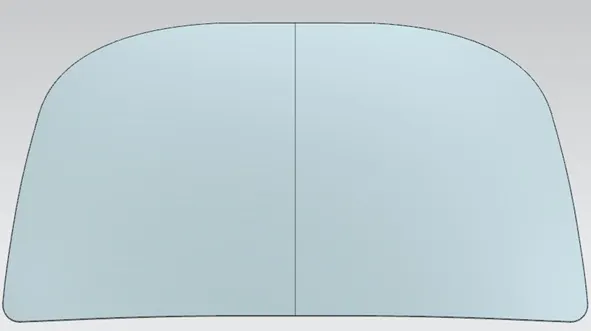
Outer panel provided the aesthetic look for hood of car. Design styling team provides skin for outer panel. Shape, size, position should be according to safety norms. So, while designing pedestrian safety is considered. By hemming process, the outer panel is made to attach with inner panel. Mastic sealants are provided between outer panel and inner panel to reduce vibration.
Image of outer panel -
Hemming relief at corner edges –
2. Hood inner panel –
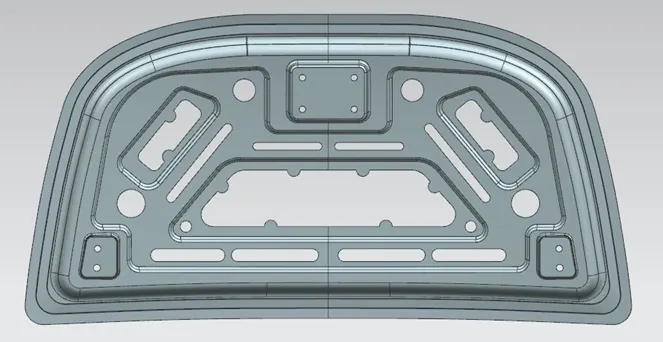
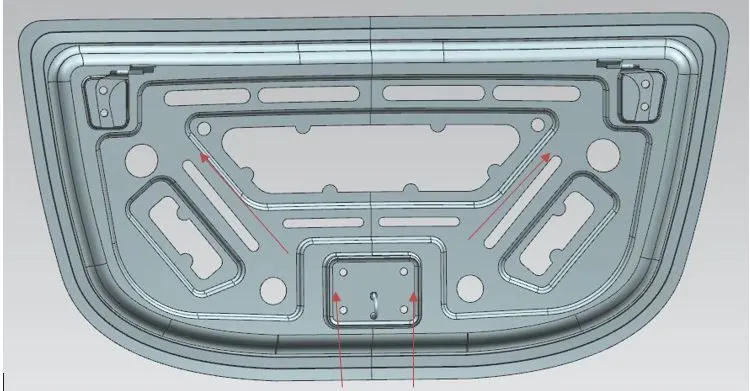
It provides the strength and rigidity to outer panel. The emboss is done in order to give strength to the inner panel, cut is done on the inner panel to reduce the weight as well as to reduce the impact when the car front hits pedestrian. Edge blend and face blend is done on the corner and face to remove sharp edges/corners.
Image of inner panel -
3.Reinforcements –
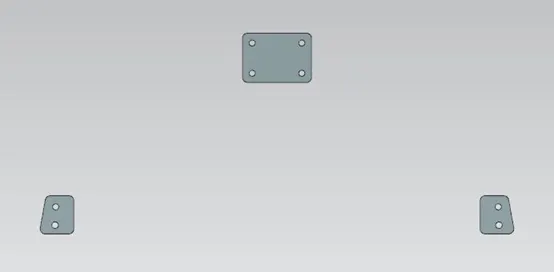
Reinforcements are given where there is need for more strength and in this hood design its given for striker and hinge assemblies. And the thickness will be greater than thar of inner panel thickness. In this design the requirement is of 1.5mm.
Image of reinforcements -
Latch Trajectory -
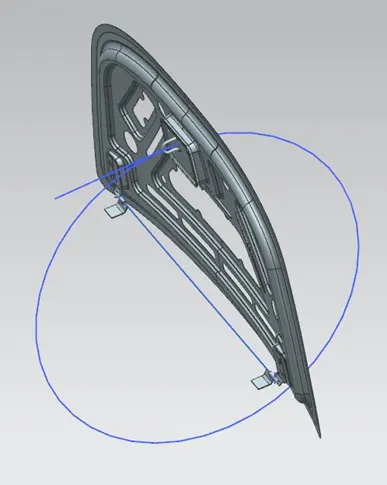
The latch trajectory is obtained by drawing the circle taking reference of hinge connecting line midpoint. After drawing circle, a tangent line is drawn on the circumference at require angle, and a mid-line is drawn to striker latch. The tangent line on circle at an angle and the mid line of striker latch are made coincident by applying constraints.
Image of Latch Trajectory –
Emboss Definition –
Emboss are provided on inner panel to give stiffness for the sheet metal. The emboss design decides how the force is dissipated when the collision has happened with the pedestrian of any object at front. To reduce the impact force the force is made to go sidewards.
Mastic data –
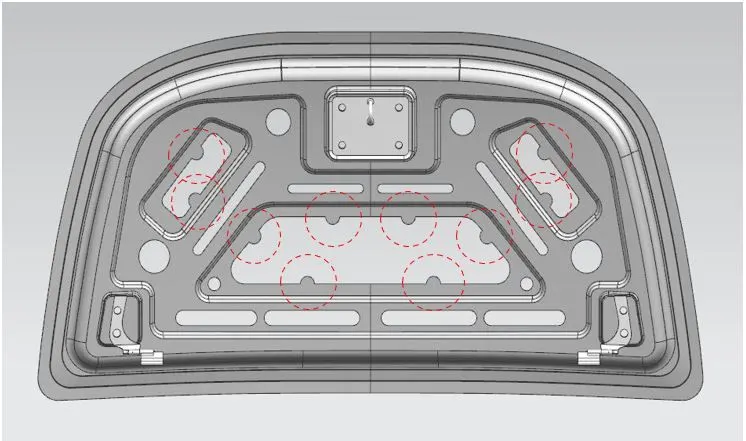
In order to join the outer panel to inner panel hemming is done but which provide support at the edges. So to join the inner and outer panel we cannot use spot welding/ mechanical fastners to join because if affects the aesthetics of outer panel and causes weight.
So in order to join between two panels mastic sealants are used, its usually made up of rubber material. Each mastic sealants has grip upto 80 mm in circular region.
Various directional views of hood with coloured appearance ,
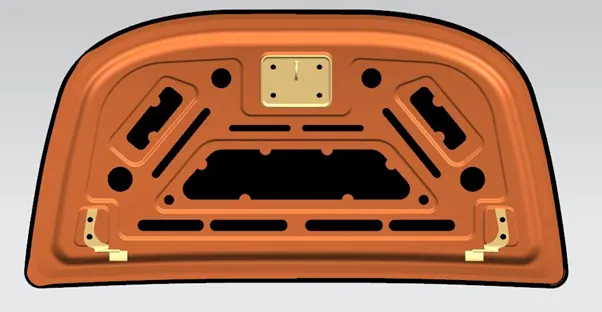
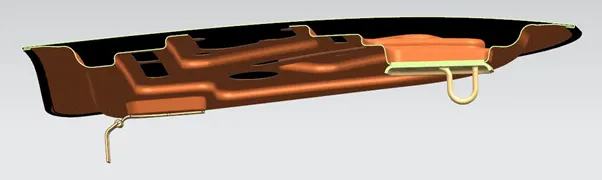
Cut section view,
Conclusion -
The Hood design comprises of outer panel, inner panel, hinge assembly, striker mechanism. Refering according to the master section various feature are applied on the sheetmetal to obtain desired output.