Hood design-Week 2
Hood Design
Hood
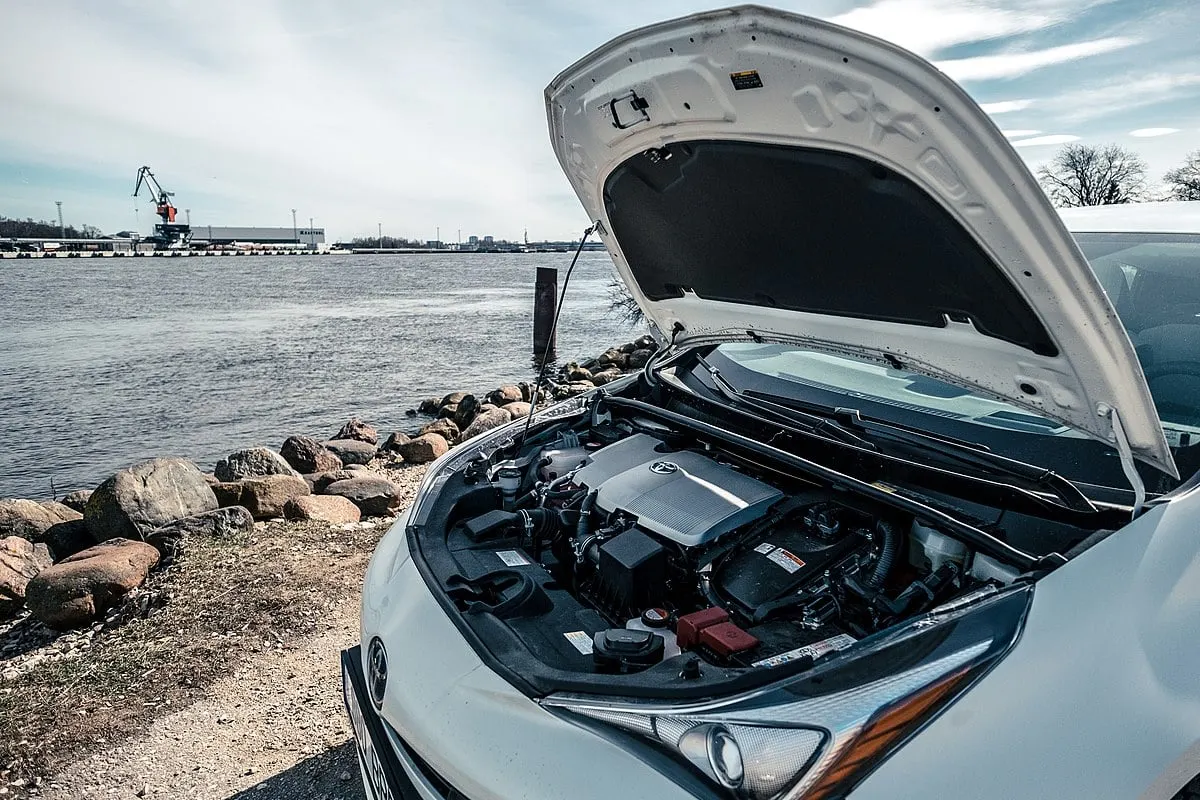
Hood or bonnet is the front most part of a car which protects the engine. Hood is made up of sheet metal and will be hinged over the engine bay. Hood has an important role in the aerodynamics of vehicle as well as in the safety of pedestrian in case of a crash.
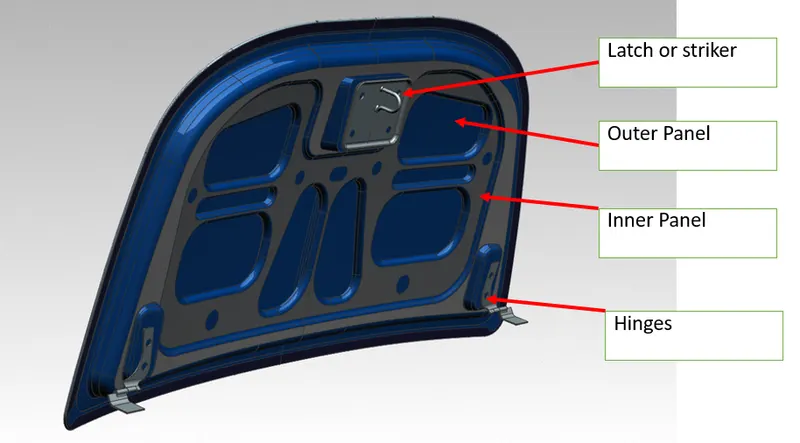
Hood Componets
- Inner Panel
- Outer Panel
- Latch & striker
- Hinges
Outer Panel
As the name indicates it is the outermost part and is the only part visible when the hood is in closed position. It is made up of sheet metal and may have It is hemmed at the outer edges around the inner panel. Outer panel may have subtle creases for the aesthetic and visual appearance of the car.
Inner Panel
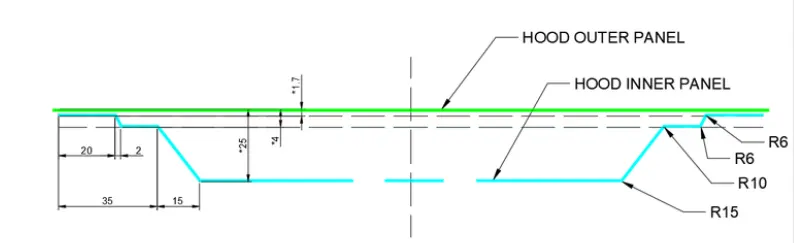
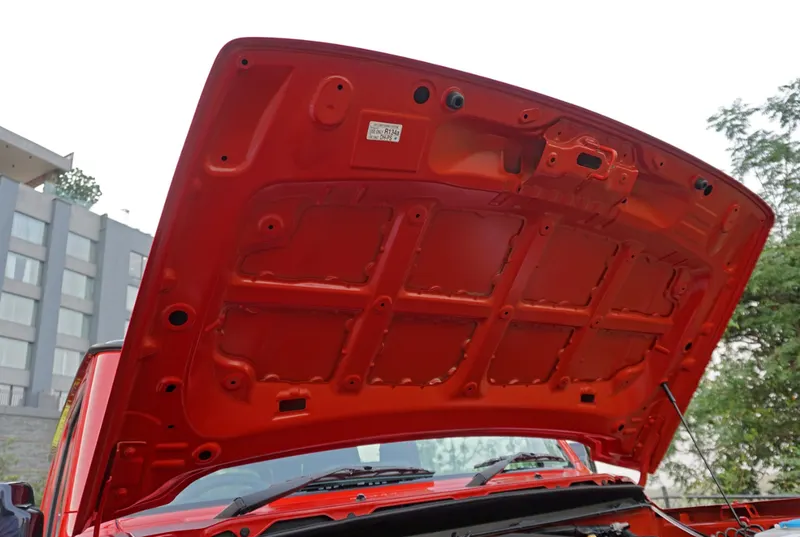
This part is only visible when the hood is in open position. The inner panel is not uniform and has a distinctive cross-section as shown in the master section sketch below. Inner panel will have reinforcements in order to place hinges and striker. It is hemmed at the outer edges around the outer panel.
Latch & striker
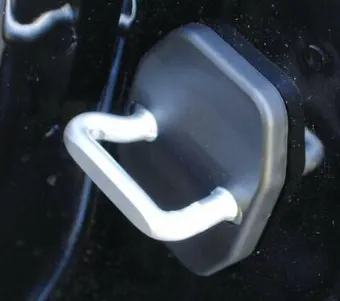
This part will be bolted to the fixed on inner panel with additional reinforcements at the front. It engages the hood latch when closed.
Hinges
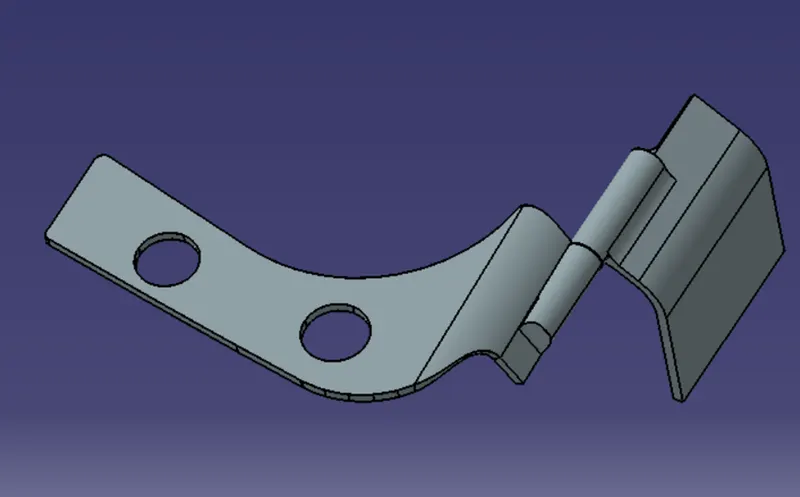
This part will be bolted to the inner panel with additional reinforcements at the back on both sides. Main function of the hinges is to provide easy opening and closing of the hood. Another end of hinges will be rigidly fixed on car body.
Latch Trajectory
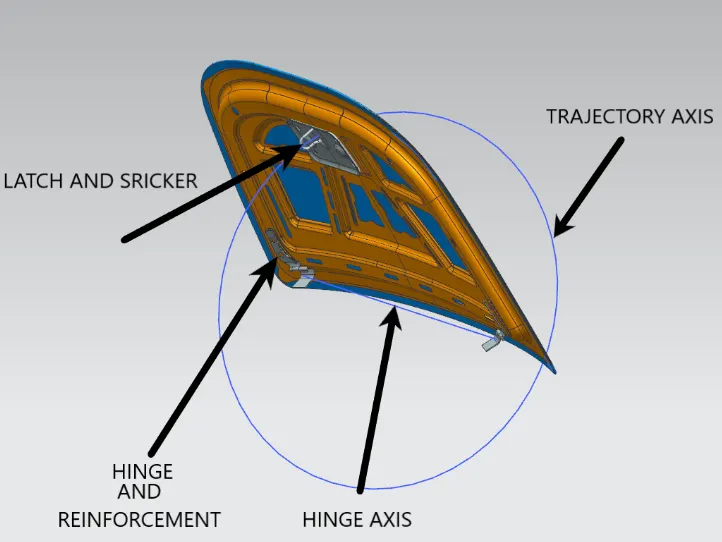
For the proper opening and closing of hood an imaginary axis known as trajectory axis is drawn to simulate the axis of rotation of striker. An embossing will be provided on the inner panel to accommodate striker. Trajectory circle is drawn and the striker point should be perpendicular to that axis. Latch closing point on the Engine bay will be positioned on the trajectory circle.
Mastic Points
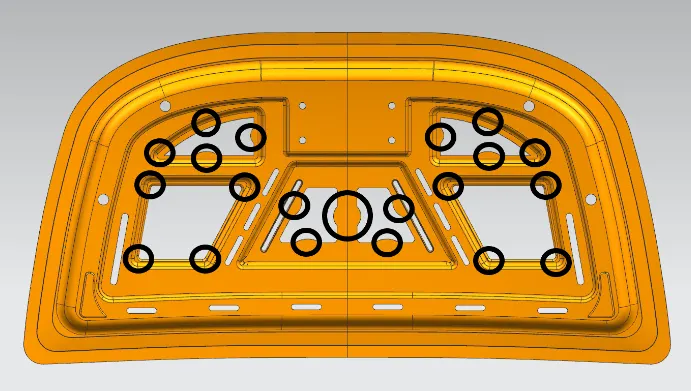
These are the points where the an adhesive sealant is applied which will bonds the outer and inner panels togethr. Mastic sealant provides proper hem flange bonding and considerably improves the NVH factor by absorbing the engine noise and by reducing vibrations between parts.
Emboss
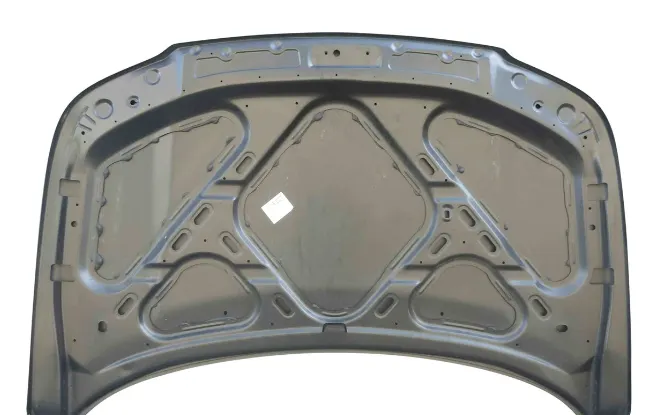
Embosses are the projections made on on the inner panel with deep drawing process. This manufacturing operation is carried out in order to stiffening flat surface and design in the inner panel. Major function of embossing is to dissipate the force acting on the hood during the crash of the vehicle toward the hinges as early as possible. Which in turn will reduce the impact of the force on the passenger compartment of the vehicle.
Hemming
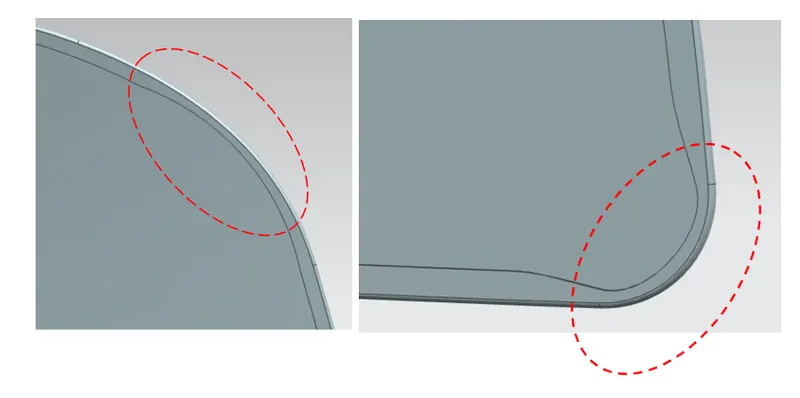
Hemming is a sheet metal operation where the edges of the part are wrapped around a surface using a roller tool. In this process working surfaces of outer and inner panels are joind by reducing the impact of the spot welds on the aesthetic surface.
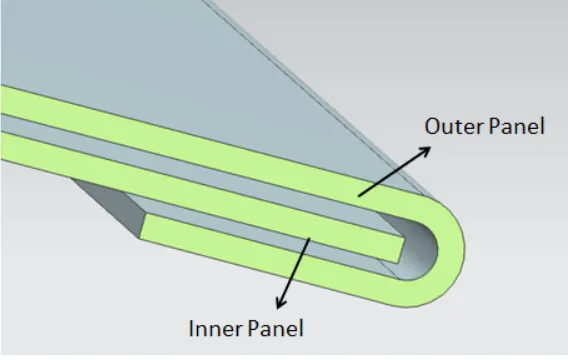
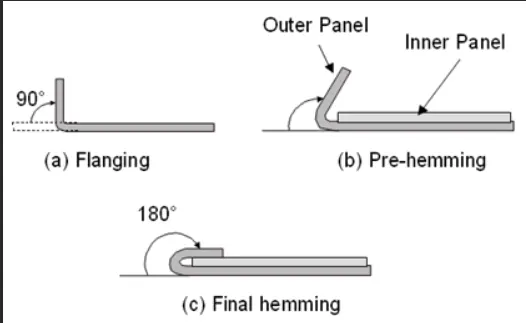
Corner reliefs are provided at the front and side portions of the panel in order to have smooth rolling operation. Tearing of the sheet occures when the roller passes through certain portions can be avoided by these corner reliefs. It provides better surface finish and reduces the intolerances and complexities in the operation.
Assembly
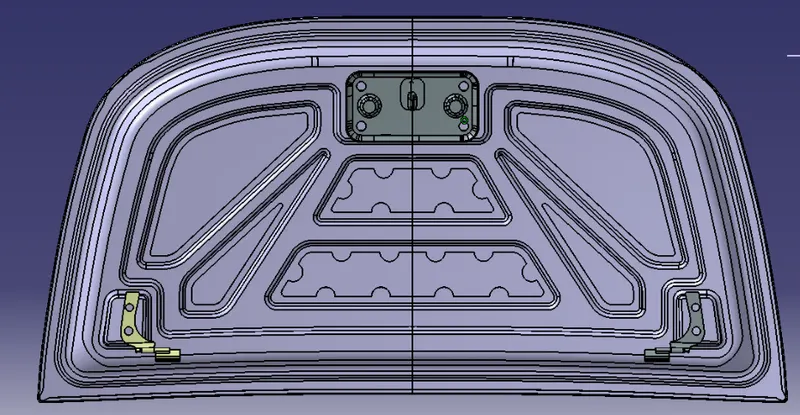
Inner panel designed based on the given data and required conditions. Reinforcements are provided for both striker and hinges on the inner panel. Embosings are provided on inner panel in such a way that forces will be disipitated towards in case of a collision and it will not tranfer to the passenger compartment. Masting points are provided for the bonding of each pannels. Hinges and striker are positioned on the inner pannel after ensuring the proper rotation of striker through trajectory circle. Hemming is provided between both inner and outer panels.
Sebin Baby