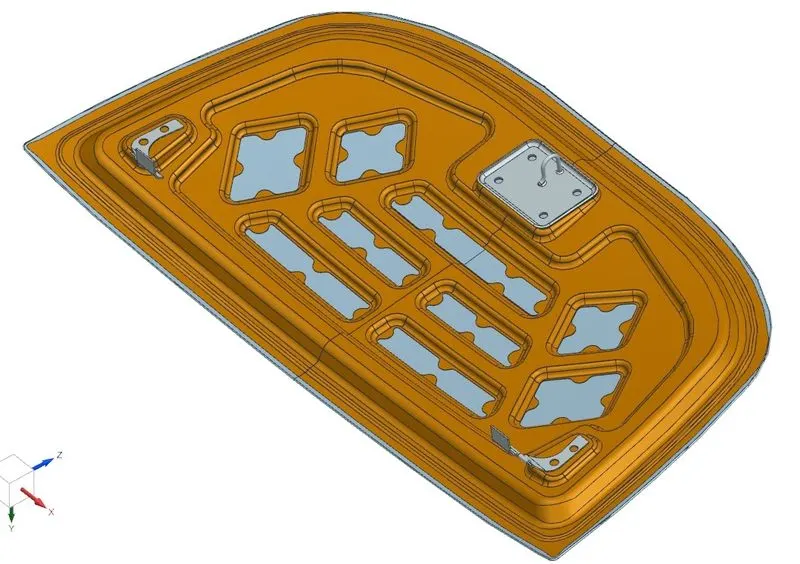
Hood design-Week 2
AIM : To design the Hood inner panel and outer panel folllowing the master section and the input surface provided.
Car is a protective covering that is positioned in front of a vehicle. It is a hinged panel that covers and protects the engine area. The major function of the automobile hood is to protect the engine, electrical components, and other important components from dirt, debris, rain, and snow.
The main components of the hood include,
- Inner panel
- Outer panel
- Hinge assembly to connect hood to the car
- Latch mechanism to lock the hood etc..
There are many things to consider while designing a car hood. In addition to protecting the engine, it has many other functions in a car.
It plays an important role in the vehicle safety. Even though the bumber absorbs most of the energy during collission, hood also should be designed considering it should absorb the collission force and crumble. And it should be designed in a way that the energy is dissipated towards the sides rather than to the centre body. Also the pedestrain safety is to be considered while designing the hood. The hood should crumble during the collssion to reduce the impact to the pedestrian during the collission.
Other factor to be considered in the designing are the manufacturability and the NVH of the vehicle.
Designing
The input surface is first downloaded and saved in the folder. An Assembly file is then created in the NX CAD software. The downloaded file is as added as part in this assembly file as the outer panel of the hood.
A new part is created as the inner panel of the hood. The surface of the outer panel is extracted into the inner panel file using the Wave Deometry Linker tool. This surface is trimmed to half. A tooling axis is created for considering the tooling direction for manufacturability. The tooling axis created perpendicular to the line joining the ends of the trimmed surface
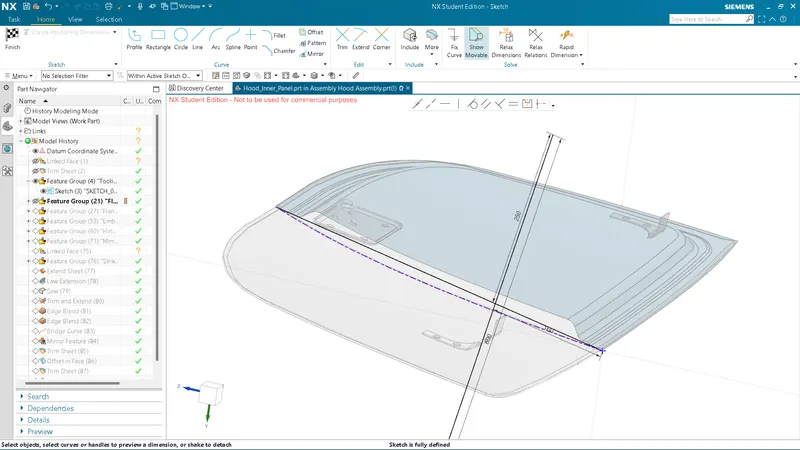
This surface is offsetted to different distances to create flanges as in the master section. And are joined using the tool Through Curves.
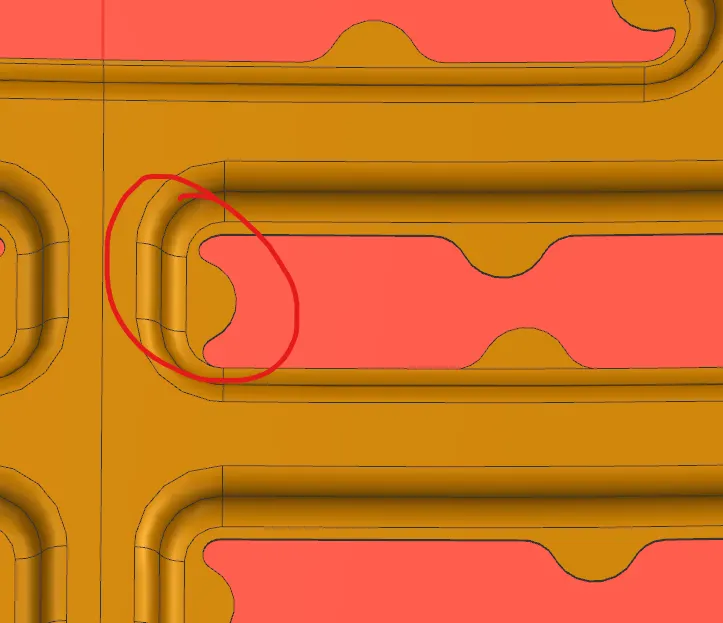
The embosses are created for the stiffening and joining the inner panel and outer panel. The emboss geometry are constructed considering the impact should dissipate sidewards. And cutouts are created on them to absorb the energy on impact by crumbing. This is for the pedestrian safety.
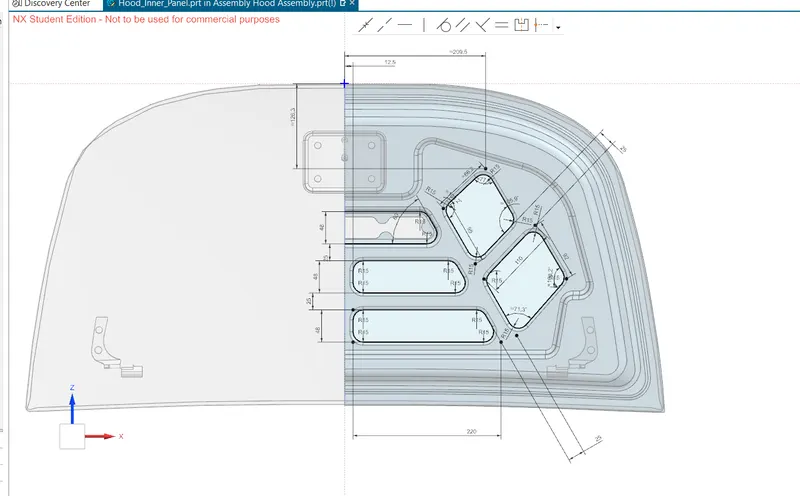
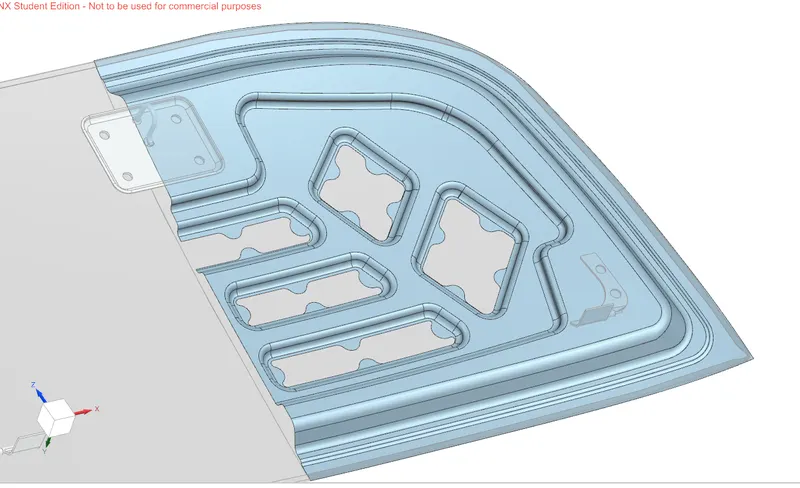
The support for the hinges are created by embossing the inner panel. Then the geometry is mirrored.
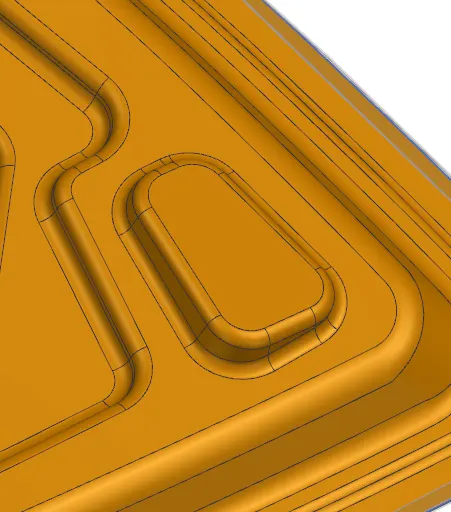
Then the hinge is assembled in the assembly file.
The latch trajectary is drawn in a sketch on a plane perpendicular to the hinge axis. Circle is drawin with the centre on hinge axis. By this the the position of the latch is decided.
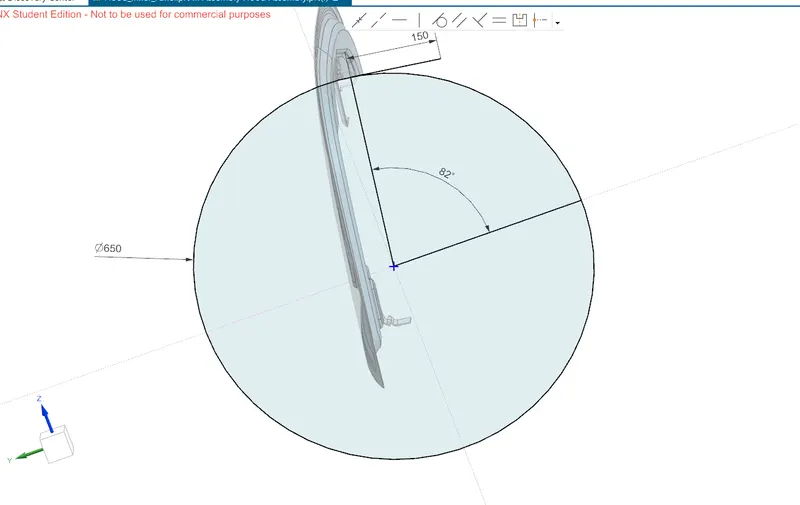
And the support for the hatch is also created by embossing the inner panel.
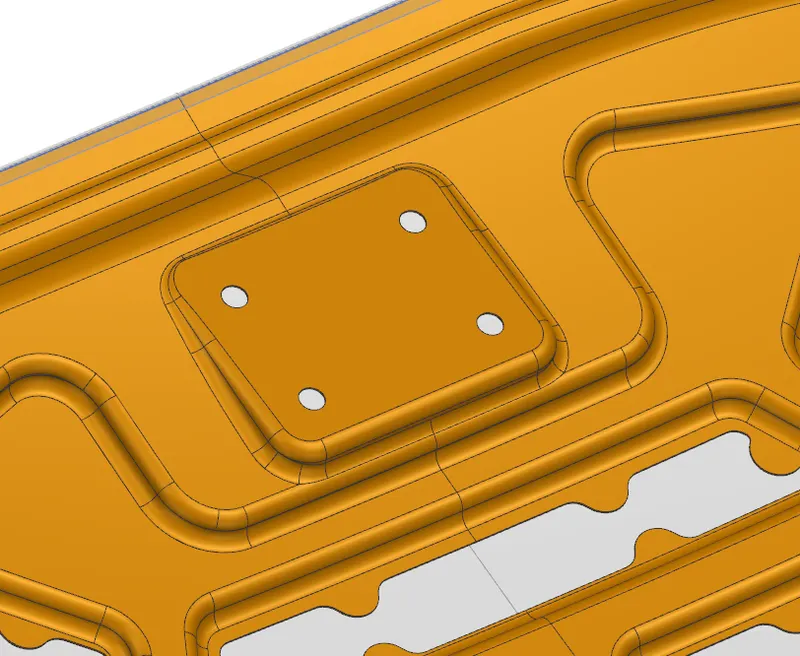
The inner panel is then thickened.
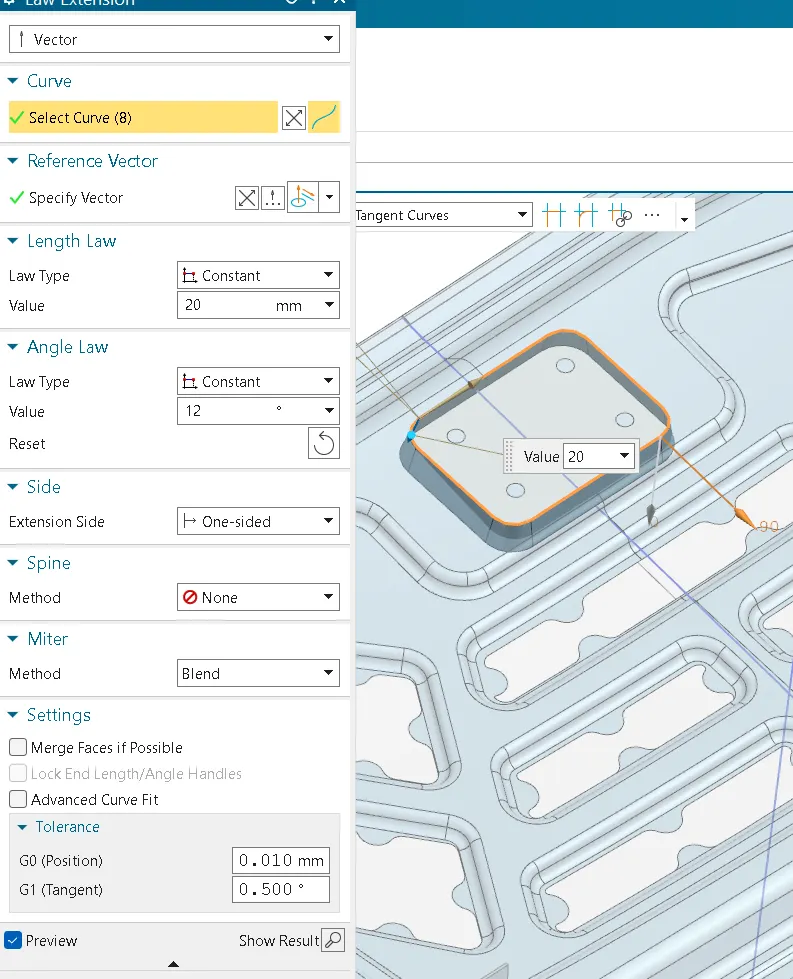
In the outer panel the folded surface of the hemming is created by offsetting surface and with the help of tools like Law extension and trim sheet
Manufacturability
Deep Drawing :Deep Drawing process is used to manufacture the hood. Deep drawing is a versatile and widely used metal forming technique that enables the production of complex, hollow parts from flat sheet metal. It converts a flat sheet into a hollow portion with depth, often with the use of a punch and die set.
Deep drawing begins with a flat sheet of metal, often steel, aluminum, or copper. The sheet is clamped at the edges before being put over a die, which is a specifically designed hollow. The sheet metal is then punched with a punch with a form that matches to the intended final shape of the component. The punch provides pressure and pulls the metal into the die cavity, stretching and deforming it.
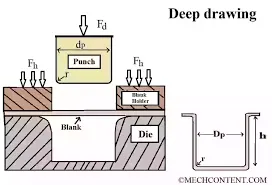
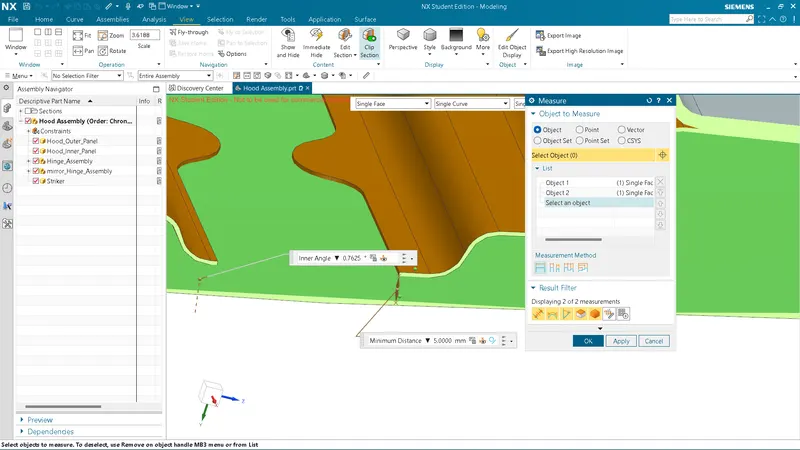
If there are surface that are perpendicular to the tooling direction, the tool wears out very fast and causes damaged products. So such perpendicular surfaces are avoided in the design. An angle of more than 8 digree from the tooling direction is followed throughout the design.
eg:-
Hemming
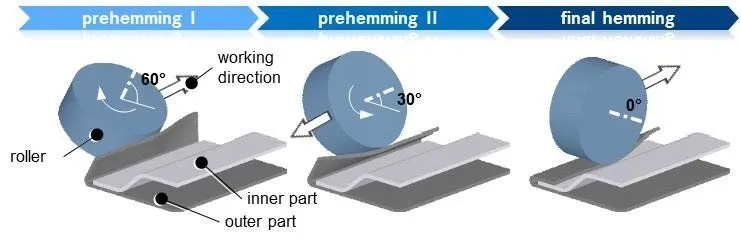
The hemming process is used to join the inner and outer panel of the hood. Hemming is is done by folding one edge of a sheet metal item over another and fastening them in place. To do this, first bend or fold one edge, known as the flange, at a precise angle.
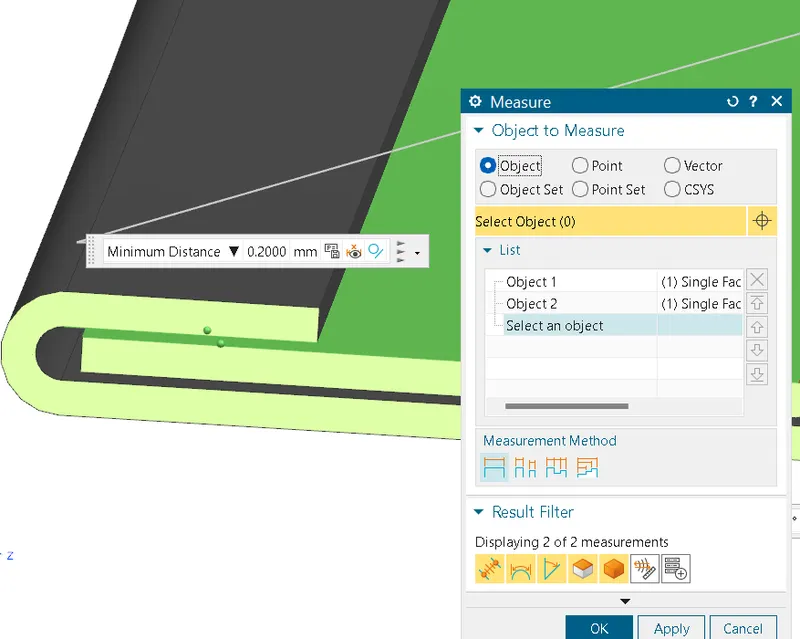
A clearance of 0.2mm is provided in the hemming area between two panels.
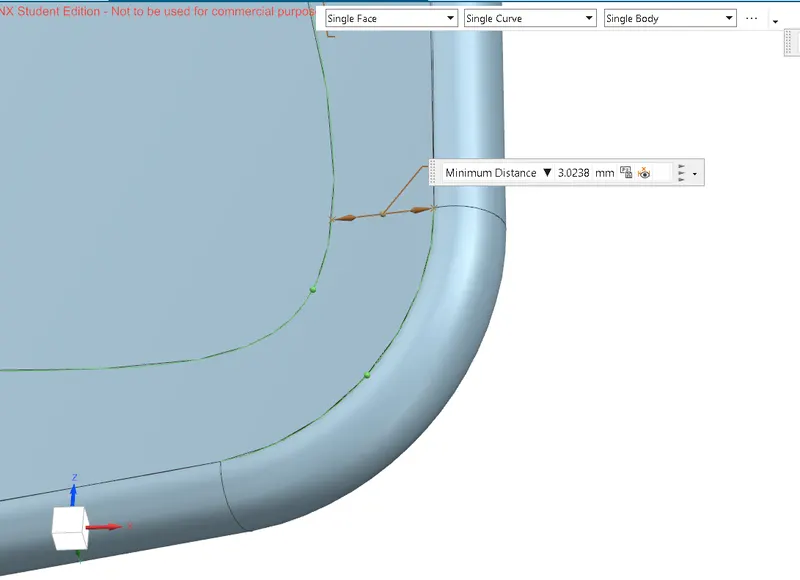
Also on the vertices to avoid the stress concentration during hemming a maximum distace of 3 mm from the edge is followed.
Mastic Data : Mastics are a sort of adhesive or sealant that is used for a variety of reasons, including joining, sealing, and filling gaps in sheet metal applications. Mastics are often designed to be viscous or semi-solid compounds that can be readily applied to surfaces. This is used between the inner and outer panel of the hood. It helps in reducing the NVH problems. A distance of 5 mm is provided for the mastic glue between the inner and outer panel.
Final Model