Hood design-Week 2
AIM : To Design the Hood Outer Panel, Inner Panel and the necessary reinforcements by following the Master Section mentioned with the Design parameters
and to Submit an Assembly of Hood Inner Panel, Outer Panel, Latch, Hinge and the Reinforcements.
Hood and its components :
Hood is the component which is placed over the engine compartment. It gives you access to the vehicle's engine and is also vital for the safety against the frontal impact of the car.
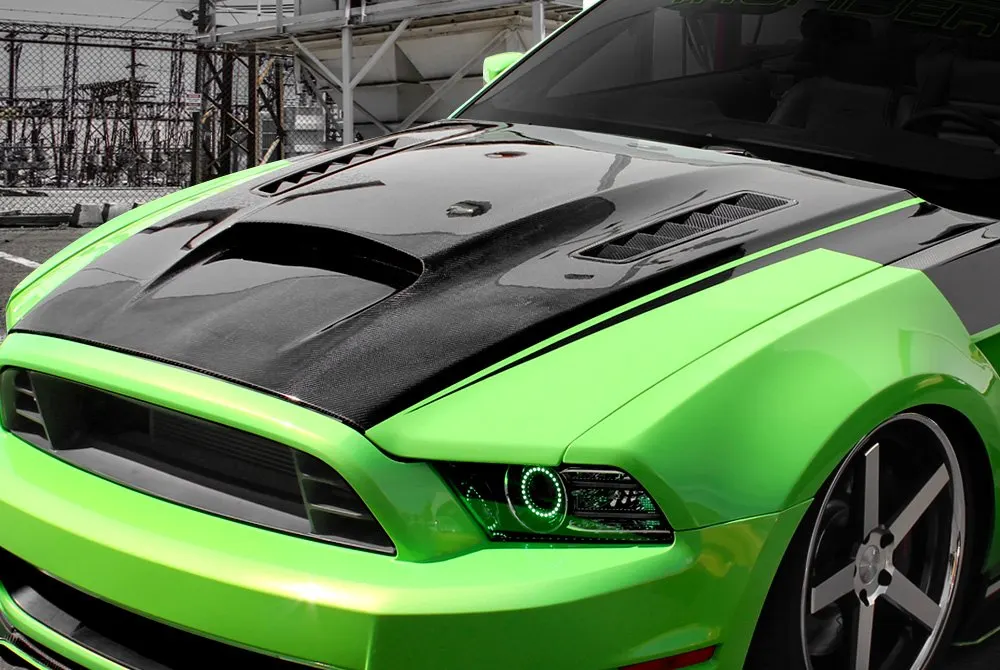
The hood (North American English) or bonnet (Commonwealth English) is the hinged cover over the engine of motor vehicles. Hoods can open to allow access to the engine compartment or trunk on rear-engine and some mid-engine vehicles for maintenance and repair. Generally, the passenger car hood may be held down by concealed Latch. But in a race car or car in aftermarket, the hoods may be held down hoods pin. Hoods sometimes also contain a hood scoop, wiper jets, power bulge, and/or hood ornament. Car hoods are typically constructed from steel and sometimes from aluminium. Aftermarket car hoods may be formed from other materials, including carbon fibre, fibreglass, or dry carbon. The hood design may vary from one make and model to another SUV. The hood is also designed for several requirements. A car hood is meant to protect the performance parts of your vehicle, including the engine, while also providing easy access for repairs and maintenance. They serve a great deal of purpose in protecting the passenger inside the car and the pedestrian in the event of an accident. The hood can incur damage as well .
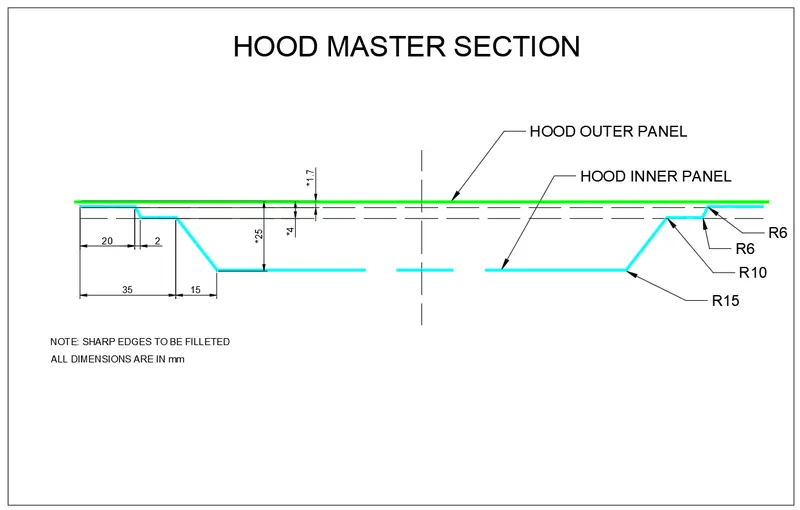
Components of Hood :
1. Outer Panel
2. Inner Panel
3. Reinforcements
Outer Panel :
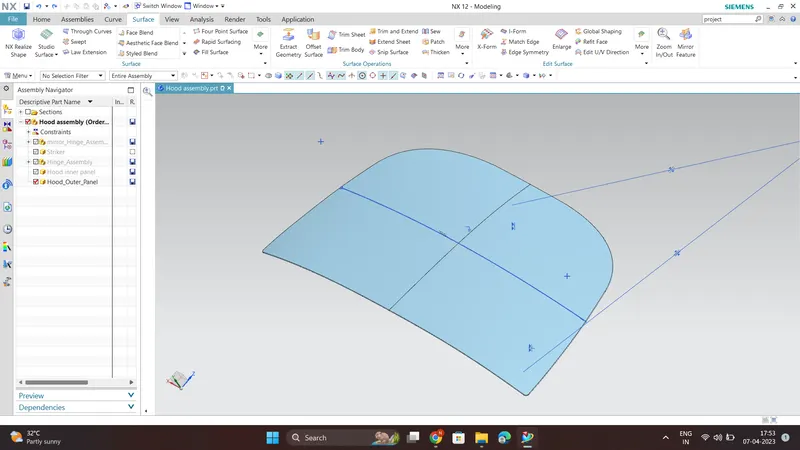
A car hood panel is one of the most important components of the BIW (body in white), it is considered the closure sheet-metal component. The outer panel has the aesthetic look to it but on its own is very weak and not capable of handling force during impact. Most automobile hood outer panels are made of traditional steel plates, and their quality does not meet the needs of lightweight development. For this reason, it is necessary to obtain lightweight effects through the application of automotive aluminium sheets. The most widely used car aluminium alloys in the market are deformed aluminium alloys of 6111, 6016, and 5182. The production process of the outer panel of the hood mainly includes blanking, deep drawing, trimming, turnup, and side turnup. Among them, deep drawing is a key process to ensure the quality of parts.
Inner Panel :
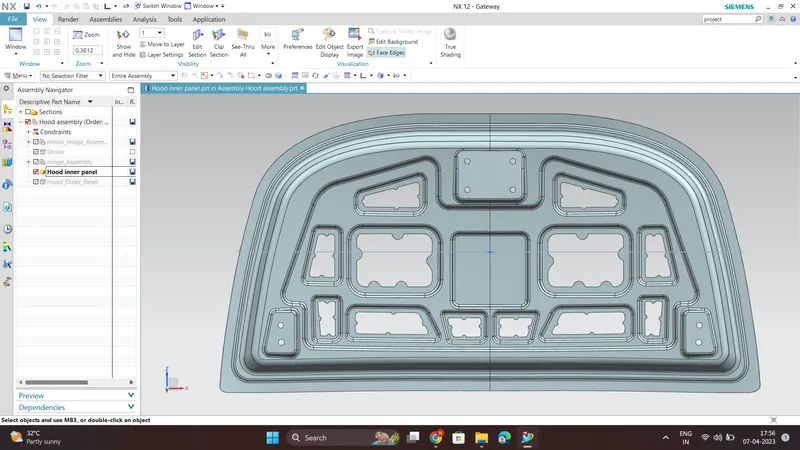
The inner panel of the hood is not visible to the customer, but this is the engineering feature of the outer panel. The hood panel is required to have a high initial reaction force against the impact exerted on the hood to enhance the energy absorption capacity. The hood is further required to minimize a reduction of a reaction force by deformation in a collision. A hood inner panel according includes an inner panel main body forming part of a hood of a vehicle, a front bead provided on the inner panel main body and extending along a vehicle width direction, and a rear bead provided on the inner panel main body, located on a rear side of the front bead and extending along the vehicle width direction. The front bead includes a centre portion in the vehicle width direction that is curved toward the front of the vehicle and located in front of each end portion in the vehicle width direction, and the rear bead includes a centre portion in the vehicle width direction that is curved toward the back of the vehicle and located behind each end the portion in the vehicle width direction.
Reinforcements :
The Striker and Hinges are attached at the lower side of the inner panel. It it can be done by directly then more stress can act at the particular area in the inner panel, it may cause deformation of the inner panel at that particular region. So that the reinforcement comes in and placed between the striker and the hood, hinge and the hood. It can able to reduce to deformation and strengthening the inner panel at that particular region.
Hinge :
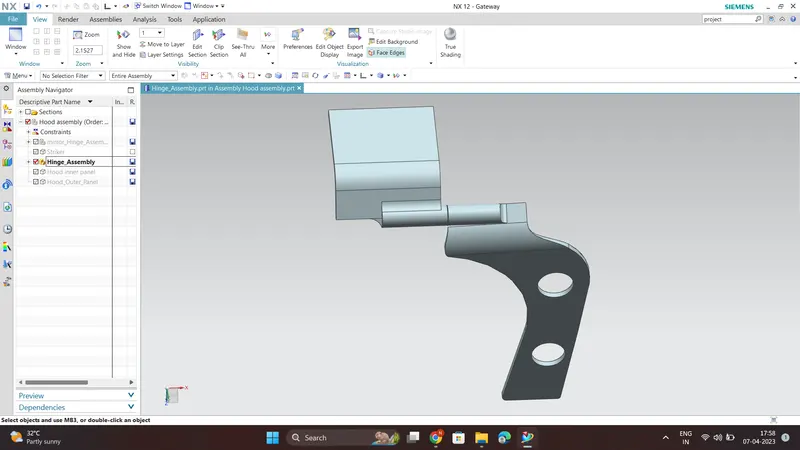
A hinge is a machine element that connects two bodies allowing angular movement about a fixed axis of rotation, all the while preventing translations and rotations on the remaining two axes. A hinge can be considered as a journal bearing with only one degree of freedom where a shaft is rotating in a hole. Hinges only allow one rotation, either yawing (the most common), pitching, or rolling. Hinges are a jointed and flexible device that is attached to any swinging part. Hinges are mechanical bearings that are used to connect two swinging objects or points and give them the freedom to move relative to each other. Hinges have limited movement, allowing the joint to move only at one angle and restricting the other movements of swinging parts.
Latch and Striker :
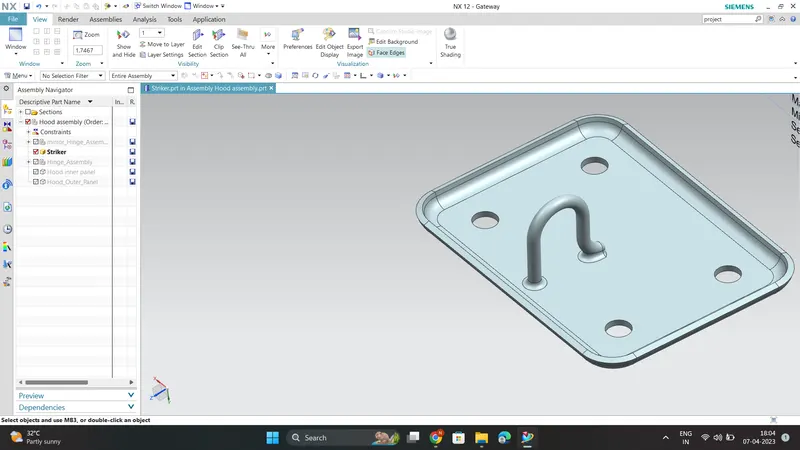
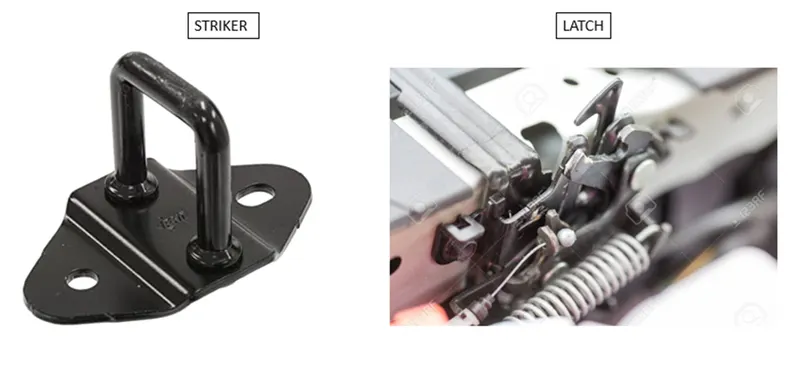
- Latches are mechanical components that allow the temporary joining of parts that are moving relative to each other. They are actuated to release the coupling and allow the two parts to separate. Latches are mostly seen on doors and enclosure openings. They are also used in devices such as seat belts, clamps, straps, and objects with retractable parts. Different designs feature various methods of actuation, holding style, and mounting. The hood latch is extremely simple. When the hood is closed, the latch slides over what is called a catch, and spring covers the latch to keep it snug. When we pull the knob inside the car to open the hood, the hood latch cable opens the latch, allowing it to bypass the catch and open.
- Striker is the part which is used to hold the hood with the engine compartment by using the latch which it is attached in the engine compartment, when the hood not require to open up. The striket is attached to the bottom of the inner panel and it hits the latch and locked with it, when the hood is dropped down.
- There is lever which is provided inside the cabin to the driver to release the latch pressure. Once it can be done, the hood will opens up in a inch, then we can able to open Hood more
Latch Trajectory :
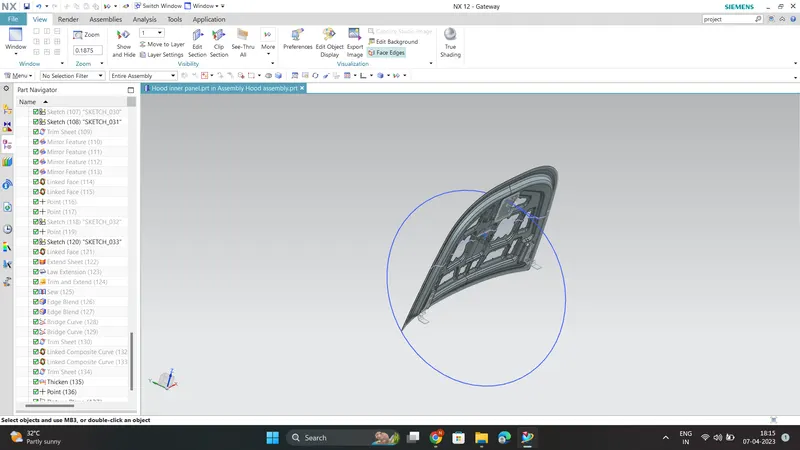
The latch trajectory shows the striker's way when the hood is opened and shut on a vehicle. It is simply the path that a striker will follow when the hood is being opened or closed. So, we have to keep it such way that it will hit the latch or the lock mechanism. The range of the round Trajectory is controlled by the set standard dependent on the typical stature of an individual. The range is estimated from the pivot hub up to the Latch. It is the Trajectory on which the movement of the hood (opening and closing are dependent). This circular Trajectory has a radius equal to the length from the centre point of the centre axis of the Hinge to the striker point on Latch. The striker point is also tangent to the Trajectory.
For this, we will create a line or an axis where the hinge will rotate. From the midpoint we will connect another line to the line of placement of our striker. The line from midpoint will make an angle with verticle plane and taking that intersection point we will create a circle which is nothing but the path of striker.
Mastic data :
The mastic points are regions where mastic interferes with the outer panel to the inner board. We can't use spot welding because this gives less elegantly fulfilling results. Accordingly, mastic is used to join the panel as it doesn't modify the actual metal.
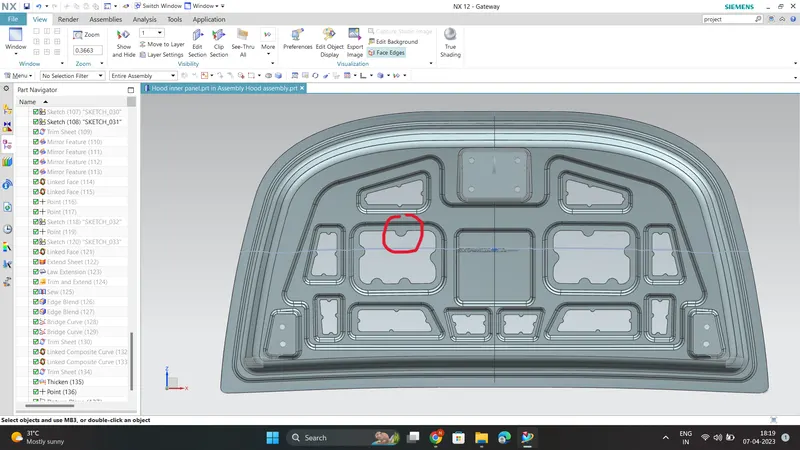
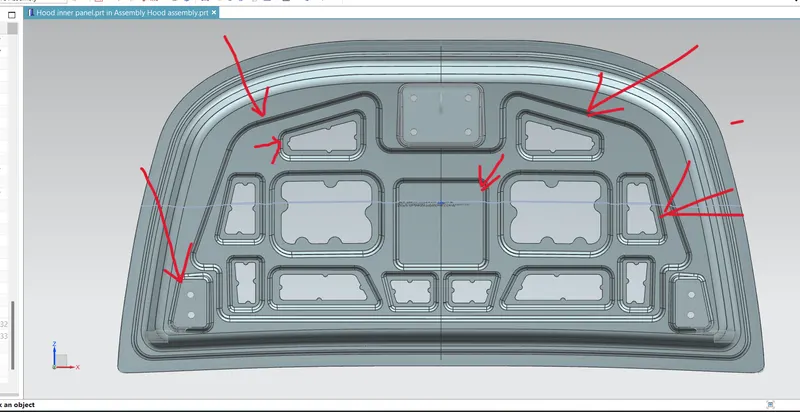
Embosses: - The design of embosses is done by the force distribution of frontal impact. It is designed so that the reduction of force starts when it is directed till the corner, i.e., up to the hinges, and loses the maximum amount (of force) till the end.
In other words , it will divert the colliding forces outwards away from the driver .
Manufacturing process :
1)Deep-Drawing :
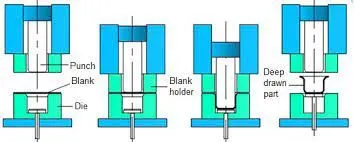
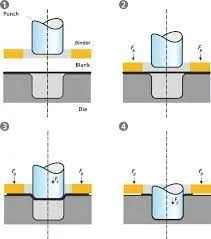
- Deep drawing is a sheet metal forming process in which a sheet metal blank is radially drawn into a forming die by the mechanical action of a punch.
- It is thus a shape transformation process with material retention.
- The process is considered "deep" drawing when the depth of the drawn part exceeds its diameter.
2)Embossing:
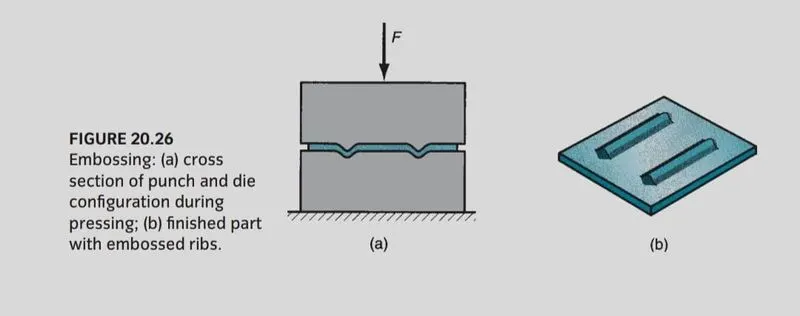
- Embossing is kind of stamping process. It is the process of appliying the pressure to the flat sheet metal by the forming tool to create the projection on that sheet metal wherever required.
- In Hood design, the inner panel of the hood has more embosses to improving the strengthening of the panel. Based on the design structure, the embosses are created or we can say projected on the inner panel sheet metal.
3)Blanking & Piercing :
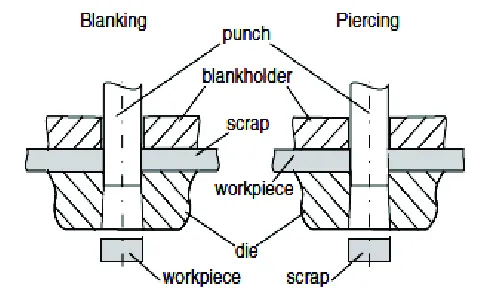
Blanking and piercing are shearing processes in which a punch and die are used to produce parts from coil or sheet stock. Blanking produces the outside features of the component, while piercing produces internal holes or shapes. The web is created after multiple components have been produced and is considered scrap material. The "slugs" produced by piercing internal features are also considered scrap. The terms "piercing" and "punching" can be used interchangeably.
4) Bending :
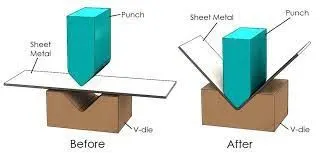
Metal bending is a process by which metal can be deformed when applying force to the subject, which causes it to bend at an angle and form the anticipated shape, which often results in it being in a 'V' or a 'U' shape. This is done through the application of force on a workpiece. The force on the work piece can be mechanical, pneumatic or hydraulic
Hemming :
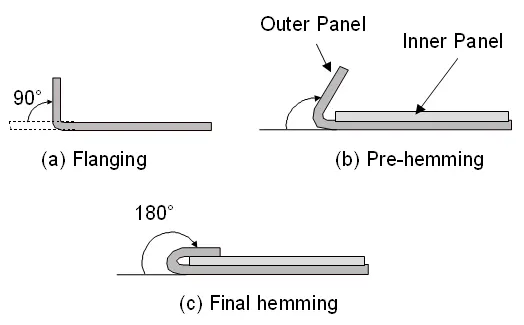
Hems are folds to the edge of a part to create a rounded ,safe edge . Hems may be open ,Flat ,or tear-dropped ,and tolerances depend on the Hems radius,Material thickness ,and Features near the hem.
Hence , the process of creating the Hems is called as ' Hemming ' .
Hemming is a forming operation in which the edges of the sheet are folded or folded over another part in order to achieve a tight fit.
Normally hemming operations are used to connect parts together, to improve the appearance of a part and to reinforce part edges.
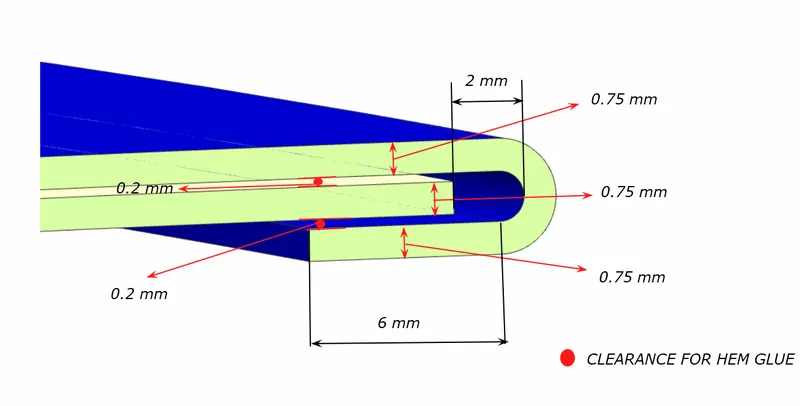
The Heming process involves joining the outer and inner panels of the hood by bending their corner curvature areas to 180 degrees.
There is also some corner relief given to the sheet to get stationed so that the rollers that do the Heming of sheets can roll appropriately in the required area.
Hemming is a sheet metal operation widely used in the automobile sector because the welding or joining process can not be done on styling parts as it may affect the car's aesthetics.
- Hoods, Doors, Boot lids of the automobile components are made by the hemming operation.
Parameters Followed in the design :
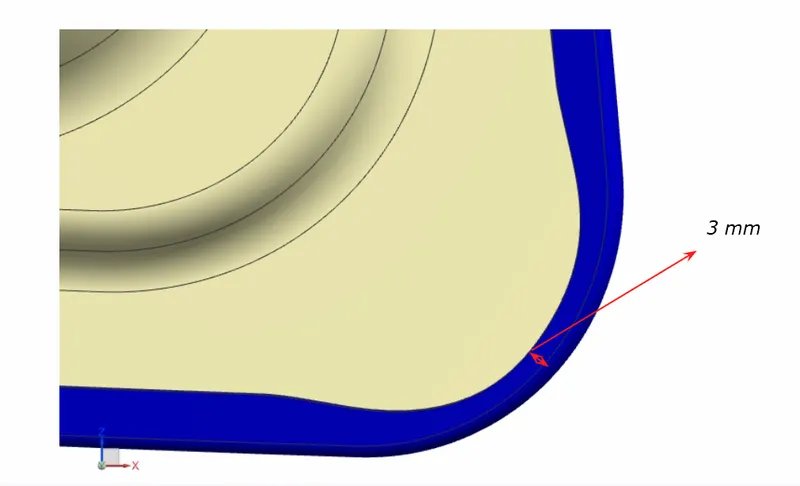
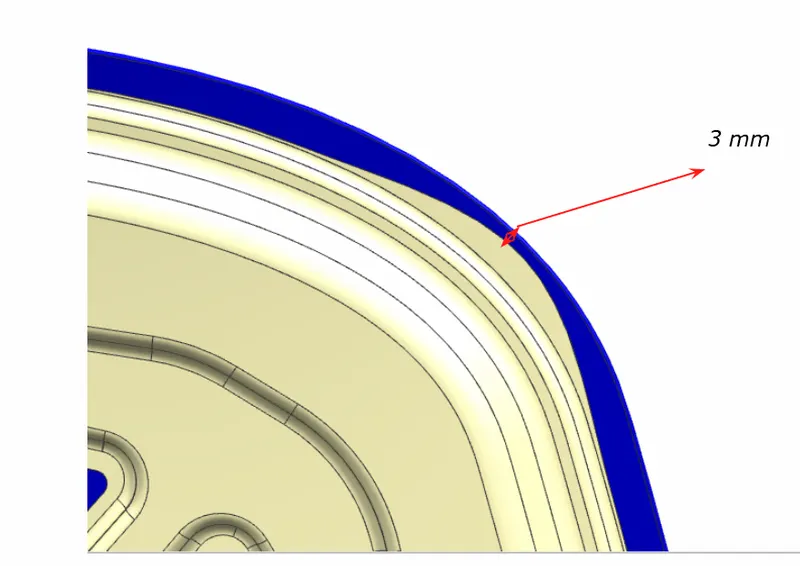
1)Reliefs: - Reliefs are provided at the front and side portion of the panel for smooth rolling operation .so that no tearing of the sheet happens when the roller passes through a specific portion.
Relief rear section Front relief
Hood Thickness
- Outer Panel Thickness = 0.75mm
- Inner Panel Thickness = 0.75mm
- Reinforcement Thickness = 1.5mm
3) Mastic sealants
4) Embosses
5) Hemming data
6) Hood opening Angle