Hood design-Week 2
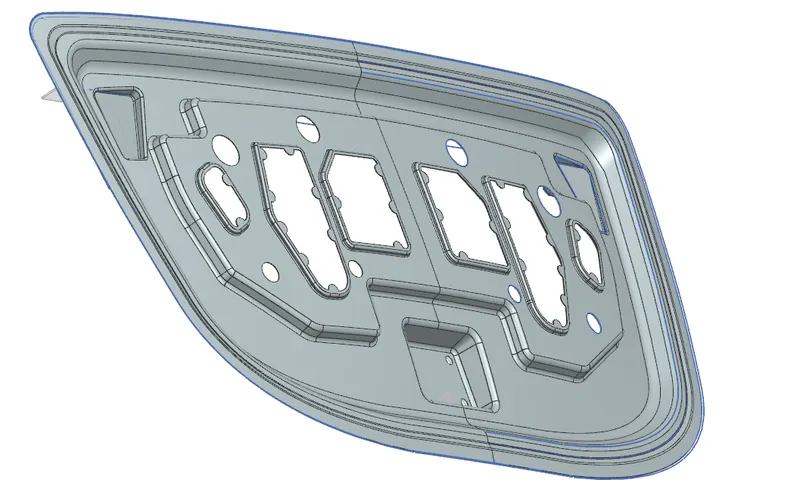
Aim: - To Design a hood inner pannel from the skin data provided. and full hood assembly with latch and hinge reinforcement
Software used
Siemens NX CAD.
Introduction to hood
The hood or bonnet is the hinged cover over the engine of motor vehicles . Hoods can open to allow access to the engine compartment, or trunk for maintenance and repair.
In morden times hoods come with lot of safety features as pedestiran airbag in Volvo car.
it also plays a important role in safety of driver which are tested in Euro NCAP,etc
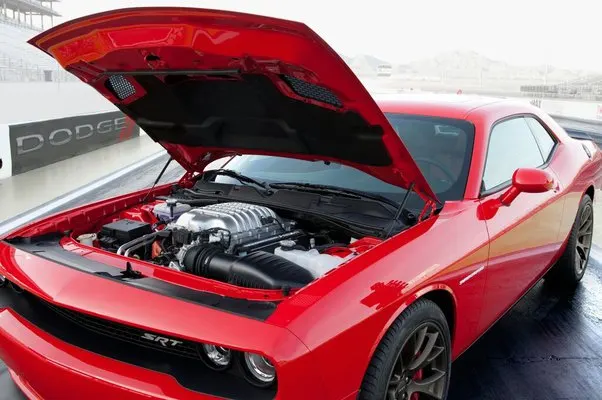
Components used in Hood assembly
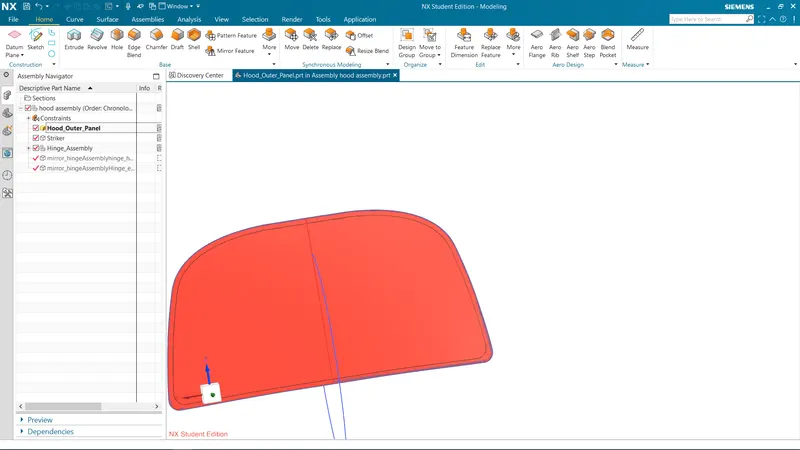
1.Hood Outer Pannel
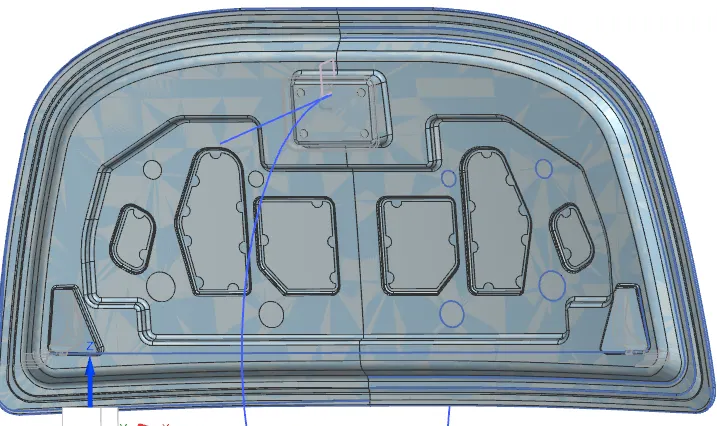
2. Hood inner Pannel
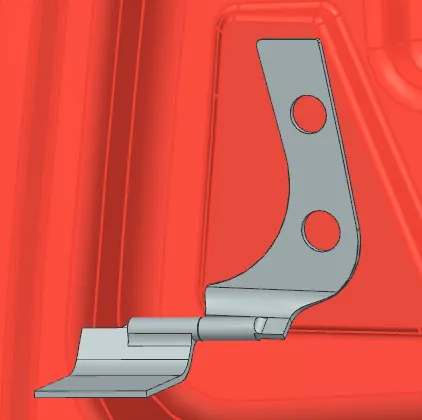
3.Hinge assembly
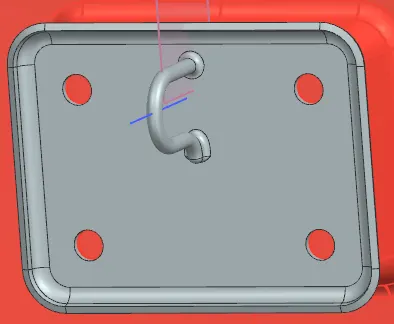
4. Striker
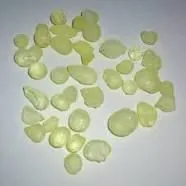
5. Mastic
Mastic is adhesive which is used to fuse in hood outer pannel and inner pannel. As spot welding marks will not look good on outer luxourios surface.
Theory
1. Deep Drawing
Deep drawing is a sheet metal forming process in which a sheet metal blank is radially drawn into a forming die by the mechanical action of a punch. It is thus a shape transformation process with material retention. The process is considered "deep" drawing when the depth of the drawn part exceeds its diameter.
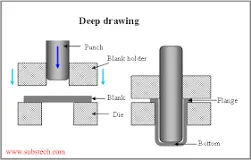
In the case of hood the deep drwaing opreation is done to create inner pannel and embosses
Process
The total drawing load consists of the ideal forming load and an additional component to compensate for friction in the contacting areas of the flange region and bending forces as well as unbending forces at the die radius. The forming load is transferred from the punch radius through the drawn part wall into the deformation region (sheet metal flange). In the drawn part wall, which is in contact with the punch, the hoop strain is zero whereby the plane strain condition is reached. In reality, mostly the strain condition is only approximately plane. Due to tensile forces acting in the part wall, wall thinning is prominent and results in an uneven part wall thickness, such that the part wall thickness is lowest at the point where the part wall loses contact with the punch, i.e., at the punch radius.
Hemming
Hemming is a sheet metal forming processes in which sheets are joined by bending it usually to 180°. Automotive body panels and automotive parts such as deck-lids, trunk-lids, doors, hoods and tailgates are formed by hemming process. This paper present a systematic review of sheet metal hemming process based on materials used in hemming process, analytical models, experimental and computational investigations made in the domain of sheet metal hemming process. Various grades of high strength sheets, aluminium alloys, recycle-friendly aluminium alloys, magnesium alloys, light weight alloys are used as workpiece materials in hemming process. Analytical models are also presented by few researchers for development in hemming process. New experimental set-up and novel experimental strategies of hemming process are devised and also adopted by researchers in past. Classical hemming, roller hemming, robot assisted roller hemming, laser assisted roller hemming and hemming with electromagnatic forming processes are the experimental different approaches utilized for performing sheet metal hemming operations. In FEM simulation of hemming process, three dimensional solid elements, shell elements and their combination are mostly employed by researchers in meshing of sheet metal blanks in hemming process. FEM simulation found to be an efficient tool for prediction of defects in hemming process and for optimization of process parameters as well. Besides, FEM simulation new computational approaches such as meta-model strategy are also applied for efficient design of hemming process.
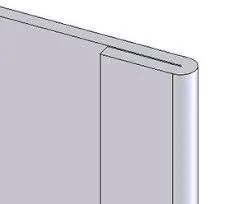
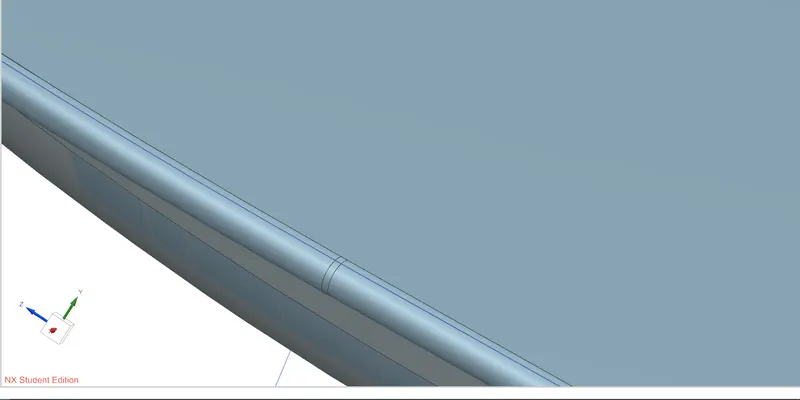
In hood assembly hemming is shown in Following picture