Hood design-Week 2
Title: Hood Design
Objective: To design hood outer panel, inner panel and the necessary reinforcements by following the master section mentioned with appropriate design parameters in NX CAD.
Introduction:
The hood or bonnet is the hinged cover over the engine of motor vehicles. Hoods can open to allow access to the engine compartment, or trunk on rear-engine and some mid-engine vehicles for maintenance and repair. The hood is also considered as another type of door in a vehicle as it consists of an outer panel and inner panel. The inner panel provides strength while the outer panel functions as the metal cover.
Some important concepts for the designing of hood are given below:
- Hood Outer Panel: It is the outer styling surface of the hood and is used to provide an aesthetic look to the car.
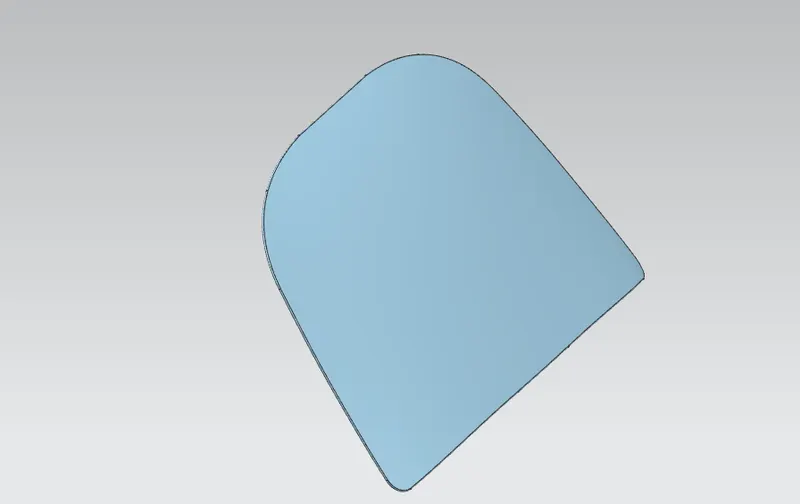
Fig1: Hood Outer Panel - Hood Inner Panel: It is an important BIW component used as the inner support surface of the hood which provides strength and rigidity to the hood outer panel.
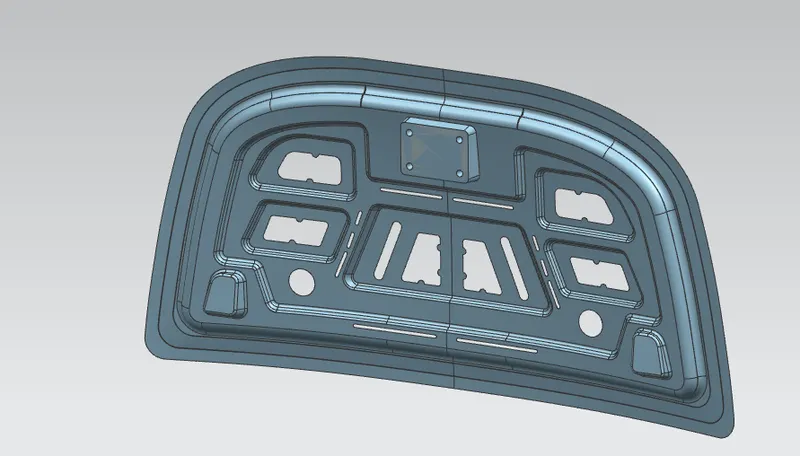
Fig2: Hood Inner Panel - Hood Stay: It is an apparatus for an engine room of a car, which can safely keep an engine hood in an open state even if an external force is abruptly generated due to vibration, wind and can facilitate an opening or closing operation of the engine hood. Hood stay is basically of two types:
a. Support Rod
b. Gas Stay - Emboss: Embosses are created to provide extra strength to the hood inner panel, reduce the overall weight of the hood and most importantly to direct the forces in case of a collision towards the outer side of the hood and safe the passengers from fatal damage.
- Mastic Seal: Mastic is commonly used on construction projects as an adhesive and sealant. It is a popular choice where one surface needs to be adhered to another in a durable bond, or where the area needs to be protected.
- Hinge: A hood hinge mechanism having a pivot pin having a D-shaped cross-sectional shape positioned within a recess. The hood and pin are pivotal to a position where at the D-shaped cross section is oriented to pass through a slotted opening to the recess to thereby allow the hood to be removed or installed on the vehicle.
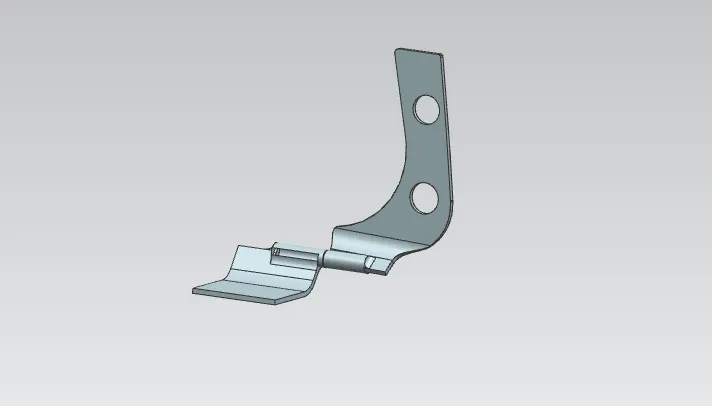
Fig3: Hinge Assembly - Striker: Hood Latch Striker is designed for long-lasting use. It's durable steel construction safeguards against body damage, ensuring the vehicle hood won't unexpectedly open while driving.
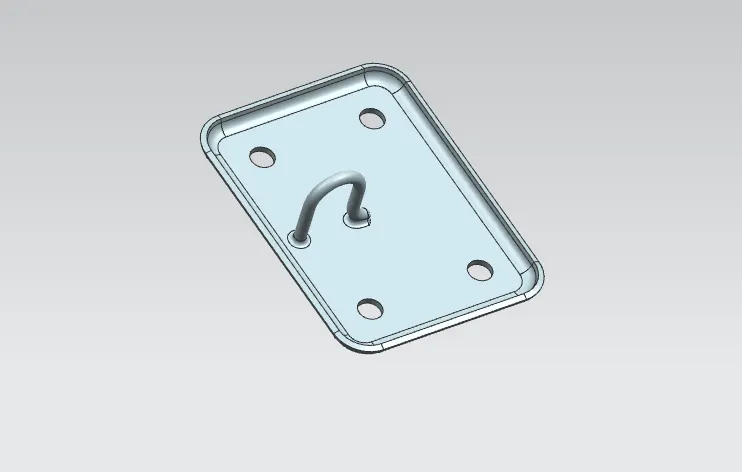
Fig4: Striker
Design Considerations:
- Hood Thickness Information :
Outer Panel Thickness = 0.75mm
Inner Panel Thickness = 0.75mm
Reinforcement Thickness = 1.5mm - Master Section:
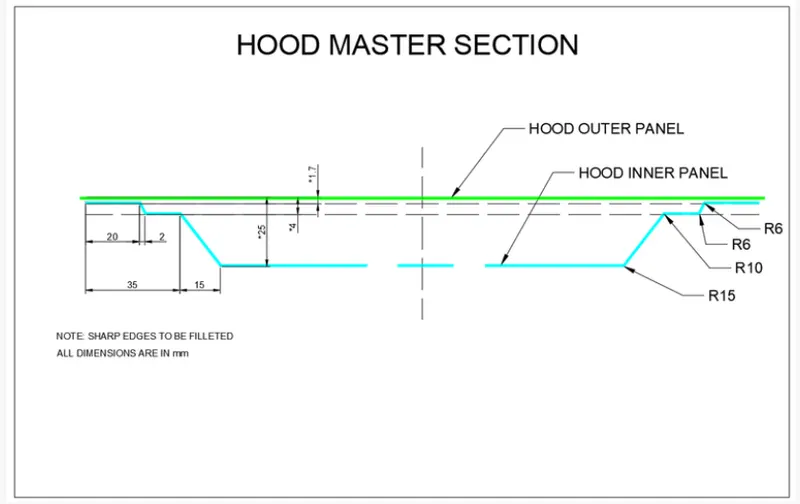
Fig5: Hood Master Section Data - Hemming Data:
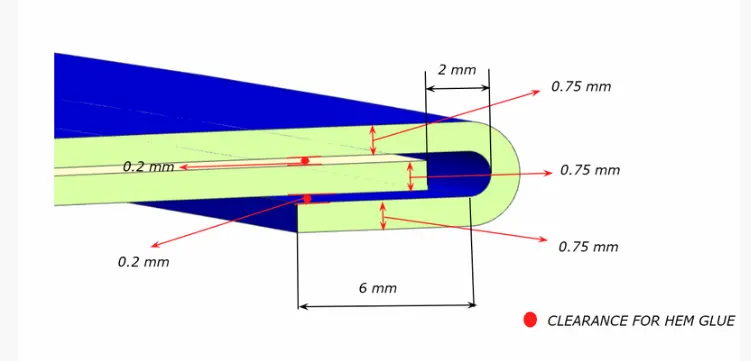
Fig6: Hemming Tolerances Data
Design Methodology:
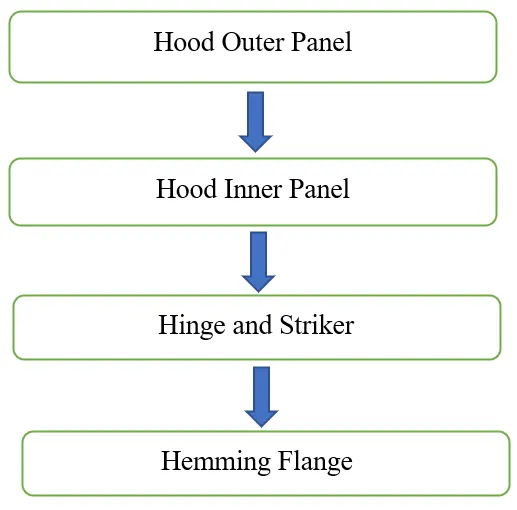
Fig7: Design Tree
Design Process:
- We download all the required CAD data and save it in a single folder.
- Then we start NX and create a new assembly file and bring in all the required files.
- We start our designing process by first creating the hood inner panel, using the given hood outer panel model.
- We offset the outer panel and use it as a working surface. We then trim the half portion of the panel using the Trim Sheet option.
- For designing the inner panel, we will firstly create all the flanges with the help of the given master section data and the trim them at appropriate offsets and then join them using the Through Curves, Law Extension and Trim and Extend options. Apply Face Blends to smooth out the surfaces.
- We then create the embosses of our inner panel, we create the first emboss for mounting the hinge and striker.
- Then we create the next embosses to provide the cut-outs of the inner panel. Apply Edge Blends to smooth out the surfaces.
- After that we create the embosses for the hinge assembly and the striker respectively.
- Then, we create the hemming flange with respect to the given data by using the Offset Surface, Law Extension, Trim and Extend, Face Blend options.
- Finally, we use the Mirror Geometry option to create the full hood panel and then use the Sew option to join all our surfaces together and make sure everything is perfectly joined and there are no gaps in the sheet metal. Save the file.
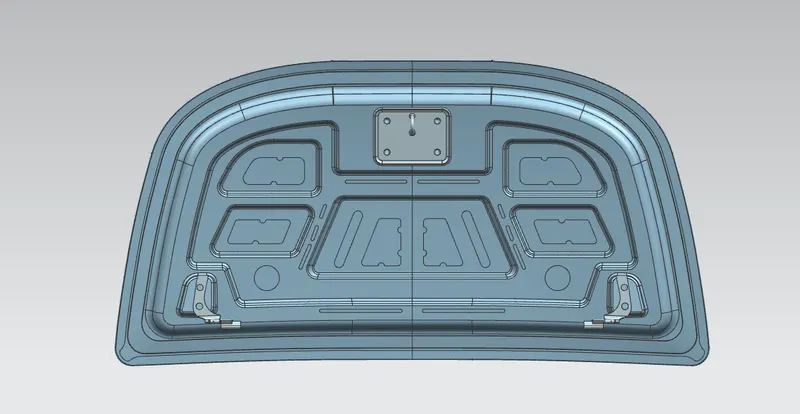
Fig8: Final Hood Assembly
Design Terminologies:
Some of the important terminologies used for the designing of the hood are as follows:
- Latch Trajectory: It is the trajectory drawn to check for the correct placement of the striker with respect to the hinge axis. This study is conducted to check the location for the latch and striker mechanism to make the hood manufacturable.
To create this trajectory, we draw a line connecting the axes of the two hinges and then creating a circle as sketch on the center plane. The center of the circle should be coincident with the center of the hinge axis.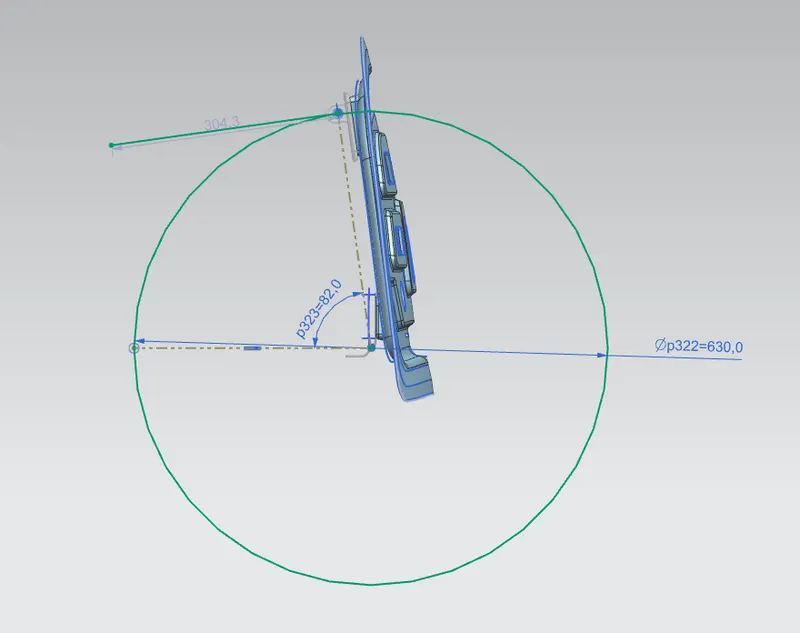
Fig9: Latch Trajectory Drawing
- Mastic Data: This data shows all the mastic points on the hood inner panel.
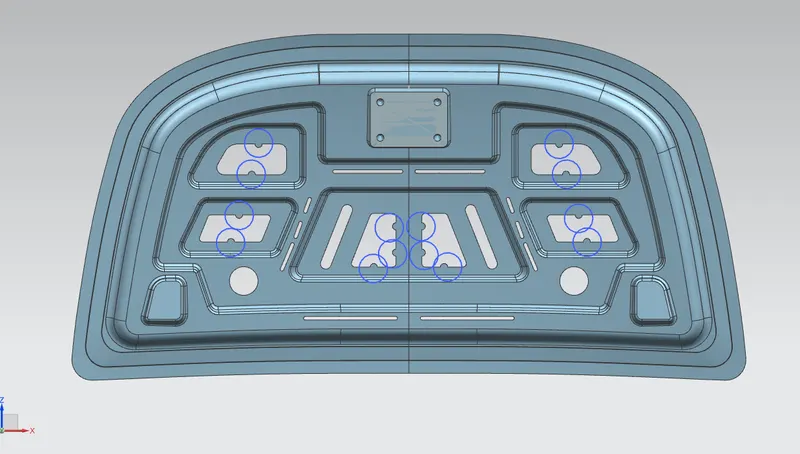
Fig10: Mastic Points - Emboss Definitions: Embosses are drawn in such a way so as to direct the forces to the outside of the hood in the case of a collision.
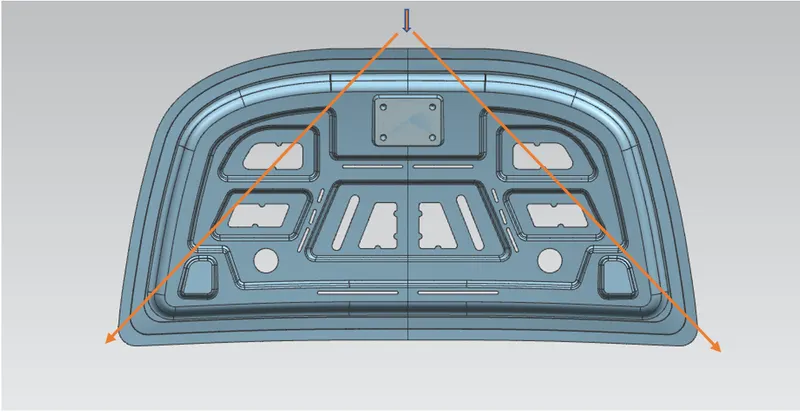
Fig11: Collision Force Dissipation - Deep drawing: It is a sheet metal forming process in which a sheet metal blank is radially drawn into a forming die by the mechanical action of a punch. It is thus a shape transformation process with material retention. The process is considered "deep" drawing when the depth of the drawn part exceeds its diameter.
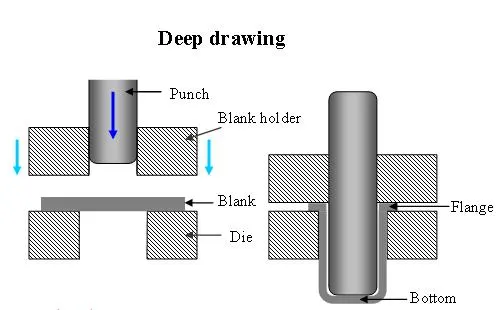
Fig12: Deep Drawing Diagram - Hemming: It is a sheet metal forming process in which sheets are joined by bending it usually to 180°. Automotive body panels and automotive parts such as deck-lids, trunk-lids, doors, hoods and tailgates are formed by hemming process.
Conclusion:
Designing of a car hood is a very critical challenge and the hood is a very important BIW component of a vehicle which not only fulfills the asthetic features of a vehicle but is also an important part regarding the safety and feasibility of the car.